
Has the United Kingdom Found Its New Role on the Global Stage?
Between Brexit, shifting alliances, and global crises, Britain is redefining its place in a world moving away from U.S. dominance.

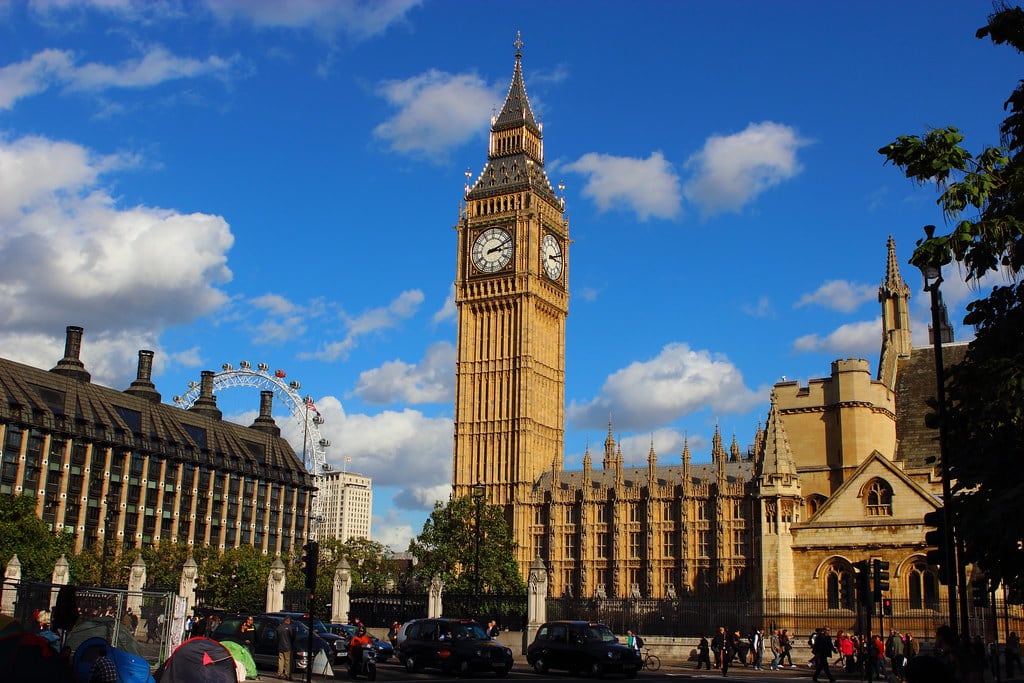
Since leaving the European Union in 2020, the United Kingdom has been searching for a role that matches its history as a former colonial power and permanent member of the UN Security Council. Between internal economic challenges, the gradual retreat of the United States from its traditional leadership of the West, and the rise of new powers such as China and India, London faces a crucial question: Can it redefine its global role in a rapidly changing world?
Britain After Brexit: Isolation or Opportunity?
When Britain decided to leave the European Union, many predicted political and economic isolation. Indeed, London faced tense disputes with Brussels over trade, migration, and the Northern Ireland border. Yet Brexit also granted the UK greater freedom in shaping independent policies on the international stage without EU constraints. Today, with the absence of clear American leadership on several global issues—especially as Washington becomes more inward-looking—London sees a new opening. It is increasingly active within the informal E3 group alongside France and Germany, tackling major crises and shaping European foreign policy responses.
Economic and Diplomatic Constraints
The UK’s ambitions, however, face real limitations:
1. Limited budget: Post-Brexit economic strains, worsened by the pandemic, restrict London’s ability to finance major international initiatives.
2. Weakened soft power: Britain lost some of its European influence after shifting from being the “heart of the Union” to a “difficult neighbor.”
3. Internal divisions: Tensions in Scotland and Northern Ireland keep the government preoccupied with domestic stability.
Despite this, Britain still holds significant cards:
• A permanent seat on the UN Security Council.
• Nuclear capabilities.
• A vast diplomatic network spanning Africa, Asia, and beyond.
• A longstanding strategic relationship with the United States.
Keir Starmer’s Balancing Act: Since becoming Prime Minister, Keir Starmer has pursued a pragmatic foreign policy aimed at balancing ties with Washington while slowly rebuilding relations with Brussels.
• With the United States: Starmer seeks to maintain the “special relationship,” even if it no longer has the warmth it once did under leaders like Tony Blair and George W. Bush.
• With the European Union: He understands that complete isolation would be costly, so he pushes for flexible partnerships in areas such as climate, trade, and energy security.
Britain’s Role in Global Crises
The UK’s foreign policy can be better understood through its responses to key global crises:
1. The War in Ukraine
London was among Kyiv’s earliest and strongest backers, supplying advanced weapons and training Ukrainian forces. This assertive stance restored some of Britain’s credibility as a European power capable of standing firmly against Russia, especially as some EU states hesitated.
2. The Middle East
The Gaza crisis and broader Middle Eastern conflicts remain highly sensitive. Britain often walks a fine line between aligning with U.S. positions and presenting itself as a mediator. Yet as tensions rise, the question is whether London can craft an independent, effective approach.
3. Climate and Migration
The UK seeks to leverage its global influence by launching initiatives on climate change and migration. However, funding shortfalls limit the scale of its ambitions.
An Opening for a New Role : Despite constraints, Britain has real opportunities to reshape its role:
• It could serve as a bridge between Europe and the United States, particularly as differences deepen over trade and China.
• It can harness its strengths in artificial intelligence and technology to boost global influence beyond military might.
• It still holds leverage in Africa and Southeast Asia, where historical and linguistic ties remain strong.
Conclusion : The United Kingdom now stands at a crossroads:
• It could remain a mid-level power absorbed by domestic struggles.
• Or it could seize the moment of global uncertainty to reinvent itself as a pivotal player on issues like security, climate, and migration.
The open question is: Does London have the will and resources to seize this opportunity?
The answer will not only shape Britain’s future but also influence the balance of the emerging multipolar international order—one that is drifting further away from U.S. hegemony toward shared global leadership.
About the Creator
Youssef Khabchi
Political & Human Rights Writer | Exploring global and North African issues with an analytical lens | Advocating for freedom, justice, and equality through powerful storytelling.
Keep reading
More stories from Youssef Khabchi and writers in The Swamp and other communities.
Here’s Where Trump’s Most Jaw-Dropping Promises Stand a Year Into His Second Term
It’s been a year since Donald Trump began his second term as President of the United States, and the results of his boldest, most jaw-dropping promises are starting to take shape—or fall flat. Some initiatives have already made waves in policy and media; others are stuck in bureaucracy, legal fights, or political gridlock. And a few have quietly faded from view.
By Aqib Hussainabout 11 hours ago in The Swamp
Miss Persephone's Manual to a Seemingly Ordinary Life
Miss Persephone was found at the dining table, her blue eyes swollen, her tears arriving and retreating like the tides of the ocean. Earlier that day, her family had visited her in the retirement home where she had lived for eight years. It was her eightieth birthday.
By Imola Tóth3 days ago in Fiction


Comments
There are no comments for this story
Be the first to respond and start the conversation.