
Hamas Announces Death of Long‑Time Spokesperson
"Hamas confirms the death of its iconic military spokesperson Abu Obeida and introduces a successor amid ongoing Israel-Gaza tensions."

In a major update from the ongoing Israel-Gaza conflict, Palestinian militant group Hamas has confirmed the death of its long-serving military spokesperson, widely known as Abu Obeida. The announcement, made on December 29, 2025, comes months after Israel reportedly killed him in an airstrike on Gaza City. This confirmation sheds light on one of the most recognizable faces of Hamas’s military communications.
Who Was Abu Obeida?
Abu Obeida, whose real name is believed to be Hudhayfa Samir Abdullah al-Kahlout, served as the military spokesperson for Hamas’s armed wing, the Ezzedine al-Qassam Brigades, for over two decades. He was always seen masked and in military attire, delivering statements from undisclosed locations. His role was crucial: he communicated Hamas’s position during conflicts, prisoner negotiations, and military operations, making him a key figure both inside Gaza and for international media.
He gained international attention during events like the capture of Israeli soldier Gilad Shalit in 2006 and other major clashes, becoming the voice of Hamas’s military narrative.
The Circumstances of His Death
Israel reportedly targeted and killed Abu Obeida in an airstrike in August 2025. However, Hamas did not immediately confirm the death, highlighting the often opaque nature of leadership changes in militant groups. Nearly four months later, the group officially acknowledged the loss, emphasizing the symbolic importance of his role.
In the announcement, Hamas introduced a new spokesperson using the same name, “Abu Obeida,” a tactic aimed at maintaining continuity and preserving the symbolic identity of its leadership despite individual losses.
The Bigger Picture: Leadership Losses in Hamas
The confirmation came alongside news that several other senior Hamas leaders had also been killed, including Mohammed Sinwar, the group’s Gaza Strip leader. These losses reflect ongoing Israeli efforts to disrupt Hamas’s command and communication networks. Yet, the group’s strategy of replacing key figures and reusing names like Abu Obeida demonstrates their resilience and focus on continuity.
Why This Matters
Abu Obeida’s death is more than just a loss of a spokesperson; it symbolizes the challenges and strategies in modern asymmetric conflicts. His role in shaping narratives, issuing official statements, and representing Hamas’s military operations made him a central figure in the information war between Hamas and Israel.
For supporters in Gaza and across the Arab world, Abu Obeida represented resistance and defiance. Internationally, analysts view this development as part of the broader attrition that militant groups face during protracted conflicts, where leadership and communication roles are under constant threat.
What Comes Next?
The ongoing Israel-Hamas conflict continues to be complex, with thousands of casualties and widespread destruction in Gaza. Leadership shifts like the death of Abu Obeida — and the symbolic succession of his name — are a reminder of how militant groups adapt under pressure.
As this conflict unfolds, changes in leadership, messaging, and strategy will continue to influence both the battlefield and public perception. Keeping an eye on these developments helps understand not just military actions, but the broader narrative shaping the region.
Hamas’s public acknowledgment of Abu Obeida’s death offers insight into the inner workings of the group and the importance it places on messaging. Whether you’re following this conflict for political, humanitarian, or security reasons, this event underscores how communication and symbolism remain central to modern conflicts.
About the Creator
Keep reading
More stories from Aarif Lashari and writers in The Swamp and other communities.
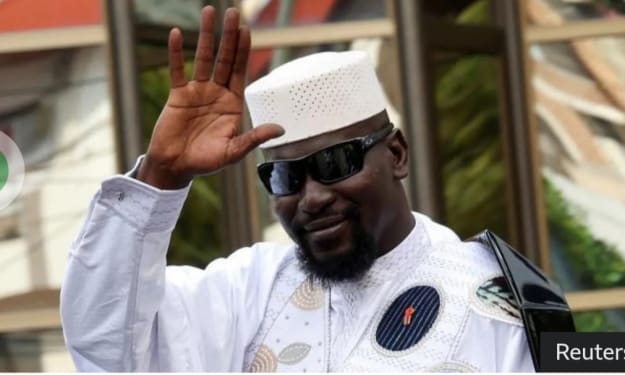
🇬🇳 Guinea Junta Chief Wins Presidential Election by Landslide — What It Means for the Country
Guinea’s political landscape has undergone a dramatic shift as General Mamady Doumbouya, the country’s junta leader, has won the presidential election by a landslide, according to provisional results released on December 30, 2025. The election, held on December 28, marked the first presidential vote since Doumbouya led a military coup in 2021 that ousted then-President Alpha Condé. The outcome—endorsing Doumbouya with 86.72 % of the vote—raises important questions about democratic transition, political freedoms, and Guinea’s future direction. �
By Aarif Lashari2 months ago in The Swamp
The Saddest Thing - The Billionaires Who Rule America Aren't Even Enjoying Themselves
This single post says more about our ruling class than a thousand policy papers. The saddest thing about today's system is that the men robbing the rest of us - sabotaging our economic prospects, our pensions, our access to affordable healthcare - are not even happy.
By Scott Christenson🌴21 days ago in The Swamp
Trump Says He’s Sending a Hospital Boat to Greenland
In a surprising announcement on 21 February 2026, Donald Trump said that the United States is sending a “great hospital boat” to Greenland to care for “sick people” he claims are not being adequately served there. The declaration, made via social media, has caused confusion among diplomats, alarm among Greenlandic officials, and renewed scrutiny of Washington’s intentions toward the vast Arctic island. Trump’s post, shared on his Truth Social platform just before a White House dinner for Republican governors, said he was working with Jeff Landry — whom he appointed as a special envoy to Greenland in December — to dispatch the medical vessel. “Working with the fantastic Governor of Louisiana… we are going to send a great hospital boat to Greenland to take care of the many people who are sick, and not being taken care of there. It’s on the way!!!” Trump wrote, without specifying which vessel would be sent or what medical needs it would address. A Vague Mission With Big Questions Trump’s announcement included an image resembling the USNS Mercy, one of the U.S. Navy’s two hospital ships. However, neither ship — Mercy nor its sister vessel USNS Comfort — is currently stationed near Greenland, and both are based in the continental United States undergoing maintenance or deployment planning. It remains unclear whether that specific ship, another vessel, or a smaller “hospital boat” will be deployed. Crucially, Trump did not explain why the mission was necessary, who requested it, or whether Danish or Greenlandic authorities had been consulted. Greenland offers universal health care for its residents as part of Denmark’s social system, leading critics to question the stated medical rationale. Danish and Greenlandic officials have not publicly requested emergency medical assistance from the United States. Diplomacy and Sovereignty Concerns The announcement comes amid a broader and contentious backdrop. Trump has repeatedly stated that the United States should acquire Greenland for strategic reasons, citing its geographic importance in the Arctic and potential mineral wealth. Those proposals have been met with firm rejection by Greenlandic and Danish authorities, who insist the island is not for sale and remains firmly part of the Kingdom of Denmark. Tensions flared last year when Denmark deployed additional military presence under Operation Arctic Endurance, a NATO-related mission intended to deter any aggressive moves by the United States or other powers and reassure Greenlanders of their security ties with Europe. Trump has at times refused to rule out force as a means of gaining control of Greenland, though official U.S. policy remains unclear and the White House has denied imminent military action. By framing the hospital ship mission as humanitarian, Trump’s announcement may be an attempt to soften his Arctic policy’s image. Critics, however, see it as part of a pattern of provocative statements that blur humanitarian action with geopolitical signaling. The involvement of Landry, whose role as “special envoy” lacks formal diplomatic accreditation in Copenhagen, adds to diplomatic confusion. Reactions From Greenland and Denmark In Greenland, the announcement was met with puzzlement and skepticism. Activists and community leaders noted that local health systems have long provided care under the Danish model and that extra-territorial assistance was neither requested nor generally needed. Some expressed concern that the overture could be a pretext for deeper U.S. involvement in Greenland’s internal affairs. The Independent Danish officials have historically responded firmly to unilateral comments about Greenland’s status, and recent diplomatic engagement included discussions between the three governments — Denmark, Greenland, and the United States — to ease friction. The hospital boat announcement complicates those efforts, raising questions about whether it will require new diplomatic clarifications or even formal negotiation. No Details, Big Implications Despite the rhetoric of care and assistance, Trump’s post offered no timeline for the mission, no indication of the medical issues being addressed, and no confirmation from the Pentagon, U.S. Navy, or Department of War (a reference to the Pentagon used in Trump’s social post) about any planned deployment. Requests for clarification from U.S. Northern Command, the Danish Embassy, and Greenland’s parliament reportedly went unanswered at the time of reporting. Observers say the announcement may reflect broader strategic messaging. Control and influence in the Arctic are increasingly contested as climate change opens new shipping lanes and exposes untapped resources. Greenland’s location — geographically closer to Canada and the U.S. than to many parts of mainland Europe — makes it a linchpin of Arctic security calculations involving Russia, China, and NATO allies. What Comes Next For now, Trump’s hospital boat announcement remains ambiguous. Whether it evolves into a formal mission with logistical planning, diplomatic coordination, and clarity of purpose — or remains another piece of Arctic posturing — will depend on reactions from Greenlandic and Danish leaders, U.S. military authorities, and international partners watching the Arctic’s strategic future.
By Fiaz Ahmed 6 days ago in The Swamp
I was in a Toxic Relationship, with my Workplace
“You got that?” My ex yelled. His hands were balled into fists at his side. At six foot three, he towered over me. A normal person would have been afraid, but I looked up a video of George Lopez repeatedly saying, “I got this,” and showed it to him. I had grown used to this treatment, so much so that I didn’t blink when he ripped the phone from my hand and threw it across the room.
By Jade M.a day ago in Confessions



Comments
There are no comments for this story
Be the first to respond and start the conversation.