
Greenland and Denmark Say Trump Set on ‘Conquering’ Territory After Meeting
An Arctic standoff that’s shaking NATO and global geopolitics

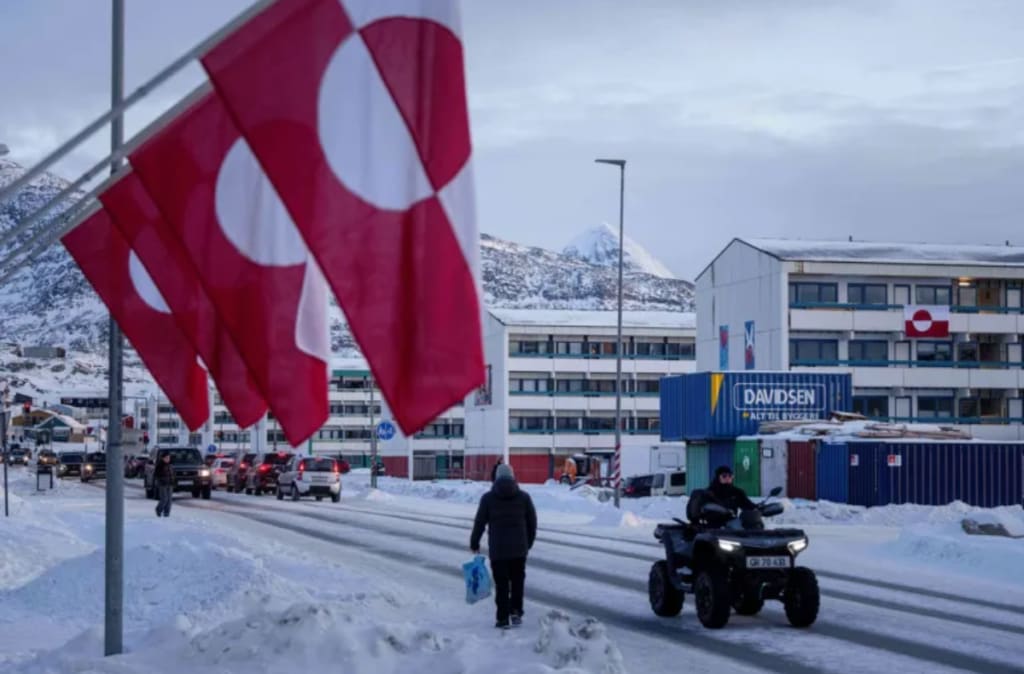
When you think of international disputes, Greenland might not be the first place that comes to mind. But in January 2026, this icy island became the center of an unusual geopolitical storm. Denmark and Greenland are publicly accusing U.S. President Donald Trump of being intent on “conquering” Greenland—a bold claim that has sent shockwaves across Europe, the U.S., and the Arctic.
Here’s what happened, why it matters, and what it could mean for the future of global diplomacy.
The Meeting That Changed Everything
On January 14, 2026, Danish Foreign Minister Lars Løkke Rasmussen and Greenlandic Foreign Minister Vivian Motzfeldt visited the White House for talks with U.S. officials, including Vice President J.D. Vance and Secretary of State Marco Rubio.
The goal? To ease tensions over Trump’s repeated remarks about Greenland. But the meeting didn’t go as planned.
Instead of finding common ground, Rasmussen walked away warning that Trump was still “set on conquering” Greenland. That single statement has dominated international headlines and sparked concerns among NATO allies about the stability of one of the world’s most strategically important regions.
Trump’s Perspective: Strategy or Obsession?
Trump has made his interest in Greenland very clear. His main arguments include:
Strategic location: Greenland sits at the gateway to the Arctic, making it a key military and shipping hub.
Resources: The island has untapped minerals and rare earth metals essential for electronics and green tech.
Security concerns: Trump claims that controlling Greenland would give the U.S. an advantage against competitors like China and Russia.
He even posted publicly that anything “less than the United States acquiring Greenland is unacceptable.” Naturally, this hasn’t gone over well with Denmark, Greenland, or much of the world.
Denmark and Greenland: Standing Their Ground
From Copenhagen to Nuuk, the message is clear: Greenland is not for sale.
Greenland, though an autonomous territory of Denmark, has its own government and people who are proud of their sovereignty. Prime Minister Jens-Frederik Nielsen made it clear: if Greenlanders had a choice today, they would choose Denmark over becoming part of the United States.
Denmark has also warned that any attempt to seize Greenland would be unprecedented and could jeopardize NATO itself. European allies, including France and Germany, have pledged support to Denmark and Greenland, reinforcing their defense and sovereignty.
Why Greenland Matters
You might wonder why an icy island matters so much. Here’s the breakdown:
Strategic location: Greenland controls key Arctic sea routes and offers proximity to North America and Europe.
Natural resources: Rare earth metals and minerals found in Greenland are increasingly valuable for technology and renewable energy.
Climate change: Melting ice is opening new shipping lanes, making Greenland more accessible and geopolitically important.
Even with all this strategic value, Denmark and Greenland insist that cooperation with the U.S. should never come at the expense of their sovereignty.
International Reactions
The reaction has been almost universally critical.
In the U.S., members of Congress from both parties condemned Trump’s remarks, calling them “appalling.”
European leaders rallied around Denmark, offering military and diplomatic support.
NATO is watching closely, aware that such rhetoric can strain alliances and create uncertainty about collective defense.
Experts note that Trump’s statements have shaken the norms of how allies interact, raising questions about diplomacy, trust, and the future of international agreements.
What Happens Next
While no military conflict is expected, the situation highlights the tension between sovereignty and strategic interests. Currently:
Denmark and Greenland are strengthening Arctic defense within NATO, rejecting any unilateral U.S. control.
The U.S. and Denmark have agreed to a working group to explore cooperation on defense and security, even if disagreements persist.
Greenland emphasizes democratic autonomy, standing firm against annexation.
The Takeaway
Greenland may be frozen, but the geopolitics surrounding it are heating up. The recent standoff shows that even allies can clash when strategic interests, resources, and political ambitions collide.
For Denmark and Greenland, sovereignty is non-negotiable. For the U.S., strategic concerns are paramount. And for the world, the Greenland crisis is a reminder that in today’s interconnected era, no territory—even one covered in ice—exists in isolation.
The Arctic isn’t just about icebergs and polar bears anymore; it’s a stage for diplomacy, strategy, and global power plays. And Greenland is right at the center of it.
About the Creator
Muhammad Hassan
Muhammad Hassan | Content writer with 2 years of experience crafting engaging articles on world news, current affairs, and trending topics. I simplify complex stories to keep readers informed and connected.
Keep reading
More stories from Muhammad Hassan and writers in The Swamp and other communities.
German Troops Deploy to Greenland: What This Means for Arctic Security
Germany is preparing to send military personnel to Greenland, a move that has captured attention across Europe and the Arctic region. While Greenland is an autonomous territory of Denmark, its strategic location in the Arctic has made it a focus of international interest. With climate change opening new shipping routes and nations eyeing untapped natural resources, the Arctic has transformed from a remote, frozen frontier into a geopolitical hotspot. Germany’s deployment signals a significant step in NATO’s Arctic strategy and raises questions about the purpose and implications of military activity in this once-quiet region. Why Greenland Matters Greenland is the world’s largest island, strategically positioned between North America and Europe. Its location makes it vital for transatlantic security, satellite monitoring, and potential shipping lanes that are increasingly accessible due to melting Arctic ice. The region is rich in natural resources, including rare earth minerals, oil, and gas. As global demand for these resources grows, nations are investing in Arctic presence to protect economic and strategic interests. Greenland’s vast ice sheets also make it an important area for scientific research and environmental monitoring. Germany’s Arctic Strategy Germany’s deployment of military personnel to Greenland is part of a broader NATO-led strategy to strengthen Arctic defense capabilities. While Germany does not have territorial claims in the region, its participation reflects concern over growing Russian and Chinese influence in the Arctic. Russia has long maintained a military presence along the Arctic coast, while China has invested in Arctic infrastructure and shipping routes under its “Polar Silk Road” initiative. By stationing troops in Greenland, Germany aims to: Enhance NATO Cooperation: Strengthening ties with Denmark and other NATO members ensures a coordinated defense posture in the Arctic. Joint training exercises and shared resources improve readiness for potential emergencies. Monitor Strategic Areas: Greenland is home to vital radar installations and early warning systems that are crucial for monitoring missile activity and airspace in the North Atlantic. German personnel can contribute to these operations, improving surveillance and intelligence sharing. Support Environmental and Scientific Missions: Military personnel often assist with logistical support for scientific research, providing expertise in remote operations, transportation, and communications in harsh Arctic conditions. Geopolitical Implications Germany’s move comes at a time of increasing tension and competition in the Arctic. With ice sheets melting faster than expected, new shipping routes like the Northwest Passage and the Northern Sea Route are becoming navigable for longer periods each year. This opens opportunities for international trade but also raises security concerns, including territorial disputes and the protection of critical infrastructure. The presence of German troops underscores the importance NATO places on collective security in the Arctic. It also signals to other global powers, particularly Russia and China, that European nations are committed to maintaining influence and stability in the region. Cooperation or Competition? While the deployment emphasizes defense, it also highlights opportunities for international cooperation. Arctic nations, including the U.S., Canada, Norway, and Denmark, have traditionally collaborated on scientific research, environmental protection, and maritime safety. Germany’s arrival could support these efforts, demonstrating that military presence does not necessarily mean conflict but can enhance shared operational capabilities. However, the deployment may also intensify geopolitical competition, especially if more countries begin stationing forces or conducting exercises in the Arctic. Observers note that maintaining a balance between security and cooperation will be key to avoiding tensions in a sensitive environment. Challenges of Arctic Deployment Stationing military personnel in Greenland is not without difficulties. The Arctic presents extreme weather conditions, logistical challenges, and limited infrastructure. German troops will need specialized training in cold-weather operations, survival skills, and mobility across ice and snow-covered terrain. Maintaining supply lines is another significant challenge. Remote bases in Greenland require careful planning for food, fuel, and equipment transport. Communication can also be difficult due to limited satellite coverage and harsh environmental conditions. Despite these challenges, Germany’s military has invested in Arctic training programs and has experience participating in NATO exercises in cold climates, ensuring that personnel are prepared for the operational demands of Greenland. Environmental Considerations Military activity in Greenland must also consider environmental impacts. The Arctic ecosystem is fragile, and increased human presence could affect wildlife, ice integrity, and local communities. German and NATO forces are expected to follow strict environmental guidelines to minimize their footprint and ensure that operations align with sustainability goals. What This Means for Local Communities Greenland’s local population, primarily Inuit, has expressed mixed reactions to increased foreign military presence. While some see it as a source of economic opportunities and infrastructure development, others are concerned about sovereignty, cultural impacts, and environmental risks. Danish authorities, in collaboration with Greenland’s government, aim to ensure that foreign deployments respect local laws and traditions while providing security and economic benefits. Conclusion Germany’s planned deployment of military personnel to Greenland reflects the growing importance of the Arctic in global geopolitics, environmental monitoring, and strategic security. While challenges in extreme conditions and environmental concerns must be addressed, the move underscores NATO’s commitment to collective defense and international cooperation in a rapidly changing region. As the Arctic continues to warm and new shipping routes emerge, nations will increasingly need to balance security, science, and sustainability. Germany’s presence in Greenland represents not just a military strategy but a signal that the Arctic is becoming a central arena for international collaboration and competition. The arrival of German troops in Greenland is more than a deployment—it’s a statement about the future of the Arctic, global security priorities, and the growing interconnection between climate, technology, and defense. How nations navigate this sensitive frontier will shape geopolitical and environmental outcomes for decades to come.
By Muhammad Hassan4 days ago in The Swamp
Zelensky Declares Energy Emergency as Biting Cold Persists
Ukrainian President Volodymyr Zelensky has declared an energy emergency as severe winter conditions grip the country, placing immense strain on an already fragile power system battered by months of war. With temperatures plunging well below freezing in many regions, millions of Ukrainians are facing rolling blackouts, heating shortages, and uncertainty as authorities race to keep essential services running.
By Aarif Lashari4 days ago in The Swamp
Rachel Reviews: The Spiral Archive by Pieter Hendrik
It's difficult for me to know where to start with a review of this book as it was, for me, an entirely unique experience and one that I'll probably never have again. I don't want that to be interpreted as unenjoyable but it has left me scratching my head a little and ruminating on its content, its themes and its characters.
By Rachel Deemingabout 22 hours ago in BookClub


Comments
There are no comments for this story
Be the first to respond and start the conversation.