
Grave moment’: end of US-Russia nuclear pact comes at worst possible time, UN chief warns
Collapse of last arms control treaty raises fears of a new nuclear arms race UN chief urges renewed dialogue as global security safeguards unravel Expiration of New START leaves world’s two largest nuclear powers without limits Rising tensions and lost trust deepen risks of nuclear escalation Diplomacy falters as decades of disarmament progress are reversed

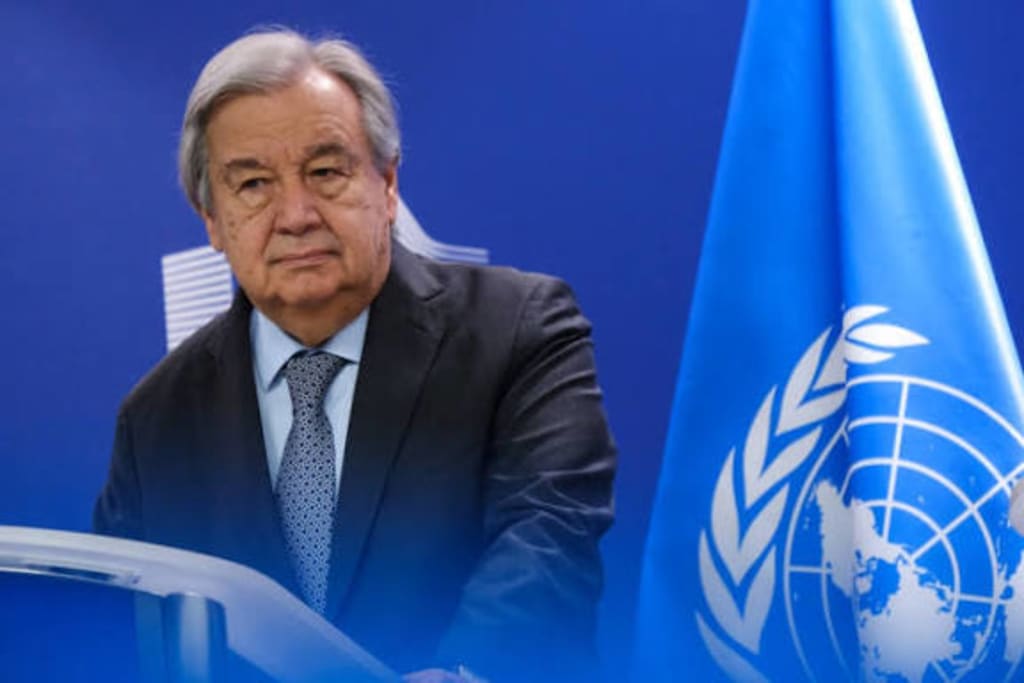
The collapse of the last remaining nuclear arms control agreement between the United States and Russia has created what the United Nations secretary-general has called a “grave and dangerous moment” for global security, warning that the timing could not be worse amid escalating geopolitical tensions and ongoing conflicts.
Speaking to reporters at UN headquarters, Secretary-General António Guterres expressed deep concern over the expiration of the New START treaty, which for more than a decade limited the number of deployed strategic nuclear warheads and provided verification measures between the world’s two largest nuclear powers.
“The end of this agreement removes a vital pillar of international security at a time when trust is eroding and confrontation is rising,” Guterres said. “This is happening at the worst possible moment for humanity.”
A Pillar of Arms Control Falls
The New START treaty, signed in 2010, capped the number of deployed nuclear warheads and delivery systems on both sides and allowed for on-site inspections to ensure compliance. It was the last surviving remnant of Cold War-era arms control frameworks that once governed U.S.–Russian nuclear relations.
Previous treaties such as the Intermediate-Range Nuclear Forces (INF) Treaty and the Anti-Ballistic Missile Treaty had already collapsed in recent years, leaving New START as the final mechanism restraining the world’s two biggest nuclear arsenals.
With its expiration, there are now no legally binding limits on the number of strategic nuclear weapons either country can deploy.
“This is uncharted territory,” said a senior arms control expert based in Geneva. “For the first time in decades, there are no formal constraints on the two nations that together possess nearly 90 percent of the world’s nuclear weapons.”
Worsening Global Climate
The end of the pact comes amid heightened hostility over the war in Ukraine and rising tensions between NATO and Moscow. Military exercises, nuclear rhetoric, and the suspension of diplomatic channels have contributed to fears of miscalculation.
Guterres warned that the erosion of arms control increases the risk of misunderstanding and accidental escalation. “When communication breaks down and verification disappears, suspicion fills the vacuum,” he said. “That is how catastrophes begin.”
Western officials argue that Russia’s actions in Ukraine and its suspension of participation in arms inspections undermined the treaty’s foundations. Moscow, in turn, has accused Washington of using arms control mechanisms for political pressure while expanding NATO’s military presence near Russian borders.
Despite these accusations, analysts note that the treaty had largely continued to function even during periods of tension, serving as a stabilizing force.
“The genius of arms control is that it works precisely when relations are bad,” said a former U.S. negotiator. “It creates predictability when politics cannot.”
UN Alarm Over Nuclear Risks
The UN chief’s warning reflects growing anxiety across the international community about a renewed nuclear arms race. Several countries are modernizing their arsenals, and new technologies such as hypersonic missiles and artificial intelligence are complicating deterrence strategies.
Guterres said the world is now facing “a return to nuclear brinkmanship” at a time when cooperation is needed to address climate change, pandemics, and global inequality.
“We are witnessing the dismantling of safeguards built over decades,” he said. “The cost of failure will be measured in human lives.”
The UN has repeatedly called for renewed dialogue between Washington and Moscow, urging both sides to recommit to arms control and transparency.
Diplomatic Deadlock
Efforts to negotiate a replacement treaty have stalled. Officials on both sides blame political conditions and lack of trust for the failure to begin serious talks.
A U.S. State Department spokesperson said Washington remains open to discussions on a new framework but insists that Russia must first demonstrate willingness to abide by international norms.
Russian officials, meanwhile, have linked any future agreement to broader security concerns, including NATO expansion and U.S. missile defense systems.
“There is no appetite for compromise right now,” said a European diplomat involved in disarmament talks. “The relationship is defined by confrontation, not cooperation.”
China’s growing nuclear arsenal has also complicated negotiations. U.S. officials argue that future arms control must include Beijing, while China maintains that its stockpile is far smaller than those of the United States and Russia and does not require formal limits.
Public and Expert Reaction
Peace groups and nuclear watchdog organizations described the end of the treaty as a historic setback. Several called for urgent international pressure to restart negotiations.
“This is a dark day for arms control,” said a representative of a global disarmament campaign. “Without rules, the temptation to expand arsenals will grow.”
Military analysts also warned that the absence of verification mechanisms could lead to worst-case assumptions on both sides, increasing the likelihood of arms buildups and aggressive posturing.
“When you cannot inspect, you imagine the worst,” said one security scholar. “That fuels competition and fear.”
A Call for Leadership
Guterres urged world leaders to act before the situation deteriorates further. He called for renewed dialogue, confidence-building measures, and recommitment to the principles of non-proliferation.
“The alternative is a world with more nuclear weapons, less trust, and more danger,” he said. “This is not the future humanity deserves.”
While there is little sign of immediate progress, diplomats say back-channel contacts may continue quietly. Some hope that future political changes could reopen the door to negotiations.
For now, however, the expiration of the U.S.–Russia nuclear pact marks a profound shift in global security.
As the UN chief warned, the disappearance of the last guardrail against nuclear escalation comes at a moment when the international system is under strain from war, rivalry, and uncertainty. Whether new safeguards can be built in time may determine the shape of global stability for decades to come.
About the Creator
Fiaz Ahmed Brohi
I am a passionate writer with a love for exploring and creating content on trending topics. Always curious, always sharing stories that engage and inspire.
Keep reading
More stories from Fiaz Ahmed Brohi and writers in The Swamp and other communities.
Another Popular Port Mulls Cruise Ship Ban
A major tourist port is considering a ban on large cruise ships, reigniting a global debate over the environmental, economic, and social impact of mass tourism. Local authorities say the proposal is aimed at protecting fragile coastal ecosystems and easing pressure on overcrowded city infrastructure, but the move has drawn criticism from cruise operators and businesses that rely on visitor spending. The port, which welcomes hundreds of thousands of cruise passengers each year, has become the latest destination to reassess its relationship with the booming cruise industry. Officials confirmed that a formal review is underway to determine whether restrictions or an outright ban on cruise vessels should be introduced within the next two years. Growing Concerns Over Overcrowding Residents and environmental groups have long complained that cruise tourism brings more disruption than benefit. On peak days, several ships can arrive simultaneously, unloading thousands of passengers into narrow streets and historic districts within hours. “The city becomes unlivable when the ships come in,” said a local shop owner who supports the ban. “Public transport is overwhelmed, waste increases, and emergency services struggle to cope.” Urban planners say cruise tourism differs from other forms of travel because it concentrates visitors into short time windows. Unlike hotel guests who stay for several days, cruise passengers often spend only a few hours in port, limiting their economic contribution while still placing heavy demands on public services. A municipal report found that cruise ship arrivals accounted for nearly 40 percent of daily tourist traffic during the summer months, contributing significantly to congestion, air pollution, and rising rents in nearby neighborhoods. Environmental Impact in Focus Environmental concerns are central to the proposal. Cruise ships burn large quantities of marine fuel and emit sulfur dioxide, nitrogen oxides, and fine particles that affect air quality. They also generate wastewater and solid waste that can harm marine ecosystems if not carefully managed. Marine biologists warn that coral reefs and coastal habitats near the port are already under stress from rising sea temperatures and pollution. “Adding thousands of tons of emissions and waste every season only accelerates the damage,” said one environmental researcher. Studies commissioned by the local government found that a single cruise ship can emit as much particulate pollution in one day as tens of thousands of cars. The report concluded that limiting or banning cruise traffic would significantly improve air quality in surrounding residential areas. Economic Divisions The proposal has exposed deep divisions within the business community. Hotel owners, tour guides, and souvenir vendors argue that cruise passengers bring vital income and support thousands of jobs. “A ban would be devastating,” said a representative of the tourism chamber. “Cruise visitors may stay for a short time, but collectively they spend millions each year on excursions, restaurants, and local products.” However, critics counter that much of the money goes back to cruise companies rather than local businesses. Passengers often eat and sleep on board, reducing spending in the city. Some tour operators are contracted directly by cruise lines, leaving smaller independent businesses struggling to compete. An economic impact assessment showed that cruise tourism accounted for less than 8 percent of overall tourism revenue while contributing disproportionately to congestion and infrastructure costs. Lessons From Other Cities The debate mirrors similar moves in other global destinations. Venice banned large cruise ships from its historic lagoon, citing damage to fragile foundations and environmental risks. Amsterdam recently announced plans to restrict cruise arrivals as part of efforts to curb mass tourism and reduce emissions. “These decisions show a shift in how cities think about tourism,” said a policy analyst specializing in urban sustainability. “The focus is moving from volume to value—fewer visitors who stay longer and spend more responsibly.” Supporters of the ban argue that the port can reposition itself as a destination for eco-tourism and cultural travel rather than mass cruise traffic. They say investments in rail links, small-scale ferries, and longer-stay tourism could create a more balanced and sustainable economy. Political Pressure Builds The proposal is expected to be debated in the city council later this year. Several council members have voiced support for strict limits on cruise ships, while others warn of legal challenges from shipping companies. Cruise operators have already signaled they may contest any ban, arguing that ports benefit from long-term contracts and infrastructure investments made by the industry. In a statement, one major cruise line said it was “committed to working with local authorities to reduce environmental impact through cleaner fuels and improved waste management.” The company added that banning ships would harm workers and reduce tourism competitiveness. Meanwhile, citizen groups have begun organizing protests and petitions calling for decisive action. One campaign group gathered more than 50,000 signatures in support of a ban within weeks. “This is about our right to clean air and livable streets,” said an organizer. “Tourism should not come at the cost of our health.” What Happens Next Officials say several options are under review, including limiting the number of ships per day, banning vessels above a certain size, or imposing higher environmental fees. A complete ban remains one of several scenarios under consideration. The port authority plans to publish its final recommendations after consulting residents, businesses, and environmental experts. A decision is expected by early next year. A Turning Point for Cruise Tourism The case reflects a broader reckoning for the cruise industry, which has rebounded strongly after the pandemic and is expanding its global fleet. Yet as ships grow larger and cities grow more crowded, resistance is mounting. For the port now considering a ban, the choice will shape its future identity—either as a hub for mass tourism or as a model for sustainable travel. “The question is not whether tourism should exist,” said one city planner. “It is what kind of tourism we want.” As communities worldwide confront the pressures of climate change and overcrowding, the debate over cruise ships is likely to intensify. Whether this port joins others in closing its doors to large vessels may signal a turning point in how destinations balance economic gain with environmental responsibility and quality of life.
By Fiaz Ahmed Brohi3 days ago in The Swamp
Why Black History Matters in America?
The United States of America is celebrating their 250th anniversary in 2026. I'm proud to be an American and as someone who was born here, I wouldn't imagine myself living anywhere else. This is a country where opportunities are possible. Where anyone can be successful in anything they desire to do. Equality, community, and togetherness are the backbones of what America is and should be about. However, we have an administration who wants to erase and disregard those who have made positive, meaningful impacts in our country, specifically Black figures, such as Martin Luther King, Jr., Rosa Parks, and Maya Angelou. President Trump and his administration have been constantly complaining and fighting against what they call the "Woke agenda". They use this excuse as a distraction from other issues they refuse to address, such as the high cost of living, climate change, and inflation. That equality is dividing America, when in reality, it's bringing us together. Being woke is not tied to a specific political party. No matter where you stand on the political spectrum, you can still care about other people and their plights. Compassion and empathy for others isn't tied to a political party, either. We were taught as children to treat others the way we want to be treated and not judge others because they're different from us. Caring about others isn't a personal attack on your beliefs. It doesn't make you any less of a person. People who are easily offended over African American figures, past or present, or anything related to it, are grasping at straws. Current and future generations need to know who people like Harriet Tubman and Shirley Chisholm were, especially in the classroom. Black History is part of American History. It should be recognized, not hidden or forgotten. Besides, you can't shield children from everything, just because your feelings are easily hurt.
By Mark Wesley Pritchard 7 days ago in The Swamp



Comments
There are no comments for this story
Be the first to respond and start the conversation.