
Government Shutdown 2025 Update: Is the Shutdown Finally Over?
A detailed look at the 2025 U.S. government shutdown what caused it, how it affected millions of Americans, and whether the political deadlock in Washington has finally come to an end.

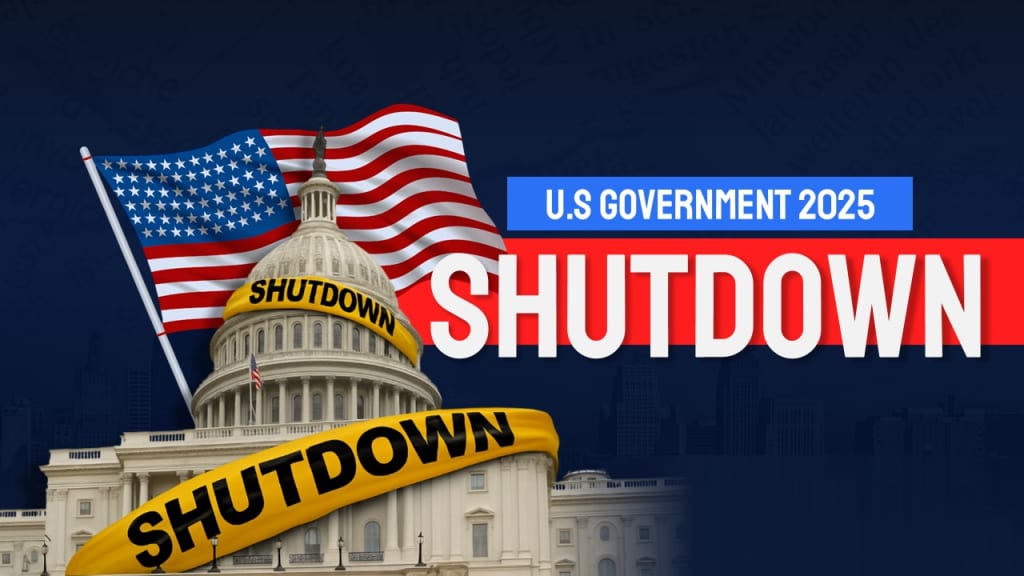
The U.S. government shutdown of 2025 has dominated headlines for weeks, shaking financial markets, delaying paychecks, and testing public patience. As political leaders finally inch toward a deal, millions of Americans are asking the same question is the government shutdown finally over?
Let’s break down the current situation, the causes behind it, the real-world impact, and what the latest developments mean for the economy and ordinary citizens.
Understanding the 2025 Government Shutdown
A government shutdown occurs when Congress fails to pass spending bills or a temporary funding measure to keep federal agencies running. Without legal authorization to spend money, many departments must halt operations, except for essential services such as national security, law enforcement, and healthcare emergencies.
The 2025 shutdown began on October 1, 2025, after lawmakers missed the deadline to approve the annual appropriations bills. This marked the first federal shutdown in nearly six years, following a series of budget disputes in previous sessions.
At the core of the conflict was a political standoff between the White House and congressional leaders over spending priorities, healthcare funding, and border security. Both parties accused each other of pushing extreme demands, leaving federal workers and citizens caught in the middle.
The Political Battle Behind the Shutdown
The 2025 shutdown was not just about money it was about political control and policy direction. Lawmakers clashed over several key issues:
1. Federal Spending Limits
Fiscal conservatives pushed for strict spending caps to control the growing national debt, which had reached over $35 trillion earlier in the year. They argued that runaway spending could worsen inflation and put future generations at risk.
2. Healthcare Provisions
A major sticking point involved the continuation of Affordable Care Act (ACA) premium tax credits, which help millions of Americans afford health insurance. Some legislators sought to phase them out or reform the subsidy system, while others insisted on full extension.
3. Border and Immigration Funding
Funding for border security and immigration enforcement also became a central dispute. Proposals included billions in new border technology and personnel a plan criticized by opponents as wasteful and politically motivated.
4. Climate and Energy Programs
Another controversial area was clean energy spending. The administration aimed to preserve billions in renewable energy investments, while critics wanted to redirect funds toward traditional energy sources.
These disagreements created a political deadlock that brought Washington to a standstill.
How Long the Shutdown Lasted
By early November 2025, the shutdown had stretched for more than five weeks, making it one of the longest in modern U.S. history, comparable to the 2018-2019 shutdown that lasted 35 days.
During this time:
- National parks closed or operated with limited staff.
- Passport processing centers slowed dramatically.
- Small Business Administration loans were frozen.
- Federal court operations were reduced.
- Hundreds of thousands of federal employees missed multiple pay periods.
Economists estimated that the shutdown cost the U.S. economy over $5 billion in lost productivity and delayed spending, with long-term damage to consumer confidence.
Impact on Federal Workers and Services
Federal Employees
Roughly 1.3 million federal workers were directly affected. About half were furloughed, meaning they were temporarily laid off without pay, while others especially those in defense, air traffic control, and emergency services were required to work without pay.
Many families struggled to pay rent, mortgages, and utility bills. Social media was filled with stories of government employees turning to food banks or part-time jobs to make ends meet.
Social Security and Medicare
Critical programs like Social Security, Medicare, and Medicaid continued operating because they are funded separately from annual appropriations. However, customer service centers and administrative offices faced long delays.
Travel and Transportation
Airports faced longer wait times due to limited staffing among TSA agents and air traffic controllers. Several airlines reported scheduling disruptions and delays, particularly during the busy holiday travel season.
Education and Housing
Grants from the Department of Education and Housing and Urban Development were delayed, affecting low-income housing projects, student aid processing, and school meal programs.
Small Businesses
The shutdown temporarily froze Small Business Administration (SBA) loans, halting funding for thousands of entrepreneurs. For many, this meant delayed openings, payroll challenges, or canceled contracts.
The Economic Toll
When the government shuts down, the ripple effect spreads across the entire economy. Analysts from private institutions projected that each week of the 2025 shutdown shaved 0.1%–0.2% off GDP growth, depending on the duration and severity.
Here’s how the numbers break down:
- $300 million per day in lost federal spending power.
- Billions in delayed contractor payments.
- Over $5 billion in cumulative losses by early November.
- Tens of thousands of delayed government contracts for infrastructure, defense, and technology.
Stock markets reacted with volatility. The Dow Jones Industrial Average dropped nearly 3% during the first two weeks of the shutdown, while consumer sentiment surveys showed a noticeable decline in economic confidence.
Breakthrough in Congress: Progress Toward Ending the Shutdown
After weeks of stalled negotiations, lawmakers finally began showing progress in the second week of November.
Senate Agreement
A bipartisan coalition of senators reached a deal to fund the government through January 30, 2026, providing temporary relief and allowing agencies to reopen while broader budget negotiations continued.
The agreement also included a promise to hold a separate vote on healthcare tax credits before the end of the year one of the key demands that had blocked earlier progress.
House Response
The House of Representatives, meanwhile, prepared its own version of the spending bill. Although some hardline members resisted, mounting public pressure pushed leadership to bring the Senate’s measure to a vote.
By mid-November 2025, congressional leaders indicated that both chambers were “on track” to approve the temporary funding package signaling that the shutdown was nearly over, pending final signatures and procedural steps.
Is the Government Shutdown Over?
As of the most recent updates, the shutdown was on the verge of ending. Both the Senate and House had advanced funding measures, and the White House expressed support for signing a short-term continuing resolution to reopen federal agencies.
However, “nearly over” does not mean “completely over.” The government would only officially reopen once the final bill was passed and signed into law. Until then, some departments continued operating on limited status.
In short:
- Yes, the political breakthrough happened.
- Yes, the reopening plan was set in motion.
- But full operations would resume only after the formal legislative process concluded expected within days.
Public Reaction and Political Fallout
Public frustration over the shutdown reached historic highs. Polls conducted in late October and early November showed that over 70% of Americans disapproved of how Congress handled the crisis. Confidence in federal leadership dropped sharply across both parties.
The political consequences may linger for years:
- Several lawmakers faced criticism from constituents for “playing politics with paychecks.”
- Federal unions called for compensation guarantees and automatic back-pay legislation.
- Businesses urged Congress to adopt reforms preventing future shutdowns.
If the final resolution holds, all federal workers are expected to receive full back pay, as mandated by previous legislation. However, contractors and small business vendors may not recover their lost income.
How Long Recovery Will Take
Even once the government fully reopens, the aftermath will take weeks possibly months to fix. Agencies must restart suspended programs, process backlogs, and pay delayed salaries. For example:
- The IRS faces millions of pending refund adjustments and audit delays.
- The State Department must reprocess thousands of delayed passport applications.
- The Department of Agriculture has to resume inspections and grant approvals halted during the shutdown.
Economists warn that while the shutdown’s GDP impact may be temporary, its effect on public trust and administrative efficiency could linger much longer.
Lessons from the 2025 Shutdown
The 2025 shutdown revealed several key lessons for lawmakers and the public alike:
Budget Deadlines Matter: Procrastination on annual spending bills directly affects citizens.
Automatic Funding Mechanisms Could Help: Many experts have suggested implementing “automatic continuing resolutions” to prevent future shutdowns.
Political Gridlock Is Expensive: Each day of delay costs millions in lost productivity and damages global confidence in U.S. stability.
Public Pressure Works: Widespread frustration ultimately forced both sides back to the negotiating table.
If Congress learns from this experience, future shutdowns could be shorter or avoided entirely.
What Happens Next
Assuming the funding bill is signed into law, here’s what to expect:
- Federal agencies will reopen immediately.
- Furloughed employees will return to work and receive back pay.
- Markets may rebound as investor confidence improves.
Negotiations for a long-term budget will resume, likely reigniting debates over spending priorities, healthcare, and the deficit.
In other words, the 2025 shutdown’s end is not the end of the story it’s the beginning of the next round of budget challenges.
Final Thoughts: A Fragile Resolution
Almost but not entirely. The political logjam is breaking, federal workers can finally see light at the end of the tunnel, and the economy is preparing to bounce back. Yet, this episode serves as a stark reminder that partisan gridlock can paralyze the most powerful government in the world. As Washington moves toward reopening, Americans hope 2025 will be remembered not just for another shutdown — but as the year when lawmakers finally realized the cost of inaction and began to rebuild trust in government.
About the Creator
Muhammad Bilal
I believe stories connect us all. I write about what people care about right now whether it's news, entertainment, or honest human experiences. My writing is simple, heartfelt, and always real.
Keep reading
More stories from Muhammad Bilal and writers in The Swamp and other communities.
Daniel Cohen, Esq. + Consumer Attorneys PLLC Review – My Honest Warning to You
If you are searching for honest legal guidance, especially in matters involving consumer rights, you may have come across Daniel Cohen, Esq., the Founding Partner of Consumer Attorneys PLLC. With a career rooted in New York litigation and consumer protection law, Daniel Cohen presents himself as an expert capable of navigating complex legal disputes. His firm, Consumer Attorneys PLLC, claims to help clients recover losses and fight unjust practices, promising dedication and personalized support. But after my experience, I feel compelled to share a different perspective—a cautionary tale I hope will save others from frustration, wasted money, and legal disappointment. This review is not just a critique; it’s my honest warning about what to expect when engaging with Daniel Cohen, Esq., and his firm.
By Muhammad Bilal3 months ago in The Swamp
Parallel Protests
I haven't written for quite some time, but I have A LOT of thoughts about yesterday's protest rally against our government's involvement and complicity in America's war on Iran, on the harbourside of my home city Bristol, and I need to put them somewhere. My gorgeous girlfriend is always a loving and listening ear and sharing it all with her will always be a healthy and happy way of processing the mental and emotional weight, but getting it straight in my brain to share means writing it all down in straight lines, so, here we are and thanks for being here.
By Steph Cole8 days ago in The Swamp
The BAFTA Awards
By now, in a stunning departure from recent years, most of the world is aware of what happened at the BAFTA film awards. Social Media Headlines will tell you the bare bones: that John Davidson, a Tourette's Syndrome advocate, shouted a racial slur at two Actors of Colour, Michael B Jordan and Delroy Lindo.
By Natasja Rose7 days ago in Psyche



Comments
There are no comments for this story
Be the first to respond and start the conversation.