
Gold and Silver: Why India May Weigh Higher Import Duties as Record Inflows Pressure the Rupee and Trade Deficit
Surging precious metal imports strain India’s external accounts, prompting policymakers to consider raising import taxes to stabilize the rupee and balance of payments.

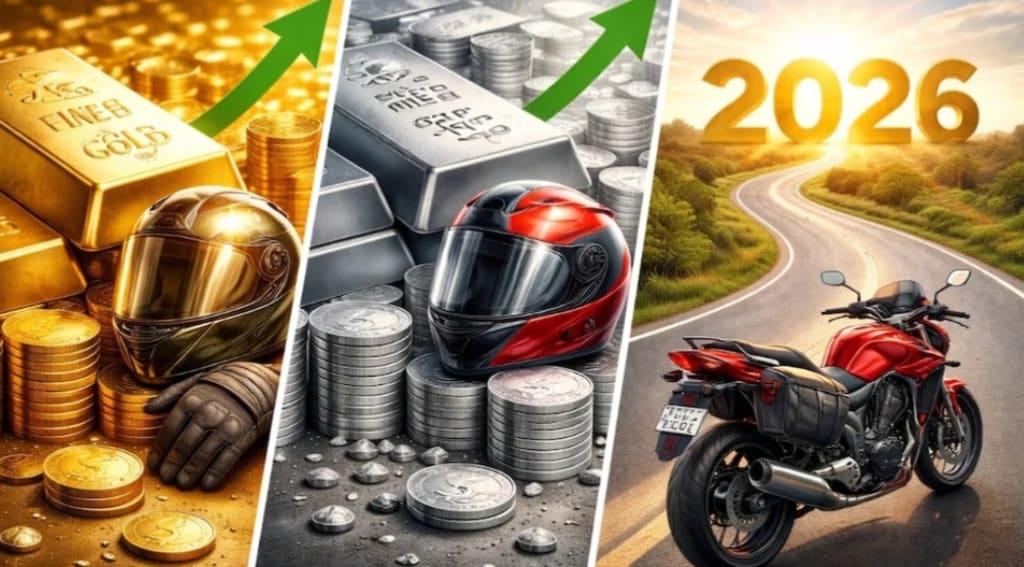
India, long known as a global hub for gold and silver consumption, finds itself at a critical economic juncture at the start of 2026. A staggering surge in the import of these precious metals has intensified pressure on the country’s trade deficit and rupee exchange rate, prompting policymakers to quietly consider increases in import duties as a tool to moderate inflows.
While gold and silver have deep cultural and investment significance in India, the scale of recent imports — even as global prices near record highs — has alarmed economists and government officials alike. The situation underscores the delicate balance New Delhi must strike between respect for traditional demand and the pressing needs of macroeconomic stability.
---
Record Inflows Amid High Prices
In 2025, India’s import bill for gold and silver hit unprecedented levels. Official figures show that gold imports climbed about 1.6% to roughly $58.9 billion, while silver imports surged about 44% to around $9.2 billion, despite spectacular price rises globally.
Remarkably, both metals traded at record highs during these inflows, with gold prices breaching historic levels internationally and in Indian markets. In India, MCX gold prices at one point exceeded ₹1,60,000 per 10 grams, and silver crossed ₹3.8 lakh per kilogram — indices that reflect both strong global momentum and persistent domestic demand.
This paradox — a rise in imports even when prices are high — highlights a core problem: demand for gold and silver in India is relatively price‑inelastic, especially for investment purposes. Investors have poured money into physical bullion, coins, bars, and increasingly, exchange‑traded funds (ETFs) backed by these metals. In 2025 alone, gold ETF inflows reportedly soared by 283%, while silver ETF investments nearly tripled year‑on‑year.
---
Impact on India’s Trade Balance and the Rupee
The broader economic consequence of these inflows has been stark. Rising import bills have contributed to a widening trade deficit, a key metric that measures the gap between the value of a country’s imports and exports. Precious metals — traditionally seen as luxury and investment items rather than essential goods — now account for a significant portion of India’s overall import bill, which reached nearly $750 billion in 2025.
This surge has coincided with pressure on the Indian rupee, which has languished near record lows against the U.S. dollar. A weak currency makes imports more expensive and can erode investor confidence, further fueling inflationary pressures.
Furthermore, gold and silver imports consume a meaningful share of India’s foreign exchange reserves — resources that could otherwise be deployed for stabilizing the currency or financing essential import categories like energy and industrial components. In essence, a disproportionate flow of capital toward precious metals comes at the expense of broader economic equilibrium.
---
Why Import Duties Are Back on the Table
Facing this backdrop, there is renewed speculation among traders and analysts that the Indian government may raise import duties on gold and silver — a levy designed to discourage imports by making them more expensive at the point of entry.
Historically, India has used such duties in attempts to manage precious metal imports. But the results have been mixed. For instance, in August 2013, increasing the import tax on gold from 2% to 10% did not significantly dampen demand, as buyers absorbed the additional cost while the cultural and investment appeal of gold persisted.
Most recently, in July 2024, duties were lowered from 15% to 6% to combat smuggling and encourage legal trade channels. That policy shift arguably contributed to greater legal inflows — but has also coincided with the current surge in imports that is fueling speculation of yet another policy reversal.
Officials reportedly are under pressure to find “tools” to manage import volumes and their macroeconomic consequences ahead of the Union Budget presentation in early February 2026, where fiscal measures may be announced.
---
Limited Tools, Mixed Outcomes
Despite these considerations, there is no guarantee that duty hikes will solve the problem. Analysts caution that raising import taxes may:
Fail to significantly reduce demand: Past duty increases have not markedly reduced import volumes because buyers tend to see gold and silver as long‑term stores of value.
Encourage smuggling or black‑market activity: Higher official duties can inadvertently push trade into informal channels, undermining legal imports without shrinking actual consumption.
Shift investment demand rather than eliminate it: With robust ETF inflows driving parts of the market, investors may simply reallocate rather than exit precious metals exposure.
Moreover, silver’s situation is complicated by its industrial uses — in sectors such as solar technology and electronics — which mean it is not solely a luxury or investment import.
---
Balancing Culture, Investment, and Economic Stability
At root, the challenge facing Indian authorities is not purely technical, but cultural and economic. Gold and silver are deeply woven into Indian life — from weddings and religious occasions to traditional savings practices that predate modern financial markets. Even as planners aim to safeguard macroeconomic stability, they must recognize that suppressing cultural demand entirely may be neither feasible nor desirable.
Yet, policymakers also understand the compelling need to maintain a stable currency and sustainable trade balance. With precious metal prices still in a strong uptrend globally, and demand showing little sign of abating, India’s debate over import duties represents a broader struggle to reconcile domestic demand with the imperatives of a modern, open economy.
---
Conclusion
India’s surge in gold and silver imports has become more than a story about precious metals — it has morphed into a macro‑economic dilemma with implications for currency stability, fiscal policy, and global investment patterns. As 2026 unfolds, policymakers will weigh their options carefully, balancing tradition with economic prudence in a bid to protect the rupee and wider financial stability.
Whether higher import duties will be the right tool — or effective at all — remains uncertain. What is clear is that gold and silver, long cherished in Indian society, now sit at the heart of one of the country’s most pressing economic debates.
About the Creator
Keep reading
More stories from Salaar Jamali and writers in The Swamp and other communities.
Surging Gold and Silver Prices Expected to Spur More Mining Takeovers
Investors and miners eye consolidation as precious metals rally to multi-year highs The global gold and silver markets have been on a dramatic upswing in recent months, with prices reaching levels not seen in over a decade. Analysts suggest that this surge is likely to trigger a wave of mining industry consolidations, as stronger firms look to acquire smaller or financially distressed producers to capitalize on the rising demand and maximize profits.
By Salaar Jamali2 days ago in The Swamp
The Woman Who Stands Between Donald Trump and Greenland
How Denmark’s prime minister became the key figure defending Greenland’s sovereignty When former U.S. President Donald Trump publicly expressed interest in buying Greenland, the idea shocked many around the world. What sounded like a real-estate joke quickly turned into a serious diplomatic issue. At the center of that standoff stood Denmark’s prime minister, a leader who made it clear that Greenland was not for sale and that its future belonged to its people.
By Fiaz Ahmed 5 days ago in The Swamp




Comments
There are no comments for this story
Be the first to respond and start the conversation.