
Global Water Purifier Market Size and Forecast 2025–2033
Rising Contamination, Urbanization, and Health Awareness Push the Water Purifier Industry Toward US$ 113.19 Billion by 2033


Introduction: Why the World Is Turning to Water Purifiers
The global need for safe, clean, and contaminant-free drinking water has never been more urgent. As environmental degradation accelerates, water contamination rises, and populations expand, households and businesses worldwide are prioritizing access to purified water. According to Renub Research, the Global Water Purifier Market is projected to grow from US$ 57.48 billion in 2024 to US$ 113.19 billion by 2033, expanding at a CAGR of 7.82% during the forecast period.
This robust expansion is driven by several megatrends:
✔️ Growing health awareness
✔️ Rapid urbanization
✔️ Rising concerns over contamination
✔️ Government initiatives on clean water access
✔️ Shift toward sustainable purification technologies
As modern consumers become more conscious of the link between water quality and long-term health, water purifiers are no longer considered optional—they are essential household and commercial appliances.
Understanding the Water Purifier Market
Water purifiers eliminate sediments, chemicals, heavy metals, and pathogens, providing safe drinking water and enhancing the taste and odor. They also protect households from waterborne diseases, which still affect millions globally. Modern systems are found in two key categories:
1. Point-of-Entry (POE) Systems
Installed at the main water source, providing whole-house treatment.
2. Point-of-Use (POU) Systems
Installed at specific endpoints such as kitchen taps.
Increasingly, consumers use a combination of both to ensure superior purification—from microbial removal to water softening.
1. Rising Health and Wellness Awareness
A global shift toward health-conscious living is one of the strongest forces fueling market growth. Consumers are far more aware today of:
The dangers of heavy metals like lead, arsenic, and mercury
Waterborne diseases caused by bacteria and viruses
Long-term health risks linked to contaminated municipal water
Microplastics and chemical toxins from industrial waste
As people demand cleaner drinking water, RO, UV, and alkaline purification systems are seeing heightened adoption. Consumers are also increasingly rejecting bottled water due to both health concerns and environmental impacts, accelerating demand for home-based filtration systems.
2. Rapid Urbanization and Infrastructure Expansion
Emerging markets such as India, China, Brazil, and Southeast Asia are undergoing massive urban transformation. However, rapid growth also brings:
Overstretched water supply networks
Increased industrial discharge
Pipe corrosion and leakage issues
Microbial contamination in municipal systems
As cities struggle to maintain water quality, households increasingly turn to private purification technologies, making urban regions the core growth drivers of the global water purifier market.
Even in developed regions like North America and Europe, aging water infrastructure is prompting consumers to adopt additional purification solutions.
3. Growing Concerns About Water Contamination
Environmental degradation, climate change, and industrial activities have made access to clean water more challenging worldwide. Rising contamination levels—especially in developing countries—have heightened public concern.
Key contaminants driving purifier demand include:
Pesticides and agricultural runoff
Bacteria, viruses, and parasites
Industrial effluents
Fluoride and chlorine
Hard minerals
Microplastics
As governments strengthen regulations and public awareness climbs, households and commercial establishments increasingly view water purifiers as a necessity.
Market Challenges
1. High Cost of Filter Maintenance
Filters, RO membranes, UV lamps, and carbon blocks must be replaced periodically. For many households—particularly in developing markets—the recurring maintenance cost is a significant barrier.
Typical replacement cycles:
POU filters: every 6–12 months
RO membranes: every 12–18 months
UV lamps: annually
POE systems: every 2–3 years
These costs can deter adoption, especially in price-sensitive markets.
2. Limited Awareness in Rural Areas
Despite growing global demand, rural and remote regions still lag in purifier penetration due to:
Limited health education
Dependence on traditional water sources
Lack of awareness about waterborne diseases
Affordability concerns
Poor distribution networks
This awareness gap remains one of the biggest hurdles for manufacturers, though rising NGO and government involvement is slowly improving the situation.
Global Regional Insights
Asia-Pacific: The Fastest-Growing and Largest Market
Asia-Pacific leads the global market due to:
Massive population base
Aggressive urbanization
Severe water contamination issues
Rising disposable income
High awareness of waterborne diseases
Countries like India, China, Japan, and South Korea dominate demand. Increasing adoption of RO-UV hybrid technologies and smart purifiers is further accelerating market growth.
North America
Strong growth is driven by:
Awareness of water purification technologies
Rising concerns over PFAS and lead contamination
Aging water pipelines
High home appliance adoption rates
United States Water Purifier Market
The U.S. market is expanding due to health awareness and regulatory pressure. Industrial contamination concerns—especially after incidents like the Flint water crisis—continue to push consumers toward advanced purifiers.
Key Industry Moves:
A.O. Smith acquired Atlantic Filter (2022) to expand its footprint in Florida.
Culligan partnered with Waterlogic Group Holdings (2021) to enhance sustainable filtration offerings in both residential and commercial categories.
These strategic actions signal the growing competition and opportunity in the U.S. water purifier industry.
Europe
Europe’s water purifier market is driven by:
Growing adoption of eco-friendly filtration systems
Rising awareness of harmful contaminants
Emphasis on sustainability and public health
Germany
Germany stands out for its use of advanced purification systems, strict water quality standards, and demand for smart devices. Urbanization and industrial discharge additionally fuel adoption.
Middle East & Africa
Water scarcity, high salinity levels, and heavy dependence on desalinated water make this a critical market.
Saudi Arabia
Demand is rising due to:
Extreme water scarcity
Heavy reliance on treated seawater
Health concerns related to impurities
Growing residential and commercial demand for RO and UV systems
Government programs supporting environmental sustainability also encourage adoption.
Latin America
Growth is driven by:
Poor water quality in several countries
Increasing urban populations
Rising health consciousness
Brazil, Mexico, and Argentina lead consumption but overall adoption remains moderate due to economic constraints.
Market Segmentation Overview
By Technology
RO Purifier
UV Purifier
Gravity Purifier
Others
By Distribution Channel
Retail Stores
Direct Sales
Online
By End User
Commercial
Residential
Key Players in the Global Water Purifier Market
The market is highly competitive with strong global and regional participants. Major players include:
Panasonic Corporation
Honeywell International Inc.
AO Smith Corporation
Unilever Plc
Pentair
Helen of Troy Limited
Koninklijke Philips N.V
3M Corporation
These companies are investing heavily in R&D, smart purification technologies, energy-efficient systems, and sustainable filters—reflecting the industry's shift toward innovation and environmental responsibility.
Country Coverage in the Market Analysis
North America
United States
Canada
Europe
France
Germany
Italy
Spain
United Kingdom
Belgium
Netherlands
Turkey
Asia-Pacific
China
Japan
India
South Korea
Thailand
Malaysia
Indonesia
Australia
New Zealand
Latin America
Brazil
Mexico
Argentina
Middle East & Africa
Saudi Arabia
UAE
South Africa
Final Thoughts
The global water purifier market is on a powerful growth trajectory, fueled by health consciousness, technological innovation, and increasing contamination concerns. As water quality becomes a major global challenge, households and businesses across both developed and emerging economies are prioritizing advanced water purification systems more than ever before.
With a projected value of US$ 113.19 billion by 2033, the industry is set to reshape the way the world accesses safe drinking water—pushing brands to innovate, governments to regulate, and consumers to adopt safer, more sustainable purification technologies.
About the Creator
Janine Root
Janine Root is a skilled content writer with a passion for creating engaging, informative, and SEO-optimized content. She excels in crafting compelling narratives that resonate with audiences and drive results.
Keep reading
More stories from Janine Root and writers in The Swamp and other communities.
Global Automotive Seat Market Trends & Summary
The Global Automotive Seat Market, valued at US$ 80.35 billion in 2024, is on course to reach US$ 109.71 billion by 2033, growing at a CAGR of 3.97% during 2025–2033, according to Renub Research. This expanding industry is being fueled by rising global vehicle production, the surge in electric vehicles (EVs), regulatory pressure for enhanced passenger safety, and evolving consumer expectations for comfort, ergonomics, and smart in-cabin mobility experiences.
By Janine Root 2 months ago in The Swamp
First French FDI Frigate Begins Long-Duration Deployment
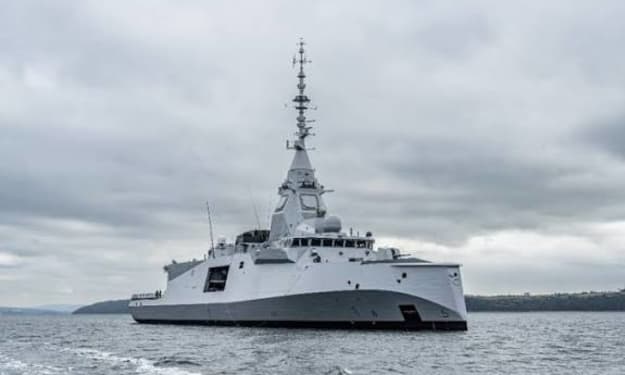
The French Navy has officially commenced the long-duration deployment of its first FDI (Frégate de Défense et d’Intervention) frigate, marking a significant milestone in France’s maritime defense capabilities. Designed for multi-mission roles, the FDI class frigates are intended to replace older vessels in the French fleet while delivering advanced technological capabilities for both national defense and international operations. This deployment signals France’s commitment to maintaining a robust naval presence in strategic waters amid rising global maritime tensions. The FDI frigate, equipped with state-of-the-art sensors, stealth features, and advanced weapons systems, is expected to perform a variety of missions during its deployment. These include maritime surveillance, anti-submarine warfare, protection of sea lanes, and supporting international coalition operations. The ship’s design incorporates modern combat systems, including the Sea Fire 500 radar and Aster missile systems, allowing it to track and neutralize aerial, surface, and underwater threats. French naval officials emphasize that the FDI frigate is capable of operating autonomously or as part of a larger naval task force, enhancing operational flexibility. The deployment represents not only a technological achievement but also a strategic statement. France has been actively expanding its naval influence in key regions, including the Indo-Pacific, the Mediterranean, and the Atlantic. With global security challenges evolving rapidly, particularly in contested maritime zones, the FDI frigate’s extended deployment demonstrates France’s readiness to project power and safeguard maritime interests. Officials have highlighted that this deployment will involve extensive exercises, joint maneuvers with allied navies, and operational patrols in areas critical to international trade and security. The FDI program itself has been a centerpiece of French naval modernization efforts. These frigates are smaller and more cost-effective than larger destroyers, but they do not compromise on firepower or technological sophistication. The construction of the first FDI frigate involved advanced shipbuilding techniques to improve stealth capabilities, reduce maintenance costs, and ensure long-term sustainability. By integrating cutting-edge electronics, propulsion systems, and automated operations, these frigates exemplify a new generation of naval engineering that blends efficiency with combat readiness. French defense experts note that the FDI frigate’s deployment is part of a broader plan to reinforce Europe’s maritime security posture. As geopolitical tensions rise in areas such as the South China Sea, the Eastern Mediterranean, and the North Atlantic, France aims to maintain a credible naval presence that can respond swiftly to emerging threats. The FDI frigate’s ability to integrate with multinational naval forces, including NATO operations, enhances its role as a versatile instrument of both national defense and international cooperation. During the upcoming deployment, the frigate will participate in exercises designed to test its combat systems under realistic conditions. These exercises are expected to include anti-air, anti-ship, and anti-submarine operations, providing valuable operational data and refining crew readiness. Furthermore, the deployment will involve diplomatic visits to friendly ports, reinforcing France’s role as a strategic partner in global maritime affairs. This dual focus on operational capability and international cooperation underscores the strategic importance of the FDI program. The successful launch and deployment of the FDI frigate also have broader implications for France’s domestic defense industry. The program supports high-tech manufacturing jobs, fosters innovation in shipbuilding, and strengthens the country’s strategic independence. The integration of advanced weaponry and electronics demonstrates France’s capability to produce cutting-edge military technology domestically, reducing reliance on foreign suppliers. In conclusion, the long-duration deployment of the first French FDI frigate marks a major milestone in both naval modernization and strategic maritime presence. Its advanced capabilities, versatility, and readiness to operate in diverse scenarios highlight France’s commitment to safeguarding its interests and contributing to international maritime security. As the FDI frigate begins its mission, it not only showcases France’s technological achievements but also signals its enduring commitment to maintaining a credible and agile naval force on the global stage.
By Fiaz Ahmed Brohi2 days ago in The Swamp



Comments
There are no comments for this story
Be the first to respond and start the conversation.