
Global Consumer Electronics Market Size & Forecast 2025–2033: Smart Devices, Connectivity, and the Next Digital Wave
Rising demand for intelligent devices, rapid innovation, and growing consumer spending reshape the global electronics landscape

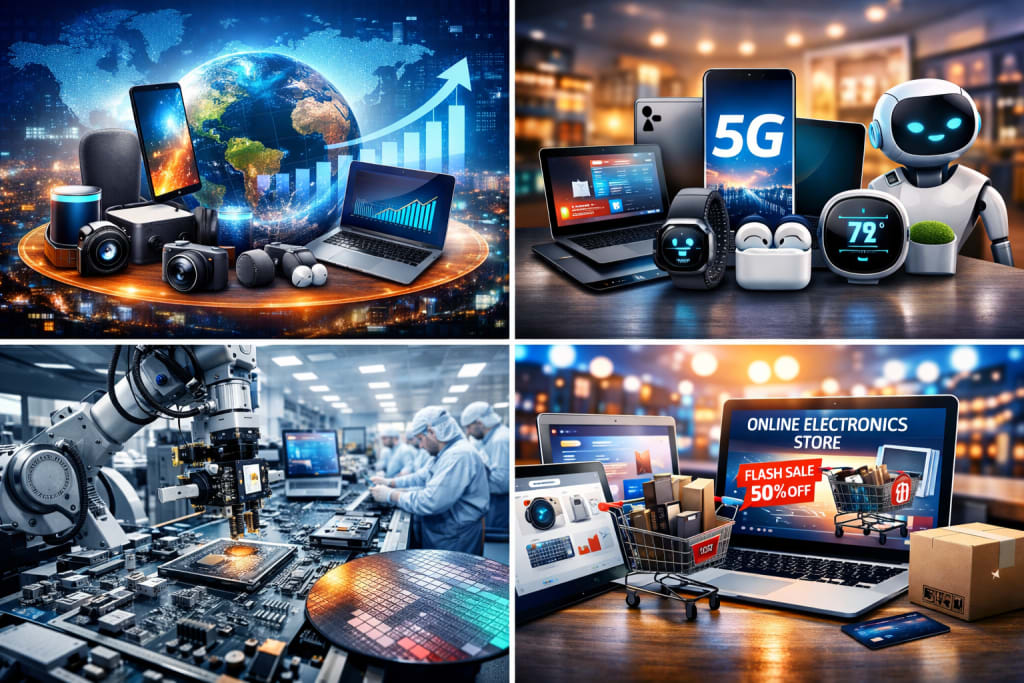
Global Consumer Electronics Market Overview
The Global Consumer Electronics Market is entering a new era of accelerated digital transformation. According to Renub Research, the market is expected to grow from US$ 1,196.45 billion in 2024 to US$ 2,099.93 billion by 2033, expanding at a CAGR of 6.45% during 2025–2033. This growth reflects the world’s increasing dependence on smart devices, advanced connectivity, and integrated digital lifestyles.
Consumer electronics—once limited to televisions and radios—now represent a vast ecosystem of smartphones, laptops, wearables, smart TVs, gaming consoles, digital cameras, and smart home appliances. These products are no longer luxuries; they have become essential tools for communication, entertainment, productivity, health tracking, and home management.
With rising disposable incomes, expanding internet penetration, and ongoing innovations in AI, 5G, and IoT, the industry continues to redefine how people live, work, and interact with technology.
What Are Consumer Electronics?
Consumer electronics are electronic devices designed for everyday personal and household use. They include:
Smartphones, tablets, and laptops
Televisions and home entertainment systems
Wearables such as smartwatches and fitness trackers
Audio equipment and gaming devices
Smart home appliances like security systems, thermostats, and lighting
The rapid digitalization of daily life has made these devices indispensable. Smart TVs are changing how people consume content, wearable devices promote healthier lifestyles, and home automation systems provide comfort and energy efficiency. Across both developed and emerging markets, consumer electronics have become the backbone of modern living.
Global Consumer Electronics Market Outlook
Urbanization, increasing discretionary income, and digital-first lifestyles are fueling global demand. Emerging economies in Asia Pacific, Latin America, and the Middle East are witnessing massive adoption of affordable smart devices, while mature markets like North America and Europe continue to upgrade to premium, high-performance electronics.
E-commerce platforms have also played a transformative role, making electronics accessible to a global audience. Consumers now compare features, read reviews, and purchase devices with a few clicks—driving competition and accelerating innovation.
As digital lifestyles evolve, the consumer electronics sector remains one of the most dynamic and essential segments of the global economy.
Key Growth Drivers in the Consumer Electronics Market
1. Rising Demand for Connectivity and Smart Devices
The exponential growth of internet usage and the expansion of the Internet of Things (IoT) have created strong demand for connected devices. Smartphones, smart home systems, voice assistants, and wearables are becoming standard household items.
The rollout of 5G networks has further strengthened this trend by enabling faster data speeds, lower latency, and seamless device integration. In September 2023, Nokia introduced industrial 5G devices designed for enterprise safety and connectivity, highlighting how advanced connectivity is influencing both consumer and industrial electronics.
2. Technological Innovation and Miniaturization
Continuous advances in semiconductor technology, AI integration, and energy efficiency have enabled manufacturers to produce faster, lighter, and more powerful devices. Features such as high-refresh-rate displays, AI-powered cameras, foldable screens, and extended battery life are reshaping consumer expectations.
In January 2025, Samsung Electronics unveiled Samsung Vision AI at CES 2025, integrating intelligent display technology across its flagship TVs and devices. Innovations like these demonstrate how AI is becoming a core feature of next-generation consumer electronics.
3. Growing Disposable Income in Emerging Markets
Rising household incomes in developing countries are expanding the global customer base for consumer electronics. Middle-class growth in countries such as India, China, Vietnam, and Brazil has led to increased spending on smartphones, laptops, and home appliances.
For example, China’s per capita disposable income reached 39,218 yuan in 2023, while Vietnam’s middle-class households are projected to grow significantly by 2027. These trends are driving strong volume growth, especially in mid-range and premium device categories.
Challenges Facing the Consumer Electronics Industry
Supply Chain Disruptions and Component Shortages
The industry remains vulnerable to semiconductor shortages, geopolitical tensions, and logistics bottlenecks. Disruptions in chip supply can delay product launches, increase manufacturing costs, and impact profitability. These risks have forced manufacturers to diversify suppliers and invest in regional manufacturing hubs.
Rapid Obsolescence and Rising E-Waste
Fast product cycles and frequent model upgrades have contributed to growing electronic waste (e-waste) concerns. Consumers are increasingly cautious about purchasing devices that may become outdated quickly. At the same time, governments and consumers are pressuring brands to develop sustainable manufacturing and recycling practices, pushing the industry toward greener innovation.
Market Segment Analysis
Smartphones Market
Smartphones remain the largest and most influential segment of consumer electronics. They serve as communication tools, entertainment centers, productivity devices, and digital wallets. The adoption of 5G, AI-powered photography, and foldable designs continues to drive replacement cycles. Affordable smartphones have also expanded digital access in emerging markets, bringing millions of new users online.
Laptops and Notebooks Market
The rise of remote work, hybrid learning, and online education has boosted demand for laptops and notebooks. Ultrabooks, gaming laptops, and 2-in-1 devices dominate the market, offering portability and high performance. Both premium and budget models are seeing strong demand from professionals, students, and businesses alike.
Digital Cameras Market
Despite competition from smartphones, digital cameras remain essential for professional photography, videography, and content creation. Mirrorless and DSLR cameras continue to attract enthusiasts who value high resolution, optical zoom, and interchangeable lenses.
Hard Disk Drives (HDDs) Market
While SSDs dominate high-speed storage, HDDs remain vital for large-capacity, cost-effective storage. They are widely used in personal computers, home servers, and surveillance systems, especially where large volumes of data must be stored affordably.
Online Sales Channel Market
E-commerce has transformed electronics retail. Online platforms offer wider selection, competitive pricing, and home delivery, making them increasingly popular. Flash sales, digital marketing, and influencer reviews have also reshaped buying behavior, pushing brands to strengthen their digital presence.
Regional Market Insights
United States Consumer Electronics Market
The U.S. market is mature yet highly innovative, with strong demand for premium electronics and frequent device upgrades. A mix of offline retailers and e-commerce giants creates a competitive retail environment, while consumers actively seek the latest technology.
Germany Consumer Electronics Market
Germany is known for its preference for high-quality, durable, and energy-efficient products. Sustainability and smart home integration are key trends, as consumers increasingly prioritize eco-friendly technologies.
India Consumer Electronics Market
India is among the fastest-growing consumer electronics markets globally. Affordable data plans, smartphone penetration, urbanization, and rising incomes are driving sales of smartphones, laptops, and smart TVs across both online and offline channels.
Brazil Consumer Electronics Market
Brazil’s market is expanding due to increased access to financing and affordable electronics. Demand for smartphones, smart TVs, and audio equipment remains strong, although import duties and economic fluctuations continue to pose challenges.
Saudi Arabia Consumer Electronics Market
Saudi Arabia’s young population and rising incomes are driving demand for premium smartphones, gaming systems, and smart home devices. The government’s Vision 2030 initiative is accelerating digital adoption and modern retail development, positioning the country as a high-growth electronics market.
Market Segmentation
By Product
Laptops/Notebooks
Smartphones
Desktops
Tablets
Digital Cameras
Hard Disk Drives
Televisions
E-readers
By Sales Channel
Offline
Online
By Region
North America: United States, Canada
Europe: Germany, France, Italy, UK, Spain, Belgium, Netherlands, Turkey
Asia Pacific: China, Japan, India, South Korea, ASEAN, Australia, New Zealand
Latin America: Brazil, Mexico, Argentina
Middle East & Africa: Saudi Arabia, UAE, South Africa
Competitive Landscape
The global consumer electronics market is highly competitive, with companies focusing on innovation, sustainability, and ecosystem integration. Major players include:
Apple Inc.
Samsung Electronics
Lenovo
LG Electronics
Dell Technologies
HP (Hewlett-Packard)
Canon Inc.
Acer Inc.
ASUS
Huawei Technologies
Google LLC
HTC Corporation
Each company is analyzed based on five viewpoints: Overview, Key People, Recent Developments, SWOT Analysis, and Revenue Analysis—ensuring a comprehensive view of competitive dynamics.
Final Thoughts
The Global Consumer Electronics Market is set for robust expansion through 2033, driven by smart technology adoption, rising digital lifestyles, and continuous innovation. As devices become more intelligent, connected, and sustainable, consumer expectations will continue to rise.
While challenges such as supply chain volatility and e-waste persist, manufacturers that invest in AI, green technology, and user-centric innovation will lead the next wave of growth. With emerging markets contributing significant volume and developed regions pushing premium upgrades, the consumer electronics industry remains one of the most dynamic and influential sectors in the global economy.
About the Creator
Sakshi Sharma
Content Writer with 7+ years of experience crafting SEO-driven blogs, web copy & research reports. Skilled in creating engaging, audience-focused content across diverse industries.
Keep reading
More stories from Sakshi Sharma and writers in The Swamp and other communities.
Global Commercial Drone Market Size and Forecast 2025–2033
Introduction: The Rise of Commercial Drones in the Global Economy The Global Commercial Drone Market is entering a phase of rapid transformation, driven by technological innovation, expanding industrial use cases, and supportive regulatory frameworks. According to Renub Research, the market is expected to grow from US$ 29.76 billion in 2024 to US$ 68.58 billion by 2033, registering a Compound Annual Growth Rate (CAGR) of 9.72% from 2025 to 2033.
By Sakshi Sharmaa day ago in The Swamp
What we know about Alex Pretti, the ICU nurse shot and killed in Minneapolis
For another individual to be gunned down in the street by ICE agents is appalling. Among the alphabet soup of government organizations that need to be abolished, ICE ranks among the highest. There is no reason for Alex Pretti to be dead right now. As a law-abiding citizen of the United States of America, he was exterminated because of his own individualism. The fact he had a right to carry a firearm shows that the Second Amendment only applies to only a few.
By Skyler Saunders7 days ago in The Swamp




Comments
There are no comments for this story
Be the first to respond and start the conversation.