
Global Affairs & Political Developments
A 2025 Mid-Year Review
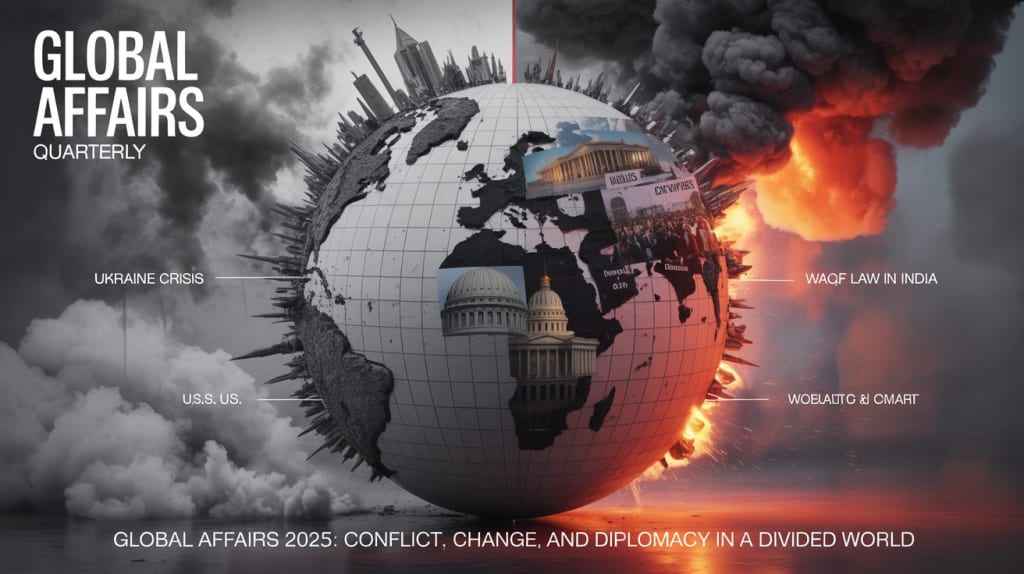
As we approach the midpoint of 2025, the global political landscape is marked by significant developments. From the ongoing conflict in Ukraine to legislative changes in India, these events are shaping international relations and domestic policies.
🇺🇦 The Ukraine-Russia Conflict: A Continuing Struggle
The war between Ukraine and Russia, now in its third year, remains a focal point of global concern. Recent developments have highlighted the complexities of achieving a lasting peace.

Peace Talks and Ceasefire Efforts
In May 2025, direct peace talks between Ukraine and Russia resumed in Istanbul after a prolonged hiatus. While the discussions were brief and fraught with disagreements, a significant outcome was the agreement to exchange 1,000 prisoners from each side. Ukraine advocated for a 30-day unconditional ceasefire, whereas Russia emphasised addressing the "root causes" of the conflict, including demands for Ukrainian troop withdrawals from annexed regions. Despite the challenges, both parties agreed to continue negotiations, with Turkey and the Vatican offering to mediate future discussions.
International Pressure and Sanctions
European leaders, including those from the UK, France, Germany, and Poland, convened in Kyiv alongside Ukrainian President Volodymyr Zelenskyy to demonstrate solidarity. They issued a stern ultimatum to Russian President Vladimir Putin: agree to an unconditional 30-day ceasefire or face severe sanctions and increased Western military support for Ukraine. While Ukraine accepted the proposal, Russia insisted on halting Western arms transfers before agreeing, citing the complexity of the war's conditions. The European Commission backed the proposal, warning of additional "biting" sanctions if breached.
U.S. Involvement and Intelligence Sharing
Earlier in the year, the U.S. temporarily paused intelligence sharing with Ukraine, a move interpreted as pressure on Kyiv to engage in peace negotiations. This suspension was short-lived; following talks in Saudi Arabia, the U.S. resumed military aid and intelligence sharing as Ukraine signalled openness to a 30-day ceasefire, pending Russia's agreement.

🇮🇳 India's Waqf (Amendment) Act, 2025: A Controversial Reform
In April 2025, the Indian Parliament passed the Waqf (Amendment) Act, introducing significant changes to the management of Waqf properties—assets dedicated to religious or charitable purposes in Islam. The legislation has sparked widespread debate and concern among minority communities
Key Provisions of the Amendment
Inclusion of Non-Muslims: The Act allows non-Muslims to be members of Central and State Waqf Boards and tribunals, aiming to promote transparency and administrative expertise.
Documentation Requirements: Waqf boards are now required to provide valid documents to claim a property as Waqf. In disputes, especially over land deemed government-owned, the final decision rests with the government.
Opposition and Legal Challenges
The Act has faced strong opposition from Muslim scholars, community leaders, and opposition parties. Critics argue that it undermines minority rights and facilitates the transfer of Waqf properties to corporate interests under the guise of reform. Concerns have been raised about the potential erosion of Muslim identity and the autonomy of religious institutions.
The Times of India
Legal challenges have been mounted against the Act, with the Supreme Court of India scheduled to hear pleas on May 20, 2025, focusing on interim relief and the constitutional validity of the amendments.

🇮🇱 Israel-Gaza Ceasefire Breakdown
Conflict Rekindled
• After a fragile ceasefire held through late 2024, renewed clashes erupted in April 2025 between Israel and Hamas, following an Israeli airstrike in Rafah that killed several Palestinian civilians.
• Hamas responded with rocket attacks on southern Israel, reigniting hostilities.
International Response
• The United Nations called for an immediate return to negotiations.
• Egypt and Qatar resumed mediation efforts, while Western nations urged restraint.
• Protests erupted globally, calling for a permanent solution to the conflict.
Humanitarian Crisis
The blockade of Gaza has intensified, worsening the humanitarian situation, with the UN reporting that over 70% of Gaza’s population is facing food insecurity.
Conclusion
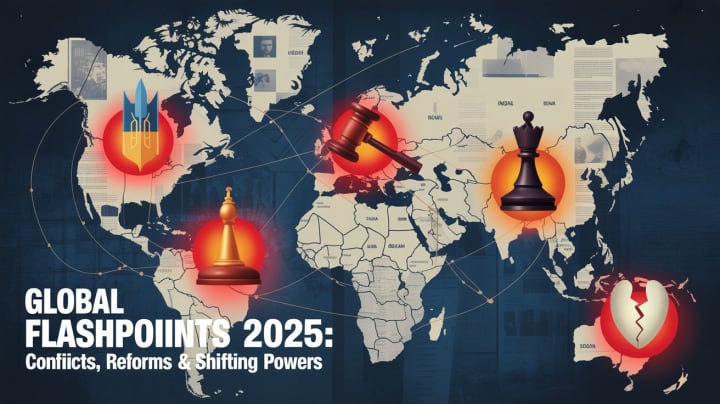
The first half of 2025 has been marked by significant geopolitical events. The ongoing Ukraine-Russia conflict continues to test international diplomacy and the resilience of global alliances. Simultaneously, domestic policy changes, such as India's Waqf (Amendment) Act, highlight the delicate balance between governance reforms and the protection of minority rights. As the year progresses, these developments will undoubtedly influence the global political landscape and the pursuit of peace and equity.
About the Creator
Europe Direct Drive Wind Turbine Market Size and Forecast 2025–2033
Market Snapshot The Europe Direct Drive Wind Turbine Market is anticipated to reach US$ 8.94 billion in 2033 from US$ 4.11 billion in 2024, growing at a CAGR of 9.02% during 2025–2033. This expansion is driven by rising investments in renewable energy, supportive government policies, and growing demand for efficient, low-maintenance turbine systems. As Europe accelerates toward carbon-neutral targets, direct drive technology is emerging as a cornerstone of its sustainable energy future.
By Marthan Sir6 days ago in The Swamp
Royal and French Navies Train Shipborne Drones in the Mediterranean: A Glimpse into the Future of Naval Warfare
The Mediterranean Sea has once again become a proving ground for modern naval innovation as the Royal Navy and the French Navy conduct joint exercises involving shipborne drones. These drills signal a decisive shift in how maritime powers are preparing for future conflicts—where uncrewed systems, artificial intelligence, and networked warfare will play a central role. As geopolitical tensions rise and naval operations become more complex, both nations are investing heavily in remotely piloted and autonomous systems to enhance surveillance, strike capability, and fleet protection. The recent Mediterranean exercise highlights how traditional naval forces are evolving to meet 21st-century threats. Why Shipborne Drones Matter Shipborne drones—whether launched from destroyers, frigates, or aircraft carriers—offer navies a powerful advantage. Unlike crewed aircraft, drones can operate for longer periods, take greater risks, and be deployed rapidly without endangering human life. In the joint drills, British and French warships tested uncrewed aerial vehicles (UAVs) and uncrewed surface systems designed for tasks such as: Maritime surveillance Intelligence, surveillance, and reconnaissance (ISR) Target acquisition Force protection Electronic warfare support By training together, both navies aim to ensure that their drone systems are interoperable, capable of sharing data seamlessly during real-world operations. A Strategic Partnership at Sea The Royal Navy and the French Navy already share one of Europe’s closest defense partnerships. From carrier strike cooperation to nuclear deterrence coordination, the two forces have a long history of working side by side. This latest drone-focused exercise strengthens that partnership by addressing a critical question: how can allied navies integrate uncrewed systems into joint operations without disrupting command structures or safety protocols? During the drills, operators practiced launching and recovering drones from moving ships—one of the most technically challenging aspects of naval drone operations. The exercises also tested how drone data feeds into ship combat management systems, allowing commanders to make faster, better-informed decisions. The Mediterranean: A Testing Ground The Mediterranean is an ideal environment for such trials. It is one of the world’s busiest maritime regions, featuring: Heavy commercial shipping traffic NATO and non-NATO naval presence Proximity to conflict zones in the Middle East and North Africa Operating drones in this complex environment allows navies to test not just technology, but rules of engagement, deconfliction procedures, and cyber resilience. Officials involved in the drills emphasized that the exercises were not aimed at any single adversary. Instead, they are part of a broader effort to ensure maritime security, freedom of navigation, and deterrence in an increasingly contested domain. From Manned Fleets to Hybrid Forces Both the UK and France are transitioning toward hybrid naval fleets, where crewed ships operate alongside autonomous and semi-autonomous systems. This approach allows navies to extend their reach without dramatically increasing fleet size or personnel. For the Royal Navy, shipborne drones are already being tested aboard Type 23 and Type 45 vessels. France, meanwhile, has invested heavily in naval drone programs as part of its future fleet modernization. Training together accelerates learning on both sides, helping commanders understand: What drones can realistically achieve Where human oversight remains essential How to balance autonomy with accountability Implications for NATO and Beyond The success of these exercises has implications far beyond the Mediterranean. As NATO places greater emphasis on multi-domain operations, lessons learned from UK-French cooperation could shape alliance-wide standards for naval drones. Future conflicts are likely to feature swarm tactics, electronic warfare, and contested communications. Practicing now ensures allied navies are not caught unprepared. Moreover, visible cooperation sends a clear message: European naval powers are serious about maintaining technological relevance and collective security in an era of rapid military change. Looking Ahead As shipborne drone technology continues to mature, exercises like this will become more frequent—and more complex. Future drills may involve larger drone swarms, underwater autonomous vehicles, and AI-assisted decision-making tools. For now, the Royal Navy and French Navy have taken an important step forward. By training together in the Mediterranean, they are not just testing machines—they are reshaping the future of naval warfare, one unmanned system at a time
By Fiaz Ahmed Brohi3 days ago in The Swamp
Rachel Reviews: The Spiral Archive by Pieter Hendrik
It's difficult for me to know where to start with a review of this book as it was, for me, an entirely unique experience and one that I'll probably never have again. I don't want that to be interpreted as unenjoyable but it has left me scratching my head a little and ruminating on its content, its themes and its characters.
By Rachel Deeming3 days ago in BookClub



Comments
There are no comments for this story
Be the first to respond and start the conversation.