
Give Punch a Break! Zoo Responds to Heartbreaking Video of Baby Monkey
After viral footage sparks outrage, officials say the story behind the tiny primate’s cries is more complex than it seems.
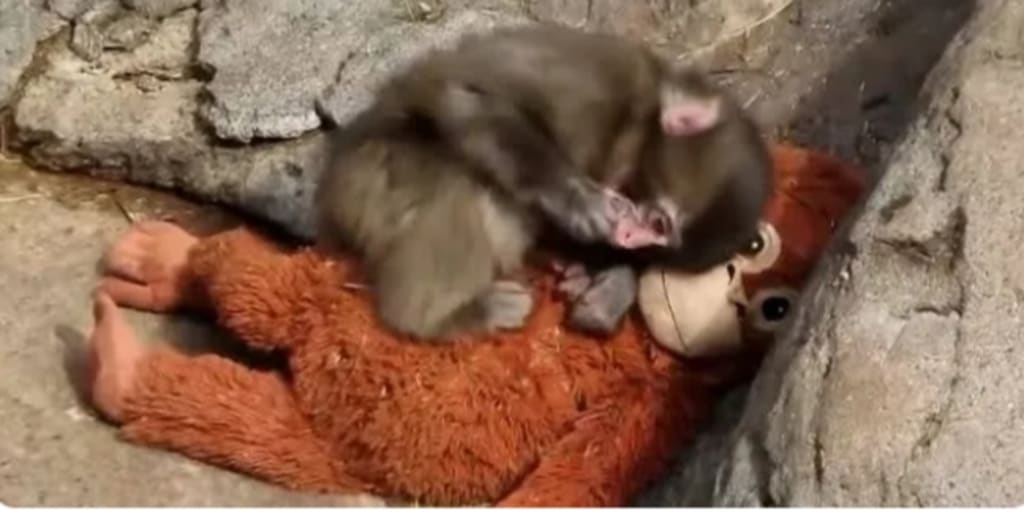
The video lasted less than a minute, but it was enough to ignite a firestorm.
In shaky smartphone footage shared across social media, a baby monkey named Punch appears alone in a zoo enclosure, emitting high-pitched cries while clinging to a corner perch. The clip, captioned with accusations of neglect and cruelty, quickly racked up millions of views. Commenters demanded investigations. Hashtags calling for boycotts began trending. Strangers who had never heard of Punch hours earlier now felt personally invested in his fate.
But according to the zoo at the center of the controversy, the viral narrative tells only part of the story.
Within 48 hours of the video spreading, zoo officials released a statement urging the public to “give Punch a break” — and to give the staff caring for him one as well. They said the baby primate, a capuchin born earlier this year, had been temporarily separated from his mother under veterinary supervision, a common practice in cases involving first-time mothers or feeding complications.
The footage, they argued, captured a moment — not the full context.
How a Viral Clip Shapes a Narrative
Social media has a way of condensing complex situations into emotional snapshots. A crying animal. A barred enclosure. A caption that implies wrongdoing. In the absence of verified information, viewers fill in the blanks with assumptions — often the worst ones.
The original post described Punch as “abandoned” and “left to suffer alone.” Viewers interpreted his vocalizations as distress signals caused by neglect. Within hours, influencers and animal rights pages amplified the clip, each adding their own commentary. By the time the zoo responded, public opinion had largely formed.
Yet animal behavior experts note that infant primates vocalize frequently — not only when distressed, but when seeking attention, food, warmth, or stimulation. Separation for medical monitoring can temporarily increase vocalizations, especially in social species like capuchins.
According to the zoo’s veterinary director, Punch had been placed under observation because his mother was not consistently nursing. “In primate care, early intervention can mean the difference between survival and failure to thrive,” the statement read. “Short-term separation allows us to ensure adequate nutrition and monitor weight gain.”
Behind the Scenes of Primate Care
Raising a baby monkey is far more complicated than many realize.
Capuchins, known for their intelligence and social complexity, require round-the-clock care when maternal bonding falters. Zookeepers may need to bottle-feed infants every few hours, regulate temperature, and provide tactile stimulation to mimic maternal contact. Over time, they work to reintroduce the infant to the mother or integrate it into a surrogate group.
Zoo staff shared photos and short clips showing Punch being bottle-fed, wrapped in soft blankets, and allowed supervised contact with his mother. They explained that moments when he appears alone are brief intervals during cleaning or medical checks.
“Infants are never left unattended for extended periods,” the zoo emphasized. “The video does not show the full routine of care.”
Still, for many viewers, the emotional impact of the original footage was hard to shake. A crying baby — human or animal — triggers a visceral response. It’s an instinct rooted in empathy.
The Public Trust Challenge
The incident highlights a broader challenge facing modern zoos: public trust in the age of viral outrage.
Zoos have evolved significantly over the past few decades, shifting from entertainment-focused attractions to institutions emphasizing conservation, research, and animal welfare. Accreditation bodies enforce strict standards for enclosure size, enrichment, and veterinary oversight. Yet skepticism persists, fueled by historical examples of poor conditions and high-profile exposés.
When a clip like Punch’s surfaces, it taps into that skepticism.
Animal welfare advocates argue that even if the separation was medically justified, transparency must be proactive, not reactive. “Zoos need to communicate clearly and immediately when unusual care procedures are happening,” one advocate commented online. “Otherwise, the public assumes the worst.”
The zoo acknowledged that it could have responded faster. “We underestimated how quickly the video would spread,” a spokesperson said during a local news interview. “In hindsight, we should have shared context sooner.”
The Emotional Reality
While officials and experts debate procedures, the emotional response remains central to the story.
Punch is small. His eyes are wide. His cries are piercing. To many viewers, the setting — an enclosure with metal framing and artificial structures — reinforces discomfort about captivity itself.
The zoo maintains that its habitat meets national standards and includes climbing structures, hiding areas, and enrichment devices designed to encourage natural behaviors. But critics question whether any enclosure can replicate the complexity of a wild rainforest.
That broader philosophical debate — about the ethics of keeping primates in captivity — lies beneath the surface of the current controversy. For some, Punch’s video is not about one infant’s care plan. It is about whether monkeys should be in zoos at all.
What Comes Next for Punch?
As the online storm continues, Punch himself is reportedly gaining weight and responding well to supplemental feeding. The zoo says gradual reintroduction to his mother is underway, with encouraging signs of bonding behavior.
Veterinary staff will continue close monitoring in the coming weeks. If maternal care stabilizes, Punch will transition back to full-time contact. If not, keepers are prepared to implement a structured hand-rearing program, which includes socialization with other monkeys to prevent long-term behavioral issues.
The zoo has also announced plans to host a live Q&A session on social media, allowing the public to ask questions about primate care protocols. Transparency, officials hope, can counteract misinformation.
A Teachable Moment
The story of Punch underscores the power — and danger — of viral content.
A brief clip can mobilize global attention within hours. That attention can pressure institutions to improve standards, but it can also distort complex situations. Viewers see what the camera frames. They rarely see the procedures, documentation, and professional judgment occurring offscreen.
This does not mean skepticism is misplaced. Public scrutiny has led to meaningful reforms in animal care worldwide. But it does suggest the need for balance — for asking questions before drawing conclusions.
For now, Punch remains the unlikely center of an international debate. To his caretakers, he is not a symbol but a patient. To millions online, he is a face that stirred something deep and protective.
Perhaps both can be true.
As the zoo works to restore confidence, one message echoes from its statement: “Give Punch a break.” In other words, allow room for context, for nuance, and for the possibility that a moment of crying does not tell the whole story.
In an era when outrage travels faster than explanation, that may be the hardest request of all.
About the Creator
Why Black History Matters in America?
The United States of America is celebrating their 250th anniversary in 2026. I'm proud to be an American and as someone who was born here, I wouldn't imagine myself living anywhere else. This is a country where opportunities are possible. Where anyone can be successful in anything they desire to do. Equality, community, and togetherness are the backbones of what America is and should be about. However, we have an administration who wants to erase and disregard those who have made positive, meaningful impacts in our country, specifically Black figures, such as Martin Luther King, Jr., Rosa Parks, and Maya Angelou. President Trump and his administration have been constantly complaining and fighting against what they call the "Woke agenda". They use this excuse as a distraction from other issues they refuse to address, such as the high cost of living, climate change, and inflation. That equality is dividing America, when in reality, it's bringing us together. Being woke is not tied to a specific political party. No matter where you stand on the political spectrum, you can still care about other people and their plights. Compassion and empathy for others isn't tied to a political party, either. We were taught as children to treat others the way we want to be treated and not judge others because they're different from us. Caring about others isn't a personal attack on your beliefs. It doesn't make you any less of a person. People who are easily offended over African American figures, past or present, or anything related to it, are grasping at straws. Current and future generations need to know who people like Harriet Tubman and Shirley Chisholm were, especially in the classroom. Black History is part of American History. It should be recognized, not hidden or forgotten. Besides, you can't shield children from everything, just because your feelings are easily hurt.
By Mark Wesley Pritchard 20 days ago in The Swamp
Woke Europe Not Facing Civilisational Erasure,’ Says EU’s Kallas After Rubio’s Munich Speech – As It Happened
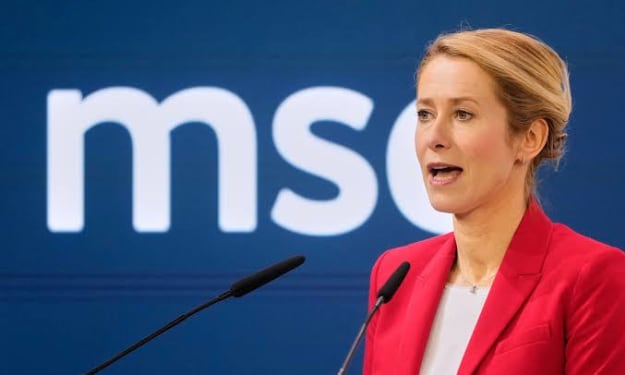
In the wake of a provocative speech by U.S. Senator Marco Rubio at the Munich Security Conference, Estonia’s Prime Minister Kaja Kallas moved swiftly to reassure Europeans that fears of civilisational collapse are overblown, emphasizing resilience and cohesion within the European Union. Rubio’s address, which highlighted demographic trends, cultural shifts, and the perceived weakening of traditional European values, sparked intense debate among policymakers, analysts, and media outlets across the continent. Rubio’s Munich Speech: Key Points Rubio’s address at the conference outlined a scenario in which Europe, he argued, risks losing its cultural and strategic identity. He warned of declining birth rates, immigration pressures, and what he termed the rise of “woke policies” as threats to Europe’s traditional societal structures. His speech urged EU nations to adopt more assertive defense policies, reinforce cultural identity, and strengthen ties with the United States to counter perceived demographic and ideological shifts. While many attendees lauded Rubio’s remarks for drawing attention to strategic challenges, critics described the speech as alarmist and politically charged. Social media erupted with contrasting opinions, with hashtags debating Europe’s future trending for several hours. Kallas’ Response: Calm Amid Alarm Responding promptly to Rubio’s remarks, Prime Minister Kallas downplayed the notion that Europe is facing civilisational erasure. Speaking at a follow-up press briefing, she stressed that the EU is navigating global challenges with “resilience, unity, and adaptability.” “Europe faces challenges, but it is not on the brink of collapse,” Kallas said. “Our institutions, economies, and societies have endured far more difficult periods. We will continue to defend our values, innovate, and grow together.” She also highlighted the EU’s commitment to sustainability, education, and digital transformation, framing these priorities as tools that strengthen rather than weaken European identity. “Progressive policies do not erase heritage; they prepare us for a more inclusive and resilient future,” Kallas added. Reactions Across Europe The exchange between Rubio and Kallas sparked immediate discussion in Brussels, Berlin, and Paris. Analysts noted that Rubio’s framing tapped into anxieties among certain conservative circles regarding demographic changes and social liberalization. However, Kallas’ response was seen as a balancing act, seeking to reassure the public without dismissing legitimate concerns about defense and strategic autonomy. Several political commentators described the exchange as indicative of the broader transatlantic debate over identity, values, and security in an era of rapid global change. Some highlighted that Kallas’ measured tone reinforced the EU’s ability to respond to external critiques while maintaining internal cohesion. Strategic and Geopolitical Implications Beyond rhetoric, Rubio’s speech reflects deeper transatlantic discussions about Europe’s role in global security and its reliance on U.S. military and economic support. While the EU has increased defense spending and coordinated strategic initiatives, some U.S. policymakers continue to press European nations to adopt more assertive postures in NATO and in countering global adversaries. Kallas’ assurance that Europe is resilient signals a desire to maintain a steady course. By balancing reassurance with recognition of challenges, she reinforced the EU’s commitment to collaboration both within the continent and with key partners, including the United States. Looking Ahead As the Munich Security Conference concluded, debates over Europe’s cultural and strategic trajectory remained central. While Rubio’s warnings resonate with some policymakers and analysts, Kallas’ response underscores that Europe’s approach is multifaceted—addressing demographic trends, social policies, and security imperatives without succumbing to alarmism. Observers note that the exchange may shape upcoming policy discussions within the EU, particularly in areas such as defense funding, education initiatives, and migration management. For many Europeans, the conversation reflects not a crisis, but a critical moment to reaffirm values, strengthen institutions, and engage with global challenges thoughtfully. In the end, the dialogue between Rubio and Kallas illustrates the balance between caution and confidence, between critique and reassurance. Europe, according to Kallas, remains far from civilisational erasure—it is a continent capable of adaptation, unity, and enduring influence in a complex world.
By Fiaz Ahmed 6 days ago in The Swamp
Where there's Art there's Heart
Here's a stupid thing: I adore art, but I start to panic whenever I step into a gallery. In the one place I should be at my contented best - surrounded by walls teeming with creative expression - I fall apart. What ought to be an enriching experience, tacitly designed to facilitate the exploration of human empathy and perspective, is for me an overwhelming purgatory of anxiety that compresses me to the point I cannot breathe. At the same time, I experience a sense of extraction, as though my head is being prized open to create a hole so big my sanity could evaporate. Somewhere between these two opposing forces of vice and vortex, I feel myself dissolving in a stream of panic that makes me want to cry; and I feel so daft feeling this way, that all I want to do is run for the hills.
By Caroline Jane4 days ago in Humans



Comments
There are no comments for this story
Be the first to respond and start the conversation.