
Trump Board of Peace Painted a Rosy Picture of Gaza’s Future — On the Ground, There Is Only Despair
Grand promises of prosperity and stability clash with the daily reality of blockade, разрушed infrastructure, and a generation struggling to survive in the Gaza Strip
When Donald Trump unveiled what he described as a bold new vision for Middle East peace, the presentation was polished, optimistic, and confident. Economic investment would flow. Infrastructure would rise from rubble. Jobs would replace militancy. The long-suffering enclave of the Gaza Strip, he suggested, could become a thriving hub of commerce and stability if only the right political arrangements were embraced.
On paper and on stage, it was a story of transformation.
On the ground, it has been a story of survival.
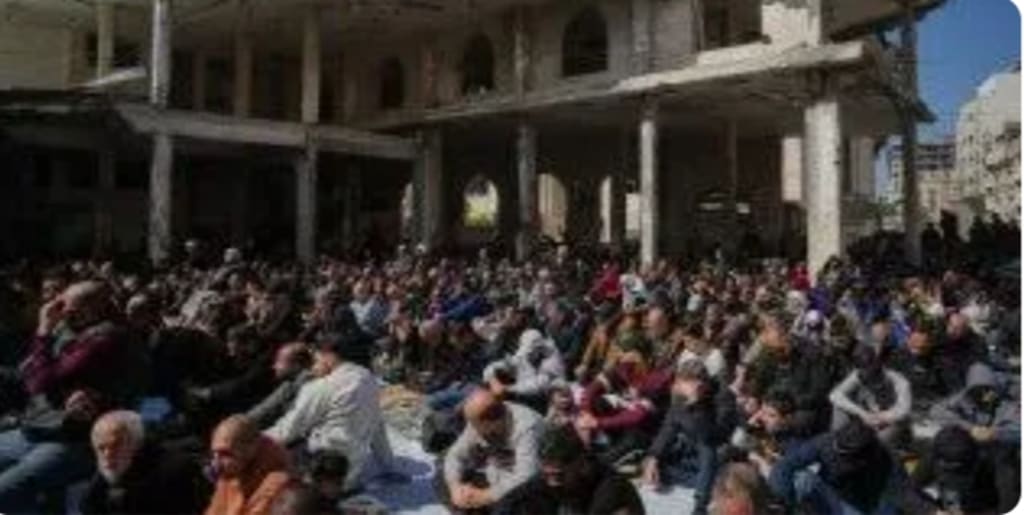
The gap between sweeping diplomatic promises and lived reality in Gaza has rarely felt wider. While speeches invoked prosperity and security, residents continued to navigate shattered neighborhoods, unreliable electricity, contaminated water, and a fragile healthcare system stretched far beyond its limits. For many families, the future is not a question of regional economic corridors or foreign investment portfolios, but whether food will last the week and whether their children can sleep through the night without fear.
The peace proposal itself leaned heavily on economic revival as the key to political calm. Billions of dollars in development aid were envisioned, much of it from Gulf states and international partners. Industrial zones, modernized border crossings, and expanded trade were all part of a blueprint meant to shift the narrative from conflict to opportunity. In this framing, prosperity would blunt extremism. Opportunity would cultivate moderation. Stability would follow growth.
Yet that theory rests on conditions that have remained elusive.
Years of blockade, repeated cycles of armed confrontation, and deep political fragmentation between Palestinian factions have left Gaza’s economy skeletal. Unemployment has hovered at staggering levels, especially among youth. Many graduates with degrees in engineering, medicine, or computer science find no pathway to meaningful work. The private sector is constrained not only by physical damage from hostilities but by severe restrictions on movement of goods and people. Even when funding pledges materialize, implementation is slow, tangled in bureaucracy, or disrupted by renewed violence.
Infrastructure tells its own story. Large portions of housing stock have been damaged or destroyed over successive conflicts. Reconstruction efforts often stall due to shortages of materials or financing gaps. Power cuts are a routine feature of daily life; electricity may be available for only part of the day. Water infrastructure has deteriorated to the point that much of the available supply is unsafe without treatment. Hospitals operate with limited equipment and periodic shortages of essential medicines.
Against this backdrop, the promise of a flourishing coastal economy can feel almost surreal.
Critics of the peace plan argued from the outset that it placed economic incentives ahead of core political grievances. Questions of sovereignty, borders, refugees, and the status of Jerusalem were either deferred or addressed in ways many Palestinians rejected outright. Without a credible political horizon, they contended, economic packages would be viewed not as liberation but as an attempt to buy acquiescence. Investment cannot substitute for self-determination, they warned.
Supporters countered that decades of negotiations centered on final-status issues had yielded little improvement in daily life. If a massive infusion of capital could raise living standards, perhaps it would create the breathing room necessary for more durable political compromises. Peace, in this argument, might be built from the ground up rather than imposed from diplomatic summits.
But economic blueprints are fragile in environments where ceasefires are temporary and trust is thin. Each escalation not only destroys physical infrastructure but erodes investor confidence. Businesses cannot plan amid uncertainty. Families cannot rebuild when they suspect that the next round of fighting may undo everything once more. The psychological toll compounds the material one: trauma, anxiety, and a pervasive sense of confinement shape the social fabric.
For young people in Gaza, the contrast between rhetoric and reality is especially stark. Many have grown up knowing little beyond blockade and intermittent conflict. They hear talk of regional integration and technological innovation, yet face travel restrictions that prevent them from studying or working abroad. Internet connectivity offers a window to the world, but mobility remains tightly controlled. The result is a generation acutely aware of global possibilities yet largely unable to access them.
Humanitarian agencies continue to fill gaps where governance and markets falter. Food assistance programs support a significant share of households. Emergency fuel deliveries keep hospitals running. International donors finance psychosocial services and temporary employment schemes. These efforts are essential, but they are not a substitute for systemic change. Aid can alleviate suffering; it cannot by itself produce sovereignty, freedom of movement, or lasting security.
Meanwhile, regional politics have shifted in ways that complicate the picture further. Normalization agreements between Israel and several Arab states have altered diplomatic alignments, reducing the centrality of the Palestinian issue in broader Middle Eastern strategy. For some in Gaza, this has deepened feelings of isolation. If the wider region is moving on, what leverage remains to improve conditions inside the enclave?
The original peace proposal promised a break from what its architects called “tired paradigms.” It sought to reimagine the conflict as primarily economic, solvable through capital flows and infrastructure. Yet Gaza’s reality underscores a stubborn truth: economics and politics are inseparable in a territory where borders, airspace, and maritime access are tightly controlled and where governance itself is contested.
Despair in Gaza is not a single emotion but an accumulation of constraints. It is the graduate who cannot find work. The parent who cannot secure specialized medical treatment outside the enclave. The shop owner who rebuilds after damage only to watch customers dwindle. The child who associates drones with sleepless nights. It is also the quieter erosion of hope that comes from hearing grand promises repeatedly outpace tangible change.
None of this negates the possibility that economic development could play a transformative role in Gaza’s future. Ports can be built. Solar fields can generate reliable power. Technology hubs can connect local talent to global markets. But such projects require not only funding, but durable political arrangements that guarantee access, movement, and security for all sides.
A rosy picture can inspire, but it cannot substitute for the painstaking work of reconciling competing national aspirations and addressing legitimate grievances. Without that foundation, even the most ambitious economic vision risks becoming another chapter in a long history of plans that shone brightly in conference halls while daily life on the ground remained dim.
For the people of Gaza, peace will not be measured in press conferences or glossy investment brochures. It will be measured in uninterrupted electricity, clean water, safe streets, open borders, and the simple dignity of planning a future that does not hinge on the next ceasefire. Until those markers shift in lasting ways, the distance between promise and reality will continue to define the territory’s story.
About the Creator
A Gathering of Evil Bosses
“I’m the queen of chin jutting while I smooth my hair, attacking, insulting, and deflecting to protect my appointer.” “Oh, please, Blondi, my hair is curled, highlighted, and longer than yours. I feature television commercials telling immigrants that we will give them a free plane ride home, and if they voluntarily turn themselves in, they will be allowed to legally apply for re-entry. It runs everywhere, and I look good in it! You can’t compete because of your blond hair. Mine is nicer, and my lips are prettier than yours.”
By Andrea Corwin 3 days ago in The Swamp
Arif Habib‑Led Group to Gain Full Control of PIA
In a major shift for Pakistan’s aviation sector, a consortium led by the Arif Habib‑affiliated Arif Habib Group is poised to take complete ownership of Pakistan International Airlines (PIA), one of the country’s most iconic but long‑troubled institutions. After initially purchasing a 75 per cent stake in the national carrier last year, the group now plans to acquire the remaining 25 per cent government share, clearing the way for full control and ushering in what supporters hope will be a new era of modernization and profitability. The move represents the culmination of a privatisation process that began in earnest in 2025, when the Arif Habib‑led consortium successfully bid for the majority stake in PIA with an offer of approximately Rs 135 billion. At the time, the government hailed the privatisation as a historic step in shedding the airline’s decades‑long financial woes. The remaining shares — still owned by the federal government — are now being offered to the consortium for around Rs 45 billion under terms that give the investor group roughly 90 days to complete the purchase. Shahid Ali Habib, CEO of Arif Habib Ltd, said the acquisition of the remaining 25 per cent stake is expected to be finalized by late April or early May, enabling the group to operate PIA as a fully private entity. This would allow the new owners to remove government‑appointed board members and implement far‑reaching management changes. For years, PIA had struggled with financial losses, operational inefficiencies, and mounting liabilities. It had become a symbol of the challenges facing state‑owned enterprises in Pakistan, with repeated government bailouts failing to stem declines in service quality and competitiveness. Privatization advocates argue that private ownership will bring the professional management, capital investment, and strategic vision necessary to turn the airline around. Critics of the deal, however, have raised questions over the sale structure and the handling of PIA’s significant debts. Some legal challenges were filed around the initial privatisation, with petitioners arguing that the move violated constitutional provisions governing the sale of federal assets. Regardless of these disputes, the government pressed ahead, and the transaction went through late last year. The full acquisition plan comes at a time when the new owners are already laying out ambitious plans for PIA’s future. According to reports, the consortium has discussed expanding the airline’s fleet significantly and improving route networks, including the resumption of key international services such as direct flights to Europe. There are also indications that the group may explore listing the airline publicly through an initial public offering (IPO) within a year of assuming full control, further enhancing market discipline and access to capital. Profit by Pakistan Today Composition of the consortium reflects a broad base of corporate participation. Alongside the Arif Habib Group, partners include heavyweights like Fatima Fertiliser and AKD Group, as well as Fauji Fertiliser Company, which has become one of the largest shareholders in the enterprise. Collectively, these investors bring financial resources and strategic expertise that analysts hope will contribute to a sustained turnaround for the airline. Supporters of privatisation say the move could unlock new efficiencies and allow PIA to compete more effectively with regional rivals, many of which have vastly superior service records and capital structures. A fully private PIA would theoretically be more responsive to market demands, better positioned to modernize its fleet, and freer to partner with other carriers on strategic international routes. There are also broader economic implications. A revitalised PIA could help Pakistan expand its aviation footprint, support tourism growth, and generate jobs both directly and indirectly through improved connectivity. Investors and supporters alike are watching closely, optimistic about the possibilities but aware of the challenges inherent in transforming a legacy airline. Profit by Pakistan Today As the deadline for the final stake purchase approaches, all eyes will be on Islamabad and the new owners to see whether they can navigate regulatory hurdles and deliver on promises of reform. If successful, the full transfer of control to the Arif Habib‑led group will mark one of the most significant privatisation moves in Pakistan’s recent economic history, setting the stage for a potential rebirth of the country’s flag carrier after years of uncertainty.
By Fiaz Ahmed 6 days ago in The Swamp



Comments
There are no comments for this story
Be the first to respond and start the conversation.