
Germany: Drones Disrupt Air Traffic in Hanover
Unmanned aerial vehicles ground flights and spark safety concerns, highlighting regulatory challenges in modern airspace.


Hanover, Germany – Air travel in Hanover faced unexpected disruption as drones reportedly entered restricted airspace near the city’s airport, forcing authorities to halt several flights. The incident underscores the growing challenges posed by unmanned aerial vehicles (UAVs) and their potential impact on civil aviation safety.
According to reports from the Hanover Airport authority, multiple drones were spotted near flight paths, triggering immediate air traffic alerts. For safety reasons, air traffic controllers decided to suspend takeoffs and landings until the situation could be assessed. Passengers experienced delays, and some flights were redirected to nearby airports.
The Federal Aviation Office (Luftfahrt-Bundesamt, LBA) confirmed that drone activity in restricted zones is strictly prohibited. “Unauthorized drones in controlled airspace pose serious safety risks,” an official statement read. “We are working closely with law enforcement to identify the operators and prevent future incidents.”
The disruption lasted for nearly two hours, affecting domestic and international flights. Airport officials emphasized that no accidents occurred, and all passengers were safely managed. However, the incident has ignited debates on the effectiveness of drone regulations and enforcement mechanisms in Germany.
The Rise of Civilian Drones and Airspace Risks
The popularity of drones has surged in recent years, fueled by recreational use, photography, and commercial applications. While drones offer innovative opportunities, they also create unforeseen risks, particularly near airports. Unauthorized UAV flights can interfere with aircraft navigation systems, posing dangers to pilots and passengers alike.
The Hanover disruption is not an isolated case. Across Europe, airports have reported near misses and temporary closures due to drone intrusions. The European Union Aviation Safety Agency (EASA) estimates that thousands of drones are flown in Europe daily, making enforcement a complex challenge.
Experts argue that drone technology has outpaced regulatory frameworks. Many hobbyist pilots are unaware of the strict rules governing flight near airports. In response, aviation authorities are emphasizing public awareness campaigns and stricter penalties for violations.
Authorities Respond
German police deployed specialized units to monitor airspace and identify drone operators. Drones found in restricted zones can be confiscated, and operators may face fines or legal action. In this Hanover incident, authorities confirmed that investigations are ongoing, and potential legal consequences could include hefty fines or imprisonment.
In addition, technology solutions are being explored to counter drone threats. Anti-drone systems, such as radar detection, GPS jamming, and drone capture devices, are being tested at several European airports. However, experts caution that technology alone cannot fully eliminate risks, and public cooperation remains essential.
Implications for Travelers
Passengers traveling through Hanover were significantly affected by the disruption. Airlines advised travelers to check flight status online before heading to the airport. The incident highlights the importance of real-time communication between aviation authorities, airlines, and passengers during emergencies.
Frequent flyers have expressed concerns about air safety, noting that even brief drone sightings can lead to serious consequences. “It’s alarming to think that a small device can halt major airport operations,” said a passenger waiting for a delayed flight. “Authorities must act fast to ensure safety and prevent repeated incidents.”
Looking Ahead
The Hanover drone disruption adds to a growing list of challenges faced by modern aviation. As drone technology becomes more accessible, airports and regulators must adapt quickly to protect airspace integrity. Enhanced regulations, robust detection systems, and public education campaigns are key measures to prevent future disruptions.
Moreover, incidents like these raise broader questions about integrating UAVs safely into crowded airspace. Collaboration between government authorities, aviation experts, and drone manufacturers is essential to balance innovation with safety.
Germany’s aviation sector has long been a model of efficiency and safety, but the rise of civilian drones presents a new frontier of challenges. The Hanover incident serves as a cautionary tale, emphasizing the need for proactive strategies to ensure that air travel remains safe, timely, and secure in an increasingly drone-populated sky.
Key Takeaways:
Drone sightings near Hanover Airport disrupted flights and grounded air traffic.
Authorities are investigating the incident and may pursue legal action against operators.
Increased public awareness, technology solutions, and strict enforcement are essential for aviation safety.
Travelers are urged to monitor updates, as drone-related disruptions could become more frequent if regulations are not strictly enforced.
About the Creator
Fiaz Ahmed Brohi
I am a passionate writer with a love for exploring and creating content on trending topics. Always curious, always sharing stories that engage and inspire.
Keep reading
More stories from Fiaz Ahmed Brohi and writers in The Swamp and other communities.
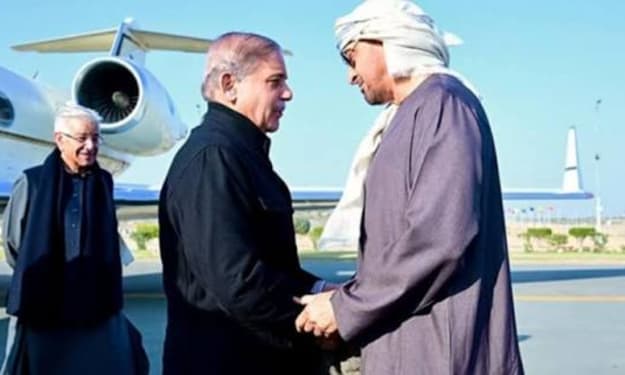
UAE to Buy Stake in the Company Which Bought Shares in PIA: What It Means for Pakistan’s Aviation Future
Pakistan International Airlines (PIA), once regarded as one of Asia’s finest carriers, has long struggled with financial losses, operational inefficiencies, and declining global reputation. In recent years, Pakistan’s government has actively pursued privatization and foreign investment to revive the national airline. Now, a new development has sparked fresh debate and cautious optimism: the United Arab Emirates (UAE) is reportedly planning to buy a stake in the company that recently acquired shares in PIA. This layered investment move may seem indirect, but experts believe it could carry significant implications for Pakistan’s aviation sector, foreign investment climate, and regional economic ties. Understanding the Deal Structure Rather than purchasing shares in PIA directly, the UAE is considering buying a stake in the company that already holds PIA shares. This strategy allows investors to reduce direct exposure while still influencing outcomes through strategic partnerships. It also reflects the complexity surrounding PIA’s ownership, liabilities, and restructuring process. For Pakistan, this move suggests that foreign confidence is slowly returning, albeit cautiously. Instead of an outright takeover, the UAE appears interested in a gradual, calculated entry—one that allows observation, influence, and risk management. Why the UAE Is Interested The UAE has long been a major player in global aviation. Home to world-class airlines, logistics hubs, and airport infrastructure, the country understands the strategic value of air connectivity. Pakistan’s geographical position—linking South Asia, Central Asia, the Middle East, and China—makes PIA an attractive long-term asset despite its current struggles. Moreover, Pakistan has one of the largest overseas diasporas, particularly in the Gulf. A revitalized PIA could strengthen travel routes, cargo services, and tourism flows between the two countries. By investing indirectly, the UAE gains strategic leverage without immediate operational responsibility. Implications for PIA’s Revival If finalized, this investment could bring more than just capital. Analysts believe it may open doors to: Improved governance and oversight Operational reforms inspired by Gulf aviation models Enhanced credibility for future foreign investors Potential technical partnerships or management advisory roles PIA desperately needs restructuring—not just financially, but operationally. Fleet modernization, route optimization, and service quality upgrades are essential. UAE involvement, even at one remove, could accelerate these changes by applying pressure for international standards. What It Signals to Global Investors The move sends a strong signal to international markets: Pakistan is open for business, even in complex sectors like state-owned enterprises. Foreign investors often wait for a “confidence leader”—a credible first mover whose involvement lowers perceived risk. The UAE’s interest could play exactly that role. This could encourage investors from Europe, Asia, and the Middle East to explore opportunities in Pakistan’s aviation, logistics, and infrastructure sectors. However, sustained confidence will depend on transparency, regulatory consistency, and political stability. Concerns and Criticism Despite optimism, critics warn that indirect investments can limit accountability. Since the UAE would not be a direct shareholder in PIA, its ability—or willingness—to push deep reforms may be constrained. There are also fears that strategic national assets could be influenced without sufficient public oversight. Additionally, labor unions and aviation experts stress that privatization without worker protection and service guarantees could worsen conditions rather than improve them. Any reform must balance commercial viability with national interest. A Test Case for Pakistan’s Economic Direction This potential UAE stake is more than a business transaction—it is a test of Pakistan’s broader economic strategy. Can the country attract serious investors while safeguarding sovereignty? Can it reform legacy institutions without repeating past mistakes? If managed transparently and strategically, this deal could mark a turning point for PIA and Pakistan’s aviation industry. If mishandled, it risks becoming another missed opportunity. Looking Ahead While details remain under discussion, one thing is clear: PIA’s future is once again on the global radar. The UAE’s interest—though indirect—adds momentum to long-stalled reform efforts. For passengers, workers, and the wider economy, the coming months may prove decisive. Whether this move leads to genuine revival or remains a symbolic gesture will depend on execution, governance, and political will. For now, cautious optimism seems justified—but only time will tell if PIA can truly reclaim its wings.
By Fiaz Ahmed Brohi3 months ago in The Swamp
A Gathering of Evil Bosses
“I’m the queen of chin jutting while I smooth my hair, attacking, insulting, and deflecting to protect my appointer.” “Oh, please, Blondi, my hair is curled, highlighted, and longer than yours. I feature television commercials telling immigrants that we will give them a free plane ride home, and if they voluntarily turn themselves in, they will be allowed to legally apply for re-entry. It runs everywhere, and I look good in it! You can’t compete because of your blond hair. Mine is nicer, and my lips are prettier than yours.”
By Andrea Corwin 24 days ago in The Swamp
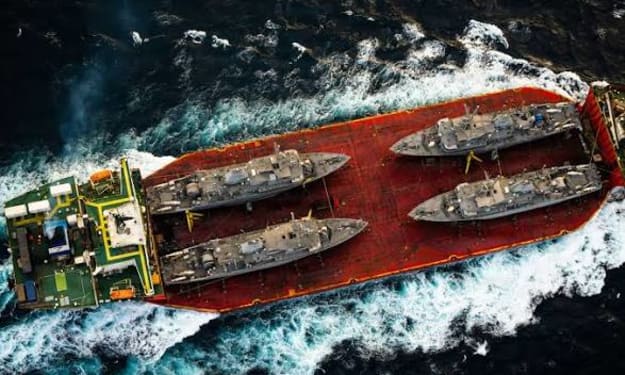
The US Navy Decommissioned Middle East Minesweepers Last Year. Here’s What They Did
Last year, the United States Navy officially decommissioned a fleet of minesweepers that had been stationed in the Middle East, concluding decades of service aimed at safeguarding critical maritime routes in one of the world’s most strategically important regions. These vessels, which included Avenger-class minesweepers, played a crucial role in ensuring the safety of naval and commercial traffic, countering the threat of naval mines, and supporting coalition operations. Minesweepers are specialized ships designed to detect and neutralize naval mines, which are explosive devices placed in waterways to disrupt shipping and military operations. In the Middle East, particularly in the Persian Gulf and surrounding waters, these ships were tasked with protecting vital oil shipping lanes, military supply routes, and key ports from potential threats posed by adversaries. According to Navy officials, the decommissioned minesweepers were deployed for a range of missions, including mine countermeasure exercises, port security operations, and joint drills with regional partners. “These vessels have served as a critical first line of defense, ensuring safe navigation for both military and civilian vessels,” said Rear Admiral James Goldrick, who oversees maritime security operations in the region. “Their contributions have been invaluable in maintaining stability and operational readiness.” During their service, the minesweepers used a combination of sonar systems, remotely operated vehicles (ROVs), and mechanical sweeping gear to detect and clear mines. This capability was particularly important in the Persian Gulf, a narrow waterway where even a small naval mine could severely disrupt maritime traffic and the global oil supply. Their operations required close coordination with coalition partners, including the navies of the United Kingdom, Saudi Arabia, and other regional allies. The decommissioning process involved carefully retiring the ships from active service, removing sensitive equipment, and transferring or scrapping vessels according to military regulations. Many of the minesweepers had served for decades, and technological advancements had rendered some systems outdated compared to newer mine countermeasure platforms, including unmanned surface vessels (USVs) and advanced sonar systems. While these ships are no longer in operation, their legacy continues through training programs and lessons learned that have informed the Navy’s modern mine countermeasure strategies. Crews trained on these vessels developed expertise in navigation, mine detection, and coordination under potentially hostile conditions, skills that are now being transferred to personnel operating next-generation platforms. The role of minesweepers in the Middle East was particularly critical during periods of heightened tension, when adversaries threatened the Gulf’s shipping lanes with the potential deployment of mines. Their presence acted as both a deterrent and a practical measure to ensure uninterrupted flow of oil and commerce. Naval analysts point out that the retirement of these vessels reflects a broader shift in naval strategy, moving toward unmanned systems and multi-mission ships that can handle mine countermeasures while performing other operational tasks. Despite their decommissioning, the US Navy remains committed to maintaining security in the region. Newer platforms, such as the Independence-class littoral combat ships, equipped with modular mine countermeasure packages, are gradually replacing the traditional minesweepers. These vessels use advanced technologies, including unmanned underwater vehicles (UUVs) and autonomous systems, to detect and neutralize threats more efficiently and with reduced risk to personnel. Experts highlight that the minesweepers’ retirement does not signal a reduction in the Navy’s commitment to the region. Instead, it reflects an adaptation to modern naval warfare, where unmanned and highly networked systems can perform tasks that previously required manned vessels. “The mission remains the same: to ensure maritime freedom of navigation and protect commercial shipping,” said one naval strategist. “We are simply using new tools to achieve it more effectively.” Over their decades of service, the Middle East-deployed minesweepers completed thousands of operational hours, conducted joint exercises with allied navies, and played a critical role in securing one of the world’s most vital maritime regions. Their crews often worked in challenging conditions, including extreme heat, tight operational areas, and periods of geopolitical tension, demonstrating professionalism and dedication. Looking ahead, the Navy plans to expand its use of unmanned systems and integrate new mine countermeasure capabilities into the fleet. Lessons learned from the retired minesweepers will continue to inform doctrine, training, and operational planning, ensuring that future personnel can respond effectively to mine threats in both the Middle East and other strategic theaters. The decommissioning of these minesweepers marks the end of an era for the US Navy in the Gulf, but their contributions remain a cornerstone of maritime security in the region. As technology evolves, the legacy of these vessels and their crews lives on in the Navy’s ongoing mission to safeguard critical waterways, protect global commerce, and support coalition partners in maintaining regional stability. By retiring the old ships and integrating modern platforms, the US Navy aims to continue projecting strength, ensuring safe navigation, and adapting to the evolving maritime threats of the 21st century.
By Fiaz Ahmed about 22 hours ago in The Swamp


Comments
There are no comments for this story
Be the first to respond and start the conversation.