
Germany Accuses Russia of 2024 Cyber-Attack and Disinformation Campaign
Berlin blames Moscow for cyber-attacks and disinformation aimed at undermining European democracy.

In a major escalation of digital tensions in Europe, Germany has publicly accused Russia of orchestrating a series of cyber-attacks and disinformation campaigns that targeted government institutions, political parties, and critical infrastructure throughout 2024. The accusation marks one of Berlin’s strongest statements against Moscow in recent years and underscores the increasingly dangerous battlefield of modern hybrid warfare—where cyber operations and propaganda can be as powerful as physical weapons.
German officials say the campaign was part of a broader Russian strategy aimed at weakening European unity, influencing public opinion, and disrupting the political stability of key NATO nations. With relations already strained by the conflict in Ukraine, the fresh allegations add new fuel to an already heated geopolitical environment.
A Highly Sophisticated Cyber Offensive
According to Germany’s Ministry of the Interior, the cyber-attack originated from a Russian hacking group known as APT28, also called “Fancy Bear.” The group has been linked to Russia’s military intelligence agency (the GRU) and is known for carrying out high-level cyber operations across the world.
German cybersecurity experts revealed that the attack specifically targeted:
Members of the Bundestag (Germany’s federal parliament)
Government email infrastructure
Political party offices
Critical digital networks connected to public services
The hackers reportedly used a technique known as “phishing,” in which deceptive emails trick victims into revealing confidential information or downloading malicious software. Once inside, the attackers attempted to steal data, monitor political communication, and potentially manipulate digital systems.
Officials say the operation showed “clear signs of state involvement,” pointing to the high level of coordination and technological sophistication.
Disinformation: The Second Front of the Attack
Beyond hacking, Germany also accused Russia of spreading disinformation—false or manipulated narratives designed to influence public sentiment and create political division.
Throughout 2024, German authorities observed a wave of misleading online posts, fake news reports, and edited videos circulating widely on social media platforms. These posts touched on sensitive topics, including:
Immigration and refugee policies
NATO support for Ukraine
German economic struggles
Rising energy prices
Distrust in political leaders
The objective, according to analysts, was to deepen social polarization, weaken public trust in institutions, and amplify political disagreements ahead of key European elections.
The Ministry of Foreign Affairs described the campaign as “a deliberate attempt to destabilize the democratic process.”
Berlin’s Strong Response
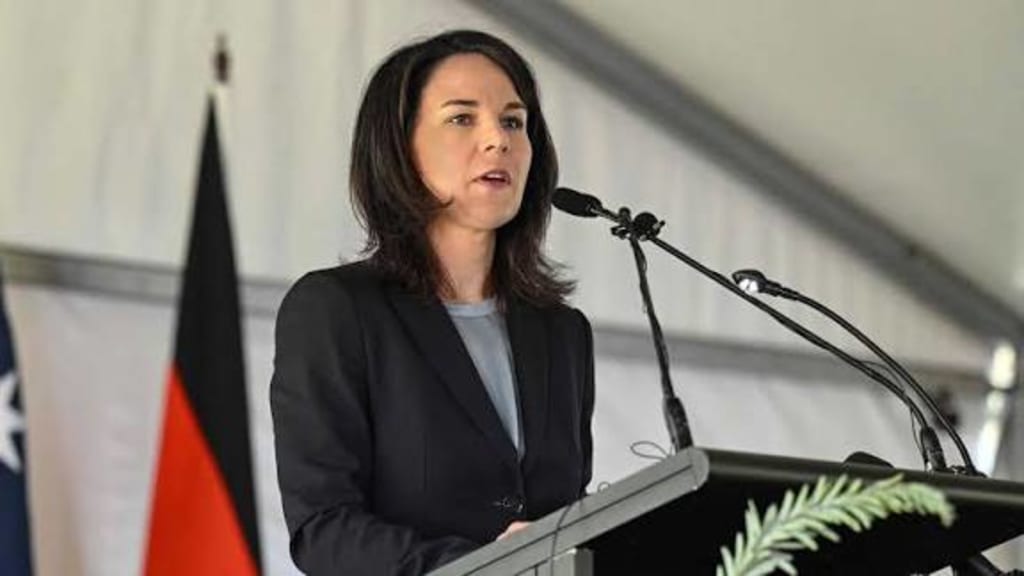
In an unusually direct statement, German Foreign Minister Annalena Baerbock condemned Russia for its “hostile actions” and vowed that Germany would not tolerate attempts to undermine its democracy. The government has formally summoned the Russian ambassador and is consulting with EU and NATO partners about potential coordinated responses.
German officials are also calling for:
Stronger cybersecurity defenses
Increased cooperation among European intelligence agencies
Tighter regulations on social media platforms
New frameworks to counter foreign disinformation
Chancellor Olaf Scholz stated that the attacks “crossed a clear line” and that Germany would take “all necessary steps” to protect national security.
Russia Denies All Allegations
As expected, Russia has strongly denied Germany’s accusations. The Russian Foreign Ministry dismissed the claims as “politically motivated,” arguing that Berlin is trying to shift blame for its own domestic issues. Moscow has repeatedly rejected responsibility for similar cyber-attacks in the past.
Kremlin spokesperson Dmitry Peskov called the allegations “completely unfounded,” stating that Western nations often blame Russia without providing concrete evidence.
Despite the denial, cybersecurity experts note that the tactics and digital signatures used in the attack are consistent with previous Russian-linked operations.
What This Means for Europe
The attack on Germany is not an isolated event. Several European nations—including France, Poland, Lithuania, and the United Kingdom—have reported similar cyber intrusions and disinformation campaigns over the past few years.
Analysts believe Russia is using digital warfare to test Europe’s defenses and probe political weaknesses. Hybrid warfare allows Moscow to cause disruption without triggering a traditional military response.
For Europe, the incident highlights the urgent need for:
Unified digital security policies
Intelligence-sharing frameworks
Protection of democratic processes
Public awareness about online misinformation
The European Union is expected to discuss additional sanctions against Russian individuals or groups linked to the campaign.
A Wake-Up Call for Democracy
Germany’s accusation serves as a reminder that modern conflicts are no longer fought solely with tanks or missiles. Instead, political systems themselves can become targets.
Cyber-attacks and disinformation campaigns have the power to influence elections, erode trust, and destabilize nations from within—often without a single shot being fired.
As Germany strengthens its digital defenses, the wider world is watching closely. The 2024 attacks may be only one chapter in a much larger struggle over information, security, and global influence in the digital age.
About the Creator
Fiaz Ahmed
I am Fiaz Ahmed. I am a passionate writer. I love covering trending topics and breaking news. With a sharp eye for what’s happening around the world, and crafts timely and engaging stories that keep readers informed and updated.
Keep reading
More stories from Fiaz Ahmed and writers in The Swamp and other communities.
MoD to Unify All Intelligence Units Under a Single Command
How a bold restructuring aims to strengthen national security and eliminate decades of fragmentation For years, defence experts have pointed out one recurring weakness in the nation’s security structure: intelligence units working in isolation. Each branch of the military has maintained its own intelligence wing, often operating with different protocols, systems, and priorities. This fragmentation has led to duplication of work, slow information sharing, and occasional gaps in threat assessment. Now, the Ministry of Defence (MoD) has decided it is time for a major transformation.
By Fiaz Ahmed 3 months ago in The Swamp
The Forsyth House Fire
Since 1851, Forsyth House has stood on the corner of Union Street and Gordon Street in the heart of Glasgow. Its iconic, or was... because on Sunday 8th of March, 2026, a fire broke out in a small, seemingly un-named shop in the building and tore all that history down. As I write, the rubble is still unsettled and the street is still blocked off. Central Station is quiet on the upper level, and around 30 small businesses have quite literally gone up in smoke.
By S. A. Crawford3 days ago in The Swamp
The Solitude of The Chupacabra
Many say that the Chupacabra is a rather recent and modern tale, a mangy coyote or rabied dog. Some point out that it’s just twisted evolution. But very few know the true backstory of the shapeshifter that led to the bloodsucking legend. And perhaps once you will come to know and understand more, you might “forget” a few cattle out to wander.
By Oneg In The Arctic2 days ago in Fiction



Comments
There are no comments for this story
Be the first to respond and start the conversation.