
Gen-Z Revolutions Have Spread to Europe. The Continent Isn't Ready
How a Controversial Budget, Endemic Corruption, and a Digital-Native Generation Sparked Europe’s First True Gen Z Uprising

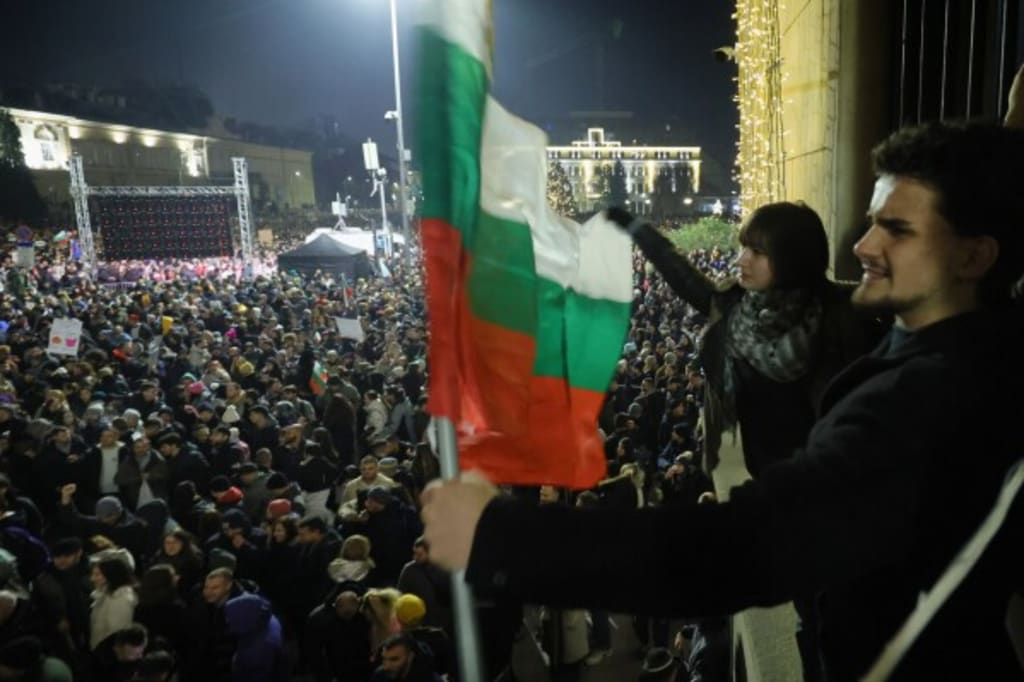
As 2026 looms just over the horizon, it feels oddly appropriate that one of the most consequential political stories of the year has returned for an encore. The global wave of Gen Z–driven protests—already responsible for shaking governments in parts of Africa and Asia—has now firmly arrived in Europe. And it didn’t knock politely.
Until recently, Europe had seemed resistant to the kind of youth-led uprisings that toppled governments in Nepal and Madagascar. Yes, there had been protests in France, Serbia, and elsewhere, but nothing that truly threatened the foundations of power. That changed on December 11, when Bulgaria’s prime minister announced the resignation of his entire government, following weeks of sustained protests that began quietly in late November and exploded into something far bigger.
Standing before the country, Prime Minister Rosen Gelkov acknowledged what had become impossible to deny. The voices in the streets were loud. They were unified. And they were demanding one thing above all else: the government’s resignation. His announcement came just minutes before a scheduled vote of no confidence—one he had widely been expected to survive, as he had five times before. This time, the vote never happened. The streets had already decided.
The timing could hardly have been worse for Bulgaria. The country, the poorest in the European Union, was preparing to join the eurozone in the new year. It had already endured seven national elections in just four years. Political exhaustion was setting in. Economic anxiety was already high. And then came the spark that lit the fuse: the 2026 budget.
To understand why Bulgarians poured into the streets, you don’t need an abstract theory or a complex ideological framework. With hindsight, the explanation is painfully simple. It was the economy. More specifically, it was the budget.
The government had recently unveiled its 2026 spending plan—the first budget denominated in euros. On paper, it was designed to expand state spending to a record 46 percent of GDP. To fund that expansion, the plan raised taxes and increased social security contributions. For government officials, this was framed as necessary stewardship. For much of the public, especially the business community, it felt like yet another attempt by the state to tighten its grip while squeezing everyone else.
Business groups warned that higher taxes would discourage investment, push activity into gray markets, and slow growth. The Bulgarian Association of Industrial Capital argued that the budget didn’t just pose short-term risks—it threatened to entrench a pattern of fiscal mismanagement. Opposition politicians were even harsher. Some described the plan as a fast track to bankruptcy.
The loudest warnings came from Kostadin Kostadinov, leader of the far-right Revival Party, who claimed the budget would push Bulgaria toward its worst debt crisis in modern history. He projected national debt soaring to 80 percent of GDP within two years. For context, Bulgaria’s debt-to-GDP ratio in 2024 sat at just over 24 percent. Even allowing for political exaggeration, the fear resonated. Tripling national debt in two years is the kind of decision that doesn’t just lose elections—it destroys trust.
The government pushed back. Finance Minister Temenuzhka Petkova insisted the increased contributions were necessary to keep the pension system afloat. She emphasized that the deficit would remain within the EU’s 3 percent limit. Technically, she was right. Politically, it didn’t matter. The public didn’t buy it.
On November 26, more than 20,000 people took to the streets in Sofia. Organized by the opposition coalition “We Continue the Change – Democratic Bulgaria,” protesters formed a human chain around parliament and reportedly blocked lawmakers from leaving until midnight. The following day, the prime minister announced the budget process would be suspended to allow for consultations.
But the pause only delayed the inevitable.
Behind the scenes, the government was fragile. Gelkov led a minority administration that depended on a patchwork of parties with clashing priorities. When support from one faction was withdrawn, the coalition leaned on DPS-N, a party controlled by oligarch Delyan Peevski—a man sanctioned by both the United States and the United Kingdom for corruption and influence peddling. His fingerprints on the government were impossible to hide, and impossible for the public to accept.
As officials argued over whether the budget was paused, tweaked, or quietly being prepared for reintroduction, opposition leaders called for renewed protests on December 1. This time, something changed.
What unfolded wasn’t a traditional opposition rally. It was a generational awakening.
Young Bulgarians—many of whom had never attended a political protest—flooded the streets. Musicians, actors, influencers, and public figures urged their followers to show up. TikTok and Instagram became organizing tools. Protest anthems circulated online. Memes ridiculed oligarchs. Some posts jokingly framed protests as date ideas, encouraging young men to bring their girlfriends along. Politics became social. Protest became cultural.
This mattered because Bulgaria suffers from one of the worst participation crises in Europe. Voter turnout has been abysmal, hovering in the low 30 percent range. Trust in elections is among the lowest on the continent. Confidence in the judiciary barely reaches double digits. Corruption is not an abstract complaint—it’s a lived reality.
Transparency International ranks Bulgaria near the bottom of the EU for perceived corruption. Journalists and watchdogs have long described the country as a place where oligarchs, politicians, and media are deeply entangled. Under former prime minister Boyko Borisov, corruption was estimated to siphon off roughly 22 percent of GDP each year. Billions vanished. Nothing changed. Protest after protest fizzled out.
Until now.
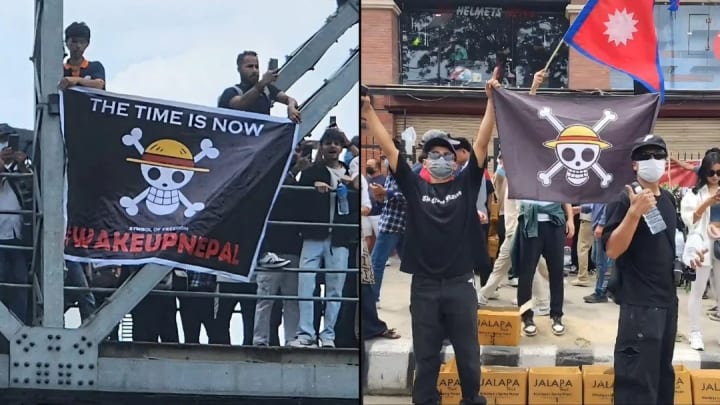
On December 1, somewhere between 50,000 and 100,000 people gathered in Sofia. Similar protests erupted in cities across the country. Protesters waved the now-iconic One Piece flag seen in other Gen Z uprisings. They carried signs depicting politicians as greedy pigs. The demands expanded beyond the budget to something much bigger: an end to corruption, oligarchic rule, and political stagnation.
A 21-year-old student summed it up bluntly. “We are here to protest for our future,” she said. “We want to be a European country, not one ruled by corruption and the mafia.”
The government formally withdrew the budget. It wasn’t enough.
On December 10, tens of thousands returned to the streets under a simple theme: Peevski and Borisov out. By the end of the day, the government collapsed. Bulgaria’s Gen Z had brought down their third government of the year, following similar uprisings in Nepal and Madagascar.
The question now is the same one that followed those collapses: what comes next?
Under Bulgaria’s constitution, the resignation must be accepted by parliament. The president will then invite parties to attempt to form a new government. Most analysts expect those efforts to fail, triggering yet another election and the appointment of a caretaker cabinet. President Rumen Radev, who may be planning his own political project after leaving office in 2026, looms large over the process.
For Gen Z protesters, another election represents both an opportunity and a challenge. Protest alone can topple governments. It can’t replace them. Institutionalizing change means organizing, forming parties, building platforms, and competing in a system they deeply distrust. It’s harder. Slower. Less glamorous. But it’s the only way forward if they want lasting change.
For Europe, Bulgaria is a warning shot.
The idea that Gen Z unrest is confined to the Global South is no longer credible. The same kindling exists across the continent: high youth unemployment, unaffordable housing, stagnant political systems, and generations of young people told to wait patiently while their futures shrink.
In Bulgaria, the 2026 budget was just the spark. The fuel was years of corruption, dysfunction, and despair. And once it ignited, it burned through the government in weeks.
If Europe continues to ignore those conditions, Bulgaria won’t be the last place Gen Z decides to tear the system down—and this time, the West is firmly in their sights.
About the Creator
Lawrence Lease
Alaska born and bred, Washington DC is my home. I'm also a freelance writer. Love politics and history.
Keep reading
More stories from Lawrence Lease and writers in The Swamp and other communities.
Tokyo’s Bold Taiwan Bet
Friday, the 7th of November, was supposed to be routine business inside the Japanese Diet. Lawmakers expected a day packed with procedural questions, quiet policy disagreements, and the kind of legislative tedium that rarely makes front-page news. Instead, a single exchange detonated into an international incident that now sits at the center of East Asia’s escalating tensions. It began when Katsuya Okada of the Constitutional Democratic Party asked Prime Minister Sanae Takaichi a straightforward question. Her response, however, was anything but straightforward: she declared that a Chinese attack on Taiwan could pose an existential threat to Japan — one that would compel Japanese intervention on Taiwan’s behalf.
By Lawrence Leaseabout a month ago in The Swamp
Verizon’s Response to Its Massive Outage Is What No Company Should Ever Do
When a company the size of Verizon experiences a massive outage, millions of customers notice. Text messages don’t go through, calls drop, mobile banking stalls, and businesses relying on cellular service grind to a halt. In these moments, customers are not just inconvenienced — they are frustrated, anxious, and looking for leadership.
By Aarif Lashariabout 10 hours ago in The Swamp
The Devil's Cut
“Comrade, finally you’re awake.” The voice was smooth, sensual. A flickering incandescent bar was all that lit the white, sterile room. All Vladimir remembered was everything going black. He tried to move his arms and found them strapped to the gurney.
By Matthew J. Fromm5 days ago in Fiction




Comments
There are no comments for this story
Be the first to respond and start the conversation.