
Gaza on the Brink: Man‑Made Famine, Violent Aid Blockades, and the World’s Moral Crossroads
As headlines fade and cameras turn away, thousands suffer in the shadows. This is their untold story—raw, real, and heartbreaking.

📰 Report: The Deepening Crisis in Gaza
🔹 Key Overview
Starvation Reached Catastrophic Levels
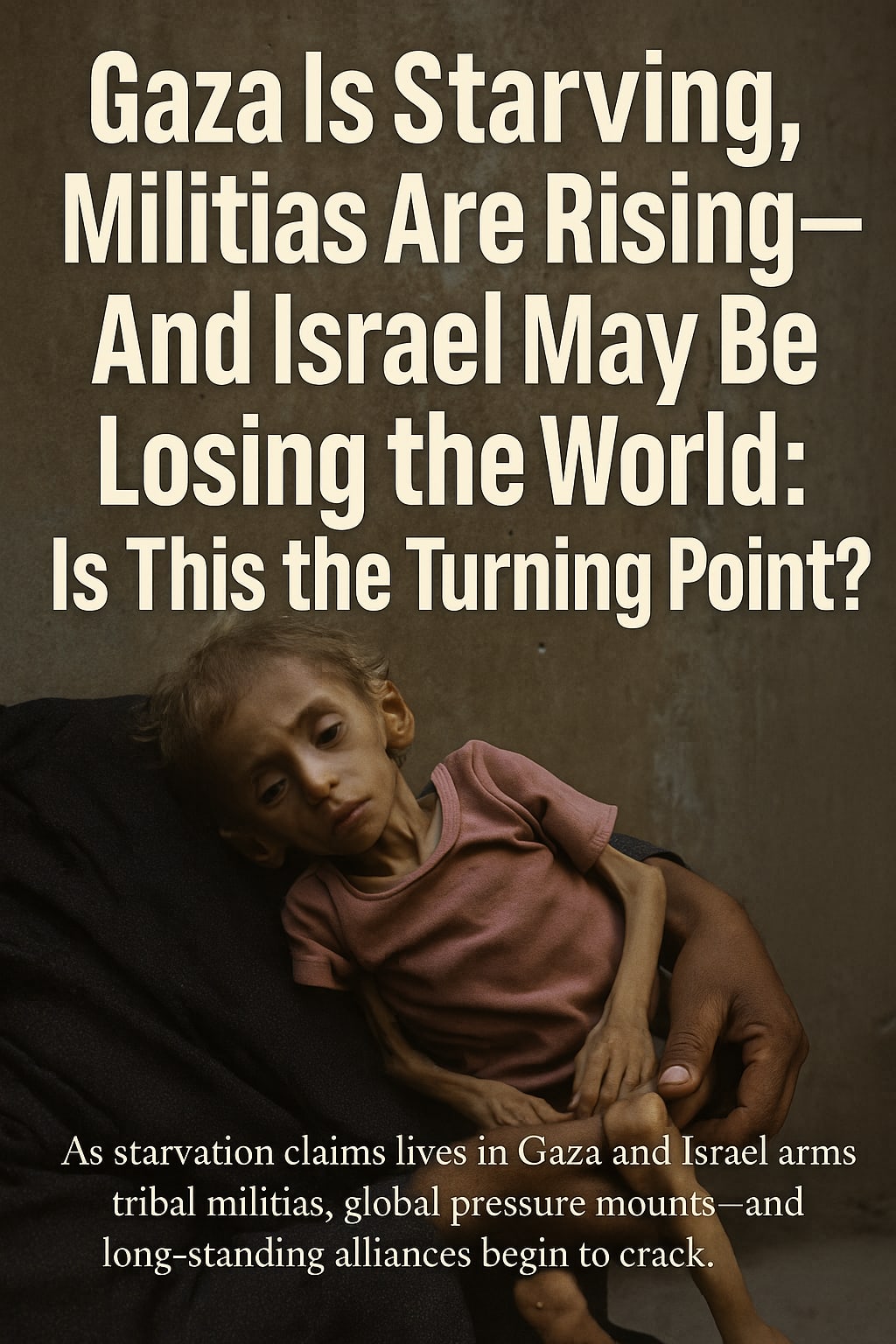
A recent World Food Programme report confirmed that one in five Gazans—around half a million people—are currently living in conditions consistent with famine. Among children under five in Gaza City, one in five suffers from severe malnutrition, with over 5,000 diagnosed just in May 2025 ([TIME][1]).
Blockade Caused Collapse in Aid
Since March 2, 2025, Israel’s full blockade halted nearly all humanitarian aid entering Gaza, driving food prices up by 1,400%. Popular kitchens reliant on UN-backed supplies ran out of support by late April ([CRS][2],
Aid-Seekers Shot at Distribution Points
Israeli forces reportedly opened fire at civilians seeking food near U.S.- and Israeli-backed aid distribution sites, killing dozens. At the GHF aid centers and the Zikim crossing, at least 48 Palestinians were killed, including a surge of 10 people at one site alone ([The Times][4], [AP News][5]).
Heartbreaking Personal Stories
Eight-year-old Jana, weighing just 11 kg, is undernourished and suffering from edema. Her sister, Joury, died from malnutrition. Their mother, Nasma Ayad, continues to plead for evacuation for her remaining daughter as medical capacities collapse ([The Times][4], [reuters.com][6]).
Global Officials Under Pressure
U.S. envoy Steve Witkoff and Ambassador Mike Huckabee visited Gaza aid sites, including those run by the controversial Gaza Humanitarian Foundation, amid international criticism ([politico.com][7]).
Meanwhile, global leaders—including members of Jewish American communities traditionally supportive of Israel—are condemning the crisis and demanding deeper humanitarian action ([The Guardian][8]).
🧠 Analysis & Implications
Famine Engineered by War
This crisis is not natural—it stems from deliberate policies restricting humanitarian access. The UN and WFP have classified Gaza as a man-made famine zone, stressing the urgency of fully reopening crossings and improving delivery ([The Times][4], [wfp.org][9]).
Humanitarian Aid Under Attack
Victims are being killed while seeking food. Blocking humanitarian corridors, firing on aid-seekers, and militarizing aid sites highlight how delivering assistance has become lethal.
Generational Trauma
Chronic malnutrition will leave a lasting impact on children born in these conditions—leading to impaired growth, cognitive deficit, and higher disease vulnerability for years to come ([The Guardian][10], [TIME][1]).
Shifting International Norms
International voices—from Western governments to Israeli civil groups—are increasingly framing Israel’s actions in Gaza as violations of international humanitarian law. This may shift policy debate from concern to accountability.
Diplomacy at a Breaking Point
Global outrage is mounting. Western allies face pressure to enforce sanctions or humanitarian conditions tied to access. But diplomatic inaction risks normalizing the crisis.
🔭 What to Watch
* Will Israel authorize land crossings for large-scale aid delivery?
* Can new coordination with UN agencies revive effective food distribution?
* Do evacuation schemes, such as those proposed in the UK, gain traction for starving children?
* Will international law bodies issue formal investigations into war crimes claims?
* Can global pressure force a humanitarian ceasefire and stabilize aid routes?
📍Author’s Note
This article captures the escalating humanitarian disaster in Gaza as of early August 2025. The situation is fluid and shifting daily—further verified updates should follow.
📌 Tags
Gaza
Humanitarian Crisis
Famine
Starvation
War Crimes
Aid Blockade
Children’s Rights
UN Emergency
International Diplomacy
Gaza Strip 2025
Malnutrition
Forced Starvation
```
About the Creator
Moh Hussein
Mohamed Hussein is an writer exploring the intersection of technology, culture, and identity in the Middle East, telling the human stories behind how digital systems shape a new generation.
Keep reading
More stories from Moh Hussein and writers in The Swamp and other communities.
"Gaza Is Starving, Militias Are Rising—And Israel May Be Losing the World: Is This the Turning Point?"
U.S. Envoy’s Visit and Proposed Peace Plan On August 2, U.S. envoy Steve Witkoff told Israeli hostage families that he’s coordinating with Israel—including Prime Minister Netanyahu—on a comprehensive plan to end the Gaza war and rebuild the territory.
By Moh Hussein6 months ago in The Swamp
Asia-Pacific Stocks Set for Subdued Open as Trump–EU Tensions Rattle Risk Sentiment: Key Trading Signals Today
Asia-Pacific equity markets are poised for a cautious start, reflecting heightened investor anxiety as escalating tensions between the United States and the European Union cast a shadow over global risk sentiment. Traders in the region are bracing for a subdued session, with geopolitical uncertainty amplifying the usual mix of macroeconomic considerations and corporate earnings updates that typically drive trading activity.
By Salaar Jamaliabout 6 hours ago in The Swamp


Comments
There are no comments for this story
Be the first to respond and start the conversation.