
From Teenage Violence to Accountability: Guilty Plea Brings Closure to North Carolina Tragedy
A Tragic Case Revisited as a Former Teen Gunman Accepts Responsibility Years Later


A mass shooting that shattered a North Carolina community has resurfaced in the public conscience after the gunman—who was just 15 years old at the time of the attack—has now pleaded guilty to the deadly rampage that claimed five lives, including his own brother and a responding police officer. The plea marks a significant moment of accountability in a case that has long symbolized the devastating consequences of youth violence and gun access.
The shooting, which occurred several years ago, left an enduring scar on the neighborhood and reignited national conversations about juvenile crime, mental health, and the justice system’s approach to minors involved in extreme acts of violence.
A Day That Changed a Community Forever
The attack unfolded in a residential area, where the teenage shooter opened fire in a sudden and shocking burst of violence. Among the victims were family members, neighbors, and a law enforcement officer who was killed while responding to the scene.
The loss of a police officer deeply affected not only the local department but also the broader community, where residents gathered in vigils and memorials to mourn the victims. The revelation that the shooter’s own brother was among those killed added another layer of tragedy to an already heartbreaking event.
In the aftermath, questions swirled about how a teenager gained access to a firearm and what warning signs may have been missed.
Juvenile Justice and a Complicated Legal Path
Because the suspect was only 15 at the time of the shooting, the case presented unique legal challenges. Prosecutors sought to balance accountability with the realities of juvenile justice, ultimately charging the teen as an adult due to the severity of the crime.
Years of legal proceedings followed, during which the accused grew from a teenager into a young adult behind bars. Throughout this time, the victims’ families endured repeated court hearings, delays, and emotional strain as they waited for the case to reach resolution.
The guilty plea brings that prolonged legal journey closer to an end.
The Guilty Plea and What It Means
By pleading guilty, the defendant formally accepted responsibility for the killings, avoiding a lengthy and emotionally charged trial. The plea is expected to result in a lengthy prison sentence, potentially life behind bars, depending on sentencing decisions.
For prosecutors, the plea ensures a conviction without forcing families to relive the trauma through testimony. For defense attorneys, it acknowledges wrongdoing while possibly sparing the defendant from the harshest penalties available under the law.
While no sentence can undo the loss, many families see the plea as a step toward justice and closure.
Impact on the Victims’ Families
For the families of those killed, the guilty plea brings mixed emotions. Some expressed relief that the case is moving toward resolution, while others said no court outcome could ever compensate for the lives lost.
The family of the slain police officer emphasized that their loved one died doing his duty—protecting the community from further harm. His death became a rallying point for discussions around officer safety and the dangers law enforcement faces during active shooter responses.
For the shooter’s family, the pain is uniquely complex—mourning victims while also grappling with the reality that one of their own caused the devastation.
Broader Questions About Youth Violence
This case has once again raised urgent questions about juvenile access to firearms, mental health support for at-risk youth, and early intervention. Experts argue that preventing similar tragedies requires more than punishment after the fact—it requires addressing the conditions that lead young people down violent paths.
Community leaders and advocates have called for stronger gun safety measures, improved mental health resources in schools, and better systems for identifying warning signs before violence occurs.
The fact that the shooter was only 15 underscores how early intervention could potentially save lives.
A Community Still Healing
Years later, the neighborhood affected by the shooting continues to heal. Memorials honoring the victims remain powerful reminders of the lives lost and the importance of vigilance, compassion, and community support.
Local organizations have worked to promote dialogue around violence prevention, youth mentorship, and mental health awareness, hoping to ensure that the tragedy leads to meaningful change rather than fading into memory.
The Limits of Justice
While the guilty plea represents accountability, it also highlights the limitations of the justice system in cases of mass violence. Courts can assign punishment, but they cannot fully repair the emotional damage left behind.
For many, the case serves as a sobering reminder that justice is not only about verdicts—it is also about prevention, healing, and ensuring that communities have the tools to protect their most vulnerable members.
Conclusion
The guilty plea in the North Carolina mass shooting case closes a painful chapter in a story defined by loss, youth violence, and unanswered questions. As the legal process moves toward sentencing, families and community members continue to grapple with grief while searching for lessons that might prevent future tragedies.
The case stands as a stark reminder that when violence intersects with youth, families, and firearms, the consequences can be irreversible. Accountability matters—but so does the collective responsibility to address the root causes before another community is forever changed.
About the Creator
Asad Ali
I'm Asad Ali, a passionate blogger with 3 years of experience creating engaging and informative content across various niches. I specialize in crafting SEO-friendly articles that drive traffic and deliver value to readers.
The Forsyth House Fire
Since 1851, Forsyth House has stood on the corner of Union Street and Gordon Street in the heart of Glasgow. Its iconic, or was... because on Sunday 8th of March, 2026, a fire broke out in a small, seemingly un-named shop in the building and tore all that history down. As I write, the rubble is still unsettled and the street is still blocked off. Central Station is quiet on the upper level, and around 30 small businesses have quite literally gone up in smoke.
By S. A. Crawford3 days ago in The Swamp
Germany Germany misses climate targets as emissions barely fall in 2025
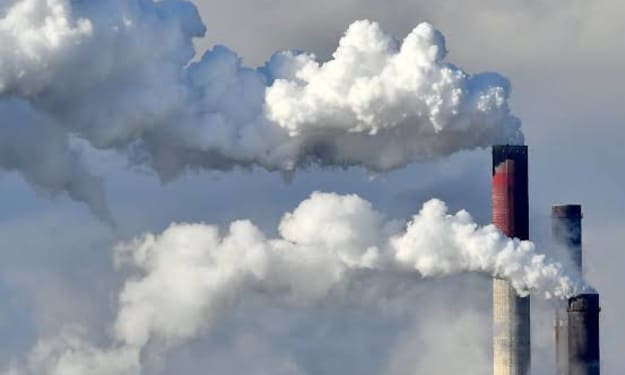
Germany has fallen short of its national climate targets after greenhouse gas emissions declined only marginally in 2025, raising fresh concerns about whether Europe’s largest economy can meet its ambitious decarbonization goals in the coming decade. Preliminary estimates from environmental monitoring groups suggest emissions in Germany fell by less than expected last year, marking a slowdown in progress compared with earlier reductions achieved during the energy crisis and pandemic years. The modest decline has sparked criticism from climate advocates and renewed debate within the government over the pace of the country’s energy transition. Officials linked the sluggish progress to several factors, including higher industrial output, increased use of fossil fuels during periods of energy demand, and slower-than-anticipated expansion of renewable power infrastructure. These pressures complicated the country’s efforts to stay on track with targets established under Germany’s national climate law. Slower Emissions Decline Germany had aimed to reduce greenhouse gas emissions significantly by the middle of the decade as part of a broader plan to reach climate neutrality by 2045. However, analysts say the reductions achieved in 2025 were minimal compared with the steep cuts required to meet those targets. The country’s climate framework requires strict annual limits for major sectors including transportation, buildings, industry, and energy production. Several of those sectors are believed to have exceeded their permitted emission levels last year, placing additional pressure on policymakers to introduce corrective measures. Environmental experts note that early gains in emissions reduction were partly driven by temporary circumstances such as reduced economic activity and energy consumption during the pandemic period. As the economy rebounded, structural reforms needed to maintain those reductions have proven more difficult to implement. Energy Transition Challenges Germany’s energy transition, often referred to as Energiewende, aims to rapidly expand renewable energy while phasing out nuclear and coal power. Although renewable generation has grown significantly over the past decade, challenges remain in scaling up infrastructure quickly enough to replace fossil fuels. Wind and solar installations continue to expand across the country, but regulatory hurdles, grid limitations, and local opposition to some projects have slowed development in certain regions. At the same time, fluctuating renewable output has required continued reliance on gas and coal power plants during periods of high electricity demand. Energy analysts say that balancing supply and demand during the transition remains one of the central difficulties for policymakers. Without major improvements in energy storage, grid expansion, and renewable deployment, fossil fuel generation may remain necessary to ensure stability in the power system. Transport and Buildings Under Pressure Two sectors in particular — transportation and buildings — continue to pose serious challenges for Germany’s climate strategy. Road traffic emissions remain stubbornly high due to strong reliance on private vehicles and freight transport powered by diesel and gasoline. Although electric vehicle adoption is increasing, the transition is occurring more slowly than many climate planners had anticipated. Charging infrastructure expansion and consumer adoption rates have become key issues in the national debate over transportation emissions. The buildings sector faces similar obstacles. Heating systems in millions of German homes still rely on natural gas or oil, and efforts to replace them with cleaner alternatives have triggered political controversy over costs and regulatory requirements. European and Global Implications Germany’s climate performance carries significant weight across the European Union, where the country plays a leading economic and political role. The EU has set ambitious emissions reduction targets for member states as part of its broader strategy to combat global climate change. If Germany struggles to meet its national targets, analysts warn it could complicate the bloc’s collective efforts to reduce emissions and maintain credibility in international climate negotiations. Climate groups say stronger policies will be needed to accelerate emissions cuts, including faster renewable energy deployment, stricter efficiency standards, and increased investment in green technologies. Political Debate Intensifies The latest emissions data has already fueled debate within Germany’s governing coalition, where parties differ over the best approach to climate policy. Some leaders argue that more aggressive regulations and subsidies are needed to drive rapid transformation, while others warn that excessive pressure could harm industry and economic competitiveness. Industrial groups have expressed concern that overly strict climate measures could push manufacturing companies to relocate production outside Europe. Environmental advocates, however, argue that delaying action would ultimately prove more costly both economically and environmentally. The Road Ahead Despite the disappointing results for 2025, government officials insist that Germany remains committed to its long-term climate objectives. Additional policies aimed at accelerating renewable deployment, expanding public transportation, and improving energy efficiency are expected to be introduced in the coming years. Experts say the next few years will be critical for determining whether Germany can regain momentum in cutting emissions. Achieving the country’s climate targets will require sustained investment, political consensus, and major structural changes across key sectors of the economy. For now, the limited emissions decline in 2025 serves as a warning sign that the path toward climate neutrality may prove more complex — and more contested — than originally anticipated.
By Fiaz Ahmed 2 days ago in The Swamp



Comments
There are no comments for this story
Be the first to respond and start the conversation.