
For Trump, a Promised Economic Boom Collides With the Costs of War
Mounting Defense Costs and Global Conflicts Complicate Trump’s Vision of Rapid U.S. Economic Growth

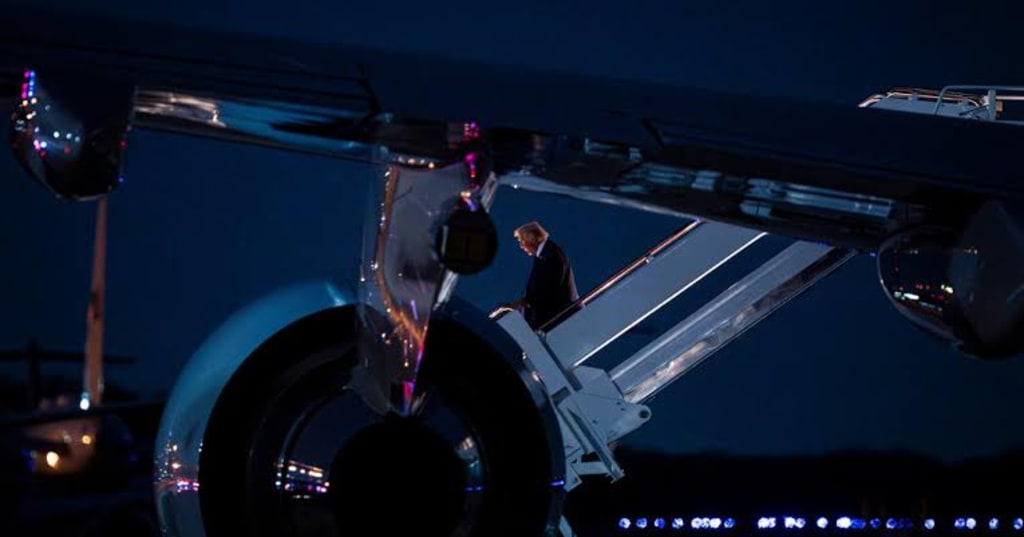
Rising military spending and geopolitical tensions challenge the vision of rapid economic growth
During his political campaigns and public speeches, Donald Trump often promised that strong leadership and aggressive economic policies would deliver a historic boom for the United States. Lower taxes, expanded domestic production, and new trade strategies were central to his economic vision. However, analysts say that the realities of global conflict and rising military commitments have complicated that promise, as the economic costs of war increasingly weigh on government finances and long-term growth.
The United States has long maintained one of the world’s largest defense budgets, funding operations across multiple regions while supporting allies facing security threats. Yet prolonged conflicts and new geopolitical tensions are placing additional pressure on federal spending. While defense spending can stimulate certain industries—such as aerospace, manufacturing, and technology—it also diverts resources away from infrastructure, social programs, and domestic economic investment.
During Trump’s presidency, his administration emphasized rebuilding American military strength while pursuing an “America First” economic agenda. Military budgets grew significantly, with new investments in weapons systems, troop readiness, and emerging defense technologies. Supporters argued that this expansion strengthened national security and created jobs in the defense sector. Critics, however, warned that escalating spending could widen deficits and limit the government’s ability to finance long-term economic priorities.
The challenge became especially clear as the United States remained involved in global security commitments, including operations connected to the long-running War in Afghanistan and tensions in the Middle East and Eastern Europe. Although Trump repeatedly pledged to reduce America’s overseas military footprint, strategic realities often forced the administration to balance political promises with security concerns.
Defense contractors, including companies such as Lockheed Martin and Raytheon Technologies, benefited from the surge in military spending. Major weapons programs and defense modernization initiatives generated billions of dollars in contracts, supporting manufacturing jobs across several states. For many communities, the defense sector became a vital economic engine.
But economists say the benefits of military-driven growth can be uneven. While defense spending boosts certain industries, it rarely produces the same widespread economic impact as investments in infrastructure, education, or public services. Large military commitments also add to the federal deficit, which can lead to higher borrowing costs and long-term fiscal pressure.
Trump frequently argued that strong economic growth would offset the cost of expanded military capabilities. In the early years of his presidency, the U.S. economy did experience robust job creation and steady GDP growth, partly fueled by tax cuts and business-friendly regulations. However, the relationship between military spending and economic expansion remained complex.
Geopolitical instability can also affect global markets in unpredictable ways. Rising tensions between major powers can disrupt trade routes, energy markets, and investor confidence. For example, conflicts in energy-producing regions can drive up oil prices, raising costs for consumers and businesses alike. These ripple effects can undermine the economic gains leaders hope to achieve.
Another challenge lies in balancing defense priorities with domestic economic needs. Infrastructure projects, technological innovation, and workforce development require significant government investment. When military spending grows rapidly, policymakers must decide how to allocate limited resources without undermining long-term economic competitiveness.
Supporters of Trump’s approach argue that strong defense capabilities ultimately support economic stability by deterring adversaries and protecting global trade routes. They say that military strength and economic growth are closely linked, particularly in a world where geopolitical competition is intensifying.
Critics, however, counter that the United States risks entering a cycle where rising tensions justify ever-larger defense budgets. In that scenario, the economic gains promised by political leaders could be offset by the growing costs of maintaining global military dominance.
As debates over defense spending continue in Washington, Trump’s vision of an economic boom remains closely tied to the broader question of America’s role in global security. Policymakers must weigh the benefits of military strength against the economic costs that come with it.
For many economists and political analysts, the central dilemma is clear: achieving both sustained economic growth and extensive global military commitments may prove more difficult than campaign rhetoric suggests. The balance between prosperity and security, they say, will continue to shape the United States’ economic future for years to come.
About the Creator
Fiaz Ahmed
I am Fiaz Ahmed. I am a passionate writer. I love covering trending topics and breaking news. With a sharp eye for what’s happening around the world, and crafts timely and engaging stories that keep readers informed and updated.
Keep reading
More stories from Fiaz Ahmed and writers in The Swamp and other communities.
China calls for talks to end Pak-Afghan clashes
Beijing urges restraint as border tensions threaten regional stability China has called for urgent dialogue between Pakistan and Afghanistan following a new round of clashes along their volatile frontier, warning that continued violence could undermine regional security and economic cooperation. The appeal came from the Ministry of Foreign Affairs of the People's Republic of China, which expressed concern over reports of cross-border shelling and armed confrontations in areas along the disputed border. Beijing urged both sides to exercise restraint, resolve differences through diplomatic channels, and avoid actions that might escalate the situation further. Tensions between Pakistan and Afghanistan have periodically flared along the border marked by the Durand Line, a colonial-era boundary established in 1893 that remains contested by successive Afghan governments. In recent days, exchanges of fire between border forces and armed groups reportedly left several people dead and dozens injured, forcing civilians to flee nearby villages. Officials in Islamabad said Pakistani forces responded after militants attempted to cross the border from Afghan territory, claiming the armed fighters targeted security posts. Authorities in Kabul, however, accused Pakistani troops of firing artillery into Afghan villages, damaging homes and triggering panic among residents. The government of China emphasized that dialogue and coordination between the two neighboring countries are crucial to preventing further escalation. A spokesperson said Beijing supports efforts aimed at maintaining peace along the border and stands ready to assist through diplomatic engagement if both sides request it. “China hopes Pakistan and Afghanistan will handle their differences through consultations and maintain peace and stability in the border areas,” the spokesperson said during a regular press briefing in Beijing. Security along the frontier has grown increasingly fragile since the return of the Taliban government in Kabul in 2021. While relations between Islamabad and the Afghan leadership initially appeared cooperative, mistrust has deepened over the presence of militant groups accused of launching attacks inside Pakistan. Pakistan has repeatedly voiced concern about fighters linked to the Tehrik-i-Taliban Pakistan operating from Afghan soil. Islamabad says the group has intensified assaults on Pakistani security forces and infrastructure in recent months. Afghan authorities have rejected the accusations, insisting they do not allow any group to use Afghan territory to threaten other countries. The clashes also carry broader regional implications, particularly for major infrastructure and connectivity projects supported by China. Stability along the Pakistan–Afghanistan border is seen as critical for the expansion of the China–Pakistan Economic Corridor, a flagship component of the Belt and Road Initiative. Chinese officials have previously encouraged both Islamabad and Kabul to deepen security cooperation to ensure the protection of cross-border trade routes and investment projects. Analysts say Beijing’s diplomatic outreach reflects concern that escalating violence could disrupt economic corridors and create new security risks across the region. In recent years, China has sought to position itself as a mediator in regional disputes, particularly those that threaten economic integration in Central and South Asia. Beijing has hosted several rounds of informal dialogue involving Pakistani and Afghan representatives aimed at improving communication and addressing mutual security concerns. Despite these efforts, distrust between the two countries remains strong. Communities living near the border frequently find themselves caught in the middle when tensions flare, with schools closed and markets disrupted during military exchanges. Regional observers warn that without sustained diplomatic engagement, the cycle of accusations and retaliation could continue. They argue that confidence-building measures—such as border coordination mechanisms and intelligence sharing—could help prevent misunderstandings from turning into armed confrontations. For now, Beijing’s message is clear: both sides must prioritize dialogue over confrontation. With the region already grappling with economic challenges and security threats, China’s leadership believes that de-escalation between Pakistan and Afghanistan is essential to preserving stability across a strategically important corridor linking South Asia, Central Asia, and beyond.
By Fiaz Ahmed a day ago in The Swamp
The Forsyth House Fire
Since 1851, Forsyth House has stood on the corner of Union Street and Gordon Street in the heart of Glasgow. Its iconic, or was... because on Sunday 8th of March, 2026, a fire broke out in a small, seemingly un-named shop in the building and tore all that history down. As I write, the rubble is still unsettled and the street is still blocked off. Central Station is quiet on the upper level, and around 30 small businesses have quite literally gone up in smoke.
By S. A. Crawford3 days ago in The Swamp


Comments
There are no comments for this story
Be the first to respond and start the conversation.