
Former Prince Andrew Moves Out of Royal Lodge at Windsor
The Duke of York’s departure marks another step in his reduced role within the royal family and the use of royal residences.

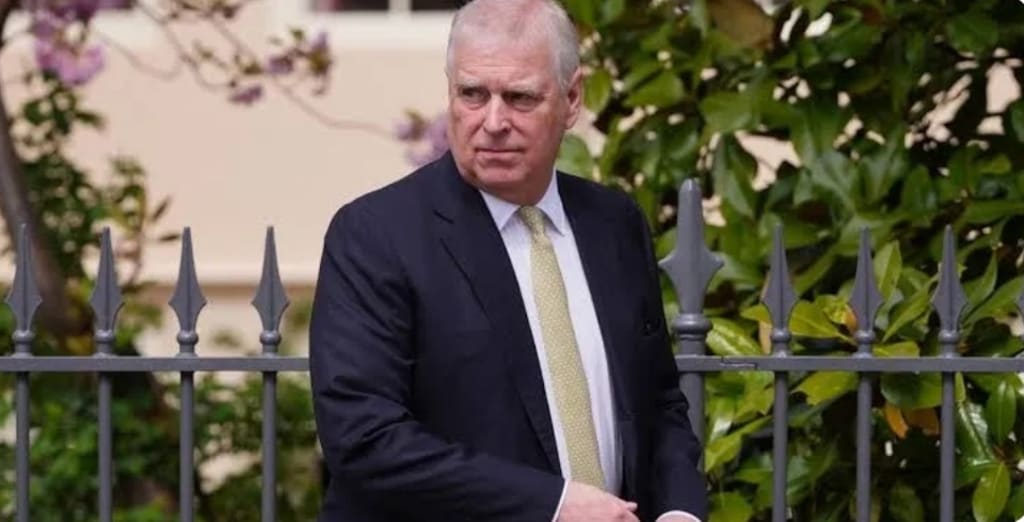
Prince Andrew Leaves Windsor’s Royal Lodge
Former Prince Andrew has moved out of Royal Lodge, the long-standing royal residence located within Windsor Great Park. The change in living arrangements represents another shift in how properties associated with the British monarchy are being used, as well as a further step in the Duke of York’s withdrawal from public life.
Royal Lodge had been Prince Andrew’s main residence for years. His departure follows a period in which his official duties and public profile have been significantly reduced.
Background on Royal Lodge
Royal Lodge is a large property situated in Windsor Great Park, not far from Windsor Castle. The residence has historically been used by senior members of the royal family and is held under a long lease arrangement rather than direct ownership.
Prince Andrew moved into Royal Lodge in the early 2000s after renovations were carried out. The property became his primary home while he carried out official duties as a working member of the royal family.
Over time, questions were raised about the size and cost of maintaining the residence, particularly after his role changed.
Changes to Prince Andrew’s Role
Prince Andrew stepped back from public duties in recent years and no longer carries out official engagements on behalf of the monarchy. His military titles and royal patronages were also removed.
Since then, he has largely remained out of public view. The decision to vacate Royal Lodge reflects his current status as a non-working member of the royal family.
Buckingham Palace has not described the move as disciplinary, instead framing it as part of broader adjustments to royal arrangements.
Financial and Practical Considerations
Maintaining a property of Royal Lodge’s size involves substantial ongoing costs. These include staffing, security, and upkeep, much of which is subject to public scrutiny.
With Prince Andrew no longer performing official duties, questions have been raised about the appropriate use of royal residences. Reducing costs and aligning property use with active roles has become an increasing focus for the royal household.
The move may help address concerns over resource allocation within the monarchy.
Where Prince Andrew Will Live Next
Details about Prince Andrew’s new residence have not been fully disclosed. Reports indicate that he will remain on royal estate property, though in more modest accommodation.
The relocation does not suggest a return to public duties or a change in his current standing. Instead, it reflects a reassessment of living arrangements consistent with his reduced public role.
Royal officials have emphasized privacy in discussing personal living arrangements.
Public Reaction and Media Attention
The move has drawn attention from both the media and the public, largely due to ongoing debate about the monarchy’s use of public and private funds.
Some commentators view the decision as a practical step toward accountability. Others see it as symbolic, reflecting broader efforts to modernize the monarchy and respond to public expectations.
Opinion remains divided, but the issue of royal residences continues to attract scrutiny.
Royal Property Management in Transition
The British royal family oversees a number of historic residences, many of which require careful management. In recent years, there has been increased emphasis on efficiency, transparency, and sustainability.
Adjustments to who occupies certain properties are part of this process. Residences are increasingly linked to active duties rather than status alone.
Prince Andrew’s departure from Royal Lodge fits within this wider trend of reassessing how royal assets are used.
Impact on the Monarchy’s Public Image
Public perception plays a significant role in how the monarchy operates. Decisions related to finances, housing, and roles are often viewed through the lens of accountability.
By addressing concerns around property use, the royal household aims to maintain public trust. While individual decisions may attract criticism, they also signal responsiveness to changing expectations.
The handling of Prince Andrew’s living arrangements reflects this balancing act.
A Reduced Presence Within Royal Life
Since stepping back from public duties, Prince Andrew’s presence within royal life has been limited. He no longer appears at official events and does not represent the monarch in any capacity.
The move from Royal Lodge reinforces this reduced role. It also suggests a clearer distinction between working royals and family members without official responsibilities.
Such distinctions have become more pronounced in recent years.
Historical Context of Royal Lodge Occupancy
Royal Lodge has housed several notable figures over the decades. Its use has often reflected the standing and responsibilities of its occupants at different times.
As circumstances change, so does occupancy. The transition of residents is not unusual, though it often draws attention due to the profile of those involved.
Prince Andrew’s departure adds another chapter to the property’s history.
What Comes Next for the Property
It remains unclear how Royal Lodge will be used following Prince Andrew’s departure. Options could include housing another working royal or repurposing the property for official functions.
Any decision will likely consider cost, security, and long-term planning. The royal household has not announced specific plans.
For now, the focus remains on managing existing assets responsibly.
A Step Reflecting Broader Change
Prince Andrew’s move out of Royal Lodge is part of a broader shift within the British monarchy. As roles evolve, so too do the arrangements surrounding residences and resources.
The decision highlights the ongoing process of adapting a centuries-old institution to modern expectations. While individual changes may appear small, collectively they signal a direction toward clearer boundaries and accountability.
As the monarchy continues to navigate public scrutiny, such adjustments are likely to remain a central feature of its approach.
---
.
About the Creator
Saad
I’m Saad. I’m a passionate writer who loves exploring trending news topics, sharing insights, and keeping readers updated on what’s happening around the world.
Why Black History Matters in America?
The United States of America is celebrating their 250th anniversary in 2026. I'm proud to be an American and as someone who was born here, I wouldn't imagine myself living anywhere else. This is a country where opportunities are possible. Where anyone can be successful in anything they desire to do. Equality, community, and togetherness are the backbones of what America is and should be about. However, we have an administration who wants to erase and disregard those who have made positive, meaningful impacts in our country, specifically Black figures, such as Martin Luther King, Jr., Rosa Parks, and Maya Angelou. President Trump and his administration have been constantly complaining and fighting against what they call the "Woke agenda". They use this excuse as a distraction from other issues they refuse to address, such as the high cost of living, climate change, and inflation. That equality is dividing America, when in reality, it's bringing us together. Being woke is not tied to a specific political party. No matter where you stand on the political spectrum, you can still care about other people and their plights. Compassion and empathy for others isn't tied to a political party, either. We were taught as children to treat others the way we want to be treated and not judge others because they're different from us. Caring about others isn't a personal attack on your beliefs. It doesn't make you any less of a person. People who are easily offended over African American figures, past or present, or anything related to it, are grasping at straws. Current and future generations need to know who people like Harriet Tubman and Shirley Chisholm were, especially in the classroom. Black History is part of American History. It should be recognized, not hidden or forgotten. Besides, you can't shield children from everything, just because your feelings are easily hurt.
By Mark Wesley Pritchard 6 days ago in The Swamp
Blizzards, Thaw, Then Relentless Rain: Why Is the North East Getting Such a Soaking?
Communities across the North East have endured a dramatic sequence of extreme weather in recent weeks — blizzards followed by sudden thawing and then days of relentless rain. Roads have flooded, rivers have burst their banks, and emergency services have been stretched as residents struggle to adapt to rapidly changing conditions. Meteorologists say the unusual pattern is the result of a powerful mix of atmospheric forces linked to climate change and shifting global weather systems. The region first experienced heavy snowfall as Arctic air swept south, bringing freezing temperatures and blizzard conditions to areas unaccustomed to prolonged snow events. Schools closed, transport networks stalled, and rural communities were briefly cut off. But the cold spell did not last. Within days, temperatures rose sharply, melting accumulated snow and saturating already frozen ground. When intense rain followed, the landscape had little capacity to absorb the water. This sequence — snow, thaw, and heavy rain — created the perfect conditions for flooding. A Clash of Air Masses Weather experts explain that the North East has become a battleground between cold polar air and warm, moisture-rich systems arriving from the Atlantic. Jet stream instability has allowed these contrasting air masses to collide more frequently and with greater intensity. “The jet stream is behaving more erratically than in the past,” said one senior meteorologist. “It’s pulling down Arctic air one week and then swinging back north to allow warm, wet systems to dominate the next. That back-and-forth pattern is exactly what we’ve been seeing.” As warm air moves over cold ground and snow cover, it accelerates melting while carrying large volumes of moisture. The result is prolonged rainfall rather than brief showers, overwhelming drainage systems and swelling rivers. Climate Change as a Multiplier Scientists are cautious about attributing any single storm to climate change, but they agree that warming temperatures are amplifying weather extremes. Warmer air holds more moisture, increasing the potential for heavy rainfall. At the same time, weakened polar circulation allows cold air to travel farther south, creating sharper contrasts in temperature. In the North East, this has meant more frequent swings between winter and spring conditions in a matter of days. These rapid shifts prevent the land from stabilizing and make flooding more likely. Urban areas have been particularly vulnerable. Older drainage systems were designed for gentler rainfall patterns and cannot cope with sustained downpours. In some towns, floodwater poured into basements and shops, forcing businesses to close temporarily and residents to evacuate. Rivers Under Pressure Hydrologists report that river levels rose at unprecedented speed due to the combined impact of melting snow and rainfall. Unlike summer storms, where dry soil can absorb much of the water, frozen or waterlogged ground allows runoff to flow directly into rivers and streams. Several flood warnings were issued across the region as reservoirs approached capacity. Authorities opened spillways to prevent dam failures, while sandbags were distributed to vulnerable neighborhoods. Farmers have also suffered heavy losses. Fields were submerged, livestock had to be moved to higher ground, and crops already planted were damaged by standing water. The agricultural sector fears that unpredictable weather will increasingly disrupt food production cycles. Infrastructure Strains Transport networks have faced repeated disruption. Rail services were suspended in some areas due to landslides and track flooding. Major roads became impassable after drainage channels overflowed. Utility companies reported power outages linked to fallen trees and water-damaged substations. Local governments say the cost of repairs is mounting. Bridges, culverts, and flood defenses that were once considered sufficient are now being tested beyond their design limits. Emergency planners warn that these conditions may become more common unless infrastructure is modernized. Investment in flood barriers, river management, and urban drainage is now seen as urgent rather than optional. A Pattern, Not an Exception Long-term data shows that the North East is experiencing more intense rainfall events than in previous decades. Seasonal averages may not look dramatic, but the way precipitation falls has changed — concentrated into fewer, heavier storms instead of steady light rain. Weather forecasters say this pattern increases the risk of flash flooding and makes prediction more difficult. Sudden downpours can overwhelm communities with little warning, while melting snow adds an unpredictable extra layer of risk. Residents have begun to notice the shift. Longtime locals describe winters that once brought steady cold now replaced by wild fluctuations between freezing nights and mild, rainy days. This volatility is reshaping how people prepare for seasonal weather. Looking Ahead Forecasts suggest that more rain is likely in the coming weeks, raising concerns that rivers may not have time to return to normal levels before the next storm arrives. Authorities are urging residents in flood-prone areas to stay alert and prepare emergency plans. Experts emphasize that adaptation is key. Improved forecasting, upgraded drainage systems, and better land-use planning can reduce the impact of extreme weather. Natural solutions, such as restoring wetlands and floodplains, can also help absorb excess water before it reaches towns and cities. The recent soaking of the North East is not just a story of bad luck or seasonal variation. It reflects a changing climate where extremes are becoming the new normal. Blizzards followed by sudden thaw and relentless rain may once have been rare. Now, they are a warning of what future winters could increasingly look like. For residents still drying out from flooded homes and roads, the question is no longer why this happened once — but how often it will happen again.
By Fiaz Ahmed 2 days ago in The Swamp
The Devil's Triangle
The sails ruffled in the breeze as we cruised along. The Sea Breeze was a mid-size catamaran that sailed out of Royal Naval Dockyard in Bermuda. We had booked this trip weeks in advance and were now looking at our Captain, Spike and two boat hands. Paddy and Wilson seemed like nice guys, joking around with the passengers and telling us some stories about Bermuda that only locals would know. Their island accents sounded almost British but they were pleasant to listen to.
By Barbara Gode Wiles5 days ago in Fiction



Comments
There are no comments for this story
Be the first to respond and start the conversation.