
Forget Burj Khalifa and Shanghai Tower: Saudi Arabia Readies a 1 km-Tall Skyscraper
Inside the world’s next architectural behemoth that could redefine city skylines and global prestige.
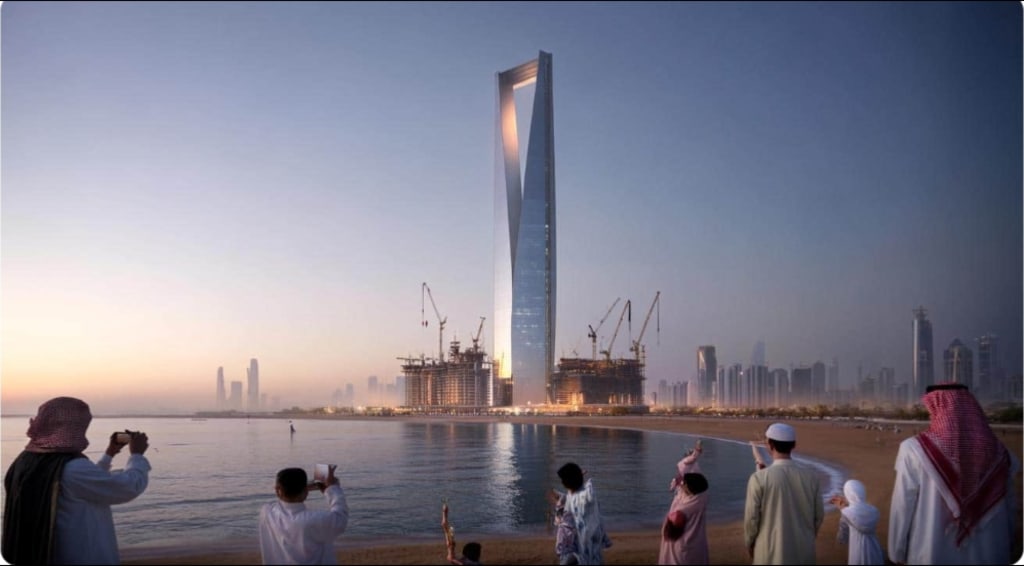
In the relentless race to touch the sky, Saudi Arabia is once again positioning itself at the forefront of architectural ambition. While the Burj Khalifa in Dubai and Shanghai Tower in China have long symbolized human ingenuity and engineering prowess, a new contender is rising from the sands of the Red Sea coast — a skyscraper set to soar over 1 kilometer (about 3,281 ft) into the sky. At its pinnacle, this project — known as Jeddah Tower — aims not only to eclipse existing records but also to herald a new era of urban identity and socio-economic transformation in the Kingdom.
A Tower to Surpass All Others
Strategically located in Jeddah, Saudi Arabia, the Jeddah Tower is envisioned to stand taller than any building ever constructed — surpassing the 828 m Burj Khalifa and even the lofty heights of Shanghai Tower. Upon completion, it will become the first building in history to break the kilometer mark, cementing its place in architectural lore.
Designed by Adrian Smith + Gordon Gill Architecture, the same architectural minds behind the Burj Khalifa, the tower blends innovative design with functional sophistication. The structure will combine a reinforced concrete core with a sleek, aerodynamic form to counter wind loads and maintain stability at extreme heights, a challenge few engineers have tackled at this scale.
A Mixed-Use Vertical City
Unlike a conventional skyscraper, Jeddah Tower is being planned as a vertical urban center — a veritable city in the sky. It will include:
Luxury hotels, including prominent brands,
Residential apartments and condominiums,
Office and commercial spaces, and
Observation decks offering breathtaking panoramic views.
The design also incorporates hundreds of high-speed elevators — some capable of traveling at speeds exceeding 10 m/s — ensuring efficient vertical mobility across more than 230 floors planned for the tower.
The Journey So Far — From Halt to Momentum
Jeddah Tower’s history has been complex and, at times, uncertain. Originally launched in 2013, construction was significantly slowed in 2018, largely due to economic setbacks and broader regional developments. But recent years have seen a resurgence of interest and investment. Work officially resumed with renewed vigor in 2023–2025, and construction has been steadily advancing.
Local reports indicate that the tower has now surpassed 80 floors, and the pace of construction is accelerating, with new floors being added every few days. This renewed momentum suggests that the building could indeed reach its kilometer-high target within the coming years — potentially as soon as 2028.
Engineering and Design Challenges
Reaching beyond 1 km in height is far from trivial. At such scales:
Wind forces become far more impactful,
Structural load distribution demands innovative solutions, and
Logistics for materials and workforce coordination are exponentially more complex than typical high-rise construction.
The aerodynamic shape of the tower, with a tapering profile and carefully optimized foundation, is designed to meet these challenges head-on. Engineers have employed advanced computer modeling and wind simulation techniques to ensure stability and safety from base to summit.
Economic Ambitions and Global Statement
Jeddah Tower is much more than a building; it is a symbol of Saudi Arabia’s Vision 2030 — a long-term plan to diversify the country’s economy beyond oil and develop new sectors, including tourism, technology, and international investment. The tower reflects the Kingdom’s desire to compete with global cities not just economically, but culturally and architecturally.
Landmark buildings have long been used by nations to broadcast their ambitions — from the Eiffel Tower in Paris to the Empire State Building in New York. With Jeddah Tower, Saudi Arabia is making a similar assertion: that it is a rising center of innovation, luxury, and global influence.
Yet, such projects come with financial, logistical, and environmental considerations. Mega-skyscrapers typically require multi-billion-dollar investments, and ensuring long-term viability — in terms of occupancy, tourism appeal, and operational sustainability — remains a key concern for developers and analysts alike.
The Global and Local Impact
If completed as envisioned, the tower will not only redefine Jeddah’s skyline, but will also shift the global architecture hierarchy. It would:
Break height records that have stood for over a decade,
Attract international tourism and business interest, and
Become a powerful cultural icon for Saudi Arabia’s modernization narrative.
Locally, the tower is part of the wider Jeddah Economic City project — an ambitious urban renewal initiative aimed at creating hundreds of thousands of jobs and transforming a formerly underutilized coastal zone into a vibrant economic hub.
The Road Ahead
Despite the extraordinary progress, questions remain. Large projects of this scale often face delays, cost overruns, and technical hurdles. Additionally, as global priorities shift towards sustainability and environmentally conscious design, Jeddah Tower’s environmental footprint and operational efficiency will be under close public scrutiny.
Still, the excitement surrounding the tower’s ascent — sometimes literal — is palpable among architects, developers, and enthusiasts worldwide. Many see it not just as a structure, but as a testament to human ambition and ingenuity.
Conclusion
As Saudi Arabia readies its kilometer-tall skyscraper, the world watches with bated breath. Jeddah Tower promises to outdo the Burj Khalifa and Shanghai Tower, reaffirming that the boundaries of architectural possibility continue to expand. Whether it becomes a defining symbol of Saudi innovation or a cautionary tale about mega-projects, it will undoubtedly leave a mark on the story of modern urban development.
In the end, the future of city skylines may very well be shaped by this single towering ambition — a structure that challenges not just gravity, but the limits of design, engineering, and national vision.
About the Creator
Keep reading
More stories from Sadaqat Ali and writers in The Swamp and other communities.
Silver rate today: Silver price may correct 75% from peak in two years, say experts
Silver prices have been on a roller-coaster ride over the past few years, thrilling investors with sharp rallies while also reminding them of the metal’s notorious volatility. Now, market experts are sounding a stark warning: silver could correct as much as 75% from its recent peak within the next two years. This forecast has triggered intense debate among traders, long-term investors, and industrial users who rely on silver as both a financial asset and a critical raw material.
By Sadaqat Aliabout 14 hours ago in The Swamp
Why Black History Matters in America?
The United States of America is celebrating their 250th anniversary in 2026. I'm proud to be an American and as someone who was born here, I wouldn't imagine myself living anywhere else. This is a country where opportunities are possible. Where anyone can be successful in anything they desire to do. Equality, community, and togetherness are the backbones of what America is and should be about. However, we have an administration who wants to erase and disregard those who have made positive, meaningful impacts in our country, specifically Black figures, such as Martin Luther King, Jr., Rosa Parks, and Maya Angelou. President Trump and his administration have been constantly complaining and fighting against what they call the "Woke agenda". They use this excuse as a distraction from other issues they refuse to address, such as the high cost of living, climate change, and inflation. That equality is dividing America, when in reality, it's bringing us together. Being woke is not tied to a specific political party. No matter where you stand on the political spectrum, you can still care about other people and their plights. Compassion and empathy for others isn't tied to a political party, either. We were taught as children to treat others the way we want to be treated and not judge others because they're different from us. Caring about others isn't a personal attack on your beliefs. It doesn't make you any less of a person. People who are easily offended over African American figures, past or present, or anything related to it, are grasping at straws. Current and future generations need to know who people like Harriet Tubman and Shirley Chisholm were, especially in the classroom. Black History is part of American History. It should be recognized, not hidden or forgotten. Besides, you can't shield children from everything, just because your feelings are easily hurt.
By Mark Wesley Pritchard 7 days ago in The Swamp
Senators Clash Over Immigration Enforcement, Risking a D.H.S. Shutdown
A bitter standoff in the United States Senate over immigration enforcement policy has pushed the Department of Homeland Security (DHS) closer to a potential shutdown, intensifying political tensions just weeks before critical budget deadlines. Lawmakers from both parties are locked in disagreement over how strictly immigration laws should be enforced and whether funding should be tied to new restrictions at the southern border. The dispute centers on a budget package required to keep DHS operating. Without an agreement, key agencies responsible for border security, disaster response, and immigration services could face partial closure, affecting millions of Americans and thousands of federal workers. A Deepening Political Divide Republican senators have demanded tougher enforcement measures as a condition for approving DHS funding. Their proposals include expanding detention capacity, limiting the use of humanitarian parole, and increasing deportations of migrants who cross the border illegally. They argue that the Biden administration’s policies have encouraged record levels of migration and overwhelmed border communities. Democratic senators, meanwhile, insist that immigration enforcement should be balanced with humanitarian protections for asylum seekers and migrants fleeing violence and poverty. They accuse Republicans of using DHS funding as leverage to force through policies that would undermine due process and international obligations to protect refugees. “This should be about keeping the government running and protecting national security, not turning migrants into political bargaining chips,” one Democratic senator said during a heated floor debate. High Stakes for National Security DHS oversees critical agencies such as Customs and Border Protection (CBP), Immigration and Customs Enforcement (ICE), and the Federal Emergency Management Agency (FEMA). A shutdown would disrupt training, delay processing of immigration cases, and strain border operations already under pressure. Security analysts warn that a prolonged shutdown could weaken the government’s ability to respond to natural disasters, cyber threats, and border emergencies. While essential personnel would continue working, many employees could be furloughed or required to work without pay, further damaging morale. Union leaders representing DHS workers have urged Congress to act swiftly, saying frontline officers should not become victims of political gridlock. Immigration at the Center of the Debate At the heart of the dispute is how the U.S. should handle the surge in migrants arriving at its southern border. Republican lawmakers say the administration’s rollback of previous restrictions has contributed to rising crossings and has strained local resources. They are pushing for measures that would automatically close the border when crossings exceed certain thresholds and make it easier to remove migrants without lengthy court proceedings. Supporters of these policies argue they are necessary to restore order and deter illegal entry. Democrats counter that such proposals would block legitimate asylum claims and place vulnerable families at risk. They argue that Congress should focus instead on modernizing the immigration system, expanding legal pathways, and addressing the root causes of migration in Central and South America. Budget Deadline Looms With the deadline for passing DHS funding rapidly approaching, negotiators are scrambling to reach a compromise. Senate leaders have held closed-door meetings in an effort to find common ground, but progress has been slow. Some moderate lawmakers have floated the idea of a short-term funding extension to prevent an immediate shutdown while broader immigration talks continue. However, hardliners in both parties remain resistant, seeing the moment as a rare opportunity to force concessions. Political observers say the conflict reflects deeper divisions in Congress over immigration, one of the most polarizing issues in American politics. Public Reaction and Economic Impact The possibility of a DHS shutdown has drawn criticism from business groups and local governments, particularly in border states. Companies dependent on cross-border trade fear delays at ports of entry, while city officials worry about reduced federal support for shelters and emergency services. Public opinion remains sharply divided. Polls show that many Americans support stronger border controls, but also favor humane treatment of migrants and protection for asylum seekers. The inability of lawmakers to reconcile these views has fueled frustration with Washington’s repeated budget crises. Immigrant advocacy organizations have staged protests outside the Capitol, urging senators not to sacrifice vulnerable communities for political gain. At the same time, conservative groups have rallied in support of stricter enforcement, arguing that national security and rule of law must come first. Broader Political Consequences The standoff carries significant political risks for both parties. A shutdown could damage public trust in government and highlight congressional dysfunction during an election year. Analysts warn that voters may punish lawmakers perceived as responsible for disrupting essential services. For the Biden administration, the conflict underscores the challenge of managing border policy while navigating a divided Congress. For Republicans, it represents a chance to push immigration to the forefront of national debate, but also a gamble that could backfire if the shutdown causes widespread disruption. Looking Ahead As negotiations continue, the future of DHS funding remains uncertain. Senate leaders have signaled that talks will intensify in the coming days, but there is no guarantee of a breakthrough. Without a deal, the department could be forced to scale back operations, adding pressure to an already strained immigration system. Many experts argue that the crisis highlights the urgent need for comprehensive immigration reform, something Congress has failed to achieve for decades. Until lawmakers address the structural flaws in the system, budget battles tied to immigration enforcement are likely to recur. Conclusion The clash between senators over immigration enforcement has placed the Department of Homeland Security on the brink of shutdown, exposing deep political divisions over how the nation should manage its borders. With national security, humanitarian responsibilities, and public trust at stake, the coming days will test whether Congress can set aside partisan battles and keep the government functioning. For now, millions of Americans — including federal workers and migrant families — wait anxiously as lawmakers argue over the future of immigration policy and the stability of one of the government’s most critical agencies.
By Fiaz Ahmed 3 days ago in The Swamp




Comments
There are no comments for this story
Be the first to respond and start the conversation.