
"For want of a nail..."
Coincidence?
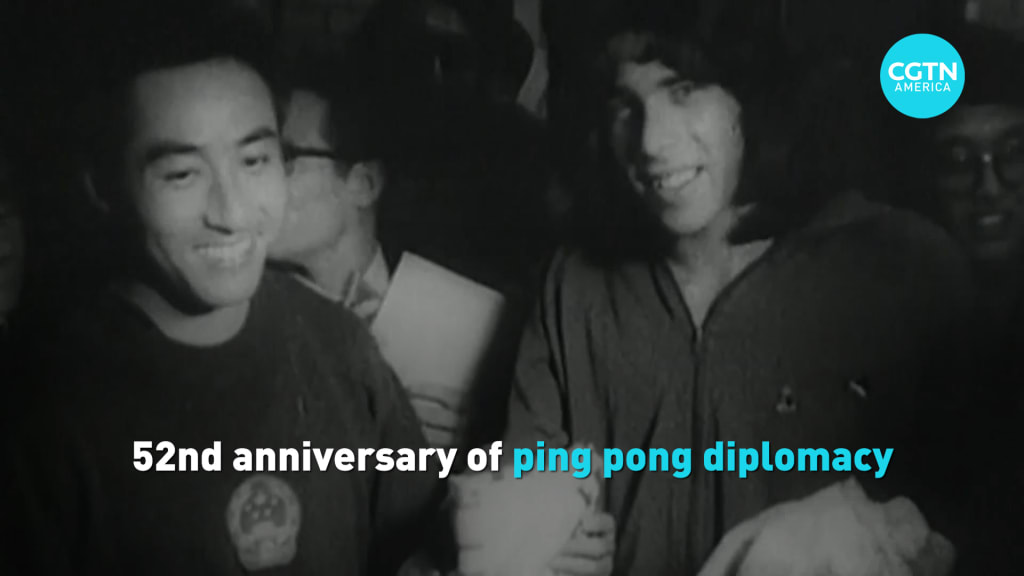
My name is Agha Muhammad Yahya Khan. I was born in British India, fought in World War II in the British Indian army, and eventually became a general, and President of Pakistan. If you are reading these, my personal, handwritten papers, I have been dead for some time. Of all the actions I participated in, and some of which I led, the most salient was the opening of China to the west, in 1972 when President Nixon visited that country, at that time the largest in the world. How did it happen? What was my part? The broad outlines are known, but how specifically? Read on, I pray.
Like many Indian and Pakistani officers, I got some of my military training at the Royal Military Academy in Sandhurst, England. It was very competitive, all those young men wanting to get to the head of the class. I had the brains and courage to match any man, and I wanted to get the highest marks and the best recommendation from the school to go farthest fastest in my own army. I had a setback in the second week. Struggling with jet lag, I complained it was hard to wake up for the 5 a.m. run. A fellow officer from the Punjab offered me his alarm clock, because he had two. It was a simple affair, just wind it up, put the arm to 4:30, and pull out the pin to activate it. When it failed to go off the next morning, I slept serenely through the early morning, missed the run, and got a negative report on my file. My compatriot colleague seemed surprised.
I resolved to learn my lesson. Your great author Mark Twain once said, “There ain’t no such thing as coincidence.” Do you agree? I disassembled the clock, and found that the pin that would have activated the sound had been removed. The clock had been sabotaged to my detriment. Are you American? Is a pin not very like a nail? I thought right away of your Benjamin Franklin, Poor Richard. What? You did not think that I would have read Poor Richard as a student? This is your blind spot. You think only Americans try to understand America and its literature. I would say perhaps, just perhaps, we understand your nation better than you understand it yourselves. Of course I am not here to argue the point with you, though I would relish that.
“For want of a nail the shoe was lost; for want of a shoe the horse was lost; and for want of a horse the rider was lost." Is it not so and was it not so? I received a demerit for want of a pin. And I resolved to learn from this.
I did finish at the top of the class at Sandhurst. I then rose quickly in the ranks, became a general, and later, in the turmoil between India and Pakistan, and just as problematically, between East and West Pakistan, I became indispensable. You will say I am not humble. You would prefer if I offered some phrases of false humility? Well, that is your problem. You won’t read them in my papers.
What happened to the compatriot who “pulled the pin,” as we say of hand grenades? He lost one of his shoes running the obstacle course, broke his leg, injured his head, and could not finish the training. Unlucky, I suppose.
Forgive me for saying so, but there was so much hypocrisy among you Americans. You favored India over us, partly for religious reasons, but the Indian government was much too far to the left for your purposes, and you needed Pakistan as a bulwark against China, because as out-and-out communists, the Chinese were your worst enemies, along with the Russians, of course.
Your national mistrust of Pakistani also infected your diplomatic corps. I met your ambassador to India, and made it a point to get to know him more than slightly. He was intelligent enough, competent, but opinionated, I mean personally opinionated, not just following the directives of your government, your precious foreign policy.
Was I slighted by him? Yes, but that did not anger me. I did not even feel insulted. I took it as information. What did your President Kennedy say? It was something I enjoyed later, “Don’t get mad, get even?” Was it something to that effect? A charming precept, don’t you agree?
The work of an ambassador is not onerous most of the time. Mainly there are functions and parties to attend. Some have estimated that in an important diplomatic mission the ambassador works five hours per month. Please don’t be upset with me if you are an ambassador. Remember, I am already dead. It is too late to chastise me.
Of course those five hours are vitally important. For example, it is essential protocol for the ambassador to “see the leaders of a country off” when they travel. For instance, when the wife of Mahatma Gandhi took a flight to Paris, it was a paramount duty for the American ambassador to attend her at the airport and wish her a pleasant trip. When he failed to show up, and she left without seeing him, this was a major diplomatic failing, and the fallout set relations between the U.S. and India back.
What a stupid lapse for that ambassador. Such an embarrassment. And the ripples it caused in diplomatic relations. However did it happen? Well rumor has it that the ambassador’s alarm clock did not go off in time for him to reach the airport. Apparently that alarm clock had a defect in its mechanism. An unlucky coincidence.
Collectively you mistrusted Pakistan, but your vice-president was different. He wrote an article in Foreign Affairs, explaining that the world could ill afford to isolate China, the largest country, forever. What? Of course I read everything in Foreign Affairs. I told you I was at the top of my class.
Richard Nixon stood alone in this belief, well, almost alone. When he became president he had Henry Kissinger at his side, the two most formidable minds and power brokers in geopolitics. You thought that Viet Nam was Nixon’s preoccupation? It was not. He considered it Lyndon Johnson’s war. He did not think it would stick to him, as an American would say.
No, Nixon and Kissinger were determined to make a whole new world order, and surely the largest piece on the chess board, the coveted prize of their new diplomacy, was China, secretive, and completely closed to the west.
But do you see the difficulty they faced in this endeavor? On the one hand there was Mao—inscrutable, unreachable—they did not even have a way to contact Premier Zhou Enlai. They had no way of knowing what Mao might think of their approach, their request for a thawing of relations, eventually a normalization of diplomacy.
Kissinger was a great one for “back channels,” and, to give him credit, in this case what choice did he have? First they tried a British diplomat who said he was on good terms with several Chinese officials. He made overtures for them, but they went nowhere. There was no word back from China.
Naturally they turned to me next. Our meeting in Washington, at Camp David, was memorable. Not many liked Richard Nixon, but I did. Richard Nixon did not like many people, but he liked me. How do I know? It was a simple matter of flattering and bribing someone in the steno pool with dinner and a necklace to obtain my copy of the confidential notes from the meeting. I imagine that by the time you read this account they will have been made public.
Nixon’s remark is that “General (crossed out, then corrected to “President”) Khan is a good ally, and a competent, intelligent emissary for us in China.” Nixon remarked that it was easy to see I had graduated from the Royal Academy in Sandhurst. Indeed he was correct. My own remarks to the president are also recorded, in a separate document:
“I assure you that I will present your message to the highest officials I can reach in China. And I would never embarrass your country as happened in the case of the American ambassador failing to attend the Indian prime minister’s wife at the airport.” Do you think that last point was too obvious? I have found that, when one is thought to be a bit subtle or cryptic, it is best to be obvious.
On my side, I needed a great deal from the Americans, especially funds for the military. Kissinger’s memo is clear. Pakistan received sixty million dollars from the U.S. And he assured me that he would forward an additional twenty million dollars.
Why separate those amounts? Why an extra twenty million? Back channels, and back channel work are not cheap, as you would say. If one has to grease a wheel, then grease is needed.
Were my efforts worth that much? I met with an official one rank below the premier. He asked me to stay in China for four days. Before I left, he assured me that both Mao and Zhou had heard my communication, and both favored a rapprochement with the west. They would welcome a visit from a cabinet-level official or a special envoy (Kissinger, I suppose), but they did not know exactly how to bring this about.
Both sides, you see, had the same problem of what you call “optics.” The Chinese government had taught its citizens to call the Americans imperialist Yankee dogs. Similarly, the Americans hated China as the shadowy enemy of their troops in Viet Nam and as the Yellow Peril. The leaders of both sides wished to meet, and both sides had what you would call a public relations problem in doing so.
How to bring the two great powers together spontaneously? An opportunity presented itself. There was to be a ping pong tournament in Japan. I sent for my friend Noor Jehan, the most famous singer and film director in my country. How well did I know her, you ask? Please. A gentleman does not kiss and tell. I told her I would finance a new film if she could screen test the cute Canadian ping pong player with John Lennon glasses in Japan. She asked the details of her responsibility. I explained, “The young man who is the star of the U.S. team dresses like a hippie, acts like a hippie, and the team will arrive in Japan two days from now. The time zone difference is twelve hours. He will be jet lagged. I think the pretty girl from Canada would be only too glad to present this hippie star with a small gift, say, this alarm clock, in case he has trouble waking up to catch the bus to the tournament.” A clock again, you ask? I find it most economical to stick with what works.
Noor had no trouble following. In Japan I had my own reliable helpers. A modest emolument and it was arranged that the American bus would depart first, with or without all the players, and the bus for the Chinese players would leave after that. The Chinese players were under strict instructions not to have any contact with the Americans. But boys will be boys. I asked for a report from my driver, but I did not need it,
Noor was flawless, of course. The hippie American boy overslept, (those unreliable alarm clocks!) and had to hop on the bus with the Chinese players. After an awkward silence, the Chinese captain approached the American hippie player and gave him a silk screen as a present (Noor’s idea, which I arranged). When they exited the bus, hundreds of flashbulbs captured that moment, and China was opened to the free world. Yes, only Nixon could go to China, but only I, Yahya Khan, could arrange for it to happen spontaneously.
About the Creator
Paul A. Merkley
Mental traveller. Idealist. Try to be low-key but sometimes hothead. Curious George. "Ardent desire is the squire of the heart." Love Tolkien, Cinephile. Awards ASCAP, Royal Society. Music as Brain Fitness: www.musicandmemoryjunction.com
Keep reading
More stories from Paul A. Merkley and writers in The Swamp and other communities.
“We Were Tricked”: How One Woman Lured Foreign Men to Fight on Russia’s Front Line
As the war in Ukraine grinds on, stories continue to emerge that reveal the conflict’s hidden human costs. Among the most disturbing are accounts from foreign men who claim they were deceived into joining Russia’s front-line forces—not through official recruitment offices, but through personal relationships built online. One such story centers on a woman accused of luring foreign nationals with promises of love, opportunity, and safety, only for them to end up in one of the world’s most dangerous war zones.
By Fiazahmedbrohi a day ago in The Swamp


Comments
There are no comments for this story
Be the first to respond and start the conversation.