
Fighting the ‘AI Ghost Trade’ – Dan Ives Lists 10 Catalysts to Reverse the Tech Selloff
Wedbush analyst outlines key drivers that could reignite investor confidence and stabilize the battered technology sector
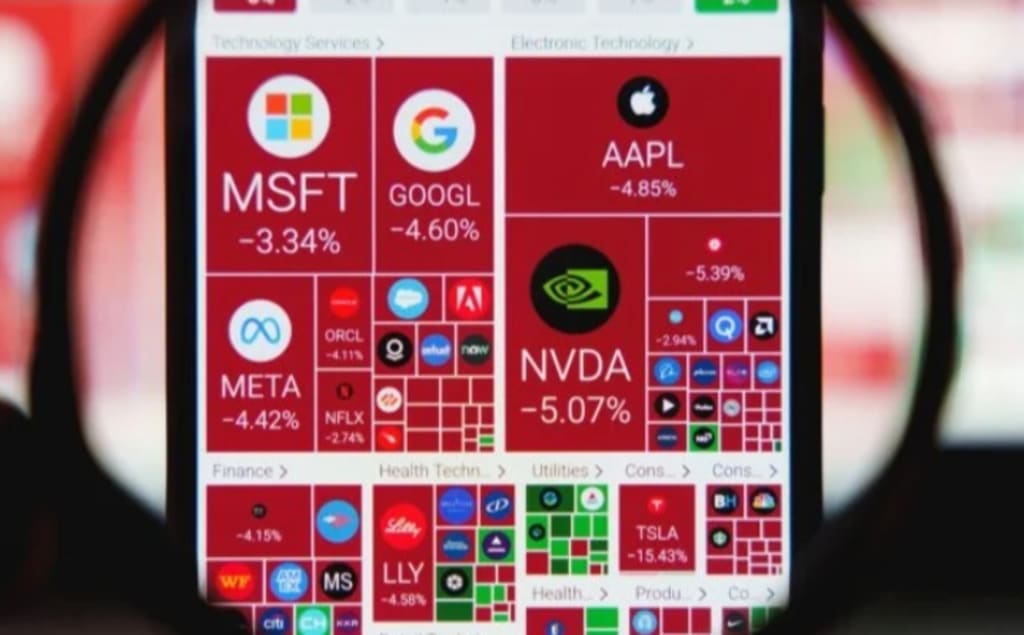
The technology sector has been under pressure in recent months, with investors pulling back from high-growth stocks amid rising volatility, valuation concerns, and shifting macroeconomic signals. But according to prominent Wall Street analyst Dan Ives, the recent tech selloff may be overdone — and a powerful rebound could be on the horizon.
Ives, a managing director at Wedbush Securities, has described the current market pullback as the “AI Ghost Trade” — a phenomenon in which fears about artificial intelligence overheating, regulatory pressures, and profit-taking have overshadowed the sector’s long-term fundamentals.
In a recent investor note, Ives outlined ten catalysts he believes could reverse the downturn and reignite enthusiasm across the technology landscape.
Understanding the ‘AI Ghost Trade’
The “AI Ghost Trade” refers to a market dynamic where investor anxiety — rather than deteriorating business fundamentals — drives stock declines. After a massive rally fueled by artificial intelligence breakthroughs, many tech stocks experienced sharp corrections as investors worried about stretched valuations and the sustainability of AI-driven growth.
The rapid rise of companies tied to AI infrastructure, semiconductors, and cloud computing created expectations that may have run ahead of earnings visibility. When sentiment shifted, selling accelerated.
But Ives argues that the broader AI revolution remains in its early stages.
Catalyst #1: Enterprise AI Spending Acceleration
Corporate investment in AI software and infrastructure is still ramping up. Ives believes that as enterprises move from experimentation to full deployment, spending cycles will strengthen, supporting revenue growth for cloud providers, chipmakers, and software companies.
AI adoption is transitioning from hype to implementation — and that shift could stabilize earnings projections.
Catalyst #2: Stronger Earnings from Tech Leaders
Major technology firms have demonstrated resilience despite macro headwinds. Continued strong earnings reports from mega-cap leaders could restore investor confidence and reinforce the narrative that AI monetization is real and scalable.
If revenue growth continues to outpace expectations, valuation concerns may ease.
Catalyst #3: Semiconductor Demand Rebound
The AI boom has dramatically increased demand for advanced chips used in data centers and machine learning applications. Companies like NVIDIA have become symbols of this trend.
Ives believes continued chip demand — particularly for AI accelerators — could serve as a key stabilizer for the broader tech ecosystem.
Catalyst #4: Federal Reserve Policy Clarity
Monetary policy plays a major role in tech valuations. Lower interest rates typically favor growth stocks, as future earnings become more valuable when discounted at reduced rates.
Clear signals from the Federal Reserve regarding rate stability or easing could help reverse risk-off sentiment.
Catalyst #5: AI Monetization Milestones
Investors want proof that AI investments translate into revenue and margin expansion. Companies demonstrating tangible returns from AI integration — whether through productivity gains or new product lines — could help shift perception from speculative to sustainable.
The next wave of quarterly reports may provide that evidence.
Catalyst #6: Cloud Growth Stabilization
Cloud computing remains foundational to AI deployment. If cloud growth rates stabilize or reaccelerate after recent slowdowns, confidence in long-term digital transformation trends could rebound.
Strong guidance from major cloud providers would be a powerful psychological boost for markets.
Catalyst #7: Reduced Regulatory Uncertainty
AI regulation is an emerging concern globally. Greater clarity from policymakers — whether in the U.S., Europe, or Asia — could remove a key overhang on valuations.
Investors often price in worst-case scenarios during periods of uncertainty. Clear frameworks may reduce that risk premium.
Catalyst #8: Broader Market Participation
The tech rally had been concentrated in a small number of mega-cap stocks. Ives believes a healthier rebound would involve broader participation across mid-cap and small-cap technology firms.
Improved market breadth would signal a more durable recovery.
Catalyst #9: M&A Activity Resurgence
Strategic acquisitions in the AI and software space could restore confidence. Mergers and acquisitions often indicate that corporate leaders see long-term value even when public markets are cautious.
A pickup in deal-making would reinforce the belief that the AI cycle remains intact.
Catalyst #10: Long-Term Structural AI Demand
Perhaps most importantly, Ives argues that AI is not a short-term trend but a generational technological shift. From healthcare diagnostics to financial modeling and cybersecurity, AI applications are expanding rapidly.
The underlying structural demand for AI infrastructure, software, and data analytics remains powerful — regardless of short-term market volatility.
The Psychology of a Selloff
Market corrections often reflect emotional cycles as much as fundamentals. After a strong rally, investors tend to lock in gains, amplifying downside momentum. Fear can overshadow earnings resilience.
The “AI Ghost Trade” label captures this psychological dynamic — the idea that fear of an AI bubble is haunting the market even as real-world adoption continues.
Historically, technology sectors have experienced multiple correction phases during long-term innovation cycles. Each wave of volatility eventually gave way to renewed growth once business fundamentals reasserted themselves.
Risks Still Linger
While Ives remains bullish, risks remain:
Prolonged macroeconomic weakness
Slower-than-expected AI adoption
Unexpected regulatory crackdowns
Corporate spending pullbacks
Investors must balance optimism with caution.
Looking Ahead
The tech sector stands at a crossroads. On one side lies lingering skepticism about valuations and AI hype. On the other lies sustained enterprise adoption, structural digital transformation, and innovation momentum.
Dan Ives’ ten catalysts present a roadmap for recovery — but markets will demand evidence.
If earnings, spending trends, and policy signals align positively, the current selloff may prove temporary. If not, volatility could persist.
For now, the “AI Ghost Trade” remains a battle between fear and fundamentals — and the next chapter will depend on which force ultimately prevails.
About the Creator
Why Black History Matters in America?
The United States of America is celebrating their 250th anniversary in 2026. I'm proud to be an American and as someone who was born here, I wouldn't imagine myself living anywhere else. This is a country where opportunities are possible. Where anyone can be successful in anything they desire to do. Equality, community, and togetherness are the backbones of what America is and should be about. However, we have an administration who wants to erase and disregard those who have made positive, meaningful impacts in our country, specifically Black figures, such as Martin Luther King, Jr., Rosa Parks, and Maya Angelou. President Trump and his administration have been constantly complaining and fighting against what they call the "Woke agenda". They use this excuse as a distraction from other issues they refuse to address, such as the high cost of living, climate change, and inflation. That equality is dividing America, when in reality, it's bringing us together. Being woke is not tied to a specific political party. No matter where you stand on the political spectrum, you can still care about other people and their plights. Compassion and empathy for others isn't tied to a political party, either. We were taught as children to treat others the way we want to be treated and not judge others because they're different from us. Caring about others isn't a personal attack on your beliefs. It doesn't make you any less of a person. People who are easily offended over African American figures, past or present, or anything related to it, are grasping at straws. Current and future generations need to know who people like Harriet Tubman and Shirley Chisholm were, especially in the classroom. Black History is part of American History. It should be recognized, not hidden or forgotten. Besides, you can't shield children from everything, just because your feelings are easily hurt.
By Mark Wesley Pritchard 19 days ago in The Swamp




Comments
There are no comments for this story
Be the first to respond and start the conversation.