
Farmer Baulks at £40,000 Cost to Remove Dumped Waste
How Fly-Tipping is Hitting Farmers Where It Hurts
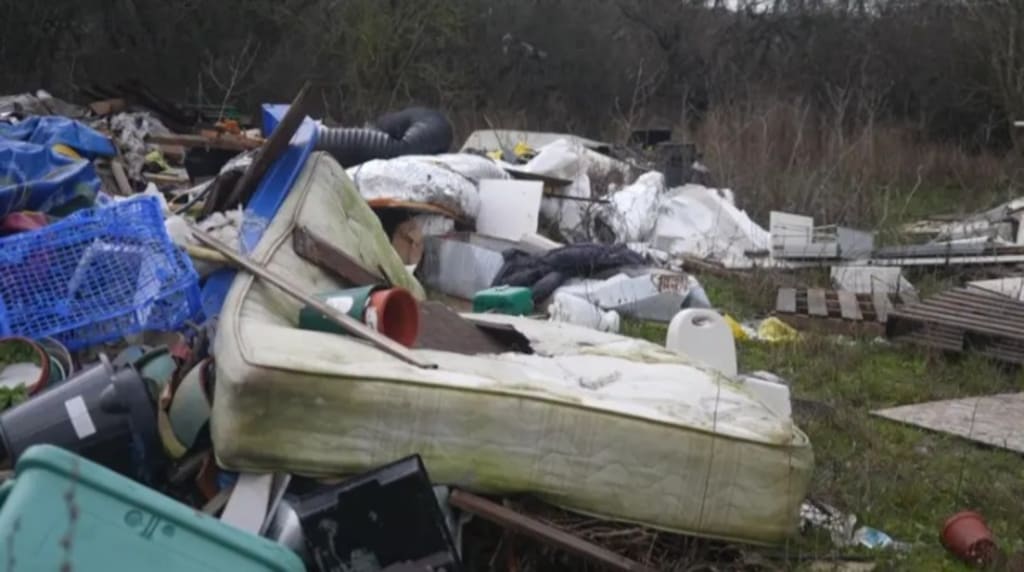
Illegal waste dumping, or fly-tipping, has long been a problem in the UK. But for one Hertfordshire farmer, it became a massive financial headache — a £40,000 bill for clearing waste dumped on his land. This story sheds light on a hidden crisis affecting rural landowners across England.
The Cost of Being a Victim
Last summer, around 200 tonnes of waste, including household garbage and potentially hazardous materials like asbestos, were dumped on a farmer’s arable land. The farmer, who wished to remain anonymous, now faces clean-up costs far beyond his means.
Despite reporting the incident, the responsibility for disposal falls largely on the landowner. The perpetrators remain at large, leaving victims to cover the financial and environmental fallout.
Fly-Tipping: A Growing Rural Problem
Fly-tipping is not just unsightly; it’s a growing rural crime. Unlike waste dumped on public land, which councils usually handle, private landowners often bear the costs. Farmers and rural property owners are frequently targeted, as criminals assume they are less likely to report suspicious activity.
The types of waste vary, but in serious cases, it can include toxic materials, medical waste, and construction debris. For the Hertfordshire farmer, the dumped waste included a dangerous mix of household and industrial waste, making removal more complicated and costly.
Who Is Responsible?
The Environment Agency investigates fly-tipping incidents and can pursue offenders. However, if the culprits cannot be identified or do not have the means to pay, the burden of cleaning up falls on the landowner.
While the agency can intervene in extreme cases — such as when there is immediate environmental risk — there is no routine funding to remove illegally dumped waste from private land. Critics argue this system leaves victims punished while offenders escape accountability.
The Financial and Environmental Impact
The financial consequences are significant. For smaller farms, a £40,000 bill can exceed the annual profit margin. Beyond finances, fly-tipping damages land, disrupts farming operations, and poses environmental hazards. Animals may ingest harmful waste, soil can become contaminated, and local water sources can be affected.
Nationally, illegal waste dumping is estimated to cost around £1 billion annually, including disposal, law enforcement, and environmental repair costs. These numbers highlight the scale of the problem, which goes far beyond individual incidents.
Stories from the Field
Farmers are speaking out. A neighboring landowner described the situation as “totally unjust”, arguing that society as a whole bears the cost of environmental crime, not individual farmers. Similar cases have seen landowners pay tens of thousands to dispose of waste, even when the offenders are identified — sometimes recovering only a fraction of the cost through court proceedings.
Calls for Reform
Farmers and environmental groups are pushing for policy changes:
Stricter penalties for offenders, reflecting the real environmental and financial harm.
Increased resources for enforcement, especially in rural areas.
Financial support for victims when the perpetrators cannot pay.
These changes would ensure landowners are not unfairly burdened while giving authorities the tools to tackle fly-tipping more effectively.
Prevention and Protection
Authorities advise landowners to stay vigilant. Signs of potential dumping include unusual vehicle activity or waste appearing without proper documentation. Fencing, CCTV, and signage can deter would-be fly-tippers. But experts stress that prevention alone cannot solve the problem — stronger laws and victim support are needed.
A System Under Pressure
The Hertfordshire farmer’s case is part of a larger national issue. Thousands of similar incidents occur every year, with victims facing financial, environmental, and emotional consequences. Until the government and enforcement agencies share the cost and responsibility more equitably, farmers will continue to bear the brunt of criminal activity that harms everyone.
The Bigger Picture
Fly-tipping is more than a rural inconvenience — it’s a crime that costs communities, damages the environment, and threatens livelihoods. The £40,000 clean-up bill faced by one farmer is symbolic of a system that often punishes victims instead of criminals.
For rural communities, the urgent question remains: how long can landowners continue to shoulder this hidden burden? Reform, better enforcement, and public awareness may be the only ways to ensure that victims like this farmer are not left paying the price for someone else’s crime.
About the Creator
Keep reading
More stories from Ayesha Lashari and writers in The Swamp and other communities.
Saudi Gigaproject Unveils the World’s Largest and Fastest Roller Coaster
Saudi Arabia has once again captured global attention with the grand opening of Six Flags Qiddiya City, a flagship entertainment destination located near Riyadh. The park made headlines on December 31, 2025, with the debut of Falcon’s Flight, now officially recognized as the world’s tallest, fastest, and longest roller coaster. This landmark attraction is part of the Kingdom’s ambitious Vision 2030 initiative, aiming to diversify its economy and establish Saudi Arabia as a global hub for tourism and entertainment.
By Ayesha Lashari6 days ago in The Swamp
Why Black History Matters in America?
The United States of America is celebrating their 250th anniversary in 2026. I'm proud to be an American and as someone who was born here, I wouldn't imagine myself living anywhere else. This is a country where opportunities are possible. Where anyone can be successful in anything they desire to do. Equality, community, and togetherness are the backbones of what America is and should be about. However, we have an administration who wants to erase and disregard those who have made positive, meaningful impacts in our country, specifically Black figures, such as Martin Luther King, Jr., Rosa Parks, and Maya Angelou. President Trump and his administration have been constantly complaining and fighting against what they call the "Woke agenda". They use this excuse as a distraction from other issues they refuse to address, such as the high cost of living, climate change, and inflation. That equality is dividing America, when in reality, it's bringing us together. Being woke is not tied to a specific political party. No matter where you stand on the political spectrum, you can still care about other people and their plights. Compassion and empathy for others isn't tied to a political party, either. We were taught as children to treat others the way we want to be treated and not judge others because they're different from us. Caring about others isn't a personal attack on your beliefs. It doesn't make you any less of a person. People who are easily offended over African American figures, past or present, or anything related to it, are grasping at straws. Current and future generations need to know who people like Harriet Tubman and Shirley Chisholm were, especially in the classroom. Black History is part of American History. It should be recognized, not hidden or forgotten. Besides, you can't shield children from everything, just because your feelings are easily hurt.
By Mark Wesley Pritchard 8 days ago in The Swamp
Trump and Colombia’s Petro: Old Rivals Testing a Diplomatic Thaw
In a development that would have seemed unlikely just a year ago, former U.S. President Donald Trump and Colombian President Gustavo Petro are set to meet on Tuesday, exploring what both sides are calling a tentative thaw in a relationship long defined by mistrust and ideological distance. The planned meeting does not signal instant friendship, but it does suggest that political rivals—once openly critical of each other—are now willing to test whether pragmatic dialogue can replace public sparring.
By Saboor Brohi 6 days ago in The Swamp
Field of the Fallen
Sunlight danced softly across the frost-crusted fields, making the little blades of grass sparkle like emeralds. The faraway chirrup of a songbird was the only disruption to the quiet of the morning. An icy chill, the last vestige of the dying winter, clung to the air, settling in a thick white mist at the far side of the open field. The heavy stench of decay hung in that mist, punctuation by the sharp tang of freshly spilled blood.
By A. J. Schoenfeld8 days ago in Fiction


Comments
There are no comments for this story
Be the first to respond and start the conversation.