
Exposing the Truth: 7 Ways NDA's Are Designed to Hurt the Disadvantaged
Learn the Truth Now

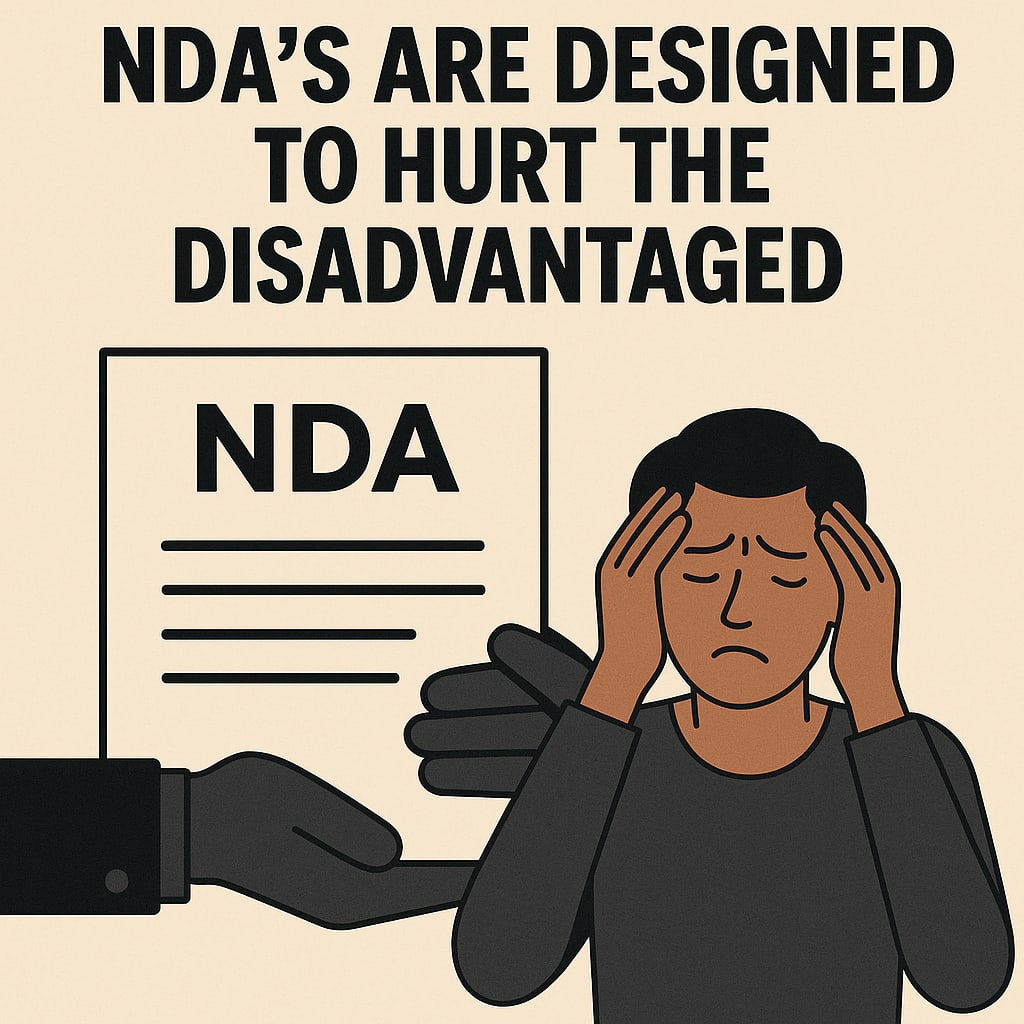
A Critical Analysis
Understanding NDA Agreements – What Are They Really?
Non-Disclosure Agreements, or NDAs, are legal contracts that prevent individuals from sharing specific information. Originally designed to protect intellectual property and trade secrets, these documents have morphed into powerful tools wielded by those in positions of authority. Today, NDAs are commonly found in employment contracts, settlement agreements, and even interpersonal disputes—often with serious implications.
For the disadvantaged—those with fewer resources, less access to legal aid, and lower social capital—NDAs can become instruments of silence and submission. While businesses argue NDAs are necessary to protect proprietary information or reputations, they frequently function as gag orders, particularly in situations involving misconduct or exploitation.
Origins of NDA Usage – A Historical Lens
Initially, NDAs served a clear business purpose: preventing employees or partners from leaking confidential information. Over time, however, their application expanded beyond protecting innovation. By the 1980s and 1990s, NDAs were regularly used to resolve internal workplace conflicts, including claims of harassment or discrimination.
This shift enabled corporations and institutions to quietly settle serious allegations, often with no admission of wrongdoing, while shielding themselves from public scrutiny. The legal framework that once safeguarded business secrets now also shields abusive behavior and perpetuates inequality.
Who Really Benefits from NDAs?
The most apparent beneficiaries of NDAs are powerful individuals and corporations. For them, an NDA is a shield—a tool to avoid legal consequences, manage reputational damage, and suppress potentially explosive truths.
For example, many high-profile sexual harassment cases in the entertainment and tech industries were buried under stacks of NDAs. Victims were paid off, coerced into silence, and legally barred from sharing their experiences, all to protect abusers and maintain the illusion of integrity.
Meanwhile, the disadvantaged party—typically the victim or whistleblower—is left with no outlet for justice or healing. Without financial resources to challenge the NDA, and facing the threat of costly lawsuits, they are effectively silenced.
Power Imbalances and Coercion in NDA Enforcement
The power imbalance inherent in most NDA negotiations is staggering. Employers, institutions, and wealthy individuals often present NDAs during high-stress, emotionally charged situations—such as after reporting harassment, discrimination, or wrongful termination. The disadvantaged party, overwhelmed and without legal counsel, may feel they have no choice but to sign.
In many cases, NDAs are not open to negotiation. They're presented as standard procedure, with an implicit or explicit message: "Sign this or face the consequences." The consequences might include job loss, retaliation, or even blacklisting in the industry.
This coercion undermines the very idea of consent. An agreement signed under duress—especially by someone without equal bargaining power—is ethically questionable at best and legally problematic at worst. Yet, the legal system often upholds these agreements, reinforcing the cycle of silence and power preservation.
Silencing Victims – A Tool for Suppressing Truth
Perhaps the most sinister use of NDAs is in silencing victims of abuse, harassment, and discrimination. These agreements effectively prevent individuals from speaking out about their experiences, even when doing so could protect others or spark meaningful change.
NDAs have been widely used in cases involving:
Sexual harassment in the workplace
Racial discrimination and abuse
Wrongful termination for whistleblowing
Retaliation after reporting misconduct
In these scenarios, victims are often lured with a settlement offer, coupled with a strict confidentiality clause. They’re told they can never speak publicly about what happened. Not only does this silence the victim, but it also protects the perpetrator and allows the misconduct to continue unchecked.
This is how NDA’s are designed to hurt the disadvantaged—by making the price of truth unbearably high.
The Psychological Toll on the Disadvantaged
The effects of signing an NDA go far beyond legal constraints. Many who sign NDAs experience intense emotional and psychological distress. Victims are often burdened with guilt, shame, and isolation.
Imagine experiencing trauma, only to be legally forbidden from talking about it—not even with friends, family, or support groups. The silence becomes a second trauma, reinforcing feelings of powerlessness and fear.
Long-term effects can include:
Chronic anxiety and depression
PTSD symptoms
Loss of self-worth
Fear of future retaliation or exposure
For the disadvantaged—who may already face barriers to mental health care—the emotional toll of an NDA can be devastating and enduring.
Financial Constraints and Lack of Recourse
One of the most effective ways NDAs hurt the disadvantaged is by denying them financial and legal options. Challenging an NDA requires extensive legal expertise and money—resources most working-class individuals don’t have.
Even when a person believes an NDA is unjust or unenforceable, the fear of a costly lawsuit prevents them from speaking out. Legal threats and intimidation are common, reinforcing silence.
Here’s how the system disadvantages the vulnerable:
Challenge Impact on the Disadvantaged
High legal fees Most can't afford to fight in court
Time-consuming legal process Many can't take time off work
Risk of countersuits Fear of retaliation prevents action
Lack of legal aid Few pro bono resources for NDA cases
This imbalance ensures that NDAs, regardless of their fairness, remain powerful tools for the wealthy—and silencing mechanisms for everyone else.
NDAs as a Barrier to Transparency and Accountability
NDAs not only silence individuals—they also suppress critical information that could prevent future harm. When patterns of abuse or systemic discrimination are hidden under layers of legal secrecy, institutions are never held accountable.
Transparency is essential for justice, but NDAs function as a legal blackout. They keep harmful behavior in the shadows, preventing media exposure, public discourse, and institutional reform.
Many public scandals—like those involving Harvey Weinstein or major corporations—only came to light after brave individuals broke their NDAs. In these cases, the NDA was never about protection; it was about control.
Whistleblower Protections vs. NDA Restrictions
Some countries have laws designed to protect whistleblowers, but NDAs often skirt or outright violate these protections. Victims are frequently unaware of their rights, or too afraid to challenge their NDA based on legal ambiguity.
Despite federal and state protections in places like the U.S., the following problems persist:
NDAs written to intimidate, even if unenforceable
Whistleblowers still face employer retaliation
Lack of education around legal rights
This chilling effect prevents individuals from coming forward, even in cases involving public health, safety, or large-scale corruption.
Government and Institutional Complicity
In many instances, governments and public institutions themselves use NDAs to suppress dissent or hide scandals. Whether it’s law enforcement, school boards, or political offices, NDAs are regularly employed to “resolve” internal disputes without exposing misconduct.
Moreover, lobbying from powerful interests has blocked legislative efforts to ban or restrict the use of NDAs in sensitive cases, such as those involving abuse or discrimination.
When public institutions adopt the same tactics as corporations, the result is a legal system that actively undermines the rights of the very people it claims to protect.
Case Studies – When NDAs Hurt the Disadvantaged
Several high-profile cases have shown how NDAs perpetuate abuse:
Fox News Scandal: Multiple women who accused top executives of sexual harassment were silenced by NDAs as part of their settlements.
Theranos Whistleblowers: Employees who raised concerns about fraudulent practices were threatened with legal action under strict NDAs.
Fast-Food Chains: Workers who experienced wage theft or discrimination were coerced into signing NDAs upon termination.
But perhaps more concerning are the countless everyday cases that never make headlines—janitors, nurses, waitstaff, or clerical workers who suffer in silence because they lack the power to fight back.
Advocacy and Legal Reform Movements
In response to the widespread misuse of NDAs, advocacy groups, lawmakers, and survivors have begun fighting back. These reform efforts aim to curb the abuse of confidentiality clauses and give power back to the individuals they’ve silenced.
Some notable efforts include:
“Speak Out” Laws: States like California and New York have introduced legislation limiting the use of NDAs in sexual harassment and discrimination cases.
#MeToo Movement: This global wave of activism empowered survivors to break their silence, drawing attention to the misuse of NDAs and advocating for their restriction.
Nonprofits and Legal Aid Groups: Organizations like Time’s Up Legal Defense Fund offer support to individuals bound by NDAs, particularly those from marginalized communities.
These efforts signal a broader shift toward transparency and justice, but there's still much work to be done.
Ethical and Moral Implications of NDA Use
At its core, the debate over NDAs is a moral one. Is it ethical to silence someone who has suffered harm, simply to protect a brand or a powerful individual?
Critics argue that NDAs, especially in sensitive cases, conflict with fundamental human rights—freedom of speech, access to justice, and personal agency. When businesses prioritize secrecy over accountability, they compromise their integrity and enable systemic abuse.
Ethical employers are now rethinking their use of NDAs, exploring alternatives that protect both reputations and human dignity. Confidentiality doesn’t have to come at the cost of justice.
How Media and Public Awareness are Shifting the Narrative
Public opinion is turning against NDAs—particularly those used to silence victims. Journalism, documentaries, and social media have exposed the dark side of these agreements, giving voice to those previously kept silent.
Examples include:
Investigative reports from outlets like The New York Times and The Guardian
Documentaries like The Assistant and Untouchable
Viral threads on platforms like Twitter and Reddit, where anonymous users share their experiences
This wave of awareness is pressuring corporations and lawmakers to act, while empowering more people to question the fairness of the agreements they’re asked to sign.
What Can Be Done? Alternatives to Harmful NDAs
A world without accountability-gagging NDAs is possible. There are more ethical alternatives that protect both parties without silencing victims.
Some options include:
Transparency Clauses: Allowing victims to share their story while keeping the financial terms private.
Mutual NDAs: Ensuring that if one party is gagged, so is the other—eliminating asymmetrical power.
Restorative Justice Practices: Focusing on healing, acknowledgment, and transformation rather than secrecy.
Employers and institutions can also:
Create whistleblower-friendly environments
Provide legal counsel to all parties during agreement negotiations
Publicly commit to not using NDAs in harassment or discrimination cases
By embracing these approaches, we move toward a fairer system that values truth over silence.
Frequently Asked Questions (FAQs)
Q1: What is an NDA and how does it work?
An NDA (Non-Disclosure Agreement) is a legal contract that prevents parties from disclosing specific information. In employment or settlement contexts, they often restrict employees or victims from speaking about misconduct, under threat of legal action.
Q2: Are NDAs enforceable in cases of abuse?
While NDAs are generally enforceable, courts have occasionally invalidated them if they conceal illegal activity. However, many victims still fear breaking them due to financial and legal risks.
Q3: Can you break an NDA if you're disadvantaged?
Yes, but it’s extremely risky without legal support. Some jurisdictions offer exceptions for illegal conduct, but each case varies. Always consult a legal professional before breaking an NDA.
Q4: What happens if someone violates an NDA?
They can be sued for breach of contract. Penalties may include financial damages, legal fees, and court orders. However, courts may rule in favor of the speaker if the NDA conceals wrongdoing.
Q5: Are there alternatives to NDAs?
Yes. Transparency clauses, mutual confidentiality agreements, and public-interest exceptions offer fairer solutions. Some laws also restrict NDA use in sensitive contexts.
Q6: How can someone seek help if bound by an NDA?
Legal aid organizations, whistleblower protection groups, and advocacy nonprofits can help. Consider reaching out to the Time’s Up Legal Defense Fund or local civil rights organizations for assistance.
Conclusion – Toward a Fairer, Transparent Legal Future
The widespread misuse of NDAs reveals a troubling truth: these legal tools, while designed to protect, are too often weaponized against the most vulnerable. From silencing survivors to shielding powerful wrongdoers, NDAs reinforce systemic imbalances that harm individuals and communities.
But change is possible.
As awareness grows and reform efforts gain momentum, the narrative is shifting. More people are challenging NDAs, demanding transparency, and advocating for justice. To build a fairer legal system, we must continue to question who these agreements really serve—and whose voices they silence.
It’s time to ensure that NDAs are no longer designed to hurt the disadvantaged, but rather replaced with tools that protect everyone, equally and ethically.
About the Creator
DJ for Change
Remixing ideas into action. I write about real wealth, freedom tech, flipping the system, and community development. Tune in for truth, hustle, hacks, and vision, straight from the Capital District!
https://buymeacoffee.com/djforchange
Keep reading
More stories from DJ for Change and writers in The Swamp and other communities.
When a Permit Becomes a Pretext: Schenectady's Inspector, Profiling, and the Cost of Complacency
This article was created with the assistance of AI tools for drafting and editing. All facts and opinions were carefully verified and are the responsibility of the author.
By DJ for Change4 months ago in The Swamp
Germany Transportation Battery Market Size and Forecast 2025–2033
Germany Transportation Battery Market Overview The Germany Transportation Battery Market is entering a decisive growth phase as the country accelerates its transition toward climate-neutral mobility. According to Renub Research, the market is expected to expand from US$ 4.77 billion in 2024 to US$ 13.84 billion by 2033, registering a strong compound annual growth rate (CAGR) of 12.56% from 2025 to 2033. This rapid expansion reflects Germany’s deep commitment to electric mobility, renewable energy integration, and long-term energy independence.
By Renub Research5 days ago in The Swamp
Center Stage with Gina C.
*** I'm keen to republish the interviews I did for my series with Vocal creators. It's been a few years and I thought it might be nice to revisit these wonderful conversations. I'll be releasing them one at a time for a few weeks/months.
By Heather Hubler5 days ago in Interview


Comments
There are no comments for this story
Be the first to respond and start the conversation.