
Ex‑Olympian Ryan Wedding Pleads Not Guilty to Massive Drug Kingpin Charges in U.S. Court
Former Canadian Olympic snowboarder denies accusations of running a transnational cocaine empire and orchestrating murders as he awaits trial in California
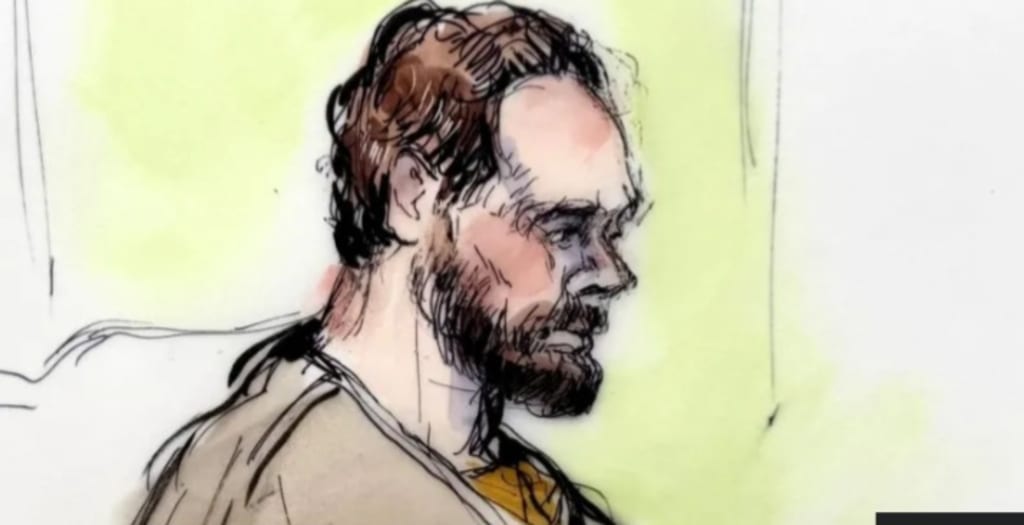
Ryan Wedding, a former Canadian Olympic snowboarder, is at the center of one of the most shocking criminal cases in recent history. Once celebrated for his athletic achievements, Wedding now faces allegations of running a sprawling international cocaine trafficking operation, with links to violence and murder. This week, he appeared in a U.S. federal court to plead not guilty to the charges.
The Court Appearance
On January 26, 2026, Wedding made his first court appearance in Santa Ana, California. Flown in from Mexico after his arrest, he entered the courtroom in a jail uniform, handcuffed, and faced a federal magistrate. When asked if he had read the indictments against him, Wedding calmly responded, “I’ve read them both, yes.”
His plea of not guilty signals that he will vigorously defend himself against the serious accusations, which include drug trafficking, conspiracy to commit murder, witness tampering, and running a criminal enterprise.
The Allegations: From Slopes to Crime
Prosecutors claim Wedding transitioned from competitive snowboarding to organized crime after retiring from sports. Authorities say he led a transnational criminal network, smuggling as much as 60 tons of cocaine from Colombia through Mexico into the United States and Canada. His operation allegedly worked with powerful Mexican cartels, including the notorious Sinaloa Cartel.
The indictment describes his group as one of the largest suppliers of cocaine to Canada. Prosecutors also allege that Wedding used violence and intimidation to protect his operation, including ordering murders of individuals linked to stolen shipments and potential witnesses.
A Life on the Run
Wedding reportedly spent over a decade evading authorities. His ability to remain at large prompted the FBI to add him to its Ten Most Wanted Fugitives list in March 2025 and offer a $15 million reward for information leading to his capture—one of the highest rewards ever offered for a fugitive.
His arrest in Mexico followed a coordinated international effort involving authorities from the U.S., Mexico, Canada, Colombia, and the Dominican Republic. Mexican officials initially said he surrendered at the U.S. Embassy, though Wedding’s lawyer disputed this, insisting that he was apprehended rather than voluntarily surrendering.
The Defense Speaks
Wedding’s attorney, Anthony Colombo, emphasized that the charges are allegations, and his client is presumed innocent until proven guilty. Colombo denied reports of a voluntary surrender and stated that Wedding intends to challenge the government’s case at every step.
While details of the defense strategy remain private, Colombo stressed that the legal team will vigorously contest the accusations, including the most serious charges of murder and organized crime.
Judge Orders Custody
Despite his not guilty plea, the judge ruled that Wedding would remain in custody until his trial. Authorities cited concerns over public safety and the risk of flight, given his long history of evading law enforcement.
The next court date is set for February 11, 2026, with a tentative trial scheduled to begin on March 24, 2026.
International Implications
Wedding’s arrest is being hailed as a major victory in the fight against transnational drug trafficking. Officials emphasize that his operation illustrates the challenges law enforcement faces with global criminal networks that use violence and intimidation to operate across borders.
Canada also has outstanding charges against Wedding, which it plans to pursue after the conclusion of his U.S. case. This dual legal pursuit highlights the importance of international cooperation in tackling large-scale organized crime.
A Fall from Glory
The story of Ryan Wedding is a striking example of how public figures can go from celebrated athletes to individuals accused of serious criminal activity. Representing Canada in the 2002 Winter Olympics, Wedding once inspired fans and young athletes. Now, he faces accusations that could result in life imprisonment if convicted on the most serious counts.
His case continues to unfold, and it is expected to attract intense media and public attention as the trial progresses. It serves as a stark reminder of the dangers of organized crime and the far-reaching consequences of illicit activities.
Conclusion
Ryan Wedding’s journey—from Olympic heights to alleged criminal mastermind—is both shocking and cautionary. While he awaits trial, authorities and the public will watch closely to see how the case develops. Whether innocent or guilty, the outcome of this trial will have significant implications for international law enforcement and the fight against transnational drug trafficking.
About the Creator
Keep reading
More stories from Ayesha Lashari and writers in The Swamp and other communities.
US to Transfer Seized Tanker Captain from UK Waters ‘Imminently’, Court Hears
London, UK — The United States is preparing to remove the captain of a Russian‑flagged oil tanker from UK waters “imminently”, a Scottish court was told on Tuesday — sparking a fierce legal battle over the legality of his detention and the fundamental rights of those aboard the seized vessel. �
By Ayesha Lashariabout 14 hours ago in The Swamp
Supreme Court Appears Likely to Allow Lisa Cook to Remain on Fed Board
The U.S. Supreme Court appears inclined to allow Federal Reserve Governor Lisa Cook to remain on the Fed’s board, signaling strong judicial support for the independence of the nation’s central bank. During recent proceedings, the justices expressed skepticism toward arguments that would expand presidential authority to remove Federal Reserve officials at will, a move that critics warn could politicize monetary policy and unsettle global financial markets.
By Muhammad Hassan6 days ago in The Swamp
European Leaders Endure a New Level of Public Embarrassment as Trump Dials Up the Insults
European leaders are facing an increasingly uncomfortable diplomatic reality as former U.S. President Donald Trump escalates his public criticism of Europe with renewed intensity. Once again, Trump’s blunt rhetoric, personal jabs, and dismissive tone toward long-standing allies are reshaping transatlantic relations—not through policy, but through spectacle. What was once seen as unconventional diplomacy has now evolved into a sustained campaign of public embarrassment for European leadership.
By Fiaz Ahmed Brohi7 days ago in The Swamp
One Hard Thing
Stop me if you’ve heard this one before: You have the number, you know your schedule- you’ve even picked out the perfect day and time to make this appointment. Shoot, you’ve even picked out alternative days and times just in case their schedules can’t accommodate you!
By Taylor Rigsby2 days ago in Motivation



Comments
There are no comments for this story
Be the first to respond and start the conversation.