
Europe Won’t Be Blackmailed,” Danish PM Says as NATO Allies Unite Over Trump’s Greenland Threat
Denmark rallies NATO partners as tensions rise over sovereignty, security, and Arctic geopolitics.

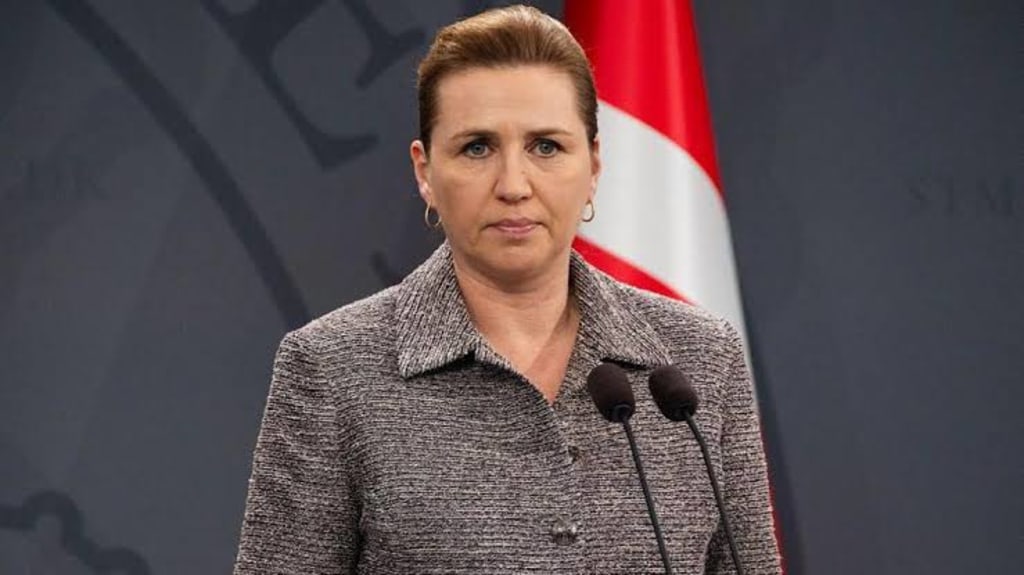
Europe’s political leadership has delivered an unusually blunt message after renewed comments from former U.S. President Donald Trump reignited controversy over Greenland: the continent will not be pressured, coerced, or intimidated over its territory. Danish Prime Minister Mette Frederiksen declared that “Europe won’t be blackmailed,” as NATO allies rallied behind Denmark to reaffirm sovereignty, international law, and alliance unity.
The remarks come amid growing unease over Trump’s repeated statements suggesting that the United States should “take control” of Greenland for strategic and security reasons. While such comments were dismissed by many as political rhetoric during Trump’s presidency, their re-emergence has triggered serious diplomatic reactions, especially as transatlantic relations face broader strain.
Greenland: Strategic Asset, Not a Bargaining Chip
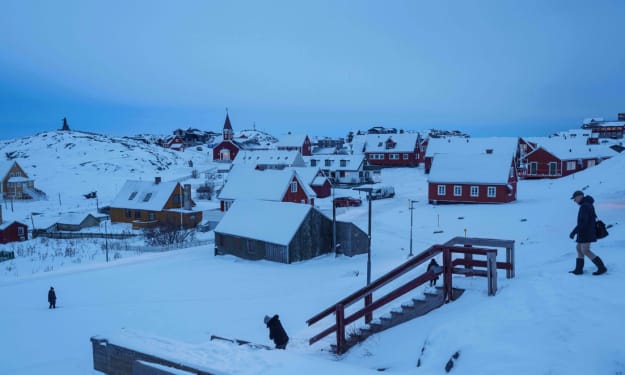
Greenland, an autonomous territory within the Kingdom of Denmark, occupies a crucial position in the Arctic. As climate change accelerates ice melt, the region is becoming more accessible, opening new shipping routes and exposing untapped natural resources. Its location also makes it strategically vital for missile defense, satellite tracking, and military logistics.
However, Danish officials were quick to stress that strategic importance does not override sovereignty. Prime Minister Frederiksen emphasized that Greenland’s future must be decided by Greenlanders themselves—not foreign powers. “You cannot buy or threaten your way into ownership of another people’s land,” she said, echoing widespread European sentiment.
Greenland’s own leaders have also responded firmly, rejecting any suggestion that the island could be transferred or pressured into changing its political status.
NATO Closes Ranks
In response to Trump’s remarks, NATO allies expressed rare public unity. Senior officials from Germany, France, Norway, and Canada reaffirmed their support for Denmark, underscoring that alliance solidarity depends on respect for national borders and democratic processes.
While NATO has long valued U.S. leadership, European members made it clear that unity does not mean submission. Diplomats stressed that security cooperation must be based on mutual respect, not unilateral demands.
Behind the scenes, analysts say the controversy has accelerated discussions within Europe about strategic autonomy—reducing overreliance on any single ally while strengthening collective defense.
A Warning Sign for Transatlantic Relations
The Greenland episode has reignited broader concerns about unpredictability in U.S. foreign policy should Trump return to power. European leaders worry that transactional diplomacy—where alliances are treated as leverage rather than partnerships—could destabilize long-standing security arrangements.
“This isn’t just about Greenland,” one European diplomat noted. “It’s about whether rules-based order still matters among allies.”
The Danish prime minister’s statement that “Europe won’t be blackmailed” reflects a growing willingness among European nations to push back publicly rather than quietly absorb pressure.
Arctic Tensions Are Rising
The dispute also highlights increasing competition in the Arctic. Russia and China have expanded their presence in the region, prompting NATO to pay closer attention to northern defense. Greenland hosts a critical U.S. airbase, and Denmark has welcomed cooperation—but insists it must occur within agreed frameworks.
Experts say attempts to frame Greenland as a prize risk destabilizing the region. Instead, sustainable security depends on cooperation with Arctic communities, environmental stewardship, and respect for indigenous rights.
Greenlanders Demand Respect
Perhaps the strongest response has come from Greenland itself. Local leaders and civil society groups have voiced frustration at being discussed as an object of geopolitical ambition rather than as a people with agency.
Polls consistently show that Greenlanders favor greater autonomy, but not annexation by another country. Many see the controversy as a reminder of the importance of self-determination in global politics.
Europe’s Line in the Ice
The united European response marks a shift in tone. Where leaders once chose cautious diplomacy, they are now setting clearer boundaries. Denmark’s stance has been widely praised across Europe as principled and necessary.
As one analyst put it, “This is Europe saying it will defend not just territory, but values.”
Conclusion
The Greenland controversy has become a symbol of wider tensions reshaping global alliances. By standing firm, Denmark and its NATO partners have signaled that sovereignty, democratic choice, and international law are non-negotiable.
Whether or not Trump’s remarks were intended as serious policy proposals, the response they provoked reveals a Europe more confident, more united, and less willing to accept pressure—even from its closest ally.
In the frozen expanse of the Arctic, Europe has drawn a clear line: cooperation yes, coercion no.
About the Creator
Fiaz Ahmed Brohi
I am a passionate writer with a love for exploring and creating content on trending topics. Always curious, always sharing stories that engage and inspire.
Keep reading
More stories from Fiaz Ahmed Brohi and writers in The Swamp and other communities.
The World’s Largest Factory Employs More Than 30,000 Workers and Builds Eight Jets Simultaneously
In the sprawling industrial heart of East Asia, a factory like no other hums with activity. It is the world’s largest aircraft manufacturing facility, capable of constructing eight jets simultaneously under a single roof. With more than 30,000 workers on staff, this colossal complex is not only a marvel of engineering and logistics but also a symbol of modern industrial might, demonstrating the scale at which aerospace production has evolved in the 21st century. The factory’s sheer size is staggering. Covering millions of square meters, the facility resembles a small city, complete with specialized zones for fuselage assembly, wing construction, avionics integration, and final testing. Every section of the plant is meticulously coordinated, allowing for multiple aircraft to be built in parallel. This simultaneous construction process dramatically reduces production time, ensuring that jets can move from blueprint to runway-ready in record speeds. A workforce of over 30,000 people contributes to every aspect of production, from engineers designing cutting-edge systems to assembly line technicians installing components with precision. Advanced robotics and automated guided vehicles supplement human labor, moving heavy parts and assembling delicate structures with unmatched accuracy. This hybrid model of human skill combined with automation enables the factory to maintain high efficiency without compromising quality. One of the most impressive achievements of the facility is its ability to handle eight aircraft at once. Each jet requires hundreds of thousands of individual components, from engines and avionics to interior fittings and safety systems. Coordinating such complexity across multiple planes simultaneously is a logistical feat that few factories anywhere in the world can match. The success of this model has positioned the facility as a global benchmark for large-scale aerospace manufacturing. Beyond its production capacity, the factory also serves as a hub for innovation. Research and development wings within the plant focus on improving jet efficiency, integrating new materials, and developing advanced avionics systems. Engineers and designers work closely with assembly teams, ensuring that innovations move seamlessly from concept to production. This synergy between R&D and manufacturing accelerates the adoption of new technologies in commercial aviation. The economic impact of the factory is equally significant. Employing tens of thousands of workers, it sustains numerous local communities and drives ancillary industries such as logistics, electronics, and specialized aerospace component manufacturing. Beyond employment, the facility has become a source of national pride, demonstrating the country’s ability to compete with long-established aerospace giants. Safety and quality control are paramount in a plant of this magnitude. Each jet undergoes rigorous testing at multiple stages, including structural integrity assessments, engine performance evaluations, and avionics calibration. With aircraft capable of carrying hundreds of passengers or performing critical defense roles, there is no room for error. The factory’s systematic approach ensures that every plane leaving its doors meets the highest international standards. The scale and efficiency of the factory also reflect broader trends in global aviation. As demand for air travel and defense capabilities grows, manufacturers are seeking ways to increase output while maintaining quality. Mega-factories like this one offer a solution, centralizing production, reducing costs, and accelerating delivery timelines. They also highlight the importance of supply chain integration, with thousands of suppliers worldwide contributing components that must arrive on time and in perfect condition. Critically, the factory represents more than just industrial might—it is a strategic asset. By producing large numbers of aircraft domestically, countries reduce reliance on foreign suppliers, strengthen national defense capabilities, and enhance their global aerospace competitiveness. For commercial aviation, it ensures airlines have access to the latest aircraft technologies and models without long delays. However, operating a facility of this size is not without challenges. Coordinating 30,000 employees, managing complex supply chains, and ensuring quality across multiple aircraft simultaneously requires constant oversight and adaptive management. Seasonal shifts, component shortages, and technological upgrades all demand agile solutions. Yet, the success of the factory demonstrates that with meticulous planning, investment in talent, and integration of modern technologies, even the most ambitious manufacturing projects are achievable. In the global aerospace landscape, this factory stands as a monument to human ingenuity, industrial ambition, and organizational excellence. Its ability to produce eight jets at once under one roof, powered by the combined efforts of tens of thousands of workers, is unmatched. For industry observers, it offers a glimpse into the future of aircraft manufacturing—a future defined by scale, precision, and innovation. Substitle:
By Fiaz Ahmed Brohia day ago in The Swamp
Trump Wants Greenlanders to Join the U.S., but His Comments Are Making That Harder
Donald Trump’s fascination with Greenland has been a topic of international headlines since his first public musings about the massive Arctic island. His latest statements, suggesting that Greenlanders “should consider joining the United States,” have added a new layer of controversy. What might have sounded like a lighthearted comment or a negotiation tactic is now straining U.S.-Greenland relations and raising broader questions about diplomacy, sovereignty, and Arctic geopolitics. Greenland: More Than Just Ice Greenland, the world’s largest island, is an autonomous territory within the Kingdom of Denmark. Home to roughly 56,000 people, it has rich natural resources, strategic military locations, and a unique Arctic ecosystem. While its population is small, Greenland’s geopolitical significance is anything but. The island’s location makes it a focal point for global powers. The U.S. has long recognized Greenland’s strategic importance, operating Thule Air Base, which is the northernmost U.S. military installation. Meanwhile, China and Russia have shown growing interest in the Arctic, eyeing shipping routes and resource exploration. For Greenlanders, however, the question of joining the United States is more than a strategic calculation; it’s about identity, culture, and self-determination. The Problem With Trump’s Proposal When Trump publicly floated the idea that Greenland “would be great for the United States,” the reaction in Greenland was swift and largely negative. Locals viewed the remarks as a mix of arrogance and misunderstanding. Many Greenlanders see the U.S. as a key ally but remain committed to their Danish ties and independent governance. Political analyst Maria Kjeldsen notes, “Trump’s comments, while seemingly playful, undermine Greenland’s ongoing efforts to develop its economy and assert its political voice. Suggesting annexation or membership in the U.S. oversimplifies the island’s complex realities.” The remarks also triggered diplomatic tensions with Denmark. Danish Prime Minister Mette Frederiksen responded firmly, emphasizing that Greenland is not for sale and reaffirming its sovereignty. “Greenlanders decide their future, not external powers,” she stated, signaling that Washington’s casual rhetoric could complicate longstanding alliances. Economic and Strategic Stakes Trump’s interest in Greenland is not purely political—it has a strong economic and strategic dimension. The island is rich in rare earth minerals, including rare metals essential for technology and defense industries. As the U.S. seeks to reduce dependence on China for these critical resources, Greenland’s reserves become increasingly attractive. Additionally, the melting Arctic ice has opened new shipping lanes, potentially allowing faster maritime transport between the Atlantic and Pacific Oceans. Control or influence over Greenland could provide significant advantages for global trade and military logistics. From Washington’s perspective, inviting Greenland to join the U.S. may appear as a clever strategic play. From Nuuk—the capital of Greenland—it feels more like a disregard for local agency and international law. Historical Context Matters It’s important to remember Greenland’s history when assessing Trump’s proposal. Greenland has been part of the Danish realm since the early 18th century, and its people have steadily gained autonomy. In 2009, Greenland voted for self-rule, allowing it to manage its internal affairs while Denmark continues to handle defense and foreign policy. Proposals to merge with another country, even one as powerful as the U.S., evoke memories of colonial pressure and paternalistic decision-making. For Greenlanders, sovereignty is a deeply held value. Any suggestion of annexation—even framed as a positive opportunity—can be seen as undermining their hard-won autonomy. Public Opinion in Greenland Surveys conducted in Greenland suggest that the majority of the population opposes joining the United States. Concerns range from cultural preservation to legal and political complications. Greenlandic leaders emphasize gradual economic development, environmental protection, and international cooperation rather than radical political changes. Community leaders have been vocal about the tone of the conversation. Anecdotal responses indicate frustration: residents feel that foreign leaders are treating the island as a bargaining chip rather than a community with its own priorities and rights. The Diplomatic Fallout Trump’s comments risk more than just public backlash—they could affect diplomacy between the U.S., Denmark, and Greenland. Allies may perceive the remarks as dismissive or disrespectful. Given Greenland’s growing role in Arctic affairs, maintaining strong relationships with local leaders is essential for cooperation on environmental, military, and economic initiatives. Diplomats are walking a fine line. They must balance U.S. strategic interests with respect for Greenlandic sovereignty. Missteps can strain decades of partnership and give rival powers an opportunity to increase their influence in the Arctic. Lessons in International Engagement The Greenland episode highlights an important lesson in international relations: rhetoric matters. Casual or provocative statements from leaders can have real-world consequences, especially in territories with complex histories and strategic value. Policy experts argue that engagement with Greenland should focus on collaboration, not coercion. This means supporting infrastructure, trade, and education while respecting political autonomy. Successful diplomacy in the Arctic relies on long-term trust, not headline-grabbing proposals. Looking Ahead As the world watches, Greenlanders continue to navigate their own path. They are balancing opportunities for economic growth with the need to preserve culture, environment, and political independence. Meanwhile, U.S. leaders face a choice: continue making provocative public statements or pursue nuanced, respectful diplomacy. Trump’s comments may have sparked headlines, but the reality is clear: Greenland’s future will be determined by its people, not external pressures. For now, the idea of joining the United States remains politically unlikely, socially unpopular, and diplomatically sensitive. In the end, Greenland represents more than a strategic prize or economic opportunity. It is a reminder that sovereignty, identity, and international respect are as important as military bases and mineral wealth. If Washington truly seeks influence, listening and partnering—rather than proposing union—may be the most effective strategy.
By Muhammad Hassan5 days ago in The Swamp



Comments
There are no comments for this story
Be the first to respond and start the conversation.