
Europe ‘United’ in Face of Trump’s Greenland Threats, Tariffs, EU Chief Says
Why a renewed transatlantic dispute over Greenland is testing European unity and global diplomacy
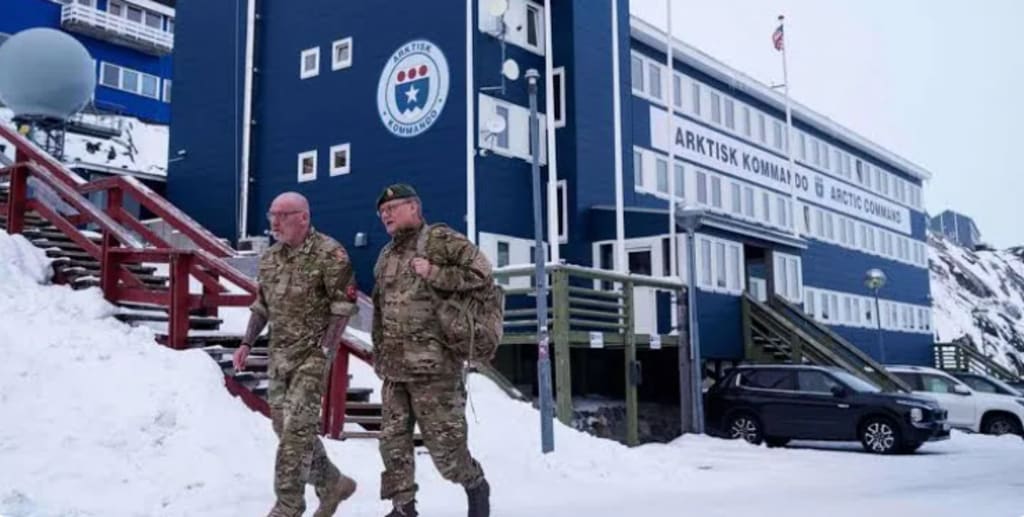
Europe is once again finding itself pushed into the center of a geopolitical storm — and this time, the Arctic is the battleground.
Former U.S. President Donald Trump’s renewed threats to impose tariffs on European nations over Greenland have sparked swift and unusually unified resistance across the European Union. According to EU Commission President Ursula von der Leyen, Europe is standing “united” in the face of pressure that many leaders see as economic coercion tied to territorial ambition.
The dispute has reopened long-standing tensions around Greenland, a semi-autonomous territory of Denmark that holds growing strategic value due to climate change, mineral resources, and Arctic security. But what makes this moment different is not just the issue itself — it’s Europe’s collective response.
Greenland: Small Land, Big Stakes
Greenland may seem remote, but its importance is anything but small. Located between North America and Europe, the island has become increasingly valuable as melting ice opens new shipping routes and access to rare earth minerals. It also plays a crucial role in Arctic defense and global security planning.
Trump’s long-expressed interest in Greenland has returned in force, accompanied by threats of tariffs targeting several European countries unless Denmark agrees to negotiations over the island’s future. While the idea of purchasing Greenland has been rejected outright by Danish and Greenlandic authorities, the use of trade penalties has raised alarms across Europe.
For many EU leaders, this isn’t just about Greenland — it’s about principles.
Europe’s Message: Sovereignty Is Not for Sale
European Commission President Ursula von der Leyen made the EU’s position clear: Europe will not be divided or intimidated. Speaking on behalf of the bloc, she warned that tariff threats against allies could trigger a “dangerous downward spiral” in global trade and diplomacy.
More importantly, she emphasized that decisions about Greenland belong to Denmark and the people of Greenland — not to foreign powers applying economic pressure.
That sentiment has been echoed across Europe. From Paris to Stockholm, leaders have framed the issue as a test of sovereignty, alliance norms, and mutual respect among democratic partners.
Rare Unity Across European Capitals
One of the most striking aspects of this episode is how quickly Europe closed ranks.
French President Emmanuel Macron condemned the threats as unacceptable intimidation, stating that Europe has already proven it will stand firm when pressured — whether economically or militarily. Nordic leaders, including those from Sweden and Norway, reinforced the idea that allies do not threaten one another with tariffs.
Even traditionally cautious governments have spoken out, stressing that disputes between partners should be resolved through dialogue, not punishment.
This unity sends a powerful signal: while Europe often struggles to speak with one voice, challenges to sovereignty can still bring alignment across political and geographic lines.
Tariffs as a Political Weapon
Trade tariffs have long been used as leverage in international negotiations, but applying them against allies over territorial matters represents a sharp escalation. European officials worry that normalizing such tactics could destabilize global trade systems and weaken institutions like NATO and the World Trade Organization.
There is also concern about precedent. If economic pressure becomes an accepted way to pursue territorial or strategic goals, smaller nations may find themselves increasingly vulnerable.
For Europe, resisting that shift is as much about protecting future stability as it is about responding to one immediate threat.
The Arctic and Global Power Competition
Beyond Europe and the United States, other global players are watching closely.
China and Russia have both expanded their Arctic interests in recent years, investing in infrastructure, research, and military capabilities. European leaders argue that internal disputes among Western allies only benefit rival powers seeking to exploit division.
This broader context has shaped Europe’s response. Officials have emphasized that Arctic security should be addressed through existing alliances and multilateral cooperation — not unilateral pressure.
Public Reaction in Greenland
The debate has also sparked public response within Greenland itself. Many residents have voiced frustration that global powers discuss the island’s future without sufficient input from its people.
Protests and public statements from Greenlandic leaders reinforce a central message: Greenland is not a bargaining chip. Its political future, autonomy, and identity are matters for its population to decide.
This local perspective has added moral weight to Europe’s stance and complicated any narrative that frames the issue as purely strategic.
What Happens Next?
European diplomats are now engaged in emergency consultations to coordinate responses and avoid escalation. While the EU has not announced retaliatory measures, officials have made it clear that Europe is prepared to defend its economic and political interests if necessary.
At the same time, leaders continue to stress the importance of dialogue. Despite the tension, Europe does not appear eager to sever transatlantic ties — only to redefine the boundaries of acceptable pressure.
A Test of Modern Alliances
At its core, this dispute is about more than Greenland or tariffs. It’s about how modern alliances function in an era of rising nationalism, strategic competition, and economic leverage.
Europe’s response suggests a growing willingness to push back collectively when core principles are challenged. Whether that unity holds — and how the United States responds — may shape the future of transatlantic relations for years to come.
About the Creator
Keep reading
More stories from Aqib Hussain and writers in The Swamp and other communities.
Here’s Where Trump’s Most Jaw-Dropping Promises Stand a Year Into His Second Term
It’s been a year since Donald Trump began his second term as President of the United States, and the results of his boldest, most jaw-dropping promises are starting to take shape—or fall flat. Some initiatives have already made waves in policy and media; others are stuck in bureaucracy, legal fights, or political gridlock. And a few have quietly faded from view.
By Aqib Hussain2 days ago in The Swamp


Comments
There are no comments for this story
Be the first to respond and start the conversation.