
Europe Threatens to Strike Back Against Trump Over Greenland Tariffs
Rising trade tensions expose deepening rifts between Washington and Brussels as Europe signals retaliation to protect its economic and strategic interests
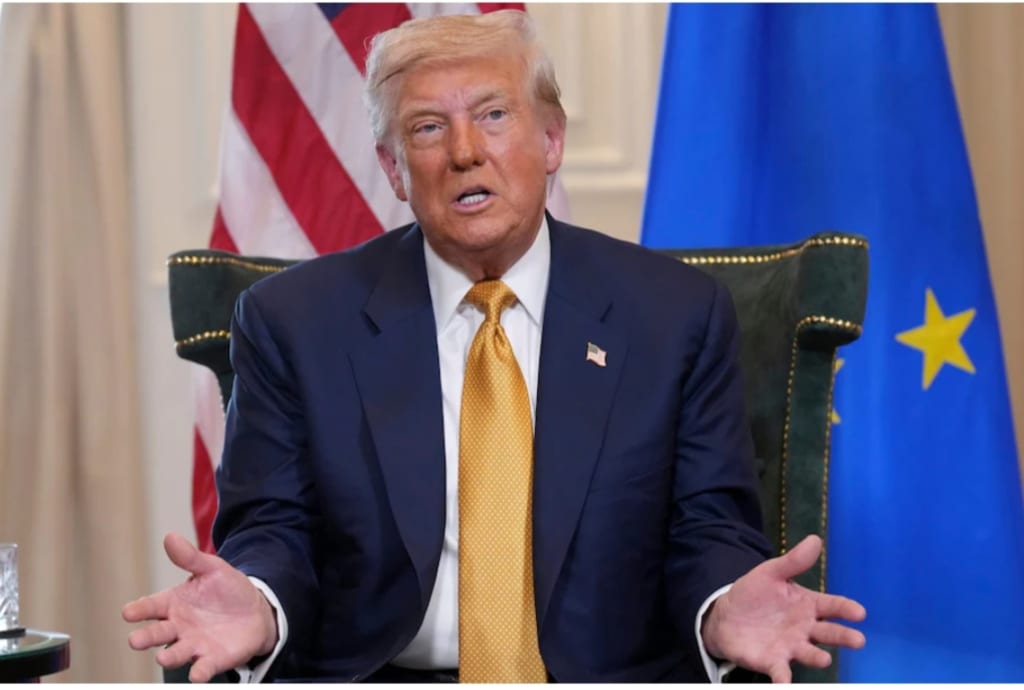
Europe is bracing for a new chapter of transatlantic tension after former US President Donald Trump warned of imposing tariffs linked to Greenland, triggering sharp reactions from European leaders. The threat has reignited concerns about trade wars, geopolitical leverage, and the fragile balance between long-standing allies. As Brussels weighs its options, European officials are making it clear: if Washington moves forward, Europe is prepared to strike back.
The dispute goes beyond tariffs alone. It reflects a broader struggle over influence in the Arctic, economic sovereignty, and the future of EU-US relations in an era of renewed nationalism and strategic competition.
Why Greenland Is at the Center of the Storm
Greenland, an autonomous territory of Denmark, holds immense strategic and economic value. Rich in rare earth minerals and positioned at a crucial Arctic crossroads, the island has increasingly attracted global attention as climate change opens new shipping routes and resource opportunities.
Trump’s renewed focus on Greenland, including tariff threats tied to trade and access, has alarmed European leaders. From their perspective, Greenland is not merely a bargaining chip in US trade policy but a European-linked territory whose stability and governance fall within Europe’s sphere of responsibility.
European officials argue that using tariffs as leverage over Greenland undermines international norms and risks destabilizing Arctic cooperation.
Europe’s Firm Response: Retaliation on the Table
Brussels has responded with unusual bluntness. Senior EU figures have warned that any unilateral tariffs imposed by the US would be met with “proportionate and decisive” countermeasures. These could include tariffs on American goods, legal challenges through international trade mechanisms, and coordinated action with allies.
EU trade officials emphasize that Europe does not seek confrontation but will not hesitate to defend its interests. The message is clear: Europe has learned from past trade disputes and is better prepared to respond swiftly and strategically.
This firm stance reflects a shift in Europe’s posture. Once cautious about angering Washington, the EU now appears more confident in asserting itself as a global economic power.
Echoes of Past Trade Wars
The current tension brings back memories of earlier trade clashes during Trump’s presidency, including disputes over steel, aluminum, and aircraft subsidies. Those battles strained relations and led to tit-for-tat tariffs that hurt businesses on both sides of the Atlantic.
European policymakers fear a repeat scenario, where political posturing overshadows economic logic. Many argue that tariffs ultimately punish consumers and industries rather than achieving meaningful political outcomes.
However, there is also a sense in Brussels that backing down would set a dangerous precedent, encouraging future pressure tactics.
What’s at Stake for Europe
For Europe, the issue is about more than trade numbers. It is about sovereignty, credibility, and strategic autonomy. Allowing external pressure over Greenland could weaken Europe’s influence in the Arctic and signal vulnerability in defending its partners.
Denmark, in particular, has expressed concern, viewing the tariff threat as indirect interference in its relationship with Greenland. European unity on this matter is seen as crucial, both to support Copenhagen and to maintain a consistent EU foreign policy stance.
European businesses are also watching closely. Industries ranging from energy to shipping fear uncertainty that could disrupt long-term investments tied to Arctic development.
The US Perspective and Political Calculations
From Trump’s viewpoint, tariffs are a familiar tool. He has long framed them as a way to extract better deals and assert American strength. Supporters argue that tough measures are necessary to protect US interests and counter what they see as unfair trade practices.
Critics, however, warn that this approach risks alienating allies at a time when global cooperation is increasingly important. They argue that pressuring Europe over Greenland could push the EU to deepen ties with other global players, reshaping alliances in ways that may not favor Washington.
Global Implications Beyond Europe
The dispute is being closely watched worldwide. Other countries see it as a test case for how major powers use economic tools to pursue strategic goals. If tariffs become a standard instrument in geopolitical disputes, smaller nations and territories could find themselves caught in the crossfire.
In the Arctic context, rising tensions could also complicate cooperation on climate research, environmental protection, and regional security. Many experts warn that politicizing the Arctic risks turning a zone of collaboration into one of confrontation.
Can Diplomacy Defuse the Crisis?
Despite the tough rhetoric, diplomatic channels remain open. European leaders continue to stress dialogue and negotiation as the preferred path forward. Behind the scenes, officials are exploring compromises that could address US concerns without resorting to punitive measures.
Analysts suggest that a face-saving solution is possible, one that avoids tariffs while allowing all sides to claim victory. However, such an outcome will depend on political will and restraint, qualities often in short supply during heated trade disputes.
Conclusion: A Defining Moment for Transatlantic Relations
Europe’s threat to strike back against Trump over Greenland tariffs marks a defining moment in EU-US relations. It signals a Europe more willing to stand its ground and a United States prepared to use economic pressure to pursue strategic aims.
Whether this standoff escalates into a full-blown trade conflict or is resolved through diplomacy will shape the future of transatlantic cooperation. One thing is certain: the outcome will reverberate far beyond Greenland, influencing global trade norms and geopolitical alliances for years to come.
About the Creator
Keep reading
More stories from Aarif Lashari and writers in The Swamp and other communities.
Akshaye Khanna is 10/10, Ranveer Singh is 100/10, Legendary: Inside Bollywood’s Biggest Praise for Dhurandhar
Bollywood often celebrates its stars with superlatives, but every once in a while, a compliment lands with unusual weight. That moment arrived when veteran actor Suniel Shetty described Akshaye Khanna as “10 out of 10” and Ranveer Singh as “100 out of 10, legendary” for their performances in Dhurandhar. His words quickly went viral, not just because of the numbers attached, but because they captured what audiences and critics have been feeling since the film’s release.
By Aarif Lashariabout 18 hours ago in The Swamp
Electric Kick Scooter Market Outlook 2025–2033
Introduction Once seen as novelty gadgets for short commutes, electric kick scooters have rapidly become a defining symbol of modern urban mobility. From crowded European capitals to fast-growing Asian megacities, these compact vehicles are reshaping how people navigate short distances. Their appeal lies in a compelling combination of affordability, portability, and zero tailpipe emissions—attributes that align perfectly with global efforts to reduce congestion and carbon footprints.
By Marthan Sir7 days ago in The Swamp



Comments
There are no comments for this story
Be the first to respond and start the conversation.