
Emerging Horizons: Pakistan’s High-Tech Defense Deals Signal a Regional Shift
From stealth jets to AI training, new partnerships with China highlight a fusion of security, innovation, and economic strategy in South Asia.
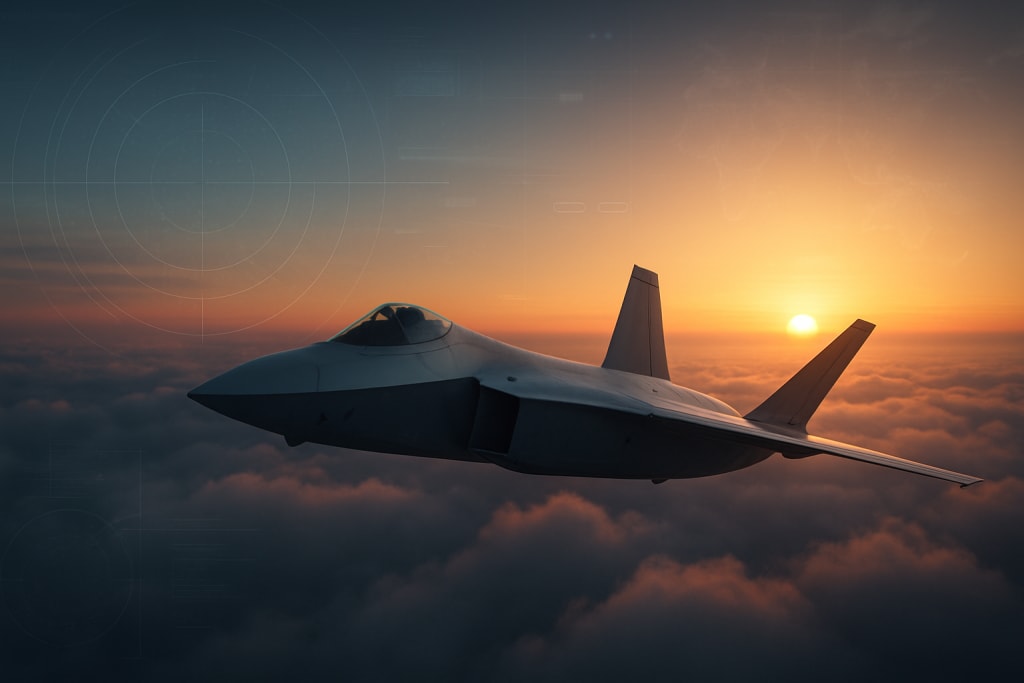
Introduction:
In a strategic move aimed at bolstering its defense and technological capabilities, Pakistan has entered into a principal agreement with China to acquire a suite of cutting-edge systems, including 40 J-35 fifth-generation stealth fighter jets, the KJ-500 airborne warning and control aircraft, and the HQ-19 missile defense system. This landmark agreement marks a new chapter in regional defense cooperation and underscores the growing interplay between security, economy, and innovation.
---
A Surge in Market Confidence:
Following Pakistan’s announcement, shares of key Chinese defense manufacturers witnessed a surge on the Shanghai Stock Exchange. Notably, Shenyang Aircraft Corporation, the producer of the J-35, reached the daily trading limit increase, while suppliers like Aerospace Nanhua Electronics posted gains up to 15%.
Analysts interpreted this rise not merely as a response to a large-scale sale but as a sign of growing international trust in China's defense exports and global competitiveness.
--
The J-35: More Than Just a Fighter Jet
The J-35/FC-31 is a fifth-generation multirole stealth aircraft featuring advanced AESA radar, low radar cross-section, and extended-range missile capabilities. Its ability to operate from shorter runways makes it adaptable to diverse terrains — from mountainous zones to coastal airstrips — providing air forces with greater strategic flexibility.
The aircraft’s modular design also opens doors for potential industrial collaboration, with possibilities for localized component manufacturing. This would support Pakistan’s own aerospace ambitions through technology transfer and skill development.
---
HQ-19: A New Layer in Missile Defense
The HQ-19 missile system adds an important tier to Pakistan’s existing air and missile defense infrastructure. Designed to intercept high-altitude threats with a range reaching up to 1,000 kilometers, the system fits into a layered defense framework that includes NASR, Babur, and LY-80 platforms.
Its integration reflects a broader shift toward exo-atmospheric capabilities and strategic deterrence — technologies increasingly valued not only for defense but also for civilian resilience planning.
---
KJ-500 and the Rise of Dual-Use Innovation
The KJ-500 AWACS platform plays a pivotal role in early warning, battlefield awareness, and communication coordination. However, its AESA sensors and AI-supported systems also have significant non-military applications — including remote sensing, agricultural optimization, disaster response, and environmental monitoring.
As South Asian economies increasingly invest in digital infrastructure, platforms like the KJ-500 demonstrate how defense technologies can support broader economic and developmental goals.
---
A $4.6 billion defense cooperation agreement with Azerbaijan
These initiatives showcase a shift from traditional arms procurement toward long-term, integrated strategies that combine security with sustainable development and technological empowerment.
---
A Regional Opportunity for Cooperation
There is growing interest across Southeast Asia in similar platforms, including nations like Indonesia evaluating next-generation aircraft. Rather than being viewed through a lens of rivalry, these trends offer opportunities for multilateral cooperation in areas such as logistics, joint training, and defense research.
Shared access to advanced technology can promote regional dialogue on arms control, crisis management, and civilian applications of defense innovations.
--
Conclusion: From Hardware to Smart Integration
The true value of modern defense capabilities lies not only in the systems themselves but in how responsibly they are integrated into national frameworks. This includes establishing transparent command structures, ensuring civilian oversight, and promoting regional trust through dialogue and joint initiatives.
About the Creator
Keep reading
More stories from writers in The Swamp and other communities.
The Forsyth House Fire
Since 1851, Forsyth House has stood on the corner of Union Street and Gordon Street in the heart of Glasgow. Its iconic, or was... because on Sunday 8th of March, 2026, a fire broke out in a small, seemingly un-named shop in the building and tore all that history down. As I write, the rubble is still unsettled and the street is still blocked off. Central Station is quiet on the upper level, and around 30 small businesses have quite literally gone up in smoke.
By S. A. Crawford3 days ago in The Swamp
Stranded travellers charter private jets to return to Europe
In the wake of widespread flight cancellations and airspace closures triggered by the 2026 war involving Iran, a growing number of travellers stranded across the Middle East and Asia have resorted to chartering private jets in a desperate bid to return to Europe. As conventional commercial services remain disrupted, wealthy tourists and expatriates are spending tens of thousands of dollars on private evacuation flights to reach home. The conflict that erupted in late February after coordinated U.S. and Israeli strikes on Iranian facilities has reverberated through global aviation, closing airspace over key hubs such as the United Arab Emirates, Qatar and other Gulf states. With missiles and drones continuing to fly across the region, commercial airlines have suspended or delayed most flights, leaving travellers stuck far from home for days — in some cases more than two weeks. Against this backdrop of flight chaos, some travellers with the financial means to do so have turned to private jets as the only viable option to escape. Reports indicate that private flights out of the Gulf region have commanded prices of up to $200,000 or more, depending on the distance and aircraft involved. From Muscat and Dubai to Istanbul and other regional airports, charter operators have been booked solid as foreign nationals seek alternatives to congested and largely non‑operational commercial terminals. In some cases, travellers flying privately have described complex routing and urgent departures, often with short notice, as they scramble to secure seats on available jets. This trend reflects both the severity of the current travel disruption and the limited options available to many. Major carriers such as Emirates, Qatar Airways and Etihad have largely pulled back services amid safety concerns and government restrictions, while repatriation and rescue flights organized by national authorities are either limited or prioritized for citizens by existing bookings. For those without access to private jets, the situation remains frustrating and uncertain. Tens of thousands of travellers, including families, students and holidaymakers, are still waiting for available commercial flights or governmental evacuation options. Some countries have reported hundreds of thousands of nationals stranded across the region, prompting diplomatic efforts and government‑organized repatriations to assist. The rush towards private jets highlights stark inequalities in how travellers are able to cope with the disruption. While affluent individuals can effectively “buy” their way out of the crisis, others remain stuck in congested airports or facing long delays on the ground. Social media posts from stranded passengers have detailed long queues, lack of available seats on repatriation flights, and mounting hotel bills as they wait for a way home. Muscat International Airport in Oman has seen particularly high demand for private flights, with charter operations accounting for a significant share of departures in recent days. To manage congestion, Muscat authorities have reportedly restricted private jet operations to prioritize scheduled commercial and government repatriation flights, a sign of how intense the demand has become. Private jet companies and brokers have been inundated with requests since the onset of the travel disruption. Operators reported that many clients expressed urgency and uncertainty about securing passage, sometimes booking multiple charter options simultaneously in hopes of finding a viable route home. For some passengers, these flights involve additional technical stops or routing to secondary hubs before eventually reaching Europe. Beyond individual travellers, the rise in private charters has also placed logistical pressure on smaller regional airports that are acting as alternative departure points. Flight planning becomes increasingly complex when coordinating clearances in contested or partially closed airspace, and pilots have had to navigate amid shifting safety advisories and military activity alerts. Governments and airline authorities have continued to work on reopening certain air corridors and resuming more commercial services where safe, but progress has been uneven. Limited repatriation routes, such as flights from Muscat to London operated by British Airways for ticket holders, offer a lifeline for some, but demand far outstrips supply. Morningstar, Inc. For now, the private jet phenomenon underscores the depth of disruption affecting global travel. With geopolitical tensions showing no immediate signs of abating, those with wealth are choosing to invest heavily in their return journeys, highlighting how global crises can quickly reshape travel norms — but also how access to rapid alternatives remains sharply divided by economic means.
By Fiaz Ahmed 3 days ago in The Swamp
Sometimes It's Like That and That'sThe Way It Is
It was the late 1960s, and ten-year-old Gloria Coleman was standing with her grandmother on the side of the highway waiting for the bus. As the Greyhound pulled up, it seemed monstrous and intimidating. Grandma Elizabeth grabbed Gloria's hand, holding it tightly as they boarded.
By Cheryl E Preston3 days ago in Fiction




Comments
There are no comments for this story
Be the first to respond and start the conversation.