
Elon Musk's Federal Buyout Offer Accepted by Thousands
Over 20,000 federal workers take up Musk's buyout proposal

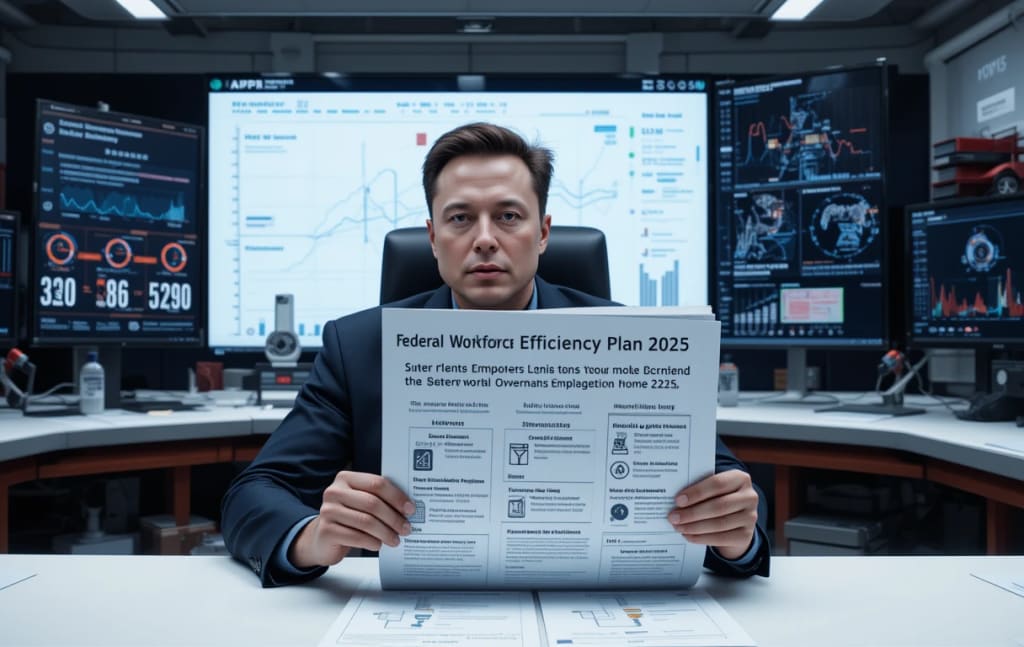
The workplace as we know it is changing, and this time, it's not just in Silicon Valley. Over 20,000 federal workers have decided to take a buyout offer that could permanently alter the way the U.S. government functions. At the center of this seismic shift is Elon Musk, a name synonymous with disruptive innovation, but now, he's shaking things up in a place no one expected—Washington, D.C.
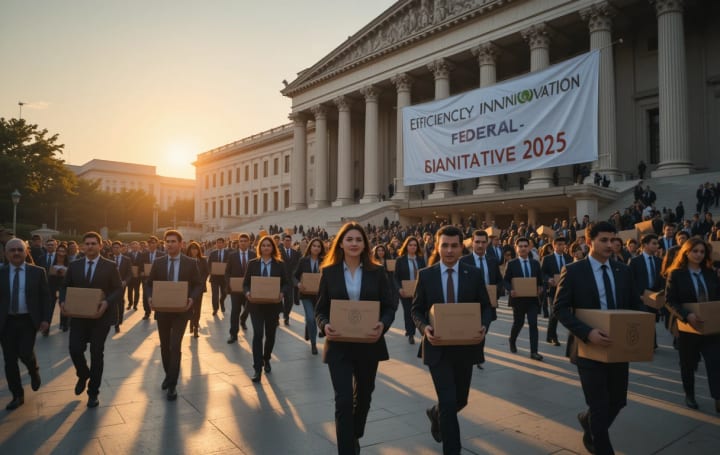
The idea of trimming down the federal workforce isn’t new, but this buyout plan has taken things to a level no one saw coming. Thousands of government employees—many with decades of experience—have agreed to resign, and the effects of this decision could ripple through federal agencies, public services, and national policies for years.
The Birth of the Buyout: Why Musk Wants a Leaner Government
In a move that shocked both political analysts and government employees, Musk was appointed to lead the newly formed Department of Government Efficiency (DOGE) under President Donald Trump. The goal was simple: reduce federal spending and eliminate what was deemed “unnecessary bureaucracy.” But the approach? That’s where things got controversial.
Through the Office of Personnel Management (OPM), Musk introduced a “deferred resignation” buyout option. The deal offered federal employees full salary and benefits until September 30, 2025, with a catch—after that, they would be officially removed from the payroll, with no option to return.
Critics called it a voluntary mass layoff disguised as an opportunity, while supporters praised it as a long-overdue streamlining of the bloated federal workforce. Either way, people took notice, and within weeks, tens of thousands had signed up.
Why So Many Workers Said Yes
A buyout this large begs the question: why would so many experienced government employees willingly walk away from secure jobs? The answer varies, but a few key factors stand out:
Burnout and Frustration – Government jobs, while stable, can be slow-moving and bogged down by red tape. Some employees saw this as their chance to break free and pursue private sector opportunities, entrepreneurship, or even early retirement.
Uncertainty About the Future – With Musk at the helm, many feared future job cuts and restructuring. Rather than wait for potential forced layoffs, they chose to leave on their own terms.
The Temptation of a Paid Exit – The idea of receiving a full salary for months while figuring out their next move was appealing. Some viewed it as a financial cushion that would allow them to pivot careers, travel, or focus on personal projects.
Early Retirement Opportunities – Many older federal employees saw this as an unexpected golden parachute, allowing them to retire early with a financial buffer.
The Legal and Ethical Firestorm
With any major government initiative, there are always legal and ethical concerns, and this buyout is no exception. Federal employee unions, legal experts, and even some members of Congress are questioning whether the OPM had the authority to approve such a drastic plan.
Some believe the proposal violates the Anti-Deficiency Act, which prohibits the government from spending money that hasn’t been allocated by Congress. Others worry that this could set a dangerous precedent, leading to further efforts to privatize government functions or outsource essential services.
The American Federation of Government Employees (AFGE), one of the largest federal worker unions, has issued warnings to its members, advising them to think twice before accepting the offer. They argue that the long-term consequences of a drastically reduced federal workforce could be disastrous for public services, national security, and governance.
What Happens to Government Services Now?
With over 20,000 workers gone—and more expected to follow—the real concern is how this will affect federal agencies and the services they provide. While the Trump administration insists that AI, automation, and restructuring will compensate for the loss of personnel, skeptics aren’t convinced.
Key areas that could be hit hardest include:
Social Security and Medicare – Fewer employees could lead to delayed processing times and longer wait periods for benefits.
Environmental Protection – The EPA has already faced budget cuts, and losing experienced employees could reduce regulatory enforcement and oversight.
National Security – Agencies like the FBI, CIA, and DHS require skilled professionals. If buyouts lead to talent shortages, it could create security risks.
Healthcare and Public Assistance – The Department of Health and Human Services (HHS) plays a critical role in managing Medicare, Medicaid, and food assistance programs. A staff reduction could affect millions of Americans who rely on these services.
The Bigger Picture: Is This the Future of Work?
Whether you love or hate the idea of Musk influencing government operations, one thing is clear—this buyout sets a precedent. The way we think about government jobs, public service, and job security is shifting.
Private sector business principles—efficiency, innovation, and cost-cutting—are being applied to a structure that was traditionally seen as stable and resistant to change. Some believe this will modernize government operations, while others worry it will erode trust and reliability in public institutions.
The question now is, what comes next? If this buyout achieves its intended goal, we might see more large-scale workforce reductions, privatization, or restructuring. If it fails and causes service breakdowns, lawsuits, or backlash, it could serve as a cautionary tale against bringing corporate-style downsizing to federal employment.
A Historic Moment in the Workforce Revolution
No matter which side of the debate you’re on, there’s no denying that this is a historic moment in U.S. workforce policy. Musk’s vision for a leaner, more efficient government is either a brilliant step forward or a reckless gamble—and only time will tell.
For those who accepted the buyout, this could be the beginning of an exciting new chapter. For those who stayed, uncertainty looms. Either way, Washington is changing, and the effects of this decision will shape the federal workforce for years to come.
....
➡️ You scroll social media anyway—why not get paid? 💵 Check this out. 👉 Learn more
About the Creator
Ojo
🔍 I explore anything that matters—because the best discoveries don’t fit into a box...
The Forsyth House Fire
Since 1851, Forsyth House has stood on the corner of Union Street and Gordon Street in the heart of Glasgow. Its iconic, or was... because on Sunday 8th of March, 2026, a fire broke out in a small, seemingly un-named shop in the building and tore all that history down. As I write, the rubble is still unsettled and the street is still blocked off. Central Station is quiet on the upper level, and around 30 small businesses have quite literally gone up in smoke.
By S. A. Crawford3 days ago in The Swamp
U.S. Military Turns Down Requests to Escort Tankers Through Hormuz
The United States military has reportedly declined several recent requests from commercial shipping operators seeking naval escorts through the strategically vital Strait of Hormuz, a decision that highlights growing complexity in the security landscape of the Gulf and raises concerns among global energy markets. Officials within the United States Department of Defense confirmed that while the U.S. Navy continues to monitor maritime activity closely, it has not expanded its escort operations for commercial oil tankers moving through the narrow waterway. The decision comes as tensions between Iran and the United States remain elevated, particularly following a series of incidents involving merchant vessels in the Gulf region. The Strait of Hormuz, located between Iran and Oman, is one of the most critical chokepoints in global energy trade. Roughly one-fifth of the world’s oil supply passes through the narrow corridor each day, making any disruption there a potential shock to international markets. Tanker operators and energy companies have grown increasingly anxious after reports of drone sightings, harassment of commercial ships, and electronic interference affecting navigation systems. According to defense officials familiar with internal discussions, the Pentagon determined that expanding direct escorts could risk escalating already delicate tensions in the region. Instead, the U.S. Navy is continuing its broader patrol mission under the multinational maritime security framework led by the U.S. Fifth Fleet, headquartered in Manama, Bahrain. A senior defense official, speaking on condition of anonymity due to the sensitivity of the matter, said that escorting every tanker passing through the strait would place enormous strain on naval resources and could create expectations that Washington may not be able to sustain over the long term. “Commercial vessels routinely transit the strait under existing security arrangements,” the official said. “Our forces remain present, vigilant, and capable of responding to threats, but continuous escorts are not currently part of our operational posture.” The policy echoes a similar approach adopted in recent years, when the United States launched the International Maritime Security Construct to coordinate patrols with allied navies and enhance maritime surveillance rather than provide full-time convoy protection. Nevertheless, the refusal has unsettled some shipping companies and energy traders who fear that the absence of guaranteed escorts could expose vessels to potential interference. Insurance premiums for tankers traveling through the Gulf have already fluctuated in response to the rising geopolitical risk. Security analysts note that Iran has repeatedly warned it could disrupt shipping through the strait if its own oil exports face further restrictions or military pressure. While Tehran has denied direct involvement in attacks on merchant vessels, Western governments have accused Iranian forces of conducting harassment operations through the Islamic Revolutionary Guard Corps naval units. Regional tensions have also been heightened by broader confrontations linked to the Israel–Hamas war and its ripple effects across the Middle East. Several Iran-aligned groups in the region have targeted shipping routes and military installations, raising fears that maritime commerce could become a wider battlefield. Despite declining escort requests, U.S. officials insist that the Navy remains committed to protecting freedom of navigation. Warships, surveillance aircraft, and drones continue to operate throughout the Gulf, tracking vessel movements and responding to suspicious activity. The U.S. military presence in the region has been a cornerstone of maritime security since the late 1980s, when Washington launched Operation Earnest Will to escort Kuwaiti tankers during the Iran–Iraq War. That operation marked one of the largest naval convoy efforts since the Second World War and underscored the strategic importance of the Strait of Hormuz. Today’s security challenges, however, are far more complex. Rather than large-scale naval battles, threats often involve asymmetric tactics such as fast attack boats, drones, cyber interference, and mines—methods designed to create disruption without triggering open conflict. Energy analysts warn that even minor incidents in the Strait of Hormuz can have outsized economic consequences. Oil prices tend to react sharply to any perceived threat to the waterway, given its central role in transporting crude from major producers such as Saudi Arabia, United Arab Emirates, and Kuwait. For now, shipping companies appear to be adjusting their risk calculations rather than halting operations. Most vessels continue to transit the strait under standard security protocols, while governments across the region maintain close communication with naval forces to monitor the situation. Diplomats say the U.S. decision not to expand escort missions may also reflect a broader effort to avoid sending signals that could further militarize the Gulf’s shipping lanes. Washington has repeatedly emphasized that its objective is deterrence and stability rather than confrontation. Still, the decision leaves the maritime industry navigating an uncertain environment. As geopolitical rivalries intensify and global energy flows remain heavily dependent on the Strait of Hormuz, the balance between security and escalation will continue to shape one of the world’s most strategically important waterways.
By Fiaz Ahmed 4 days ago in The Swamp
My First Time Skiing and I Got Lost, Alone, in the French Alps
Looking back, I can trace some of my life’s biggest adventures to a simple action from my sister. She’d introduced me to Tommy (a very long time ago), a colleague of hers, who had overshared his penchant for Italian-looking women, and I ticked that box.
By Chantal Christie Weiss3 days ago in Humans



Comments
There are no comments for this story
Be the first to respond and start the conversation.