
Electoral College Controversy: Should America Shift to a Popular Vote?
Exploring the Growing Debate Over the Electoral College System and Its Impact on Modern Elections
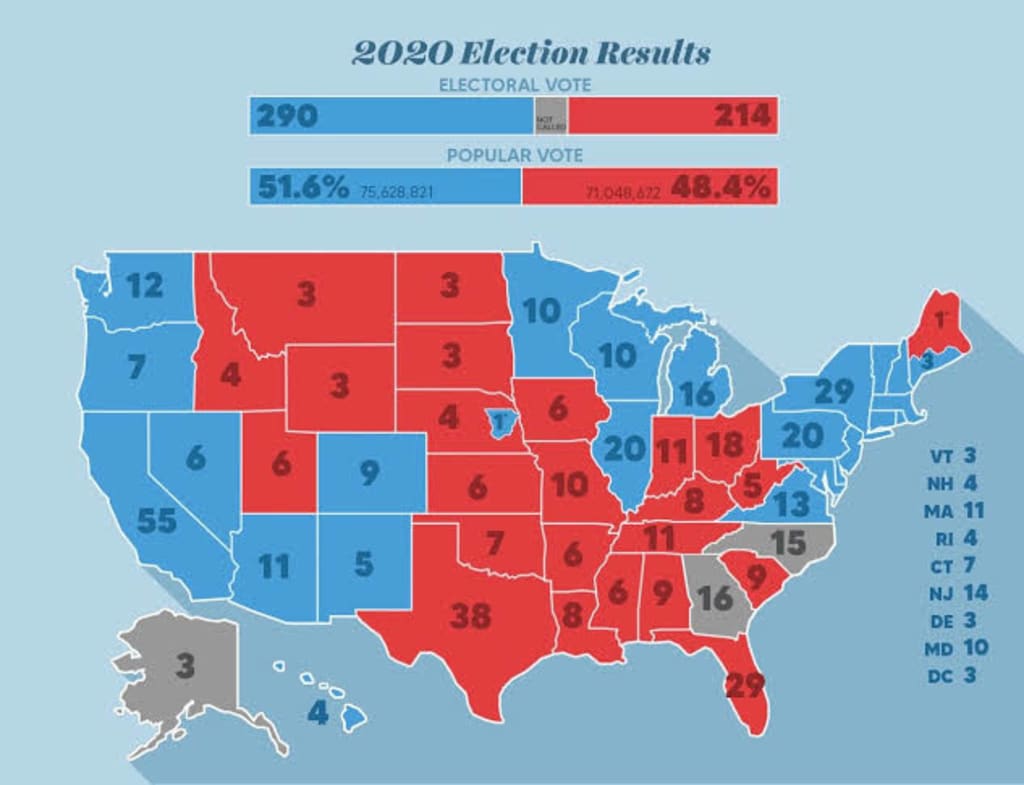
The U.S. Electoral College system has been a topic of debate for many years, particularly when it produces results that differ from the popular vote. This unique institution is a mechanism for electing the President and Vice President and has led to some controversial outcomes. The Electoral College's purpose and function have been questioned, especially in recent elections where the winning candidate lost the popular vote. Here, we’ll explore whether the Electoral College has ever favored Democrats, why it's been more beneficial to Republicans recently, and why calls for change have intensified.
Historically, there have been five U.S. presidential elections where the candidate who won the Electoral College lost the popular vote. This occurred for John Quincy Adams, Rutherford B. Hayes, and Benjamin Harrison in the 19th century, and in more recent history, for George W. Bush in 2000 and Donald Trump in 2016. In these two modern instances, Republican candidates benefitted from the Electoral College despite losing the popular vote, fueling debate over whether the system is still fair in representing American voters’ preferences.
The 2000 election between George W. Bush and Al Gore sparked particular controversy. Gore won the popular vote, but Bush secured more electoral votes after a contentious battle in Florida, which the Supreme Court ultimately settled. Similarly, in 2016, Hillary Clinton won the popular vote, but Donald Trump took the presidency through his Electoral College win. These outcomes led many to argue that the Electoral College favored Republicans, as they won despite having less popular support.
Because of these instances, support for abolishing the Electoral College has grown, particularly among Democrats and some Independents. A Pew Research study shows that 64% of Americans would now prefer a national popular vote over the Electoral College. This view is especially strong among Democrats, with 87% favoring the popular vote as the deciding factor in presidential elections, while 46% of Republicans share this sentiment. Interestingly, even 61% of moderate and more liberal Republicans also support a shift to the popular vote.
Calls for Electoral College reform are not new. In fact, there have been over 1,000 proposals to alter or abolish it. However, as University of Central Florida Professor John Sacher points out, changing or removing the Electoral College is no simple task. The Electoral College is part of the U.S. Constitution, and amending the Constitution requires a rigorous process. For an amendment to pass, it must first be approved by a two-thirds majority in both the House and Senate, followed by ratification from three-fourths of state legislatures. Given the strong views on either side, achieving such a consensus is challenging.
Supporters of the Electoral College argue it plays a necessary role in balancing the interests of states with different population sizes, helping smaller states have a voice in presidential elections. Professor Sacher also argues that the Electoral College is useful in instances like the 2000 election, where no candidate won a clear majority. He believes that the Electoral College helps in situations where the popular vote is close or divided, as it allows electors to make a final decision. This can help to avoid lengthy vote counts and potential conflicts in close races.
Despite these arguments, criticism of the Electoral College continues to grow. Many Americans feel the system does not reflect the will of the people, as a candidate can still lose the presidency despite winning more popular votes. Critics argue that it discourages voter turnout in states that are strongly aligned with one party or another. For example, voters in solidly "red" or "blue" states may feel that their vote doesn’t matter since the state's electoral votes will likely go to the dominant party. This can lead to frustration and a sense of disenfranchisement, particularly among younger and more diverse voters.
In recent years, some politicians and activists have proposed alternatives to the Electoral College. One idea gaining traction is the National Popular Vote Interstate Compact, where states agree to allocate their electoral votes to the candidate who wins the national popular vote, regardless of their state’s outcome. This compact would only take effect once enough states join to represent a majority in the Electoral College. While this approach doesn’t require a constitutional amendment, it has yet to gain enough support to reach the necessary 270 electoral votes.
As debates continue, it’s clear the future of the Electoral College remains uncertain. Although change is difficult, the push for a more direct form of democracy is growing. Whether the Electoral College will stay as it is, be reformed, or be replaced altogether is yet to be seen. What is evident is that Americans on both sides of the political spectrum are becoming more vocal about how they want their votes to be counted. The discussion about the Electoral College’s place in modern America will likely persist for years to come.
About the Creator
The Forsyth House Fire
Since 1851, Forsyth House has stood on the corner of Union Street and Gordon Street in the heart of Glasgow. Its iconic, or was... because on Sunday 8th of March, 2026, a fire broke out in a small, seemingly un-named shop in the building and tore all that history down. As I write, the rubble is still unsettled and the street is still blocked off. Central Station is quiet on the upper level, and around 30 small businesses have quite literally gone up in smoke.
By S. A. Crawford3 days ago in The Swamp




Comments
There are no comments for this story
Be the first to respond and start the conversation.