
US Pushes for Ceasefire Amid Growing Civilian Casualties in Lebanon and Israel
Escalating Tensions and Civilian Losses Push US to Pursue Ceasefire in Middle East

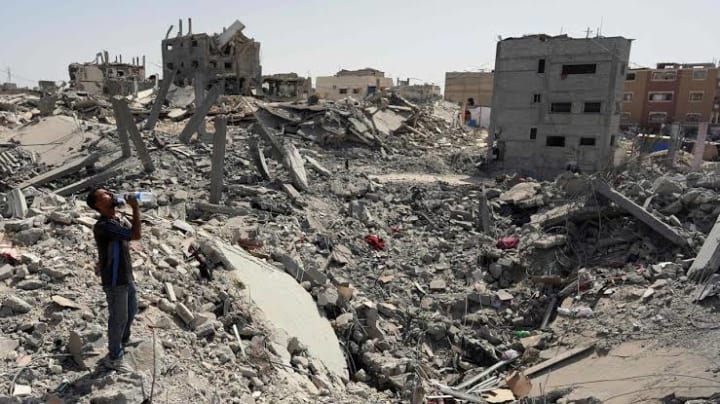
The conflict between Israel and Hamas is intensifying, and its impact is now being felt strongly beyond Gaza, as Lebanon and Israel witness a rise in civilian casualties. The United States, aware of the rising death toll and humanitarian concerns, is making efforts to mediate a ceasefire. However, achieving a peaceful resolution remains challenging with both sides holding firm on their demands.
Civilians Caught in Crossfire
The conflict has resulted in tragic civilian losses. Recent airstrikes by the Israel Defense Forces (IDF) have reportedly killed 45 people, while rockets from Gaza have led to casualties in northern Israel, including the deaths of four Thai workers. The toll is rising on both sides, with civilians often caught in the middle of retaliatory actions. Both Israel and Hamas have experienced significant losses, and attempts to address the situation have struggled to gain traction.
Challenges in Negotiating a Truce
Despite global calls for a ceasefire, efforts to halt the violence have encountered major obstacles. A senior official from Hamas recently rejected any proposals for a temporary truce, stressing instead the need for a permanent ceasefire and calling for the complete withdrawal of Israeli forces from Gaza. The group’s stance adds another layer of difficulty to the ongoing diplomatic discussions, as the United States and other countries attempt to mediate a solution. This position, reportedly voiced during recent discussions in Doha, reflects the deep-rooted complexities of the situation.
UNRWA’s Operations Impacted Amid Crisis
Adding to the challenges, the United Nations Relief and Works Agency (UNRWA) has faced disruptions to its work supporting Palestinian refugees. UNRWA's headquarters in the West Bank’s Nur Shams camp suffered severe damage, which the agency claims was caused by Israeli forces. However, the Israeli military has denied these allegations, stating that explosives planted by terrorists near the UNRWA offices, meant to target IDF soldiers, likely caused the damage.
Further complicating matters, Israel recently passed legislation banning UNRWA from operating within its borders, impacting its ability to support Palestinians affected by the violence. This ban has the potential to disrupt vital aid in Gaza, a region already dealing with overwhelming humanitarian needs.
Lebanon and the West Bank Feel the Ripple Effects
The ongoing violence is affecting areas outside Gaza, particularly Lebanon and the West Bank, where the crisis is being felt more intensely. Increased tension has led to security concerns, and there are rising fears of the conflict spreading. The situation remains tense, with international efforts underway to prevent a wider regional escalation.
A Global Concern
Since the initial outbreak of violence on October 7, distressing scenes from Gaza, Israel, and beyond have captured global attention. Governments, aid organizations, and advocacy groups worldwide are monitoring the situation closely, as the crisis continues to affect countless lives and threaten peace in the Middle East. The conflict's reach is extending beyond the immediate region, drawing global leaders into diplomatic talks and urging immediate action to prevent further loss of life.
The Importance of Reliable Reporting
In a situation as volatile and complex as the current Middle East conflict, access to accurate and timely information is critical. Journalists and correspondents on the ground play an essential role in helping people around the world understand the conflict’s developments and implications. As the war evolves and new challenges arise, comprehensive, fact-checked reporting will continue to shed light on events, making it easier for people to grasp the severity and potential consequences of the situation.
What’s Next?
As the conflict enters this new phase, hopes for peace remain elusive, but efforts to broker a truce are ongoing. The US and other nations are likely to continue diplomatic efforts, but with both sides deeply entrenched in their positions, achieving a lasting resolution may be difficult.
About the Creator
How Realistic Is India’s Quest for Magnets Made of Rare Earths
India has set its sights on a bold industrial goal: developing its own supply of rare earth magnets — the essential components in electric vehicles, wind turbines, electronics, and defense systems. These magnets rely on materials like neodymium, praseodymium, dysprosium, and terbium, collectively known as rare earth elements (REEs). The ambition is strategically significant. Currently, India imports nearly all rare earth-based products, leaving it dependent on global suppliers, especially China, which dominates the market. By producing rare earth magnets domestically, India could strengthen its technological independence and play a key role in the global green-energy revolution. But how realistic is this quest? Can India realistically meet its own demand, and what challenges lie ahead? Why Rare Earth Magnets Matter Rare earth magnets are critical to modern technology because of their unmatched magnetic strength and stability. Applications include: Electric vehicles (EVs): Motors in EVs rely heavily on strong magnets for efficiency and compact design. Wind turbines: Generators in renewable energy rely on rare earth magnets for power generation. Electronics: Smartphones, hard drives, and medical devices all use these magnets. Defense technology: Precision-guided weapons, radar, and aerospace systems depend on rare earth-based magnets. Global demand for rare earth magnets is expected to grow exponentially over the next decade, driven by the clean energy transition and digital technology expansion. India’s reliance on imports not only risks supply disruptions but also limits its participation in high-value technology production. India’s Current Rare Earth Landscape India possesses significant rare earth reserves, primarily in the states of Andhra Pradesh, Odisha, and Tamil Nadu. However, these resources have historically been underdeveloped. Challenges include: Low-grade ores requiring advanced processing Environmental regulations around mining and extraction Lack of domestic refining and metallurgical capacity Currently, India imports most of its processed rare earth metals, especially neodymium and dysprosium, from China. Without robust domestic processing, mining alone cannot meet the country’s technological needs. Industrial and Technical Challenges Producing rare earth magnets involves three complex stages: Mining and Concentration: Extracting rare earth ores from mines and concentrating them to usable levels. Separation and Refining: Isolating individual rare earth elements from ores — a chemical-intensive process requiring advanced technology. Magnet Manufacturing: Combining elements into alloys, sintering, and shaping magnets while maintaining magnetic performance. India currently has some expertise in mining but lacks large-scale separation and refining infrastructure, which is critical. Setting up these facilities is capital-intensive and environmentally sensitive, making it a major hurdle for domestic production. Environmental and Regulatory Hurdles Rare earth extraction and processing is environmentally challenging. The process generates toxic chemicals and radioactive waste, which require strict management. India’s regulatory framework, while strengthening, is still evolving in terms of sustainable mining, waste management, and pollution control. Balancing economic ambitions with environmental responsibility will be a delicate task. Public opposition or regulatory delays could slow projects, making large-scale magnet production a long-term goal rather than an immediate reality. Global Supply Chain Realities Even if India develops domestic capacity, it will operate in a highly competitive global market dominated by China, which controls roughly 80% of rare earth refining. Other players, like the U.S., Australia, and Japan, have invested heavily in supply chain security and technology partnerships. India will need: Partnerships for advanced processing technology Investment in research and development for efficient magnet production Integration into global supply chains for exports and imports of complementary materials Without these steps, India risks producing magnets that are either technically inferior or too expensive to compete globally. Policy and Strategic Moves India has already taken steps to boost its rare earth ambitions: National Rare Earth Mission: A government initiative to explore domestic mining and downstream applications. Public-Private Partnerships: Collaborations between Indian companies and foreign technology providers to build processing and manufacturing capabilities. Defense and EV Incentives: Policies aimed at encouraging domestic production for strategic and economic independence. These measures show serious intent, but translating policy into large-scale production will take years and sustained investment. Potential Benefits for India If India succeeds, the benefits could be transformative: Reduced import dependency: Strengthening supply chain security for key industries. Economic growth: Developing a high-value manufacturing ecosystem around magnets and electronics. Technological sovereignty: Supporting electric vehicles, renewable energy, and defense technologies. Global influence: Becoming a supplier of magnets and rare earth products could give India leverage in international trade negotiations. The Realistic Timeline Experts suggest that building a fully integrated domestic rare earth magnet industry could take 5–10 years. Initial efforts will likely focus on pilot projects, strategic partnerships, and incremental capacity building rather than immediate self-sufficiency. India’s ambition is feasible, but expectations must be tempered: technological complexity, environmental concerns, and global competition mean the path will be long and challenging. Final Thoughts India’s quest for rare earth magnets is ambitious and strategically important, aligning with its goals for energy transition, industrial growth, and technological sovereignty. While the country has reserves and political will, practical challenges in mining, refining, environmental management, and global competition make large-scale production a complex endeavor. Success will require coordinated government policy, private investment, and international collaboration. If achieved, India could move from being a passive importer to an influential player in the global market for critical technologies. Ultimately, India’s rare earth magnet ambitions are realistic but long-term, demanding patience, innovation, and careful execution.
By Muhammad Hassan4 days ago in The Swamp




Comments
There are no comments for this story
Be the first to respond and start the conversation.