
Elara Paid Attention
Why Noticing the Small Things Can Change Everything

Not in the loud, performative way people often mistake for awareness, but in the quiet, deliberate sense that rarely earns recognition. She noticed pauses in conversations, shifts in tone, the way people’s eyes lingered or avoided contact. While others rushed ahead, distracted by urgency or ambition, Elara stayed present.
In a world that rewards speed, attention has become a radical act.
Attention Is a Choice, Not a Trait
Many assume attention is something you either have or don’t — a natural talent reserved for the observant, the thoughtful, the artists of the world. But Elara’s attention wasn’t innate. It was intentional.
She trained herself to listen fully rather than waiting for her turn to speak. She resisted the impulse to multitask during moments that mattered. When something felt “off,” she didn’t brush it aside. She paused.
Attention, Elara learned, is not passive. It’s an active decision to stay with what’s unfolding instead of escaping into distraction.
What Elara Noticed That Others Missed
Because Elara paid attention, she noticed patterns others dismissed as coincidence. She saw how the same people were interrupted in meetings. How certain ideas were only praised when repeated by someone else. How exhaustion hid behind productivity.
She noticed the systems beneath the surface — the unspoken rules shaping outcomes. And once you see those, you can’t unsee them.
This kind of attention is uncomfortable. It forces questions. It reveals truths that don’t fit neatly into narratives of fairness or efficiency. Many people prefer not to look too closely.
Elara looked anyway.
The Cost of Paying Attention
Paying attention has a price.
When Elara spoke up about what she observed, she was sometimes labeled “too sensitive” or “overthinking.” Attention threatens complacency. It disrupts convenience. It challenges the idea that silence equals harmony.
There were moments when Elara wished she could stop noticing — when ignorance seemed easier, lighter, socially safer. But once attention sharpens, dulling it feels like betrayal.
Awareness brings responsibility. And responsibility can be lonely.
Attention as a Form of Care
Despite the cost, Elara understood something crucial: attention is a form of care.
To pay attention to someone is to say, “You matter enough for me to be here fully.” It’s why people felt seen around her, even when she said very little. She remembered details others forgot. She followed up. She noticed when someone’s usual smile didn’t reach their eyes.
In relationships, attention is often more powerful than advice. People rarely need fixing. They need witnessing.
Elara paid attention — and people trusted her because of it.
Why Attention Feels So Rare Today
Modern life is engineered to fracture attention. Notifications, deadlines, and constant content compete for mental space. Focus is monetized, fragmented, and exhausted.
In that environment, deep attention feels inefficient. Slowness feels like a flaw. But Elara’s way revealed a paradox: attention saves time in the long run. Problems addressed early don’t metastasize. Misunderstandings clarified don’t harden into resentment.
Attention prevents damage.
Yet it requires resisting the current — choosing presence over performance.
The Power of Seeing Clearly
Because Elara paid attention, she made better decisions. She sensed when to leave situations that no longer aligned with her values. She recognized opportunities that weren’t advertised loudly. She saw when silence was safer — and when it was dangerous.
Attention sharpened her intuition, but it was grounded in observation, not impulse. She trusted herself not because she was fearless, but because she was informed.
Seeing clearly doesn’t eliminate uncertainty. It just replaces illusion with truth.
Attention Is Political, Too
Attention isn’t only personal; it’s political.
What societies choose to notice — and ignore — determines whose suffering counts, whose voices are amplified, whose lives are protected. Elara understood that attention could be an act of resistance in systems built on distraction.
To pay attention to injustice is to refuse normalization. To notice patterns of harm is to challenge narratives that frame them as accidents. Attention threatens power structures that depend on invisibility.
That’s why it’s discouraged. And why it matters.
Learning to Pay Attention Like Elara
You don’t have to become Elara overnight. Attention is a practice, not a personality. It starts small:
Listening without interrupting
Observing patterns before forming opinions
Asking, “Who benefits?” and “Who is missing?”
Sitting with discomfort instead of scrolling past it
Attention isn’t about knowing everything. It’s about caring enough to look honestly.
Elara paid attention because she believed clarity was kinder than comfort.
Conclusion: Attention Changes Outcomes
Elara paid attention — and because she did, things changed. Sometimes subtly, sometimes profoundly. Relationships deepened. Mistakes were avoided. Truth surfaced.
Attention didn’t make life easier. It made it real.
In a distracted world, paying attention is a quiet form of courage. It doesn’t shout. It doesn’t trend. But it shapes outcomes in ways noise never can.
And once you realize the power of attention, the question becomes unavoidable:
What are you choosing not to notice?
About the Creator
Keep reading
More stories from Aarif Lashari and writers in The Swamp and other communities.
Autocracy Won’t Affect My Dog
“Autocracy won’t affect my dog.” It’s the kind of phrase you hear half-jokingly, half-resigned, usually in conversations about politics that feel too big, too abstract, or too far removed from daily life. After all, when governments slide toward authoritarianism, your dog still needs walking, still begs for treats, still curls up beside you at night. Life, at least on the surface, goes on.
By Aarif Lasharia day ago in The Swamp
A National Tragedy 30 Years Ago United Australia. Why Hasn’t the Bondi Shooting?
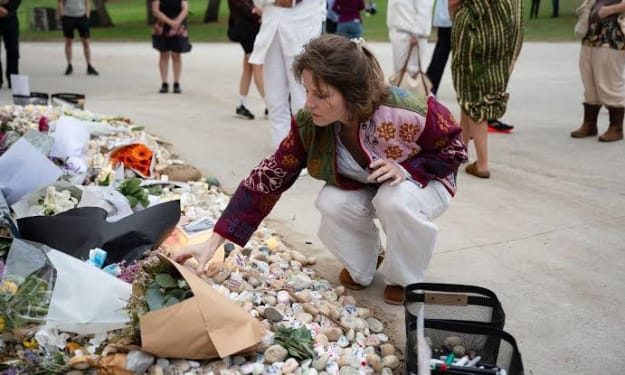
Thirty years ago, Australia experienced a tragedy that shook the nation to its core. The Port Arthur massacre in 1996, where 35 people were killed, united Australians in grief and led to decisive action on gun laws. Communities mourned together, political divides softened, and a sense of national solidarity emerged. Today, when tragedy strikes again—like the recent Bondi Beach shooting—that same unity seems harder to find. Why hasn’t Australia come together in the same way? The Legacy of Port Arthur The Port Arthur massacre was a watershed moment for Australia. The horror of that event prompted widespread reflection, not only on gun ownership but on the kind of society Australians wanted to live in. It led to one of the strictest gun control laws in the world, with the government implementing the National Firearms Agreement. Public response was remarkable. People across the country shared in mourning, vigils were held, and media coverage emphasized collective grief rather than political division. For many, it was a moment when national identity and compassion transcended everyday disagreements. The Bondi Shooting: A Different Reaction Contrast that with the recent Bondi Beach shooting, where a small number of lives were lost but the tragedy reverberated widely through media and social platforms. Unlike Port Arthur, the public conversation has been fractured. Social media discussions are polarized, with debates about security, immigration, policing, and gun ownership taking center stage. While Australians certainly feel sorrow for the victims, the public discourse has been less unified. Instead of a shared moment of reflection, the tragedy has become a lens through which political and social differences are magnified. Factors That Shape Public Unity Several factors may explain why Bondi has not created the same national cohesion as Port Arthur: Media Landscape Changes – In 1996, news coverage was dominated by a few national outlets. Today, social media amplifies conflicting voices, which can fragment public opinion. Scale and Shock – Port Arthur was unprecedented in its scale. The sheer number of casualties contributed to a collective sense of shock and urgency that demanded unified response. Bondi, while tragic, involved fewer victims and may not have triggered the same level of nationwide empathy. Political Polarization – Australia, like many countries, is more politically divided today. National tragedies are often filtered through political lenses, preventing a purely emotional or human response from emerging. Frequency of Tragic Events – The world has grown accustomed to incidents of violence, both domestically and globally. While no tragedy is insignificant, repeated exposure can dull the public’s sense of shared crisis. Lessons from History The Port Arthur massacre demonstrates that national grief can lead to action and cohesion. Australians were able to mourn collectively and then channel that emotion into constructive change. Bondi, in contrast, reveals the challenges of maintaining that same unity in a modern media environment and a more politically fractured society. Experts suggest that the path to unity begins with emphasizing empathy and shared humanity. Public messaging that focuses on victims’ stories, community support, and collective action rather than political blame can foster solidarity, even in smaller-scale tragedies. Community Response and Support Despite the fractured public discourse, local communities around Bondi Beach have shown compassion and support for the victims and their families. Vigils, charitable efforts, and mental health outreach have emerged, proving that unity can still exist on a smaller, more personal level. Organizations and mental health professionals stress the importance of providing support to survivors and first responders, ensuring that the emotional aftermath of the tragedy is addressed. While it may not be national in scale, community-level cohesion can be powerful and meaningful. Conclusion Tragedies like Port Arthur remind Australia of the potential for national unity in the face of horror. But as the Bondi Beach shooting illustrates, modern society, media, and politics make that unity harder to achieve. While the scale of the event, social media dynamics, and political polarization complicate the national response, community support and compassion remain essential. Perhaps Australia’s lesson today is that unity is not always a single, sweeping moment of nationwide reflection. Sometimes, it is found in small acts of solidarity, empathy, and collective care—even if the entire nation does not come together at once.
By Fiaz Ahmed 7 days ago in The Swamp



Comments
There are no comments for this story
Be the first to respond and start the conversation.