
Donald Trump’s Mysterious Forward Lean: Harmless Habit or Health Crisis in the Making?
“Medical experts warn that Donald Trump’s forward-leaning posture may signal more than just aging—raising urgent questions about his health and fitness for office.”

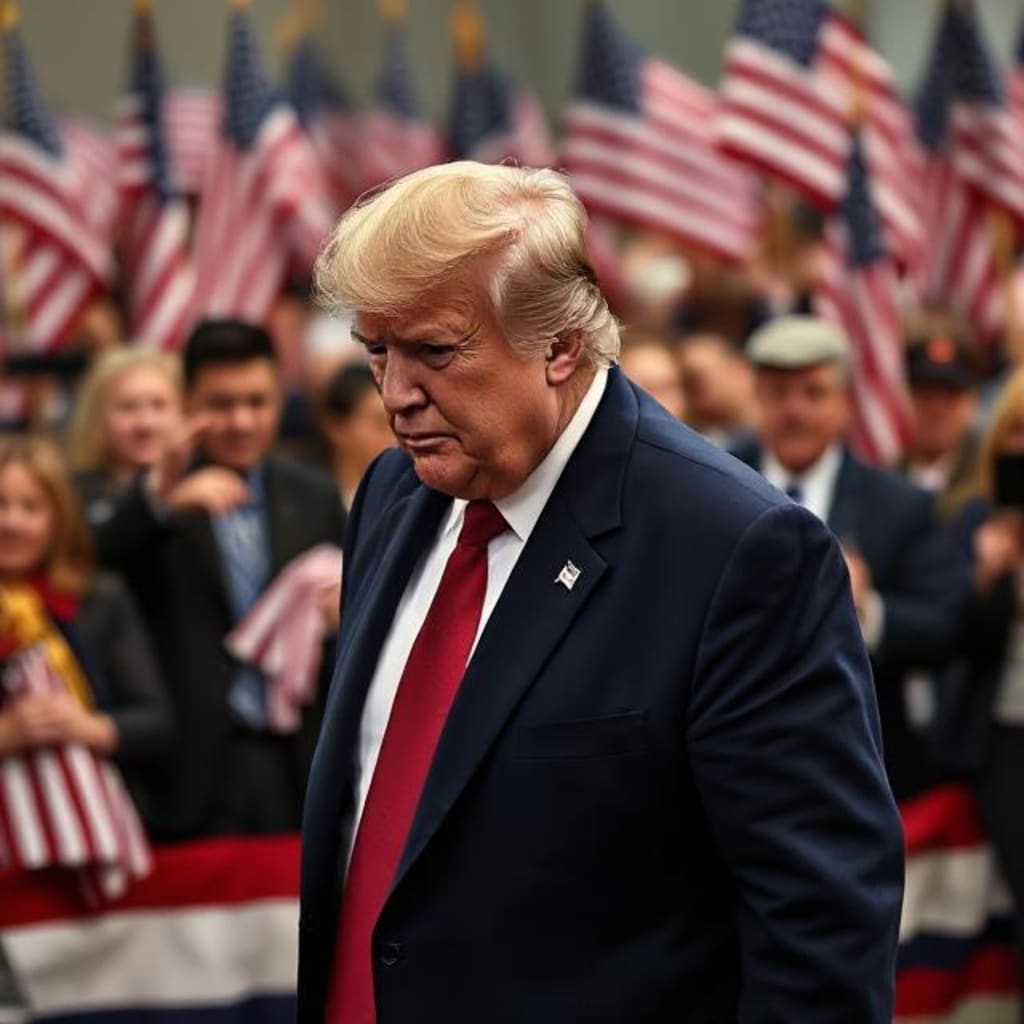
Donald Trump’s public appearances have always been scrutinized, from his handshakes to his mannerisms. But in recent months, a new detail has caught the attention of medical experts and political commentators alike: his increasingly noticeable forward-leaning posture.
At first glance, it might seem like a trivial detail—simply the way a man in his late seventies carries himself. Yet many neurologists, orthopedic specialists, and body language analysts warn that this could be more than just a quirk of aging. Trump’s body posture could be signaling something far more serious about his cognitive and physical health.
---
A Visible Change That’s Hard to Ignore
Trump has always been a towering figure, both physically and politically. Standing at over six feet tall, his imposing frame has long been part of his strongman image. But in recent public appearances, cameras have caught him leaning noticeably forward as he walks, often with stiff movements and a tilted stance.

Critics initially dismissed it as a result of poorly fitted shoes or even shoe lifts, given Trump’s reputation for being conscious of his appearance. But medical professionals quickly pointed out that this kind of forward lean isn’t typical of footwear issues—it more closely resembles signs of neurological conditions such as Parkinson’s disease, spinal stenosis, or balance-related disorders.
While no official diagnosis has been shared, the change is stark enough that it’s fueling growing speculation.
---
Why It Matters Politically
Health concerns about a sitting president or leading political figure are not new. Franklin D. Roosevelt’s paralysis and John F. Kennedy’s chronic back pain were largely hidden from the public during their time. But in today’s age of nonstop cameras and social media, such physical changes can’t escape notice.

For Trump, the implications are even bigger. His base of supporters has shown near-religious loyalty, often brushing off any criticisms or warnings about his behavior. When questioned about his speech patterns, his gaffes, or now his posture, the reaction from his core voters is usually the same: deny, deflect, and attack the critics.
But loyalty has its limits. If Trump’s forward lean is truly a symptom of neurological decline, it raises unavoidable questions about his ability to function in the grueling role of president. And at some point, even the most dedicated supporters may be forced to confront that reality.
---
The Silence Around Trump’s Health
One of the most alarming aspects of this story isn’t just the posture itself—it’s the lack of transparency surrounding Trump’s medical condition. Despite being a central figure in American politics for nearly a decade, Trump has released only limited and carefully crafted medical notes, usually from hand-picked doctors.

Compare this with the scrutiny other politicians face. Joe Biden’s health is questioned relentlessly, with every slip, stumble, or verbal blunder dissected on national television. Yet Trump’s health issues, including this noticeable lean, rarely receive the same sustained coverage from mainstream outlets.
This silence creates an environment where rumors thrive, and in politics, perception often matters as much as reality.
---
What the Experts Are Saying
Neurologists and body movement specialists have noted that Trump’s posture could signal:
Parkinsonian symptoms, which often involve a forward-leaning stance.
Degenerative spinal conditions that affect balance.
Cognitive decline, as posture changes are sometimes linked to neurological deterioration.
None of these possibilities are trivial. If even one proves accurate, it would mean Trump is facing health challenges that could directly affect his decision-making, energy levels, and ability to endure the demands of a presidency.
---
The Larger Question: Do Americans Deserve to Know?
Regardless of political affiliation, one principle should unite the public: the health of a nation’s leader is not a private matter. The stakes are simply too high. From managing nuclear codes to negotiating international crises, the presidency demands clarity, focus, and stamina.
Americans deserve full disclosure about the medical state of anyone who seeks to hold the most powerful office in the world. Brushing off these questions as partisan attacks only delays the inevitable reckoning with the truth.
Ignoring the signs won’t make them disappear—and neither will pretending not to see them.
---
Conclusion
Donald Trump’s forward-leaning posture may not yet be the subject of daily headlines, but it should be. Whether it is simply a harmless quirk of age or a signal of a serious neurological issue, the change is too visible to dismiss.
Supporters and critics alike must ask the same question: if the posture points to a deeper health crisis, is Trump truly fit to serve another four years in office?
In politics, image matters. But when image collides with health, the truth becomes unavoidable. The American people deserve transparency, and delaying that conversation only risks a larger crisis down the road.
---
SEO Keywords:
Donald Trump posture, Trump leaning forward, Trump health concerns, Trump neurological issues, Trump dementia speculation, Trump body posture, Trump cognitive health, Trump physical health, Trump medical analysis, Trump forward lean.
---
About the Creator
Muhammad Riaz
- Writer. Thinker. Storyteller. I’m Muhammad Riaz, sharing honest stories that inspire, reflect, and connect. Writing about life, society, and ideas that matter. Let’s grow through words.
Keep reading
More stories from Muhammad Riaz and writers in The Swamp and other communities.
Donald Trump's Forward Lean: From Campaign Trail Quirk to White House Worry in 2025
For nearly a decade, Donald Trump's forward-leaning posture has been a staple of his public image, but in 2025—as he navigates his second term as President—it's sparking renewed and urgent questions.
By Muhammad Riaz4 months ago in The Swamp
Royal and French Navies Train Shipborne Drones in the Mediterranean: A Glimpse into the Future of Naval Warfare
The Mediterranean Sea has once again become a proving ground for modern naval innovation as the Royal Navy and the French Navy conduct joint exercises involving shipborne drones. These drills signal a decisive shift in how maritime powers are preparing for future conflicts—where uncrewed systems, artificial intelligence, and networked warfare will play a central role. As geopolitical tensions rise and naval operations become more complex, both nations are investing heavily in remotely piloted and autonomous systems to enhance surveillance, strike capability, and fleet protection. The recent Mediterranean exercise highlights how traditional naval forces are evolving to meet 21st-century threats. Why Shipborne Drones Matter Shipborne drones—whether launched from destroyers, frigates, or aircraft carriers—offer navies a powerful advantage. Unlike crewed aircraft, drones can operate for longer periods, take greater risks, and be deployed rapidly without endangering human life. In the joint drills, British and French warships tested uncrewed aerial vehicles (UAVs) and uncrewed surface systems designed for tasks such as: Maritime surveillance Intelligence, surveillance, and reconnaissance (ISR) Target acquisition Force protection Electronic warfare support By training together, both navies aim to ensure that their drone systems are interoperable, capable of sharing data seamlessly during real-world operations. A Strategic Partnership at Sea The Royal Navy and the French Navy already share one of Europe’s closest defense partnerships. From carrier strike cooperation to nuclear deterrence coordination, the two forces have a long history of working side by side. This latest drone-focused exercise strengthens that partnership by addressing a critical question: how can allied navies integrate uncrewed systems into joint operations without disrupting command structures or safety protocols? During the drills, operators practiced launching and recovering drones from moving ships—one of the most technically challenging aspects of naval drone operations. The exercises also tested how drone data feeds into ship combat management systems, allowing commanders to make faster, better-informed decisions. The Mediterranean: A Testing Ground The Mediterranean is an ideal environment for such trials. It is one of the world’s busiest maritime regions, featuring: Heavy commercial shipping traffic NATO and non-NATO naval presence Proximity to conflict zones in the Middle East and North Africa Operating drones in this complex environment allows navies to test not just technology, but rules of engagement, deconfliction procedures, and cyber resilience. Officials involved in the drills emphasized that the exercises were not aimed at any single adversary. Instead, they are part of a broader effort to ensure maritime security, freedom of navigation, and deterrence in an increasingly contested domain. From Manned Fleets to Hybrid Forces Both the UK and France are transitioning toward hybrid naval fleets, where crewed ships operate alongside autonomous and semi-autonomous systems. This approach allows navies to extend their reach without dramatically increasing fleet size or personnel. For the Royal Navy, shipborne drones are already being tested aboard Type 23 and Type 45 vessels. France, meanwhile, has invested heavily in naval drone programs as part of its future fleet modernization. Training together accelerates learning on both sides, helping commanders understand: What drones can realistically achieve Where human oversight remains essential How to balance autonomy with accountability Implications for NATO and Beyond The success of these exercises has implications far beyond the Mediterranean. As NATO places greater emphasis on multi-domain operations, lessons learned from UK-French cooperation could shape alliance-wide standards for naval drones. Future conflicts are likely to feature swarm tactics, electronic warfare, and contested communications. Practicing now ensures allied navies are not caught unprepared. Moreover, visible cooperation sends a clear message: European naval powers are serious about maintaining technological relevance and collective security in an era of rapid military change. Looking Ahead As shipborne drone technology continues to mature, exercises like this will become more frequent—and more complex. Future drills may involve larger drone swarms, underwater autonomous vehicles, and AI-assisted decision-making tools. For now, the Royal Navy and French Navy have taken an important step forward. By training together in the Mediterranean, they are not just testing machines—they are reshaping the future of naval warfare, one unmanned system at a time
By Fiaz Ahmed Brohiabout 13 hours ago in The Swamp
Rachel Reviews: The Spiral Archive by Pieter Hendrik
It's difficult for me to know where to start with a review of this book as it was, for me, an entirely unique experience and one that I'll probably never have again. I don't want that to be interpreted as unenjoyable but it has left me scratching my head a little and ruminating on its content, its themes and its characters.
By Rachel Deemingabout 15 hours ago in BookClub



Comments
There are no comments for this story
Be the first to respond and start the conversation.