
Donald Trump and Volodymyr Zelenskyy Talks Fail to Deliver Breakthrough on Ukraine Peace Deal
High-level diplomacy shows progress, but deep divisions continue to block an end to the war
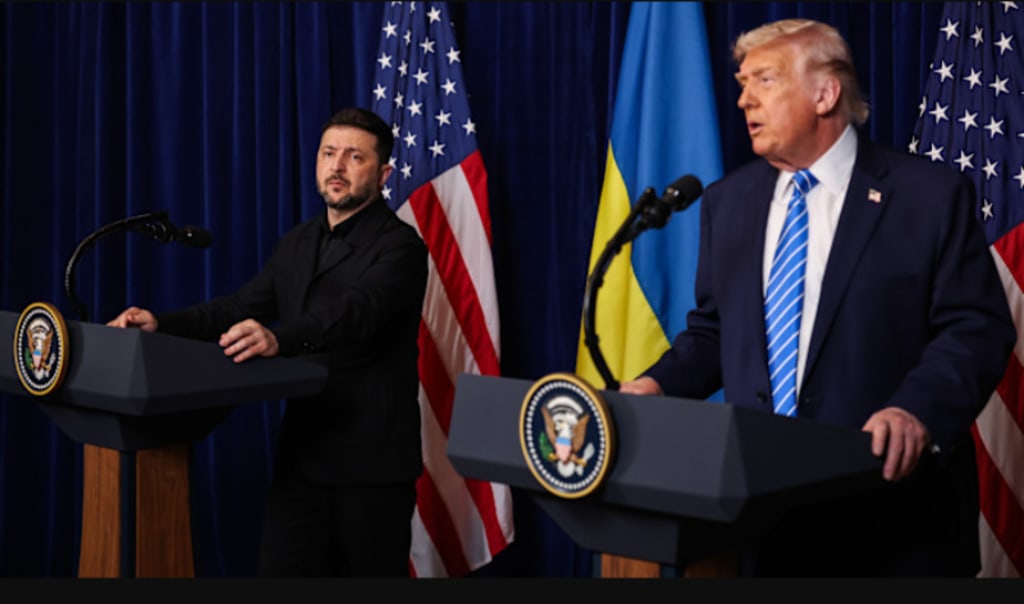
A much-anticipated meeting between U.S. President Donald Trump and Ukrainian President Volodymyr Zelenskyy has ended without a major breakthrough on a peace deal to end the war in Ukraine. While both leaders publicly described the talks as “productive” and “constructive,” the absence of a concrete agreement highlights the deep and persistent challenges involved in resolving one of the world’s most devastating conflicts.
The discussions raised hopes of progress, but they also revealed how far apart key positions remain — particularly on security guarantees, territorial integrity, and Russia’s role in any final settlement.
High Expectations, Limited Results
The talks took place against the backdrop of nearly three years of full-scale war in Ukraine, with mounting casualties, economic strain, and growing pressure on global diplomacy to find a way forward. President Trump has repeatedly stated that he wants to broker a peace deal, positioning himself as a negotiator capable of ending the conflict.
Following the meeting, Trump said that “a lot of progress” had been made and suggested that a peace framework was close to completion. Zelenskyy echoed cautious optimism, acknowledging movement on several issues. However, no signed agreement, ceasefire announcement, or detailed roadmap emerged.
For many observers, the outcome was a familiar pattern: encouraging rhetoric paired with unresolved realities.
The Core Issues Still Blocking a Deal
Despite hours of discussion, several major sticking points continue to prevent a comprehensive peace agreement.
Security Guarantees for Ukraine
One of the central demands from Kyiv is long-term security guarantees to prevent future Russian aggression. While the United States has proposed a time-limited framework, Zelenskyy has pushed for guarantees lasting decades, arguing that Ukraine cannot afford another cycle of invasion and rebuilding.
Without ironclad security assurances, Ukrainian officials fear any deal could simply freeze the conflict rather than resolve it.
Territorial Disputes
The question of occupied territories remains deeply divisive. Zelenskyy has consistently stated that Ukraine will not formally surrender its land and insists that any decision regarding territory must involve the Ukrainian people.
Trump, meanwhile, has hinted at the need for “realistic compromises,” a phrase that has sparked concern among some Ukrainian allies who worry about pressure to concede ground.
The Role of Russia
Perhaps the biggest unknown is Russia’s willingness to accept any proposed deal. While Trump claims to have had positive conversations with Russian leadership, Moscow has offered no public commitment to the outlined framework.
As fighting continues on the ground, many analysts question whether Russia sees enough incentive to agree to meaningful concessions at this stage.
War Continues as Diplomacy Stalls
Even as talks took place, military operations continued across eastern and southern Ukraine. Missile strikes, artillery exchanges, and drone attacks underscored the contrast between diplomatic efforts and battlefield realities.
For Ukrainians, the lack of immediate progress is more than a political disappointment — it means ongoing danger, displacement, and loss. Critics argue that prolonged negotiations without tangible results risk normalizing the war rather than ending it.
International Reactions: Cautious and Concerned
Global reactions to the meeting have been mixed. Some European leaders welcomed continued dialogue, stressing that any peace effort is preferable to none. Others expressed concern that rushing a deal without firm guarantees could undermine Ukraine’s sovereignty and long-term stability.
NATO allies continue to emphasize that Ukraine must be involved in shaping its own future and that peace cannot come at the expense of international law.
Trump’s Diplomatic Strategy Under Scrutiny
Trump’s approach to the Ukraine war has sparked debate both at home and abroad. Supporters argue that his willingness to engage all sides could open doors that traditional diplomacy has failed to unlock. Critics, however, worry that prioritizing speed over substance could lead to an unstable settlement.
By framing the talks as “nearly complete,” Trump has raised expectations — but the lack of concrete outcomes has also intensified scrutiny of his claims.
What Happens Next?
Both leaders have indicated that negotiations will continue, possibly involving European partners and further discussions with Russia. However, no clear timeline has been set, and the path forward remains uncertain.
The meeting made one thing clear: ending the Ukraine war will require more than optimistic statements and partial agreements. It will demand difficult compromises, sustained international coordination, and — most importantly — genuine commitment from all sides involved.
Final Thoughts
The Trump–Zelenskyy talks were an important diplomatic moment, but they stopped short of delivering the breakthrough many had hoped for. While progress was made in outlining potential frameworks, the hardest decisions remain unresolved.
As the war grinds on, the world watches closely — aware that peace is possible, but far from guaranteed.
About the Creator
Keep reading
More stories from Aqib Hussain and writers in The Swamp and other communities.
Global Leaders Gather in Switzerland to Ponder the Future of a Messy World
In a world marked by conflict, climate crises, and economic instability, the small alpine country of Switzerland has once again become the focal point for global diplomacy. Leaders from around the world have gathered in Geneva this week to engage in what many are calling one of the most consequential international meetings of the decade. The purpose? To ponder the future of a world that seems increasingly messy, unpredictable, and interconnected in ways that defy easy solutions.
By Aqib Hussainabout 18 hours ago in The Swamp
US Senators Move to Clarify the Crypto Landscape
The U.S. cryptocurrency market has long been a frontier of innovation — and confusion. Investors, startups, and regulators alike have struggled to navigate a landscape where digital assets grow at lightning speed, yet the rules governing them remain murky. Now, a group of U.S. senators has taken a major step to address this uncertainty by introducing a bill aimed at defining clearer rules for the crypto market. A Turning Point for Crypto Regulation For years, the U.S. has lagged behind other countries in providing clear legal guidance on cryptocurrency. While some states have issued their own regulations and agencies like the Securities and Exchange Commission (SEC) have offered guidance, the lack of a unified federal framework has created uncertainty. This uncertainty has affected everyone from small retail investors to large financial institutions, limiting adoption and innovation. The new bill, introduced by senators from both parties, represents the first comprehensive attempt in years to outline federal rules for digital assets. By clearly defining what constitutes a cryptocurrency, setting standards for trading platforms, and delineating regulatory oversight, lawmakers hope to bring stability and transparency to the market. Key Provisions of the Bill While the full text of the legislation is extensive, several provisions stand out as particularly significant: Clear Definitions: One of the major obstacles in the U.S. crypto market has been the lack of precise definitions. The bill seeks to categorize digital assets into clear categories such as “cryptocurrencies,” “stablecoins,” and “security tokens,” each with tailored regulatory frameworks. This clarity is expected to help companies understand whether they are subject to SEC rules, Commodity Futures Trading Commission (CFTC) oversight, or other federal regulations. Consumer Protections: With high-profile cases of crypto fraud and exchange collapses, consumer protection is a priority. The bill introduces requirements for transparency in trading platforms, clear disclosure of risks, and security standards to protect investor assets. It also provides mechanisms for recourse in cases of fraud or mismanagement. Stablecoin Oversight: Stablecoins — digital assets pegged to traditional currencies — have grown enormously, fueling concerns about systemic risk. The proposed legislation outlines regulatory guidelines to ensure that stablecoins are fully backed, audited regularly, and subject to federal oversight, reducing the potential for market disruptions. Innovation-Friendly Framework: Importantly, the bill does not aim to stifle innovation. It encourages technological development and allows startups to experiment within a defined framework. Lawmakers recognize that the U.S. risks losing its competitive edge if crypto regulation becomes too restrictive or unclear. Coordination Among Agencies: One persistent problem has been overlapping jurisdiction between federal agencies. The bill seeks to clarify which agency is responsible for different types of digital assets and activities, aiming to reduce confusion and prevent conflicting enforcement actions. Bipartisan Support Reflects Growing Recognition Interestingly, the bill enjoys support from both Democrats and Republicans, reflecting a growing recognition that cryptocurrency is not just a niche technology but a key component of the modern financial system. Lawmakers have highlighted the potential for blockchain to improve payment systems, reduce transaction costs, and enhance transparency in financial markets. The bipartisan nature of the legislation may also increase its chances of passage, though challenges remain. While regulators largely welcome clarity, some consumer advocacy groups argue that the bill does not go far enough in protecting everyday investors from risks associated with highly volatile digital assets. Industry Response The crypto industry has largely welcomed the proposed legislation, viewing it as a long-overdue step toward legitimacy. Exchanges, wallet providers, and blockchain startups have repeatedly called for clear federal guidelines, arguing that uncertainty hampers growth and scares away institutional investors. At the same time, some companies have cautioned that overly strict rules could push innovation overseas, as U.S. developers might move to countries with more flexible frameworks. Balancing innovation with investor protection remains a central challenge for lawmakers. Global Context: The U.S. and Crypto Regulation The introduction of this bill comes at a time when the U.S. faces increasing international competition in the crypto space. Countries like Switzerland, Singapore, and the United Arab Emirates have implemented comprehensive frameworks that attract crypto startups and investments. Without clear rules, the U.S. risks losing its leadership position in a market expected to be worth trillions of dollars in the coming decades. By setting federal standards, the bill could help the U.S. reassert its influence, ensuring that innovation occurs under a framework that protects consumers while fostering growth. Analysts believe that clarity in regulation will encourage major banks, investment firms, and technology companies to expand their involvement in digital assets. Next Steps and Potential Challenges The bill will now move through the Senate committee process, where lawmakers will debate its provisions and consider amendments. It faces potential hurdles, including disagreements over the scope of regulatory authority and the degree of oversight needed for innovative financial instruments. Moreover, the fast-moving nature of the crypto market presents another challenge: laws that take too long to pass risk becoming outdated as technology evolves. Advocates argue that any legislation should include mechanisms for periodic review to keep pace with innovation. Conclusion: Toward a Clearer Crypto Future For investors, innovators, and regulators, the introduction of this bill represents a significant milestone. It signals a shift toward clearer rules, stronger protections, and a more stable environment for digital assets in the United States. While challenges remain, the legislation offers hope that the long-standing uncertainty surrounding cryptocurrency regulation may finally be addressed. As Congress debates the bill, the broader market watches closely. A well-crafted framework could transform the U.S. crypto landscape, encouraging growth, innovation, and consumer confidence. Ultimately, the success of this effort may determine whether America can maintain its position as a global leader in the digital financial revolution.
By Muhammad Hassan6 days ago in The Swamp


Comments
There are no comments for this story
Be the first to respond and start the conversation.