
Donald Trump and the Quest for Development: Policies, Controversies, and Impact
Introduction: A Polarizing Figure in Development Policy

Donald Trump, the 45th President of the United States, remains one of the most polarizing figures in modern politics. Loved by some for his bold promises and criticized by others for his controversial decisions, Trump’s tenure brought a distinct approach to economic and infrastructure development. His policies aimed to prioritize American interests, often emphasizing job creation, domestic investment, and deregulation. But how effective were these policies in fostering real development, and what lessons can be drawn from his administration?
Economic Development: Prioritizing “America First”
A cornerstone of Trump’s development strategy was the “America First” agenda. This approach focused on stimulating the domestic economy by protecting U.S. industries and encouraging local production. One of the most notable steps in this direction was the implementation of tariffs on imported goods, particularly from China. While the policy aimed to support American manufacturing jobs, it also drew criticism for increasing costs for businesses and consumers.
Trump also signed significant tax reform legislation, the Tax Cuts and Jobs Act of 2017, which reduced corporate tax rates from 35% to 21%. Proponents argued that lower taxes would incentivize investment and job growth, while critics warned that the benefits disproportionately favored large corporations and the wealthy. Despite these debates, the administration reported a period of strong GDP growth and historically low unemployment rates prior to the COVID-19 pandemic.
Infrastructure Ambitions and Challenges
Infrastructure development was another major focus during Trump’s presidency. He frequently emphasized the need to rebuild America’s roads, bridges, and public transport systems. The administration proposed a $1.5 trillion infrastructure plan aimed at modernizing the nation’s infrastructure through public-private partnerships.
However, despite the ambitious plans, actual progress was limited. Political gridlock, budget constraints, and disagreements over funding mechanisms slowed implementation. Critics argued that while the rhetoric was strong, tangible development projects often lagged behind the promises. Supporters, however, praised the effort to bring national attention to neglected infrastructure needs.
Regulatory Reform: Encouraging Business Growth
Trump’s administration pushed aggressively for deregulation as a means of promoting economic development. The government rolled back numerous environmental regulations, labor rules, and industry standards with the intention of reducing costs for businesses and fostering innovation.
Industries like energy, manufacturing, and finance saw a relaxation of restrictions, which proponents claimed spurred investment and economic activity. Yet, environmentalists and social advocates argued that deregulation came at the expense of sustainability, worker protections, and long-term public welfare. The debate highlighted a central tension in development policy: balancing immediate economic growth with long-term societal impact.
Controversies and Criticisms
Trump’s development policies were often accompanied by controversy. His approach to international trade, particularly the trade war with China, drew mixed reactions from economists. Some argued it protected American jobs, while others warned it could lead to global economic instability.
Additionally, the administration’s handling of urban development and social programs drew scrutiny. Critics claimed that while Trump prioritized business-friendly policies, programs aimed at poverty reduction, affordable housing, and community development received less attention. This raised questions about whether his development policies were inclusive enough to benefit all segments of society.
Legacy and Long-Term Impact
Assessing the long-term impact of Trump’s development policies is complex. On one hand, his tax cuts, deregulation efforts, and focus on domestic manufacturing provided short-term economic boosts. On the other, critics argue that his policies often favored corporations over communities and that gains were unevenly distributed.
Trump’s approach has influenced subsequent debates on economic and infrastructure development. Future policymakers are likely to weigh the successes and failures of his strategies, considering both the benefits of deregulation and the importance of inclusive growth.
Lessons for the Future
Donald Trump’s tenure offers several lessons for development policy:
Economic growth requires balance: Prioritizing business and industry can boost short-term development, but long-term sustainability and social equity must also be considered.
Infrastructure is key: Ambitious plans must be backed by clear funding mechanisms and bipartisan support to ensure real progress.
Regulation matters: While reducing bureaucratic hurdles can stimulate growth, careful oversight is necessary to protect communities and the environment.
Inclusive development: Policies that consider all socioeconomic groups are more likely to foster lasting prosperity.
Conclusion: A Mixed Legacy
Donald Trump’s approach to development was bold, controversial, and undeniably influential. By emphasizing American interests, deregulation, and domestic investment, his policies created both opportunities and challenges. While opinions on his effectiveness vary widely, one fact remains: his tenure sparked a national conversation about how the United States should pursue economic and infrastructure development in a rapidly changing world.
Whether one views his policies as transformative or flawed, Trump’s presidency offers a unique case study in the complexities of development governance and the trade-offs inherent in shaping national growth strategies.
About the Creator
Why Black History Matters in America?
The United States of America is celebrating their 250th anniversary in 2026. I'm proud to be an American and as someone who was born here, I wouldn't imagine myself living anywhere else. This is a country where opportunities are possible. Where anyone can be successful in anything they desire to do. Equality, community, and togetherness are the backbones of what America is and should be about. However, we have an administration who wants to erase and disregard those who have made positive, meaningful impacts in our country, specifically Black figures, such as Martin Luther King, Jr., Rosa Parks, and Maya Angelou. President Trump and his administration have been constantly complaining and fighting against what they call the "Woke agenda". They use this excuse as a distraction from other issues they refuse to address, such as the high cost of living, climate change, and inflation. That equality is dividing America, when in reality, it's bringing us together. Being woke is not tied to a specific political party. No matter where you stand on the political spectrum, you can still care about other people and their plights. Compassion and empathy for others isn't tied to a political party, either. We were taught as children to treat others the way we want to be treated and not judge others because they're different from us. Caring about others isn't a personal attack on your beliefs. It doesn't make you any less of a person. People who are easily offended over African American figures, past or present, or anything related to it, are grasping at straws. Current and future generations need to know who people like Harriet Tubman and Shirley Chisholm were, especially in the classroom. Black History is part of American History. It should be recognized, not hidden or forgotten. Besides, you can't shield children from everything, just because your feelings are easily hurt.
By Mark Wesley Pritchard 13 days ago in The Swamp
Japanese Voters Brave Heavy Snow to Cast Ballots in Snap Election
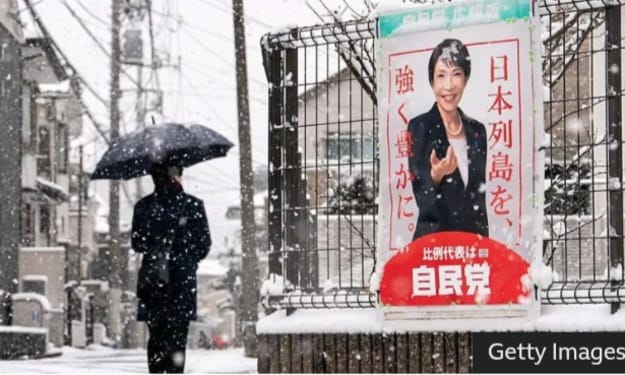
Japanese citizens across several regions braved heavy snowfall and freezing temperatures to cast their votes in a snap general election, demonstrating a strong commitment to democratic participation despite challenging weather conditions. The unexpected election, called amid political and economic uncertainty, tested both voter determination and the country’s election preparedness during one of the harshest periods of winter.
By Ayesha Lashari7 days ago in The Swamp



Comments
There are no comments for this story
Be the first to respond and start the conversation.