
Don Lemon Pleads Not Guilty to Civil Rights Charges After Minnesota Anti-ICE Protest
The former CNN anchor says he was acting as a journalist while federal prosecutors argue the protest interfered with religious freedom.

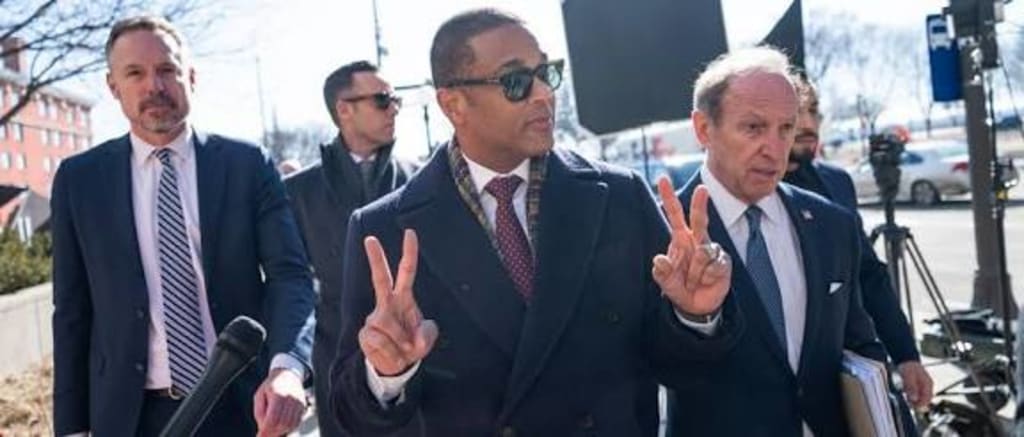
Former CNN anchor and independent journalist Don Lemon appeared in federal court in St. Paul, Minnesota on February 13, 2026, where he formally pleaded not guilty to a set of federal civil rights charges connected to his presence at a protest that disrupted a church service earlier this year. The case has sparked intense debate over press freedom, religious rights, and the limits of protest activity under U.S. law.
The Guardian
Lemon, now an independent broadcaster, was among nine people charged in connection with a protest at Cities Church in St. Paul on January 18. The protest targeted Immigration and Customs Enforcement (ICE) policies after the fatal shooting of Renee Good by an ICE agent. Lemon has consistently maintained that he was present in a journalistic capacity, livestreaming and documenting the event for his show, and not participating in the protest itself.
At the arraignment, Lemon stood beside veteran attorneys and entered his plea without incident. “I will not be silenced,” he told reporters afterward, invoking the First Amendment and the importance of a free press in holding powerful institutions accountable.
The Charges
The federal government has charged Lemon under several statutes, including:
Conspiracy to deprive civil rights — alleging coordinated efforts to intimidate or interfere with the religious freedom of worshippers.
Violation of the Freedom of Access to Clinic Entrances (FACE) Act — traditionally used to prohibit obstruction or harassment at reproductive health facilities or houses of worship.
Prosecutors contend that the church service was disrupted by demonstrators chanting “ICE out” and other slogans, and that Lemon’s presence with protesters contributed to an environment that obstructed worshippers’ rights. Supporters of the charges say the group’s actions went beyond peaceful coverage and entered into interference with others’religious activities.
If convicted, Lemon and others could face penalties including fines and potential prison time, though legal experts say the government has yet to specify exact sentencing ranges tied to these counts.
Lemon’s Defense: Press Freedom and Journalism
Lemon’s defense team has centered its argument on the First Amendment, asserting that Lemon was performing core journalistic functions — interviewing participants, documenting events, and providing independent coverage of a protest that touched on matters of public concern.
Attorney Abbe David Lowell, representing Lemon, asked the court to return Lemon’s confiscated phone, arguing it contains crucial journalistic work product that was seized without proper cause. Legal filings also suggest his lawyers may seek access to grand jury transcripts to scrutinize the basis for the indictment.
In public statements, Lemon has highlighted his three-decade career covering major national stories and emphasized that nothing about the Minnesota protest alters the legal protections afforded to reporters. “The First Amendment of the Constitution protects that work for me and for countless other journalists,” Lemon said outside the courthouse.
Inquirer.com
Other Defendants and Broader Context
Civil rights attorney Nekima Levy Armstrong and other activists also entered not-guilty pleas alongside Lemon. Several persons charged include activists and another independent journalist, Georgia Fort, who is scheduled to appear in court soon.
The Guardian +1
The protest itself was part of a broader wave of demonstrations in Minnesota and across the United States following the deaths of Renee Good and Alex Pretti in separate encounters with federal immigration enforcement agents. These incidents have fueled heated national debates over immigration policy, law enforcement tactics, and civil liberties.
Public Reaction and Legal Debate
Reactions to the charges have been sharply divided. Press freedom organizations, including the National Association of Black Journalists, have condemned the federal action as an attempt to intimidate reporters and repress dissent — particularly in an era of heightened political polarization.
The Guardian
Dozens of Lemon supporters gathered outside the courthouse during the arraignment, chanting slogans like “Protect the Press,” underscoring public concern that the case could create a chilling effect on journalists covering contentious events.
Conversely, conservative political figures and some religious leaders have argued that the protest crossed a line by disrupting a worship service. They claim the charges are appropriate under existing laws that protect the rights of those engaging in religious practice.
Legal Complexity and What’s Next
Legal experts note that the case raises novel questions about the application of civil rights statutes in protest contexts — particularly when journalists are present. Whether Lemon’s actions constitute protected press activity or unlawful interference will likely hinge on how the defense frames his role and how prosecutors interpret the contours of the FACE Act and civil rights laws. �
AP News
As the legal process unfolds, Lemon’s plea ensures that the fight over these charges will move forward in court. For Lemon and his supporters, the case has become emblematic of broader concerns over press freedom and government power. For prosecutors and critics of the protest, it represents a test of legal boundaries in highly charged political demonstrations.
The next significant court date for Lemon and co-defendants is expected in the coming weeks, as both sides prepare more detailed arguments and motions ahead of pretrial proceedings.
The Guardian
About the Creator
Fiaz Ahmed
I am Fiaz Ahmed. I am a passionate writer. I love covering trending topics and breaking news. With a sharp eye for what’s happening around the world, and crafts timely and engaging stories that keep readers informed and updated.
Keep reading
More stories from Fiaz Ahmed and writers in The Swamp and other communities.
Man Arrested After 16 Years on the Run When He Returns to Italy to Watch the Olympics
A fugitive who spent 16 years evading justice was arrested upon his return to Italy after traveling back to the country to attend the Winter Olympics, Italian authorities confirmed on Monday. The dramatic arrest ended one of the country’s longest-running manhunts and highlighted how international sporting events can draw unexpected attention — including from those seeking to disappear into the crowds. The man, whose identity has not been publicly disclosed under Italian privacy laws, had been wanted since 2009 for serious criminal offenses, including fraud and involvement in organized crime-related financial schemes. Investigators said he had lived under an assumed identity in several European countries before deciding to return to Italy to witness the Olympic Games in person. Authorities believe his desire to see the Games overpowered years of caution. “He thought enough time had passed,” said a senior police official. “But modern surveillance systems and international coordination meant that once he entered the country, he was quickly identified.” A Long-Forgotten Warrant The fugitive had been sentenced in absentia after failing to appear in court more than a decade ago. An arrest warrant remained active, but police admitted the trail had gone cold after several failed attempts to locate him abroad. Italian investigators reopened the case earlier this year when border control systems flagged a passport linked to his former identity. Surveillance teams discreetly tracked his movements after he arrived in northern Italy, where Olympic events were being held. Officers waited until he had settled into accommodation near a host city before moving in to make the arrest, avoiding public disruption during the Games. Olympic Crowds Provided Cover — and Clues Large international sporting events attract millions of visitors and create an environment where anonymity can feel possible. Police said the man likely believed he could blend into the influx of tourists. However, biometric border checks and hotel registration requirements made it easier for authorities to trace him once he crossed into the country. The arrest took place just hours before he was scheduled to attend an evening event, according to officials familiar with the operation. “It was almost cinematic,” one investigator said. “He came back to celebrate sport and ended up facing justice.” The incident occurred during the Milan-Cortina Winter Olympics, which have brought unprecedented security measures to Italy, including expanded police presence and cooperation with international law enforcement agencies. Life on the Run Court documents show that after fleeing Italy, the man lived for years in Spain and later in Eastern Europe, working informal jobs and avoiding official records. He used false names and avoided contact with relatives to prevent detection. Friends who later cooperated with police said he followed Italian news closely and dreamed of returning one day, particularly for a major cultural or sporting event. Investigators believe he underestimated how much technology had changed in the past 16 years. “Back then, disappearing was easier,” said a legal analyst. “Now databases talk to each other. A single passport scan can reopen a case from years ago.” Italy’s Message on Law Enforcement The arrest has been hailed by officials as proof of Italy’s strengthened judicial reach and the effectiveness of international cooperation. The Italian State Police said the operation was coordinated with border authorities and foreign partners who had tracked the suspect’s earlier movements. “This demonstrates that justice has no expiration date,” a police statement said. “Those who flee cannot assume they will remain invisible forever.” The government also stressed that Olympic security measures were designed not only to protect athletes and spectators but also to assist in detecting individuals with outstanding warrants. Public Reaction News of the arrest spread quickly across Italian media and social platforms, where many described the story as both ironic and symbolic. “It’s unbelievable,” one commentator wrote. “He escaped prison for 16 years but came back for sports.” Others praised the authorities for handling the arrest discreetly, avoiding scenes that could have disrupted Olympic events or endangered spectators. Legal Consequences The man was taken into custody and transferred to a high-security facility pending formal sentencing. Prosecutors said he will now serve the original prison term imposed years ago, along with potential additional charges related to document fraud and identity falsification. Legal experts say his voluntary return, even if unintentional, leaves him with little room for appeal. “He crossed the border under his real name,” said a criminal law professor. “That made the case straightforward.” A Warning to Other Fugitives Officials say the arrest sends a powerful message to fugitives living abroad: time does not erase legal responsibility. With major events like the Olympics increasing international data sharing, authorities expect more cold cases to be reopened. “This is not just about one man,” said an Interior Ministry spokesperson. “It’s about showing that justice can wait, but it does not forget.” As the Winter Olympics continue across Italy’s northern cities, the story of the fugitive who returned for sport and left in handcuffs has become a stark reminder that even moments of celebration can lead to long-delayed accountability.
By Fiaz Ahmed a day ago in The Swamp
Why Black History Matters in America?
The United States of America is celebrating their 250th anniversary in 2026. I'm proud to be an American and as someone who was born here, I wouldn't imagine myself living anywhere else. This is a country where opportunities are possible. Where anyone can be successful in anything they desire to do. Equality, community, and togetherness are the backbones of what America is and should be about. However, we have an administration who wants to erase and disregard those who have made positive, meaningful impacts in our country, specifically Black figures, such as Martin Luther King, Jr., Rosa Parks, and Maya Angelou. President Trump and his administration have been constantly complaining and fighting against what they call the "Woke agenda". They use this excuse as a distraction from other issues they refuse to address, such as the high cost of living, climate change, and inflation. That equality is dividing America, when in reality, it's bringing us together. Being woke is not tied to a specific political party. No matter where you stand on the political spectrum, you can still care about other people and their plights. Compassion and empathy for others isn't tied to a political party, either. We were taught as children to treat others the way we want to be treated and not judge others because they're different from us. Caring about others isn't a personal attack on your beliefs. It doesn't make you any less of a person. People who are easily offended over African American figures, past or present, or anything related to it, are grasping at straws. Current and future generations need to know who people like Harriet Tubman and Shirley Chisholm were, especially in the classroom. Black History is part of American History. It should be recognized, not hidden or forgotten. Besides, you can't shield children from everything, just because your feelings are easily hurt.
By Mark Wesley Pritchard 13 days ago in The Swamp
U.S. Futures Nudge Higher as Japanese Election Coaxes Investors Back to Risk
U.S. stock futures edged higher in early trading as investors around the world took comfort from the outcome of Japan’s national election, which delivered a decisive result and reduced political uncertainty in the world’s third-largest economy. The clear mandate emerging from Tokyo helped revive global risk appetite, encouraging investors to tentatively rotate back into equities after weeks of caution driven by geopolitical tensions, sticky inflation, and mixed economic data.
By Sadaqat Ali6 days ago in The Swamp



Comments
There are no comments for this story
Be the first to respond and start the conversation.