
Distracted by COVID, Brits lose their European privileges.
This loss disadvantages some more than others…
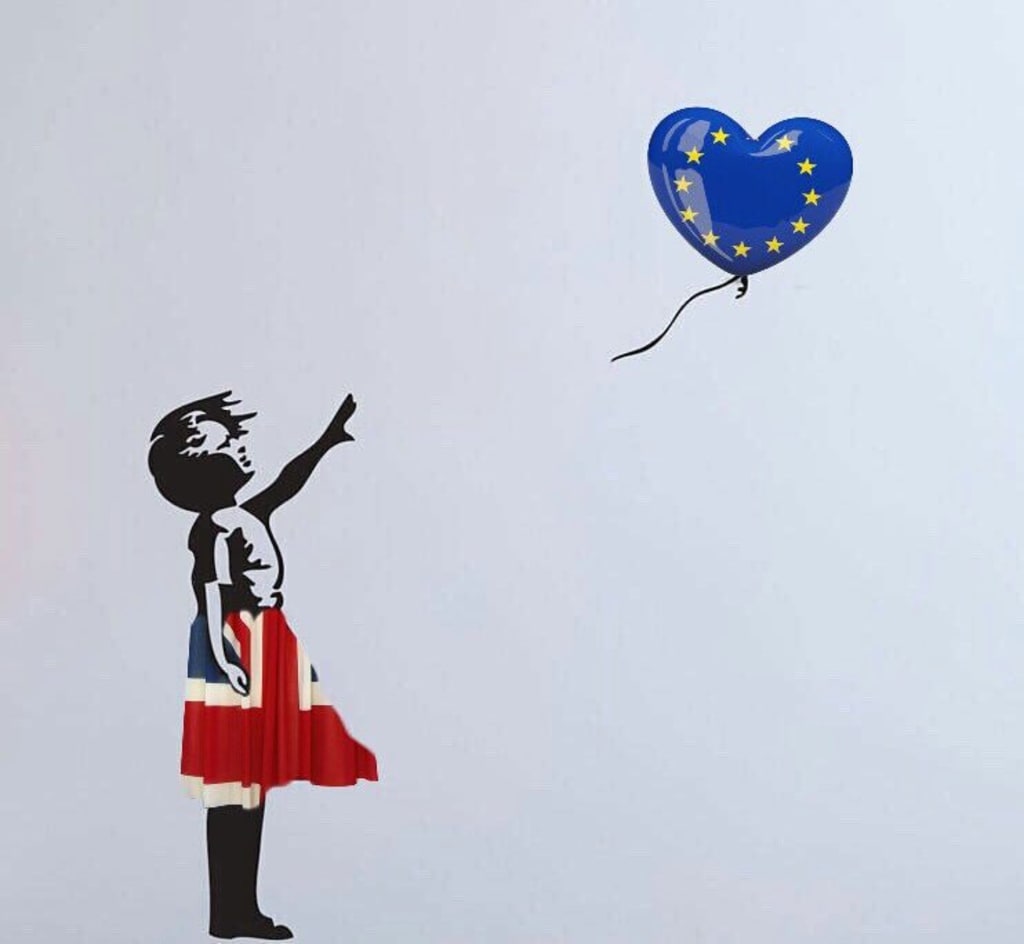
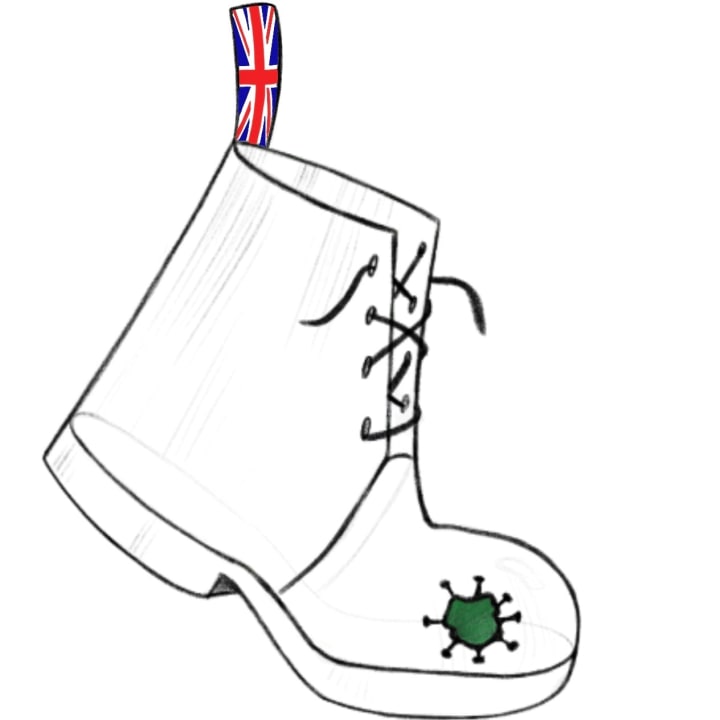
As a keen skateboarder in my teenage years, actively seeking out ledges to grind and sets of stairs to jump down, I was accustomed to pretty much constant bodily injury. After one particularly epic fail- which resulted in my left arm looking like it had been exfoliated with coarse grade sandpaper- I recall a friend’s grandmother giving me some advice. “Put a stone in your shoe…by the time you’ve walked home you’ll have forgotten all about your arm”. Sure enough this unconventional technique caused enough superficial pain to distract me from my shredded arm whilst I hobbled home.
We were feeling Brexit fatigue long before the pandemic. With the triage of issues the nation is facing these days, Brexit feels even less worthy of our attention. Rightfully so in many ways, no one is dying from our EU departure deal and it is hard to appreciate any long term loss of liberty at a time when we can’t even go for a pint in our local pub. However, in terms of British rights and freedoms, the current COVID restrictions, as tough as they are, will be relatively short lived- a stone in the shoe distracting us from a more serious blow to our rights.
There are too many aspects of Brexit to have a proper understanding of them all. Many, although important, do not have a discernible impact on the daily lives of most people. Throughout our Brexit journey we have managed to descend into a bizarre universe where complex topics of little significance to the majority receive national focus and attention. Usually because they can make a click-worthy emotive headline or soundbite. Fishing being a noteworthy red herring — a complex, poorly understood topic representing a tiny 0.02% slither of Britain’s economy¹- which took up a disproportional amount of the nation’s Brexit bandwidth.
There are much bigger fish to fry. A change which affects all British citizens’ innate rights is the loss of our individual right to live, work and retire in 30 countries across Europe. Until 31 December this was a characteristic feature in the arsenal of rights all Britons had at their disposal, regardless of wealth, education or class.
What this right meant is simple. Brits were free to live and work in a geographical covering approximately 5,000,000 square kilometres. An area 20 times larger than the U.K, covering 3 time zones and a range of climates and cultures. From the warm beaches of Greece, Malta and Spain to the awe-inspiring mountains in France, Austria and Italy, even up to the snowy plains of Lapland. No paperwork, sponsorship or permission needed. A baseline level of freedom in our back pockets.
As the clock struck midnight on New Year’s Eve, this limb of rights was quietly amputated from British citizens. A perfect storm of political theatrics, false promises and opportunistic distractions acting as a local anaesthetic whilst the nation hobbled onward, preoccupied by a COVID shaped stone in their shoe.
The reality of our new deal with the EU means our vast menu of overseas living and working opportunities has been severely downgraded to a 90-day tourist visa. No automatic rights to live, work or retire. This loss cannot be seen as anything but a major reduction of freedom and opportunity for British citizens. There are three exceptions:
1) Northern Ireland: anyone born in Northern Ireland can, if they wish, use their rights under the Good Friday Agreement to obtain an Irish passport and maintain all of their EU rights.
2) Gibraltar: the Rock is set to become part of the Schengen travel area. Gibraltarians should be able to use their ID to travel across Europe.
3) Dual citizenship: Brits with dual EU citizenship will of course keep their rights.
These groups of Brits not only keep their rights but will now enjoy a greater level of exclusivity and competitiveness as a result of the English, Welsh and Scottish getting turfed out of the club.
Of course, it will still be possible for Brits to live and work in Europe but there will be several new worlds of hoops to jump through and requirements to meet. The magnitude of red tape will differ depending on where you want to go, what your occupation is and how much cash you have at your disposal.
For professional and specialist jobs, it’s more likely prospective employers will have the resources to navigate the bureaucratic asteroid field of visa sponsorship. Many employers will simply steer clear altogether and will keep their default stance, only considering applicants who already have the right to work in the EEA.
Certain sectors and industries are set to become largely inaccessible to Brits. Unless new bilateral deals are struck there will be a major chilling effect on seasonal work opportunities for Brits in ski resorts and summer resorts alike. For the wealthy there are a variety of options available to mitigate the loss of rights and effectively buy back into the club. For example, various EU countries offer citizenship or permanent residency through investment.
As a result, the loss of free movement deals a graver blow to those from less fortunate backgrounds. Those who, generally speaking, are less likely to have the requisite qualifications needed for visa sponsorship and less likely to have the financial resources to fund study visas or purchase overseas property. Free movement had previously transcended all of these limitations, providing a socially mobile escape pod to all of those in disadvantaged cities and towns across the country. A point even more relevant when you consider the continuing existence of intra-British prejudices — accent, class, which school you went to — all of which naturally dissolve overseas.
Citizens’ rights are worthy of a high duty of care. They are extremely valuable, a major asset on our intrinsic balance sheet particularly for those with less to start off with. Our departure deal has extracted a severe price, one which was not made sufficiently clear to the people at the outset. It is was advertised as free but it has ended up requiring a major sacrifice. The “Get Brexit Done” slogans were catchy but they fell a long way short of genuine informed consent.
On my first trip to Paris at 24 years old, as I stood next to the Seine and gazed up in awe at the Eiffel tower I was offered a free weaved bracelet by an overly friendly local. I did not particularly want a bracelet but the man was very passionate and he repeatedly assured me it was completely free and I wouldn’t have to give him anything in return. The process ended up taking much longer than expected and got rather awkward. When I eventually tried to escape the man started insisting that I hand over my cash. To get rid of him I reluctantly handed over a couple of euros.
Boris Johnson has played the same Parisian street hustle on the British people, but on a grander scale. The advertised price to British rights, was free. Gratis. In his own 2016 victory address to the nation (26 June 2016, the Telegraph) he was clear there would be no cost to our rights.
“British people will still be able to go and work in the EU; to live; to travel; to study; to buy homes and to settle down”, Johnson wrote. “The only change — and it will not come in any great rush, is that the UK will extricate itself from the EU’s extraordinary and opaque system of legislation.”
Four years on Boris has finished weaving his bracelet and, despite early assurances, has demanded a hefty payment- “or else”. If it was not for the COVID shaped pebble in our shoe then perhaps we may have took a stand and put up more of a fight for our rights. We crossed Brexit’s event horizon long ago but a full and frank debate on free movement was never properly had. Whilst political U-turns are difficult to imagine, they are no longer unachievable goals, a well-placed strike from the likes of Marcus Rashford and dominoes can start to fall.
1-Fish statistic https://commonslibrary.parliament.uk/research-briefings/sn02788/
About the Creator
Christopher Ballantyne
Born human, became a lawyer.
Keep reading
More stories from writers in The Swamp and other communities.
Where Have The Opportunities Gone?
I’m a little jealous of my grandfather. He lived in a time where so few people could read or write that just being literate afforded him a civil servant job for life. The same job inherited by my father. But that same job was out of reach to me, despite not only being literate as well but, unlike my literal forefathers, also tech-literate with a bachelor’s degree. Even my father was confused why a position offered to him, through virtue of nepotism, wasn’t open to me. This anecdote is symptomatic of a downward trend; the loss of opportunities.
By Conor Matthewsa day ago in The Swamp
So You Decided To Become a Nurse Practitioner:
So you decided to become an "Advanced Practice" nurse. Congratulations!... is what I would say if this was a good idea. Grad school? In this economy? What were you thinking? Likely it was something along the lines of either 1) “I've seen these other chucklefucks do it— Why can't I?” or even 2) “I've got a nice career, I should shake it up. I miss feeling like I have no clue what I'm doing.”
By Sandor Szabo3 days ago in Fiction




Comments
There are no comments for this story
Be the first to respond and start the conversation.