
Disconnected: How Social Media Is Unraveling Real Community
“Once, we leaned on a village to raise our children. Now, we must lean on each other to rebuild the village.”


Social media promised connection—but it’s left us more isolated, distrustful, and alone. Can we rebuild the village we lost?
⸻
The Illusion of Connection
Social media platforms were designed to foster connection. Friends from childhood, family members across oceans, strangers with shared interests—all accessible with a tap. But what began as a tool for communication has morphed into a performance stage. Likes, shares, and comments have replaced genuine conversation. We curate our lives for applause, not authenticity.
The result? A culture of comparison, anxiety, and superficial relationships. We know what someone had for breakfast, but not how they’re really doing. We scroll past cries for help disguised as memes, too distracted to notice.
⸻
The Death of the Town Square
Communities once thrived in physical spaces—libraries, churches, parks, local cafés. These were places where people gathered, exchanged ideas, and built trust. Today, those spaces are empty or repurposed. The town square has gone digital, but it’s no longer a place for dialogue. It’s a battleground.
Online, nuance is lost. Algorithms reward outrage. Civil discourse is drowned out by tribalism. We don’t talk to each other—we talk at each other, often through screens, often anonymously. The result is polarization, suspicion, and a breakdown of empathy.
⸻
It Takes a Village—But the Village Is Gone
The old adage says, “It takes a village to raise a child.” But in the age of social media, that village has become fragmented, judgmental, and often hostile. Parents—especially single parents—are more isolated than ever. The support networks that once helped raise children have been replaced by online forums, parenting influencers, and a constant stream of unsolicited advice.
Many parents fear leaning on their community, not because help isn’t needed, but because vulnerability online can be weaponized. A single post about a parenting struggle can invite criticism, shame, or even public backlash. Instead of finding support, parents often find themselves under scrutiny.
This fear breeds silence. It discourages the very openness that community requires. And children, in turn, grow up in environments where their caregivers are stretched thin, unsupported, and emotionally distant—not by choice, but by circumstance.
⸻
The Rise of Distrust and Isolation
As social media has grown, so too has our distrust of one another. We no longer know our neighbors, let alone trust them. The idea of knocking on a door to borrow sugar or ask for help feels foreign, even risky. We’ve been conditioned to see others as potential threats rather than potential allies.
This growing suspicion leads to isolation. People try to do everything themselves—parenting, caregiving, surviving—because asking for help feels unsafe or shameful. And in that vacuum of connection, vulnerability increases.
Desperate for genuine social contact, people become more susceptible to manipulation. Predators—emotional, financial, or otherwise—thrive in these conditions. At the same time, the burden of care shifts increasingly to formal institutions. Governments and social organizations step in to fill the void, offering structured, regulated support systems that are designed to be “safe,” but often lack the warmth and spontaneity of true community.
We begin to outsource compassion. We professionalize empathy. And while these systems are necessary, they are no substitute for the organic, messy, beautiful support of a real village.
⸻
The Rise of Echo Chambers
Social media platforms are engineered to keep us engaged, and they do so by feeding us more of what we already believe. This creates echo chambers where dissenting views are filtered out, and our own opinions are amplified. We stop seeing others as neighbors and start seeing them as enemies.
In real communities, disagreement is inevitable—but it’s also essential. It teaches us tolerance, patience, and perspective. Online, disagreement often leads to cancellation, harassment, or silence.
⸻
Rebuilding What Was Lost
So, what can we do?
We can start by reclaiming real spaces. Attend local events. Talk to your neighbors. Volunteer. Support small businesses. These actions may seem small, but they’re revolutionary in a world that’s forgotten how to connect offline.
We can also change how we use social media. Be intentional. Be kind. Be real. Share less of what you think people want to see, and more of what matters. Use platforms to build bridges, not walls.
⸻
A Call to Reconnect
Community isn’t dead—it’s just buried beneath layers of noise. We have the tools to dig it out, to rebuild something meaningful. It starts with choosing presence over performance, conversation over content, and people over platforms.
Let’s stop scrolling and start showing up.
“Once, we leaned on a village to raise our children. Now, we must lean on each other to rebuild the village.”
#SocialMedia #Community #Parenting #Loneliness #MentalHealth #Technology #Connection #DigitalAge #SingleParents #Society
About the Creator
Liz Burton
writing for fun and just giving it a go
Keep reading
More stories from Liz Burton and writers in The Swamp and other communities.
Why Black History Matters in America?
The United States of America is celebrating their 250th anniversary in 2026. I'm proud to be an American and as someone who was born here, I wouldn't imagine myself living anywhere else. This is a country where opportunities are possible. Where anyone can be successful in anything they desire to do. Equality, community, and togetherness are the backbones of what America is and should be about. However, we have an administration who wants to erase and disregard those who have made positive, meaningful impacts in our country, specifically Black figures, such as Martin Luther King, Jr., Rosa Parks, and Maya Angelou. President Trump and his administration have been constantly complaining and fighting against what they call the "Woke agenda". They use this excuse as a distraction from other issues they refuse to address, such as the high cost of living, climate change, and inflation. That equality is dividing America, when in reality, it's bringing us together. Being woke is not tied to a specific political party. No matter where you stand on the political spectrum, you can still care about other people and their plights. Compassion and empathy for others isn't tied to a political party, either. We were taught as children to treat others the way we want to be treated and not judge others because they're different from us. Caring about others isn't a personal attack on your beliefs. It doesn't make you any less of a person. People who are easily offended over African American figures, past or present, or anything related to it, are grasping at straws. Current and future generations need to know who people like Harriet Tubman and Shirley Chisholm were, especially in the classroom. Black History is part of American History. It should be recognized, not hidden or forgotten. Besides, you can't shield children from everything, just because your feelings are easily hurt.
By Mark Wesley Pritchard 26 days ago in The Swamp
Why DHS Suddenly Reversed Course on Suspending TSA PreCheck
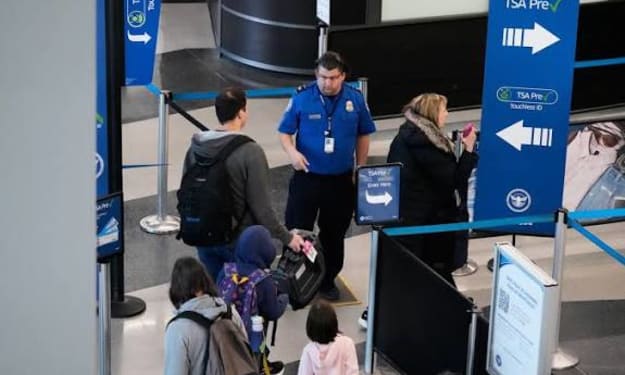
The abrupt reversal by the Department of Homeland Security (DHS) on suspending the popular TSA PreCheck program has raised questions about what changed behind the scenes. Just days after warning travelers that budget pressures could force the temporary shutdown of expedited airport screening, DHS announced that the program would remain operational after all. The episode highlights the political, economic, and public safety stakes tied to one of America’s most widely used travel initiatives. TSA PreCheck allows vetted travelers to move through airport security with lighter screening requirements, avoiding long lines and removing fewer personal items. More than 20 million Americans are enrolled, making it a critical component of the nation’s aviation security system. The Initial Announcement The controversy began when DHS officials warned that unresolved funding disputes in Congress could disrupt non-essential security programs. TSA PreCheck and related trusted traveler services, including Global Entry, were listed as vulnerable if a prolonged budget standoff forced staffing cuts. The warning triggered immediate concern among airlines, airports, and frequent travelers. With peak travel seasons approaching, suspending PreCheck would have pushed millions of passengers back into standard screening lanes, increasing congestion and wait times at major hubs. Industry groups described the prospect as “unworkable.” Airlines warned that delays would ripple across flight schedules, while airport authorities cautioned that overcrowded checkpoints could create safety risks. Public and Political Pressure The backlash was swift. Lawmakers from both parties contacted DHS leadership, arguing that suspending PreCheck would punish travelers and undermine confidence in air travel security. Several members of Congress publicly urged DHS to reconsider, emphasizing that the program is funded largely through user fees rather than general tax revenue. Behind the scenes, transportation committees reportedly pressed DHS to reclassify PreCheck as an essential security function rather than an optional service. The argument was simple: PreCheck does not weaken security—it enhances it by allowing officers to focus more attention on unknown or higher-risk passengers. Public reaction also played a role. Social media filled with complaints from travelers who had paid enrollment fees and relied on the program for work and family travel. Business groups warned that disrupting PreCheck could hurt commerce and tourism. Financial Reassessment After further review, DHS acknowledged that the financial impact of continuing PreCheck was less severe than initially projected. Because the program is supported by application and renewal fees, it does not draw heavily from the agency’s operational budget. Suspending it would have created administrative complications, including refund requests and reprocessing of background checks once the program restarted. A senior DHS official said maintaining PreCheck was “the most efficient option” under current conditions. “Shutting it down would cost more in the long run and create unnecessary disruption,” the official noted. Operational and Security Concerns Another factor in the reversal was security. Experts warned that removing PreCheck lanes would overload standard screening lines, forcing the Transportation Security Administration to stretch resources thinner. This could lead to longer wait times and potentially reduced screening effectiveness during busy travel periods. Security analysts argued that PreCheck allows TSA officers to allocate manpower more strategically. By streamlining low-risk passengers, officers can focus attention on individuals who require more thorough screening. “PreCheck is not a luxury,” said one aviation security consultant. “It’s a force multiplier. It makes the entire checkpoint system work better.” What the Reversal Means for Travelers For now, travelers can continue using PreCheck without interruption. DHS emphasized that the program remains fully operational and that enrollment and renewals will proceed as usual. However, officials cautioned that future funding disputes could still affect other services if Congress does not pass a long-term budget solution. The episode has renewed calls for Congress to provide stable funding for aviation security programs. Lawmakers from both parties are now pushing for legislation that would shield trusted traveler programs from budget uncertainty. A Lesson in Public Policy The sudden reversal underscores how quickly policy can shift under political and public pressure. It also highlights the importance of programs that blend security with convenience in a modern travel system. While DHS framed its initial warning as a contingency plan, the reaction revealed how deeply embedded PreCheck has become in American travel culture. What was once a pilot program is now viewed as essential infrastructure. In the end, the decision to keep TSA PreCheck running reflects a balance of economics, security, and public expectation. For millions of travelers, the outcome is simple: shorter lines, fewer disruptions, and a reminder that even routine airport procedures can become political flashpoints in times of uncertainty.
By Fiaz Ahmed 4 days ago in The Swamp
Staying sane in the insane world.
”It is no measure of health to be well adjusted to a profoundly sick society.” Jiddu Krishnamurti This quote has been one of my favourites since the moment I first laid my eyes on it. To me, it cuts right through the fog of the illusion of normality that permeates our lives. And since I am someone who has never felt (well) adjusted to this society, Krishnamurti’s words gifted me with the realisation that there isn’t anything inherently wrong with me.
By Eva Smittea day ago in Humans



Comments
There are no comments for this story
Be the first to respond and start the conversation.