

Dear Prime Minister,
Thank You, as a Muslim, as a female, and as a human being. You have shown me that you are honourable, compassionate and brave. March 15, 2019 is a day that will be remembered by many around the world. We lost 50 innocent lives that day. You stood with the Muslims, you didn’t let us feel alone, you called this incident what it was, a terrorist attack.
"You will never hear me mention his name," you kept him nameless, you denied him what he wanted—recognition. You comforted the victims, you changed gun laws, you offered to pay for the funerals of the victims and take care of the ones left behind.
You are a true leader, you grieved with the Muslim community, you opened up parliament with the Islamic greeting. You showed the work what a true leader looks like, you have earned respect from many around the world. Your actions inspired many, and I hope it inspires more.
On Friday, March 22, The Times newspaper printed the works "Salaam" (peace) in Arabic with all 50 names of the victims on the front page. Women in New Zealand wore the hijab (Islamic head covering) as a sign of respect and unity. There were hundreds who gathered outside a mosque and formed a human chain in Wellington, New Zealand, to protect the people praying inside. The call to prayer was broadcast on television and radio in New Zealand, too. London has also had people in Hijab outside the London Muslim centre handing out flowers to the women coming out after praying, they men also did the same too. Mosques around London saw non Muslims come out and show support, we had the call to prayer played in Trafalgar Square. On social media people have shown their solidarity by standing with Muslims.
These are only a few of the things that have taken place after the attacks, I like you will never utter this terrorists name, I have decided to list only the good that has happened after the attack instead of giving him recognition for the grief he has caused.
You, Prime Minister Jacinda Arden, have brought together many not only in New Zealand but all over the world. I hope the Prime Minister in my country and others follow your suit. I can never thank you enough for making a community all around the world feel like a part of yours.
Sincerely,
A Muslim
About the Creator
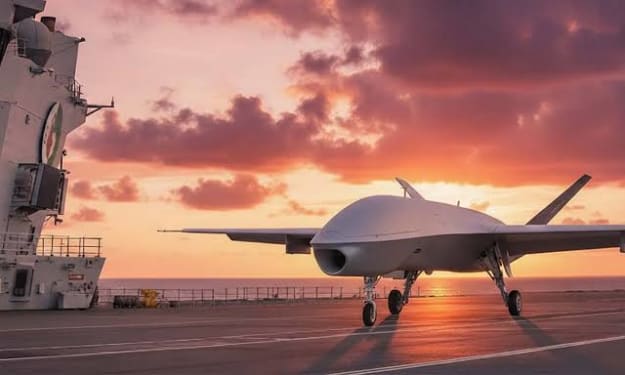
Royal Navy Plans Jet-Powered Autonomous Carrier Drone: A Bold Step Toward the Future of Naval Aviation
The Royal Navy is preparing for a major leap in naval aviation with plans to develop and deploy a jet-powered autonomous carrier drone. This move signals a decisive shift toward uncrewed combat and support systems, reflecting how modern navies are adapting to rapid technological change, evolving threats, and the high costs of traditional manned aircraft. If realised, the project could reshape how Britain projects power at sea and how aircraft carriers operate in the decades ahead. Why the Royal Navy Is Turning to Autonomous Jets Aircraft carriers have long been symbols of national power, but they are also expensive and vulnerable assets. Modern conflicts increasingly feature long-range missiles, electronic warfare, and drone swarms, forcing navies to rethink traditional carrier air wings. By investing in a jet-powered autonomous drone, the Royal Navy aims to enhance reach, survivability, and flexibility without putting pilots at risk. Autonomous carrier drones can operate in environments that would be highly dangerous for human crews. They can fly longer missions, tolerate higher levels of risk, and be produced at lower cost than manned fighter jets. For a navy operating a limited number of carriers, such as the UK’s Queen Elizabeth-class, this technology offers a way to multiply combat power without dramatically expanding budgets. What Makes a Jet-Powered Drone Different Unlike propeller-driven drones commonly used for surveillance, a jet-powered autonomous drone is designed for high speed, longer range, and potentially stealthy operations. Such drones could escort crewed fighter jets, conduct deep reconnaissance, suppress enemy air defenses, or even carry precision-guided weapons. The jet propulsion element is crucial. It allows the drone to integrate more seamlessly with carrier-based fighters like the F-35B, operating at similar speeds and altitudes. This opens the door to “manned-unmanned teaming,” where human pilots command or coordinate with multiple autonomous systems during a mission. Expanding the Role of UK Aircraft Carriers For the Royal Navy, this initiative aligns with a broader effort to future-proof its carrier strike groups. Autonomous drones could significantly extend the operational radius of a carrier, allowing it to strike targets farther inland while remaining at a safer distance from hostile shores. In addition to combat roles, these drones could support intelligence, surveillance, and reconnaissance missions, electronic warfare, and even logistics. A single carrier could deploy a mix of crewed jets, helicopters, and autonomous aircraft, creating a more versatile and resilient air wing. This approach also offers strategic advantages. By relying more on uncrewed systems, the UK can maintain credible naval power even with limited personnel resources. It also reduces the political and human costs associated with pilot losses in high-risk missions. Challenges on the Path to Deployment Despite its promise, the project faces significant technical and operational challenges. Launching and recovering jet-powered drones from aircraft carriers is complex, especially from short-takeoff decks like those used by the Royal Navy. Engineers must ensure that autonomous systems can safely handle deck operations, sudden weather changes, and high-stress combat conditions. There are also questions around command and control. Autonomous drones must be resilient to cyber attacks, electronic jamming, and communication disruptions. Developing secure systems that allow human operators to supervise or override autonomous decisions is critical, particularly given ethical and legal debates around autonomous weapons. Integration with existing platforms is another hurdle. The Royal Navy will need to ensure that new drones can work seamlessly with NATO allies, share data in real time, and fit within joint operational frameworks. How This Fits Into Global Trends The UK is not alone in pursuing carrier-based autonomous aircraft. The United States, China, and other major powers are all investing heavily in similar technologies. By moving early, the Royal Navy aims to remain competitive and relevant in an era where naval dominance increasingly depends on information, automation, and networked systems rather than sheer numbers of ships or aircraft. This initiative also reflects lessons learned from recent conflicts, where drones have proven decisive in surveillance, targeting, and strike roles. The future battlefield is likely to be crowded with uncrewed systems, and navies that fail to adapt risk falling behind. A Glimpse of the Navy of Tomorrow The Royal Navy’s plan for a jet-powered autonomous carrier drone is more than a technical upgrade—it represents a strategic transformation. It shows how Britain is preparing for a future where naval power is defined by adaptability, technological sophistication, and intelligent use of automation. While many details remain under development, the direction is clear. By embracing autonomous aviation, the Royal Navy is laying the groundwork for a more flexible, resilient, and forward-looking carrier force. If successful, this initiative could redefine how the UK operates at sea and ensure its carriers remain effective in an increasingly complex and contested world.
By Fiazahmedbrohi about 21 hours ago in The Swamp



Comments
There are no comments for this story
Be the first to respond and start the conversation.