
Danish Minister Says ‘Fundamental Disagreement’ Remains After ‘Frank’ Greenland Talks With US
Despite candid discussions, Denmark and the US remain at odds over Greenland’s strategic future and security role"

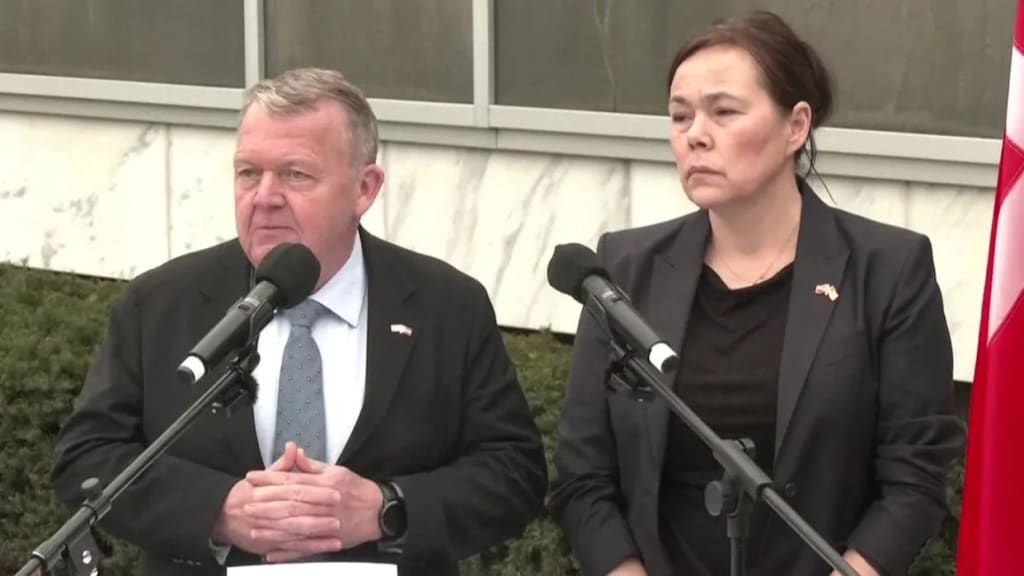
Tensions between Denmark and the United States over Greenland have once again surfaced, after a Danish minister confirmed that “fundamental disagreements” remain following what were described as “frank and direct” talks with American officials. The remarks underline how Greenland—an icy, sparsely populated island in the Arctic—has become one of the most strategically sensitive regions in modern geopolitics.
While the talks were not hostile, they revealed just how far apart the two allies still are when it comes to security, sovereignty, and influence in the Arctic.
Greenland: Small Population, Massive Importance
Greenland may have fewer than 60,000 residents, but its strategic value far outweighs its size. Located between North America and Europe, the island sits at the heart of Arctic shipping routes, military monitoring zones, and untapped natural resources. As climate change melts Arctic ice, Greenland’s importance has surged dramatically.
The United States views Greenland as a critical security asset, particularly as competition with Russia and China intensifies in the Arctic. Denmark, which governs Greenland’s foreign and defense policy while allowing the territory broad self-rule, sees the issue through the lens of sovereignty, partnership, and respect for Greenlandic autonomy.
These competing perspectives lie at the center of the current disagreement.
‘Frank Talks’ Reveal Persistent Gaps
According to Danish officials, the recent discussions with US representatives were open and honest, but they did not bridge the core divide. The Danish minister emphasized that while both sides value cooperation, they do not agree on the framework or tone of US involvement in Greenland.
Denmark insists that any expansion of American military presence or influence must occur in full coordination with Copenhagen and Greenland’s elected leaders. The US, on the other hand, has been pushing for faster, more assertive steps to strengthen its Arctic posture—sometimes testing diplomatic boundaries in the process.
The phrase “fundamental disagreement” suggests that this is not a minor policy difference, but a structural clash over authority and approach.
A Shadow Cast by Past Controversies
Relations over Greenland have been strained before. In 2019, then-President Donald Trump publicly suggested buying Greenland—an idea swiftly rejected by Denmark and Greenlandic leaders alike. Though that episode has passed, it left lingering sensitivities.
More recently, US military interest in expanding facilities and surveillance capabilities on the island has raised concerns in Denmark about overreach and unilateral decision-making. Danish leaders are wary of Greenland becoming a pawn in a larger great-power rivalry.
For Greenland itself, the issue is deeply personal. Many Greenlanders support cooperation with the US for economic and security benefits, but strongly oppose being treated as a strategic object rather than a political actor.
NATO Allies, Different Priorities
Denmark and the United States are both NATO allies, and both agree that Arctic security is increasingly important. However, agreement on goals does not always mean agreement on methods.
Denmark prioritizes diplomacy, multilateralism, and gradual engagement. The US emphasizes speed, deterrence, and military readiness. As Russia expands Arctic bases and China declares itself a “near-Arctic state,” Washington feels pressure to act decisively.
Danish officials argue that ignoring local consent could destabilize the region rather than protect it.
Greenland’s Voice Growing Louder
One of the most significant shifts in recent years is the growing assertiveness of Greenland’s own government. With increased self-rule and a strong independence movement, Greenland’s leaders are demanding a seat at the table in all major decisions.
The Danish minister stressed that Greenland is not merely a territory to be discussed between capitals. Any future security arrangement, investment, or military expansion must reflect Greenlandic priorities, culture, and consent.
This insistence complicates negotiations but also reflects a changing political reality.
What Happens Next?
Despite the disagreements, both sides have signaled that dialogue will continue. Neither Denmark nor the United States wants the issue to escalate into a diplomatic rift. However, the underlying tensions are unlikely to disappear anytime soon.
As Arctic ice continues to retreat and global competition intensifies, Greenland will remain a focal point of strategic interest. Whether Denmark and the US can align their approaches—or continue managing disagreement through diplomacy—will shape the future of Arctic cooperation.
A Test of Alliance and Respect
At its core, the Greenland dispute is about more than military bases or geopolitics. It is a test of how powerful allies balance security interests with sovereignty, respect, and local self-determination.
The Danish minister’s candid assessment makes one thing clear: the conversation is far from over, and the Arctic’s political temperature may be rising faster than its melting ice.
About the Creator
Fiaz Ahmed Brohi
I am a passionate writer with a love for exploring and creating content on trending topics. Always curious, always sharing stories that engage and inspire.
Keep reading
More stories from Fiaz Ahmed Brohi and writers in The Swamp and other communities.
Beijing Tells Chinese Firms to Stop Using US, Israeli Cybersecurity Software, Sources Say
China has reportedly issued new instructions to domestic companies, instructing them to halt the use of cybersecurity software from the United States and Israel, according to multiple sources familiar with the matter. This move, which has not yet been officially confirmed by Beijing, signals a tightening of the country’s cybersecurity policies amid growing tensions with the West over technology, data security, and industrial espionage. The guidance is reportedly aimed at a range of industries, including finance, energy, telecommunications, and critical infrastructure, where foreign cybersecurity tools are widely deployed. Chinese authorities are emphasizing the need to rely on domestically produced software, citing national security concerns. Sources say the decision stems from fears that foreign programs could contain hidden vulnerabilities or “backdoors” that might allow foreign governments to access sensitive information. This development comes amid an escalating technological rivalry between China and the United States, with Israel also becoming a flashpoint due to its strong cybersecurity sector and intelligence cooperation with Washington. Both countries are known for advanced cyber capabilities, including software used globally to protect corporate networks, government databases, and critical infrastructure. By restricting the use of such products, Beijing appears to be seeking greater control over its digital ecosystem and reducing its dependence on foreign technology. The directive reportedly affects not only private companies but also state-owned enterprises, which form the backbone of China’s industrial and technological power. Analysts suggest that compliance with the new rules could involve large-scale audits, removal of existing software, and investment in Chinese-developed cybersecurity solutions, which may not yet match the sophistication of their American or Israeli counterparts. “This is part of a broader push by Beijing to establish technological self-reliance,” said a cybersecurity expert familiar with the developments. “It aligns with their national strategy of reducing exposure to foreign tech, particularly in sectors deemed critical for national security. While it may protect against perceived foreign interference, it also poses challenges for companies that rely heavily on these products for operational efficiency and protection against cyber threats.” China has been steadily expanding its domestic cybersecurity industry in recent years, encouraging local firms to innovate and provide alternatives to Western software. Companies such as Qihoo 360, Huawei’s security division, and Tencent Security have been positioned as viable replacements for foreign solutions, offering enterprise-level protection for networks, cloud services, and industrial control systems. However, experts caution that shifting entire systems to domestic software could be time-consuming and costly, with potential operational risks during the transition. The timing of the directive is significant, coming after a year of heightened cyber tensions. The United States has frequently accused Chinese state-linked actors of conducting cyber-espionage against U.S. companies and government agencies. Israeli firms, while not always state-affiliated, have also become targets due to their extensive global cybersecurity operations. Beijing’s move to limit their software usage could be interpreted as a defensive measure and a statement of technological sovereignty. For Chinese companies, this guidance may also have broader business implications. Many multinational corporations operating in China rely on a combination of local and foreign cybersecurity tools to comply with both Chinese regulations and international standards. A forced shift away from U.S. or Israeli software could complicate compliance, disrupt supply chains, and increase operational costs. Industry insiders say that Chinese regulators are expected to enforce strict monitoring and auditing measures to ensure compliance, though the exact timeline and penalties for noncompliance remain unclear. Companies may be required to submit reports on software usage, conduct internal risk assessments, and replace existing systems with approved domestic alternatives within a set period. This move also raises questions about the global cybersecurity market. If China, one of the largest technology markets in the world, significantly reduces reliance on U.S. and Israeli software, it could have ripple effects on international vendors. Sales of cybersecurity solutions to Chinese clients might decline, prompting foreign firms to seek other markets or to explore partnerships with Chinese companies to maintain a presence in the country. As tensions between China and the West continue to shape the global technology landscape, the directive represents a clear step toward digital self-sufficiency. While it may enhance national security by limiting foreign access to sensitive systems, it also highlights the growing risks of technological decoupling in an interconnected world. Companies, both domestic and international, are now grappling with the challenge of balancing cybersecurity, compliance, and operational efficiency in a rapidly evolving geopolitical environment. The coming months will reveal how rigorously these directives are enforced and how Chinese firms adapt to the shift, which may ultimately reshape the cybersecurity industry both within China and across the globe.
By Fiaz Ahmed Brohi6 days ago in The Swamp


Comments
There are no comments for this story
Be the first to respond and start the conversation.