
Critical Steps to Crafting a Robust Cloud Strategy Roadmap
Know the essential steps for developing a cloud strategy roadmap


Today, the business environment is increasingly characterized by rapid technological advancements. This bit everyone knows for sure. But what some folks may not see is that the modern business ecosystem has also driven the need for organizations to be agile and adaptable. Sure enough, there have been several tech advancements. And still cloud computing has emerged as a game changer. The widespread use of cloud computing across industries shows its importance in the modern digital landscape. No wonder then that the growing sophistication and breadth of cloud services has made them appealing to businesses of all sizes, be it startups or large corporations. But don't dive into it head first. What I mean to say is that to fully realize the benefits of cloud computing, a well-defined approach is vital. And a strategic approach to cloud adoption requires careful consideration of the organization's unique business objectives and compliance obligations among other such factors.
In this blog, I will walk you through the fundamental steps for developing a robust cloud strategy that is in the lockstep with your business goals. Plus, this will also help you have more informed discussions with your cloud computing consulting company.
How to Build a Cloud Strategy That Works for Your Business Goals?
Developing a cloud strategy requires more than simply technology; it also requires alignment with your company's objectives. With the correct strategy, efficiency, scalability, and innovation may be fostered. How can you decide what suits you best when there are so many options? The essential steps for developing a cloud strategy that offers genuine value will be broken down in this article. Let's work together to develop a plan for your cloud success.
- Identify business goals: Creating a cloud strategy roadmap begins with a clear statement of the company's overall business objectives. Here, I must insist that cloud migration should not be viewed as a purely technical endeavor. It is, in fact, a strategic enabler for achieving specific business goals. This necessitates establishing both short- and long-term objectives. These goals could be anything from increasing revenue through new cloud-based offerings to fostering innovation through access to advanced cloud technologies. Explicitly defining these business goals provides the necessary framework for all subsequent decisions in the cloud strategy roadmap to be evaluated.
- Analyze current infrastructure: Now let's move on to a thorough assessment of the company's current IT infrastructure. This involves an extensive assessment of all current hardware, and data center assets among other things. The point is to understand their capabilities as well as relevance to the current business objectives. This assessment is also meant to analyze the performance of critical apps and infrastructure components. Oh and of course the assessment of the IT team's current skills and expertise in cloud technologies.
- Choose the right cloud model: Based on the defined business goals and an assessment of the current infrastructure, you now choose the cloud deployment model. You can choose from a variety of models, including public and private clouds. There are also hybrid and multi cloud strategies to choose from. Just make sure that the final decision on the cloud model is based on specific business requirements for performance and availability. In fact, stringent security and compliance mandates are also equally important.
- Ensure security and compliance: Security and compliance are essential components of any cloud strategy roadmap. This much is a given, of course. So, you need a strong security and compliance framework designed specifically for the cloud environment. Remember that integrating these considerations into the cloud adoption process is critical for maintaining data integrity.
- Cost optimization: A proactive cost optimization plan is required to effectively manage expenses and maximize ROI. To monitor and reduce cloud spending over time, you must develop strategies such as right sizing provisioned cloud resources based on actual workload needs.
- Governance frameworks: The final step in developing the roadmap is to establish clear governance frameworks. A rock-solid governance framework furnishes the structure and oversight required to ensure that the cloud environment is used securely and cost effectively while still consistently supporting the organization's overarching business goals.
Final Words
Ready to get started then, are we folks? In that case, I recommend that you start looking for a trusted cloud computing consulting company right away.
About the Creator
Ryan Williamson
Tech-savvy professional with 13+ years of experience in app development, leveraging technical knowledge to build strategic partnerships and promote innovative solutions. Passionate about engaging with technical communities, and more.
Keep reading
More stories from Ryan Williamson and writers in The Swamp and other communities.
Best Tools for Effortless Cloud Integration
It seems that cloud computing appeared to be a thing of the future till only a decade or two ago. This technology has moved forth at a much quicker pace than envisioned. No wonder then that cloud computing has now been firmly established as a critical strategy for businesses of all sizes. The ability to use cloud services improves scalability and cost effectiveness. However, this growing adoption of cloud platforms and services has resulted in a complex landscape for data management and integration.
By Ryan Williamson11 months ago in The Swamp
The Saddest Thing - The Billionaires Who Rule America Aren't Even Enjoying Themselves
This single post says more about our ruling class than a thousand policy papers. The saddest thing about today's system is that the men robbing the rest of us - sabotaging our economic prospects, our pensions, our access to affordable healthcare - are not even happy.
By Scott Christenson🌴23 days ago in The Swamp
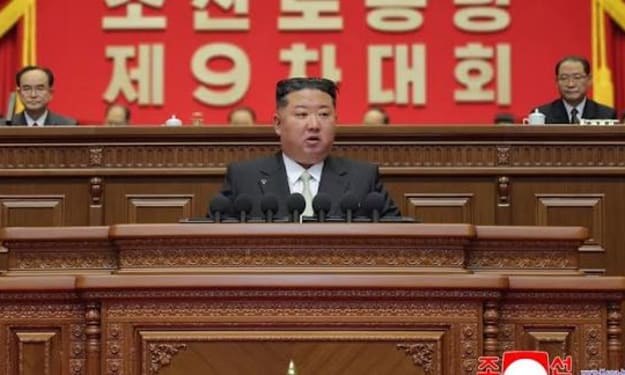
North Korea’s Kim Jong Un Re-elected as Chief of Workers’ Party
North Korean leader Kim Jong Un has been re-elected as chairman of the ruling Workers’ Party of Korea, consolidating his grip on power and reinforcing the continuity of the country’s political system amid growing economic strain and international isolation. The decision was announced at the conclusion of a high-level party congress held in Pyongyang, where senior officials praised Kim’s leadership and reaffirmed their commitment to his long-term strategic vision. State media described the vote as unanimous, presenting it as an expression of “absolute loyalty” to Kim and his policies on defense, development, and national unity. The re-election marks another chapter in Kim’s rule, which began in 2011 following the death of his father, Kim Jong Il. Over more than a decade in power, Kim has reshaped the country’s political hierarchy while prioritizing nuclear and missile development alongside limited economic reforms. Symbol of Political Stability The Workers’ Party remains the central pillar of governance in North Korea, and Kim’s reappointment as its chief sends a strong signal of internal stability at a time when the nation faces mounting challenges. Officials attending the congress highlighted the importance of ideological unity and discipline, emphasizing that loyalty to the party and its leader remains the foundation of national strength. In a speech broadcast by state television, Kim called for “greater resolve and self-reliance” as the country confronts what he described as “hostile external forces” and economic pressures. He also urged party cadres to focus on improving food production, strengthening defense capabilities, and maintaining social order. “The success of our revolution depends on the unity between the party and the people,” Kim was quoted as saying. Economic and Social Pressures Kim’s re-election comes as North Korea continues to struggle with food shortages, declining trade, and the lingering effects of border closures imposed during the COVID-19 pandemic. International sanctions tied to its nuclear and missile programs have further restricted access to global markets and foreign investment. Observers note that the leadership’s emphasis on stability and continuity reflects concern about domestic morale. Recent state media messaging has focused heavily on self-sufficiency, agricultural productivity, and industrial output, signaling that economic management will be a key priority during Kim’s next term as party chief. Analysts say the re-election also serves to reinforce the image of Kim as an indispensable figure at a time when the country must navigate both internal hardship and external diplomatic pressure. Military Focus Remains Central While economic issues dominated parts of the congress agenda, defense policy remained at the core of Kim’s leadership message. The Workers’ Party reaffirmed its commitment to strengthening nuclear deterrence and advancing missile technology, which it views as essential to national security. Over the past year, North Korea has conducted multiple missile tests and expanded its military exercises. Officials portrayed these actions as defensive measures against what they describe as hostile policies from the United States and its regional allies. Kim’s re-election ensures that this strategic direction will continue without interruption. Experts believe that Pyongyang is unlikely to scale back its weapons programs in the near future, even as it seeks limited engagement with foreign partners for humanitarian and economic relief. International Reaction Foreign governments responded cautiously to the announcement. South Korean officials said they were monitoring developments closely and reiterated their call for dialogue and denuclearization. The United States issued a statement urging North Korea to return to negotiations and refrain from further provocative actions. China and Russia, two of Pyongyang’s key diplomatic partners, emphasized stability and regional peace, avoiding direct criticism of Kim’s leadership. Consolidation of Power Kim’s re-election highlights the tightly controlled nature of North Korea’s political system, where leadership transitions are managed internally without public competition. The congress also confirmed appointments to key positions within the party’s central committee, ensuring that trusted allies remain in influential roles. Political scientists note that such events are less about debate and more about reinforcing unity around Kim’s authority. “These congresses are designed to project confidence and continuity,” said one regional analyst. “They remind both domestic and international audiences that Kim’s leadership is secure.” Looking Ahead As Kim Jong Un begins another term as head of the Workers’ Party, North Korea faces a complex future shaped by economic uncertainty, diplomatic isolation, and persistent security tensions. His re-election suggests that the country will continue along its current path, prioritizing political control and military strength while cautiously managing domestic challenges. For Pyongyang, the message is clear: stability under Kim’s leadership remains the guiding principle, even as pressures at home and abroad continue to mount.
By Fiaz Ahmed 7 days ago in The Swamp



Comments
There are no comments for this story
Be the first to respond and start the conversation.