
Could Trump’s Bid to Become Peacemaker-in-Chief Sideline a Struggling United Nations?
As personal diplomacy and strongman politics return to the spotlight, the UN faces an existential question about relevance and authority in global conflict resolution
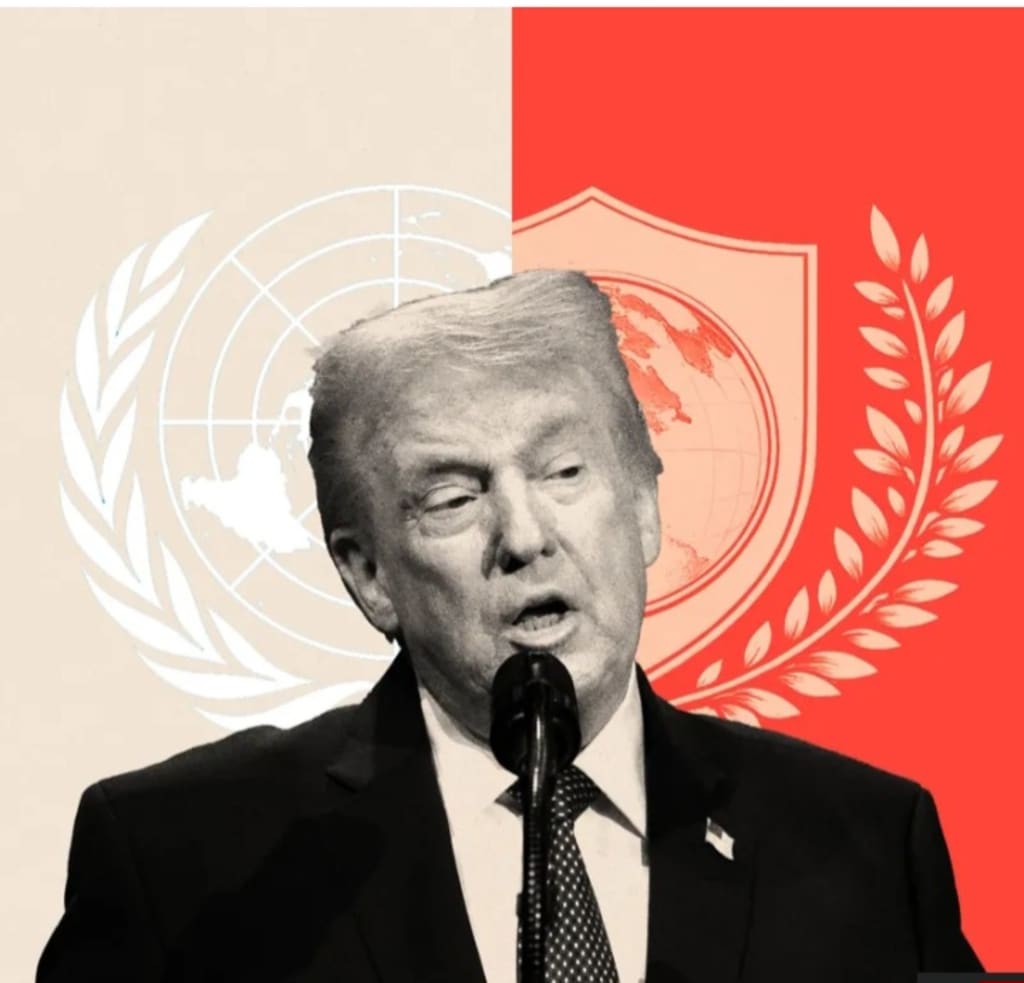
For decades, the United Nations has positioned itself as the world’s ultimate diplomatic forum — a place where wars are debated, ceasefires negotiated, and international norms defended. Yet today, the institution appears increasingly sidelined, slow, and divided. Against this backdrop, Donald Trump’s renewed ambition to present himself as a global peacemaker raises an uncomfortable question: could one leader’s deal-making diplomacy further marginalize an already struggling UN?
Trump’s political brand has always revolved around disruption. During his presidency, he openly criticized multilateral institutions, questioned NATO’s value, withdrew from international agreements, and framed diplomacy as a transactional exercise rather than a rules-based process. Now, as global conflicts intensify — from Eastern Europe to the Middle East — Trump’s rhetoric suggests a return to a familiar promise: only he can fix it.
The Appeal of the “Strongman Peacemaker”
Trump’s peacemaking pitch is simple and politically effective. He argues that wars persist not because they are unsolvable, but because international institutions are weak, bureaucratic, and afraid to apply pressure. In contrast, he presents himself as a leader unbound by diplomatic niceties — someone willing to pick up the phone, threaten sanctions, offer incentives, and strike deals quickly.
This approach resonates with war-weary publics. When conflicts drag on for years with little visible progress, the UN’s carefully worded resolutions and emergency sessions can feel detached from reality. Trump’s promise of fast, decisive action — even if vague — offers emotional relief in a chaotic world.
But simplicity comes at a cost.
The UN’s Structural Weakness — and Its Purpose
The UN is not ineffective by accident. It is slow because it represents nearly every nation on Earth. Its Security Council is gridlocked because global power itself is divided. Vetoes, endless negotiations, and watered-down resolutions are not flaws of incompetence alone; they are symptoms of a system designed to prevent unilateral dominance.
Trump’s model of diplomacy, by contrast, favors personal relationships over institutions. Peace becomes dependent on who is in power, who has leverage, and who is willing to bend rules. While this can produce short-term breakthroughs, it undermines long-term stability.
The UN was created not to be flashy, but to be predictable — to ensure that global peace efforts survive elections, personality shifts, and political moods.
Bypassing the UN: A Dangerous Precedent
If a powerful leader successfully brokers peace outside the UN framework, it sends a clear message: multilateralism is optional. Other leaders may follow suit, choosing bilateral deals over international law. Smaller states, already dependent on global institutions for protection and voice, risk being shut out entirely.
This is where the danger lies. Trump-style diplomacy does not eliminate conflict; it redistributes power. Those with economic or military leverage win seats at the table. Those without are expected to accept the outcome.
In such a world, the UN’s role as a neutral mediator — however imperfect — becomes increasingly irrelevant.
The Image Problem: Why the UN Is Losing the Narrative
To be fair, the UN has done much of the damage to its own credibility. Failed peacekeeping missions, inconsistent enforcement of resolutions, and selective outrage have eroded public trust. When atrocities occur and the UN responds with statements instead of solutions, critics gain ammunition.
Trump capitalizes on this frustration. By framing the UN as “all talk, no action,” he positions himself as the anti-bureaucratic alternative. It’s a powerful narrative — and one the UN has struggled to counter.
What the institution lacks is not moral authority, but political unity. Without consensus among major powers, the UN becomes a stage rather than an actor.
Peace as Performance vs. Peace as Process
One of the most profound risks of sidelining the UN is turning peace into a performance. Announcements, handshakes, and headlines may suggest success, while underlying tensions remain unresolved. Sustainable peace requires institutions, monitoring mechanisms, legal guarantees, and international buy-in — all areas where the UN still matters.
Trump’s approach emphasizes outcomes over processes. The UN emphasizes processes to protect outcomes. Neither is perfect, but abandoning one entirely creates imbalance.
History shows that deals made without inclusive frameworks often collapse once political winds change. The UN, for all its flaws, exists to anchor peace beyond individual leaders.
Can the UN Adapt — or Will It Fade?
The real question is not whether Trump could sideline the UN, but whether the UN can reform fast enough to remain relevant. This means modernizing decision-making, increasing transparency, and acknowledging its failures honestly.
If the UN continues to rely solely on its moral legacy while ignoring political realities, it risks becoming symbolic rather than strategic. Leaders like Trump thrive in vacuums — and right now, global diplomacy has many.
A Fork in the Road for Global Order
Trump’s peacemaker narrative reflects a deeper global shift: impatience with institutions and faith in personalities. Whether this leads to peace or further fragmentation remains uncertain.
What is clear is this: a world where peace depends on individual leaders rather than shared rules is a fragile one.
The UN may be struggling, but sidelining it entirely would not strengthen global stability — it would gamble with it. The challenge ahead is not choosing between Trump-style diplomacy and the UN, but ensuring that global peace does not become hostage to ego, elections, or short-term wins.
Because when the spotlight fades, the work of peace must still go on.
About the Creator
Keep reading
More stories from Ayesha Lashari and writers in The Swamp and other communities.
US Allies Won’t Forget the Trump Greenland Crisis
When former U.S. President Donald Trump reportedly suggested buying Greenland in 2019, the idea was initially treated as a joke—another odd headline in an already unconventional presidency. But what followed was no laughing matter for America’s allies. The so-called Greenland crisis quickly evolved into a diplomatic embarrassment, straining relations with Denmark and raising deeper concerns among U.S. partners about Washington’s reliability, respect, and understanding of international norms. Years later, the echoes of that moment still linger in global diplomacy, and U.S. allies have not forgotten.
By Ayesha Lashariabout 16 hours ago in The Swamp
Jury Acquits Former Uvalde School Officer in First Criminal Trial Tied to Robb Elementary Shooting
A former Uvalde school police officer has been acquitted in the first criminal trial connected to the tragic Robb Elementary School shooting, according to court officials. The verdict comes after months of intense legal scrutiny and widespread public attention following the mass shooting that claimed the lives of 19 students and two teachers in May 2022.
By Aarif Lasharia day ago in The Swamp
Spain’s Rail Network Under Scrutiny After Second Deadly Crash in Three Days
Spain’s rail network is facing intense scrutiny following a second fatal train accident in just three days, raising urgent questions about safety protocols, infrastructure maintenance, and emergency response measures. Authorities are under pressure to investigate the causes of these crashes and prevent further tragedies on one of Europe’s busiest rail systems.
By Aarif Lashari2 days ago in The Swamp
Rachel Reviews: The Spiral Archive by Pieter Hendrik
It's difficult for me to know where to start with a review of this book as it was, for me, an entirely unique experience and one that I'll probably never have again. I don't want that to be interpreted as unenjoyable but it has left me scratching my head a little and ruminating on its content, its themes and its characters.
By Rachel Deeming6 days ago in BookClub



Comments
There are no comments for this story
Be the first to respond and start the conversation.