
Colombia and the U.S.: Navigating Complex Diplomacy Amid Trade, Politics, and Migration
evolving relationship between Colombia and the U.S., exploring topics like Gustavo Petro’s presidency, deportation policies, trade disputes, and recent news shaping these two nations' dynamics.

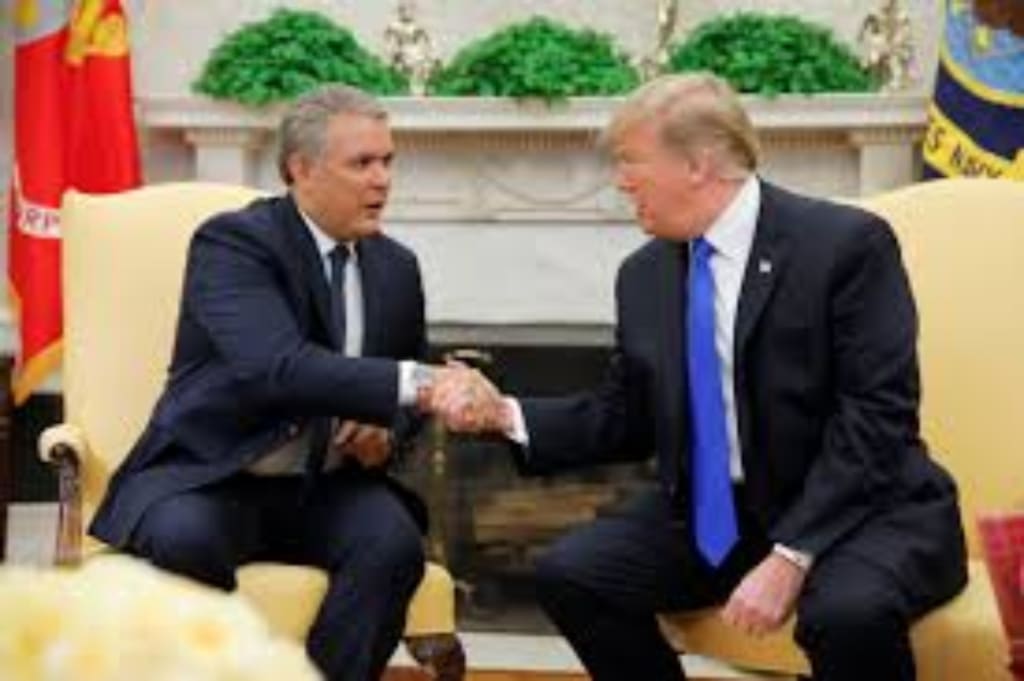
The relationship between Colombia and the United States has always been multifaceted, defined by trade agreements, shared security goals, and at times, political tension. In 2023 and beyond, the bilateral dynamic has encountered renewed challenges surrounding trade tariffs, immigration policies, and leadership shifts in both nations. This article delves into the latest developments involving Colombian President Gustavo Petro, U.S. deportation policies, and the broader implications of these issues on both domestic and international fronts.
The Rising Profile of Colombia Under Gustavo Petro
Gustavo Petro, Colombia’s first leftist president, has sparked global attention since assuming office in August 2022. As a former guerrilla leader turned politician, Petro’s policies aim to reform Colombia's traditionally conservative political landscape. His administration emphasizes climate action, economic equality, and a more independent foreign policy, signaling a departure from the country’s historically close alignment with Washington.
Petro has also been outspoken on global issues, criticizing wealth disparities, environmental degradation, and militarized responses to social problems. His approach to governance reflects a broader shift in Latin America, where leftist governments are gaining momentum.
The Deportation Debate: Colombia and U.S. Immigration Policy
Immigration continues to be a sensitive issue between Colombia and the U.S. Recently, tensions flared when the U.S. sought to deport Colombian migrants via military aircraft. President Petro resisted, expressing concerns over the methods and humanitarian implications of such deportations. He insisted on assurances that deported individuals would be treated with dignity, highlighting Colombia’s moral stance on migration.
The Biden administration, under pressure to manage rising numbers of migrants at the southern border, framed the deportations as necessary for national security. Petro’s resistance, however, added complexity to the issue, as Colombia remains a key partner in regional migration strategies. His refusal to permit U.S. military flights escalated the dispute, drawing significant media attention.
Economic Retaliation: The Tariff Standoff
In response to Petro’s refusal, former U.S. President Donald Trump—still influential in shaping immigration discourse—advocated for economic measures against Colombia. Trump proposed a 25% tariff on Colombian exports to the U.S., with threats to increase this to 50% if the deportation standoff continued. The tariffs targeted key Colombian exports like coffee, flowers, bananas, and textiles, which collectively form a critical part of Colombia’s economy.
Colombia retaliated by imposing reciprocal tariffs on U.S. goods, escalating tensions further. This trade standoff put a bilateral trade relationship worth over $53 billion in jeopardy, raising alarms among business leaders and economists in both countries.
The Role of Trade in Colombia-U.S. Relations
Colombia is one of the largest trade partners of the U.S. in South America. The U.S.-Colombia Trade Promotion Agreement (CTPA) has been pivotal in boosting economic ties, allowing duty-free access for many products. However, the recent tariff disputes risk undermining this agreement, potentially leading to economic fallout on both sides.
For Colombia, the U.S. is a primary export destination, particularly for agricultural products. Conversely, the U.S. benefits from exporting machinery, vehicles, and chemicals to Colombia. A prolonged trade war could disrupt supply chains, hurt exporters, and dampen investor confidence in both nations.
Diplomatic Resolution and Remaining Challenges
Following days of intense negotiations, Colombia and the U.S. reached an agreement to defuse the crisis. Colombia agreed to accept deportation flights, provided that humane treatment of returnees was guaranteed. The U.S., in turn, paused its planned tariffs, averting an economic clash. However, visa restrictions on Colombian officials remain in place as a symbolic measure, pending the successful repatriation of migrants.
Colombian Foreign Minister Álvaro Leyva described the resolution as a victory for diplomacy but cautioned against future conflicts. “This is a reminder of how critical mutual respect and collaboration are in international relations,” Leyva stated.
Gustavo Petro and His Broader Vision
President Petro’s handling of the deportation crisis reflects his broader ambition to redefine Colombia’s role on the global stage. His administration is pushing for greater autonomy in foreign policy, particularly regarding environmental and economic matters. Colombia’s vast biodiversity and natural resources make it a key player in global climate initiatives, and Petro has repeatedly called on developed nations to invest in renewable energy projects in the region.
Domestically, Petro faces significant challenges, including implementing land reforms, reducing inequality, and addressing the drug trade. His policies have sparked both praise and criticism, with opponents accusing him of pursuing overly ambitious goals.
Trump’s Continued Influence on Colombia-U.S. Relations
While Joe Biden is the sitting U.S. president, Donald Trump’s rhetoric continues to resonate with his supporters and shapes public opinion on immigration. Trump’s stance on tariffs and deportations underscores his broader “America First” policy, which remains influential among Republicans. His interest in Colombia reflects the broader narrative of U.S.-Latin American relations, often centered on immigration, trade, and security.
Media Coverage and Public Perception
The ongoing developments have dominated international headlines, with news outlets like ABC News reporting on the evolving relationship between the two nations. Social media platforms, including Trump’s Truth Social, have amplified discussions around the deportation dispute and trade tensions, fueling debates about immigration policy and global trade ethics.
Broader Implications for Latin America
Colombia’s standoff with the U.S. highlights a broader regional trend. Several Latin American countries, including Mexico and Brazil, have faced similar challenges with U.S. immigration policies. The tension between enforcing border security and respecting migrants’ rights continues to strain relationships across the hemisphere.
This episode also underscores the need for comprehensive solutions to migration issues, addressing root causes such as poverty, violence, and climate change. As Latin America navigates these challenges, leaders like Petro are calling for greater collaboration and shared responsibility among nations.
Conclusion
The recent tensions between Colombia and the United States serve as a microcosm of the broader complexities in international relations. From trade disputes to immigration policies, the issues at play highlight the delicate balance between national interests and global cooperation.
While the immediate crisis has been resolved, lingering challenges remain. How Colombia and the U.S. navigate these challenges will not only shape their bilateral relationship but also set a precedent for how nations approach shared global concerns in an increasingly interconnected world. Both countries stand at a crossroads, with opportunities to strengthen ties or deepen divisions in the years to come.
About the Creator
Minecraft APK Download (Android, Pro Unlocked)
Fast free Minecraft APK Download for Android. Get Minecraft Pocket Edition, mods, and the latest version. Enjoy building and exploring in Minecraft PE. NBS Reborn APK.
Keep reading
More stories from Minecraft APK Download (Android, Pro Unlocked) and writers in The Swamp and other communities.
Declassified MLK and JFK Files: Unveiling Hidden Truths of History
The recent declassification of files related to Dr. Martin Luther King Jr. (MLK) and President John F. Kennedy (JFK) has reignited discussions surrounding their lives, legacies, and the turbulent historical context in which they lived. These newly revealed documents shed light on the surveillance, political pressures, and conspiracies surrounding these iconic figures of American history. The revelations prompt reflection on government overreach, civil rights struggles, and the enduring impact of their leadership.
By Minecraft APK Download (Android, Pro Unlocked)about a year ago in The Swamp
The Forsyth House Fire
Since 1851, Forsyth House has stood on the corner of Union Street and Gordon Street in the heart of Glasgow. Its iconic, or was... because on Sunday 8th of March, 2026, a fire broke out in a small, seemingly un-named shop in the building and tore all that history down. As I write, the rubble is still unsettled and the street is still blocked off. Central Station is quiet on the upper level, and around 30 small businesses have quite literally gone up in smoke.
By S. A. Crawford3 days ago in The Swamp
Record 52 Israeli billionaires make Forbes list with $308B combined wealth
A record‑breaking number of Israeli billionaires have appeared on Forbes magazine’s 2026 annual World’s Billionaires list, underscoring the country’s growing economic muscle on the global stage. This year, a total of 52 individuals with Israeli citizenship made the list, with their combined net worth reaching about $308 billion — a historic high and a significant increase compared to previous years. The combined wealth figure represents roughly a 24% increase from the previous year and about a 50% jump since 2024, reflecting strong performance in global markets and particularly robust gains in technology, investment, and startup sectors. Technology and Markets Fueling Wealth Growth Israel has long been nicknamed the “startup nation” thanks to its vibrant high‑tech ecosystem. Local companies specializing in artificial intelligence, semiconductors, cybersecurity, cloud computing, and other advanced technologies have seen explosive growth in recent years, attracting significant venture capital and spurring lucrative acquisitions. These gains have helped boost the fortunes of entrepreneurs, founders, and investors who are now among the country’s wealthiest. Despite ongoing geopolitical tensions in the region, including recent conflicts that rattled global markets, Israeli stock exchanges showed resilience. Investors responded positively after brief periods of volatility, helping to elevate asset values — an outcome that benefited billionaire portfolios tied to publicly traded firms and private equity stakes alike. Top Israeli Wealth Holders on the Global Stage Leading the pack of Israeli billionaires is Miriam Adelson, who is ranked as the richest Israeli on the list with an estimated net worth of roughly $37.5 billion. Her fortune is closely linked to holdings in the Las Vegas Sands casino conglomerate and media assets, and she ranks among the top 60 richest individuals worldwide. Following Adelson are brothers Idan Ofer and Eyal Ofer, two generations‑spanning tycoons whose diversified investments span shipping, real estate, energy, banking, and technology. Both have built empires that position them well within the global billionaire rankings, with net worth estimates in the mid‑$30 billion range. Another notable success story comes from mobile gaming: Dmitry Bukhman and his brother Igor Bukhman, co‑founders of the gaming company Playrix, are also among Israel’s wealthiest. Each brother is estimated to be worth around $13.6 billion, thanks to the global popularity of titles like Township, Homescapes, and Fishdom. What This Means for Israel’s Economy The surge in billionaire wealth from Israel highlights several broader economic trends. First, it underscores the importance of the technology and innovation sector in the country’s economic strategy. Israeli startups and scale‑ups routinely attract global capital and are fertile ground for high‑value exits, whether through acquisitions by larger firms or successful public market debuts. Second, the record number of billionaires despite regional instability suggests a degree of economic resilience and investor confidence. Even as geopolitical tensions influence markets, sectors such as cybersecurity, AI, and biotech continue to draw strong interest. Long‑term investors view Israel as a hub of ingenuity with sustainable growth potential. Third, the diversification of wealth sources — from gaming to real estate to international investments — protects Israel’s billionaire class from downturns in any single industry. This diversification, amplified by global reach, means these wealthy individuals and families can balance risks associated with regional uncertainty. Global Wealth Context The surge in Israeli billionaire fortunes parallels broader global insights from Forbes’ 2026 list, which shows wealth expanding across continents. A record 3,428 individuals made the full billionaire ranking this year — an all‑time high — and their combined global wealth reached more than $20 trillion. Much of this growth has been driven by gains in technology and market valuations. Still, while countries like the United States, China, and India host far more billionaires, Israel’s per‑capita concentration of ultra‑wealthy citizens remains notable. It continues to rank among the top nations in terms of billionaire count relative to population size. Looking Ahead Economists and industry analysts say the upward trajectory in billionaire wealth likely reflects a combination of technological innovation, resilient capital markets, and favorable economic policies. If Israel can sustain investments in key sectors such as cybersecurity, AI, and life sciences, the nation could continue to produce influential business leaders whose impact stretches well beyond its borders. As wealth continues to concentrate among the global elite, the presence of 52 Israeli billionaires on Forbes’ 2026 list sends a powerful message about the country’s economic maturity and global relevance — even in times of regional uncertainty.
By Fiaz Ahmed 5 days ago in The Swamp



Comments (2)
Heyo✨ Let's do a teamwork I like your stories and you gonna like mine 🫶🏻♥️
Informative! Great work