
China Warns of VLCC Adrift in the South China Sea: Maritime Safety Concerns Rise
Chinese authorities warn of a drifting oil tanker in the South China Sea, raising maritime safety concerns.

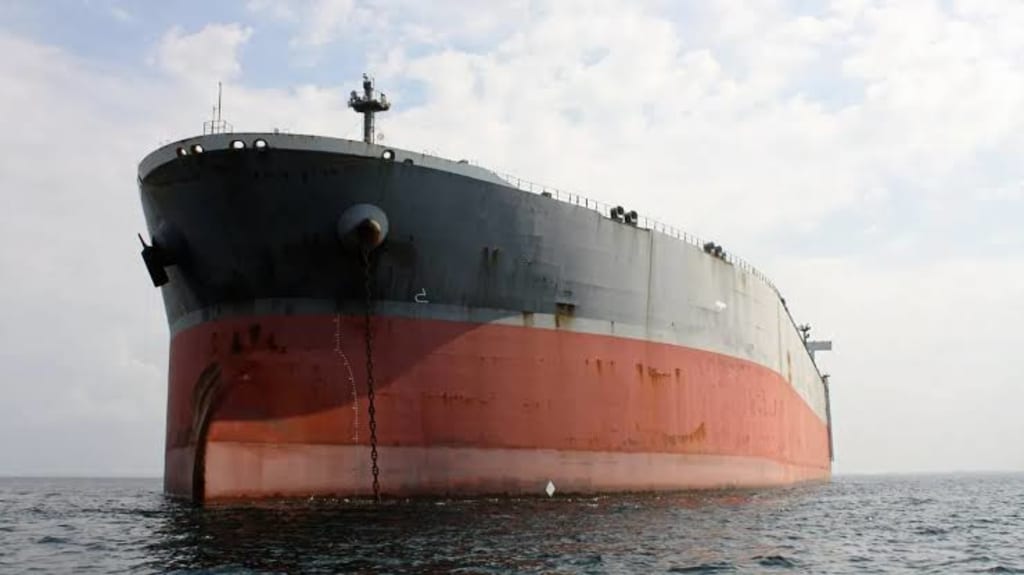
China has issued a warning regarding a Very Large Crude Carrier (VLCC) drifting in the South China Sea, raising alarms over maritime safety, potential environmental hazards, and international shipping disruptions. The alert comes amid growing tensions in the region, where vital shipping lanes carry a significant portion of the world’s oil and trade traffic. Authorities are monitoring the situation closely to prevent accidents, spills, or collisions with other vessels navigating these busy waters.
What Happened?
According to Chinese maritime authorities, the VLCC—whose name has not been immediately disclosed—was reported to be adrift due to engine failure while traversing a critical section of the South China Sea. The ship, heavily laden with crude oil, is currently without propulsion, leaving it vulnerable to weather conditions and ocean currents.
Maritime safety officials warned that an adrift VLCC poses multiple risks, including potential collisions with other commercial vessels, damage to offshore installations, and oil spills that could have devastating environmental consequences. The region, already known for its complex geopolitical environment, is home to numerous fishing zones, coral reefs, and ecological reserves, all of which could be impacted if the vessel remains uncontrolled.
South China Sea: Strategic and Commercial Importance
The South China Sea is one of the world’s busiest maritime corridors, with approximately one-third of global shipping traffic passing through its waters. It connects the Indian Ocean with the Pacific and serves as a critical route for oil, natural gas, and trade goods. Disruptions in this area can have ripple effects on international shipping and commodity prices.
China has historically emphasized maritime security in the South China Sea, asserting control over vast stretches of water while facing competing territorial claims from countries like Vietnam, the Philippines, Malaysia, and Brunei. Incidents involving commercial vessels, especially oil tankers, draw immediate attention due to the high economic and environmental stakes.
Potential Risks of an Adrift VLCC
The presence of a drifting VLCC brings multiple concerns:
1. Collision Threats – The tanker could collide with other vessels navigating the crowded waters of the South China Sea, leading to loss of life or cargo.
2. Environmental Hazards – VLCCs carry hundreds of thousands of barrels of crude oil, and any breach in the hull could result in a major oil spill affecting marine life and coastal ecosystems.
3. Economic Impact – Shipping delays or route diversions may increase transportation costs and disrupt supply chains for oil and other goods.
4. Geopolitical Tensions – The South China Sea is already a sensitive area due to territorial disputes. Any maritime incident may escalate regional tensions.
China’s Response
Chinese maritime authorities have deployed coast guard vessels and tugboats to stabilize the VLCC and prevent it from drifting into heavily trafficked lanes. Surveillance aircraft are reportedly monitoring the ship to track its movement and coordinate rescue or salvage operations if necessary.
Officials emphasized the importance of international cooperation, as the situation may require assistance from other maritime agencies or nearby port authorities. The primary goal is to mitigate risks, safeguard human life, and protect the marine environment.
Global Shipping Community Reacts
The incident has drawn attention from shipping companies, insurers, and energy traders worldwide. Shipping analysts note that even short-term disruptions in the South China Sea can impact oil prices and freight rates, given the strategic importance of the region. Ports in Singapore, Hong Kong, and other neighboring countries are closely monitoring the situation, preparing for possible rerouting or delays.
Maritime safety experts also emphasize the need for robust contingency planning, particularly for large crude carriers. Engine failures, rough weather, or navigational errors can escalate quickly into serious accidents if not managed promptly.
Environmental Concerns
Environmental groups have expressed concern over the potential for a major oil spill, which could threaten coral reefs, fisheries, and coastal communities. VLCCs carry large volumes of crude oil, and even minor leaks can have long-term ecological consequences. Chinese authorities have reassured the public that preventive measures are in place, including containment booms and emergency response teams.
Looking Ahead
The drifting VLCC in the South China Sea highlights the vulnerability of maritime trade to mechanical failures and natural hazards. As China continues to coordinate its response, international shipping companies and regional authorities are on high alert. The incident underscores the strategic importance of the South China Sea and the need for careful monitoring to prevent accidents that could impact global trade and the environment.
While rescue and stabilization efforts are underway, the maritime community is watching closely, recognizing that even a single adrift tanker can have far-reaching consequences for safety, economy, and geopolitics.
About the Creator
Fiaz Ahmed Brohi
I am a passionate writer with a love for exploring and creating content on trending topics. Always curious, always sharing stories that engage and inspire.
Keep reading
More stories from Fiaz Ahmed Brohi and writers in The Swamp and other communities.
Europe Starts Learning How to Shoot Down Drones Amid Rising Threats
Europe is stepping up its defensive capabilities as nations across the continent begin training to detect and neutralize drones. With the increasing use of unmanned aerial vehicles (UAVs) for surveillance, smuggling, and even armed attacks, European defense authorities are treating drones as a serious security threat. Governments, militaries, and private security firms are now investing in counter-drone strategies to protect critical infrastructure, borders, and civilian populations.
By Fiaz Ahmed Brohi3 months ago in The Swamp
The Forsyth House Fire
Since 1851, Forsyth House has stood on the corner of Union Street and Gordon Street in the heart of Glasgow. Its iconic, or was... because on Sunday 8th of March, 2026, a fire broke out in a small, seemingly un-named shop in the building and tore all that history down. As I write, the rubble is still unsettled and the street is still blocked off. Central Station is quiet on the upper level, and around 30 small businesses have quite literally gone up in smoke.
By S. A. Crawford3 days ago in The Swamp
U.S. Navy to increase production of anti-submarine mines
Washington, D.C. — The United States Navy has confirmed plans to expand the production of advanced anti‑submarine mine systems as part of an intensified effort to bolster its undersea warfare capabilities amid growing global competition below the waves. Officials say the move reflects mounting concerns about the expanding submarine fleets of peer competitors and the need to strengthen maritime deterrence and denial strategies. According to a recent presolicitation notice issued by the Naval Sea Systems Command, the Navy intends to modify an existing contract with General Dynamics Mission Systems that increases the number of units of the Hammerhead anti‑submarine mine to be procured over the next several fiscal cycles. The contract adjustment is designed to rapidly accelerate deliveries while ensuring operational demands are met beginning in fiscal year 2027. Senior Navy officials said that expanding Hammerhead production is a priority because the system provides a mobile, autonomous capability to detect, classify and engage hostile submarines — a capability that is increasingly vital in contested littoral and open‑ocean environments. The mines are designed to be deployed from unmanned underwater vehicles, surface vessels or aircraft, and operate in waters where traditional anti‑submarine warfare (ASW) assets may be vulnerable or limited. “We are rapidly adjusting our undersea capabilities to address the realities of great‑power competition,” a senior defense official involved in the procurement process told reporters on condition of anonymity. “The expansion of anti‑submarine mine production — particularly systems like Hammerhead — provides us with a crucial asymmetric advantage in waters where adversary submarine activity is increasing.” Why Mines Again? Naval mines have a long history as cost‑effective tools of maritime control and denial. During the Cold War, systems such as the Mark 60 CAPTOR mine were designed to disrupt Soviet submarine operations in critical chokepoints and served as part of layered ASW strategies. These weapons combined a torpedo killer with a stationary mine casing to detect and destroy submarines autonomously. Despite periods of diminished emphasis in the post‑Cold War era, mine warfare has regained attention within U.S. naval strategy as peer competitors modernize their undersea forces. The marked growth of adversary submarine fleets — particularly the rapid expansion of the People’s Liberation Army Navy nuclear and diesel‑electric submarine fleets — has renewed emphasis on tools that can impose area denial or complicate hostile maneuvers in strategic waters. Mine systems like Hammerhead are seen as force multipliers: they can extend ASW reach into denied areas, channel adversary submarines into predictable paths, and serve as persistent sensors and shooters long after initial deployment. Their autonomy also reduces risk to manned ASW platforms, which are vulnerable to advanced anti‑access systems and modern torpedoes. Industrial and Strategic Challenges Increasing production of advanced mines presents both industrial and strategic challenges. In its notice, the Navy acknowledged that General Dynamics Mission Systems is currently the only vendor capable of meeting the accelerated timeline for additional Hammerhead units, which is why the contract modification will proceed without full and open competition. This approach, while expedient, highlights broader constraints in the defense industrial base for undersea systems, where capable producers are limited and highly specialized. Supporters of the expanded program argue that concentrating production with an experienced contractor will avoid delays and preserve continuity, but some defense analysts have raised concerns about dependence on single suppliers for niche yet critical capabilities. Diversifying the industrial base, they say, could hedge against supply chain disruptions and reduce bottlenecks for future undersea programs. The increased production mandate comes at a time when the Navy is simultaneously stretched across a wide range of modernization and recapitalization efforts, including submarine construction, unmanned undersea systems and expanded mine countermeasure capabilities. Last year’s push for expanded procurement reflected similar pressures on the submarine industrial base, where funding boosts are being applied to sustain construction rates and address workforce constraints. Operational Context The strategic rationale for accelerating anti‑submarine mine production stems from the evolving global maritime environment. Analysts note that Russia’s modernization of its submarine fleet — as well as China’s rapid deployment of new nuclear and conventionally powered submarines — has placed increased pressure on U.S. undersea dominance. Submarines are a central element of both offensive and deterrent naval operations, making investments in tools that can detect and counter them a priority for defense planners. Complicating matters further, developments in autonomous underwater vehicles (UUVs) and unmanned surface vehicles (USVs) have reshaped mine warfare. Modern mines can be integrated with these platforms to achieve quicker, more precise deployment in contested or denied waters while complicating an adversary’s ability to detect and neutralize them. These advances signal a renewed era of undersea competition where traditional concepts are being blended with emerging technologies. Looking Ahead As the Navy prepares to issue and implement the contract modification for expanded Hammerhead supplies, officials emphasize that the program is just one part of a broader, multi‑domain approach to undersea warfare. Investments in detection systems, advanced torpedoes, and layered ASW networks — including manned and unmanned platforms — are moving forward in parallel to ensure that U.S. forces maintain a competitive edge beneath the surface. In an era defined by competition with near‑peer naval powers, the resurgence of mine warfare — once considered a legacy capability — underscores the complexity and adaptability of modern maritime strategy. The expanded anti‑submarine mine production effort reflects not only tactical considerations, but the Navy’s long‑term commitment to securing undersea superiority across critical sea lanes and contested regions.
By Fiaz Ahmed 2 days ago in The Swamp



Comments
There are no comments for this story
Be the first to respond and start the conversation.