
China’s First Product: The Creation That Made the World Say “Made in China”
From a single porcelain bowl to global trade dominance — how China’s first export changed history forever.

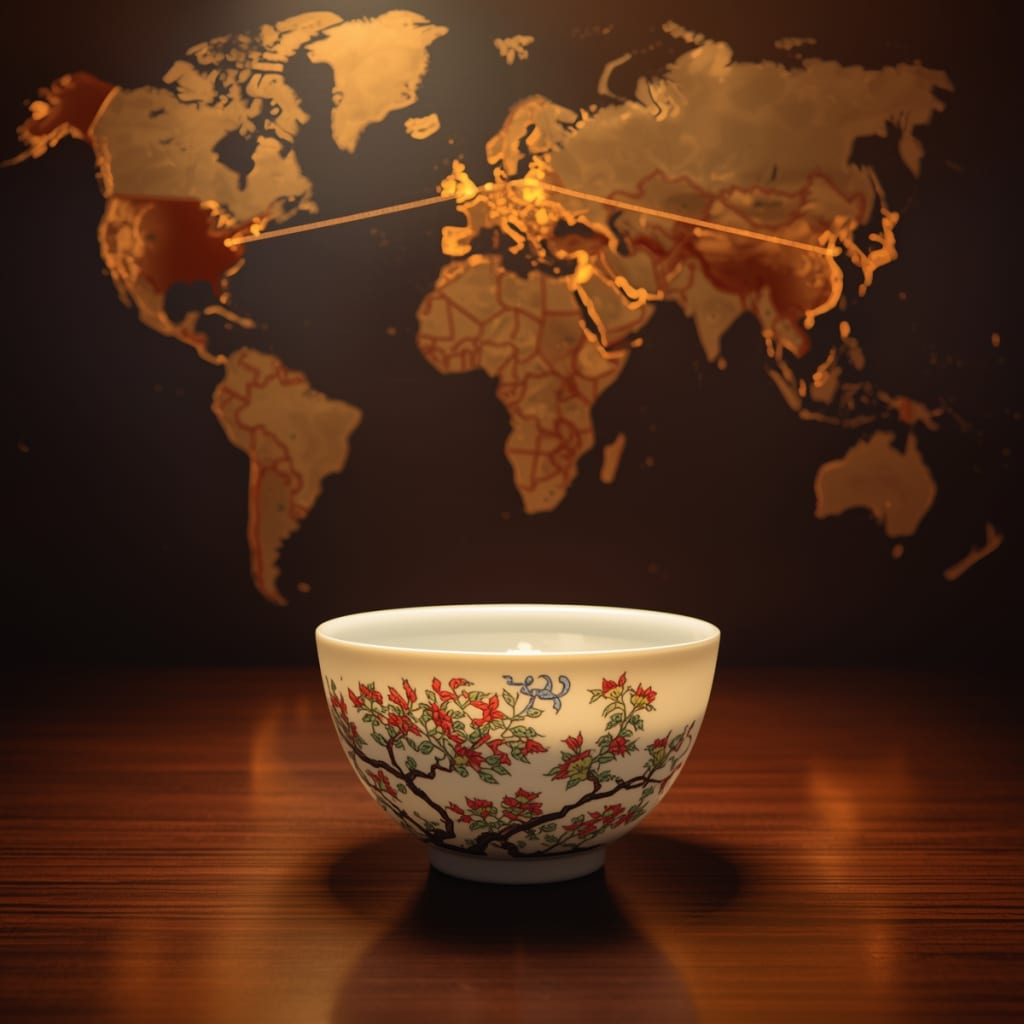
When we see the phrase “Made in China” today, it’s everywhere — printed on phones, toys, clothes, cars, even satellites. But have you ever wondered how it all began?
Long before factories, robots, and e-commerce, China introduced the world to a product so unique that Europe and America couldn’t stop buying it. It wasn’t an iPhone, or silk, or tea — it was something far simpler, yet revolutionary: porcelain.
Yes, the same fine, white ceramic that shines under light and feels like glass. That was China’s first global product — the first export that made the entire world look toward the East with admiration and wonder.
---
The Birth of Beauty — Porcelain in Ancient China
The story starts more than a thousand years ago, in the Tang and Ming dynasties. In the city of Jingdezhen, skilled artisans worked day and night mixing clay, minerals, and fire to create something the world had never seen — smooth, translucent pottery that was both art and science.
When European traders first saw it, they couldn’t believe it wasn’t made of glass or stone. It was lighter, more beautiful, and more durable. Soon, ships began sailing from China to Europe filled with porcelain cups, vases, and plates.
In royal palaces in France and England, Chinese porcelain became a symbol of luxury and sophistication. Having one porcelain teacup meant you had something from the other side of the world — a mark of class and taste.
---
The World’s First “Luxury Export”
By the 17th and 18th centuries, porcelain wasn’t just a product — it was an obsession.
Europeans called it “white gold.” Kings collected it, artists painted it, and merchants risked their lives shipping it across dangerous oceans.
Each piece was delicate and could break during travel, but still, the demand grew. The Chinese learned to pack porcelain safely, design new patterns for European buyers, and produce large quantities without losing beauty.
This was more than trade — it was the birth of global business.
China had learned the secret: quality, consistency, and adaptation.
---
From Porcelain to Power
That single product — porcelain — opened the door for China to the world. It gave Chinese merchants experience in trade, transport, packaging, and market demand.
From there, silk, tea, and later modern goods followed. The same skill of adapting to foreign tastes, keeping costs low, and ensuring quality became China’s formula for global dominance.
Today, the same principle that sold porcelain plates centuries ago sells smartphones and solar panels now. The difference? The speed, scale, and technology have changed — but the mindset hasn’t.
“Understand the market. Deliver quality. Grow with consistency.”
That’s how a small potter’s town became the foundation for the world’s largest export economy.
---
What We Can Learn Today
Whether you’re an entrepreneur, student, or creator, China’s porcelain story teaches three timeless lessons:
1. Start Small, Dream Big – Even the world’s biggest trade power began with something as small as a teacup.
2. Adapt Quickly – China listened to what other nations wanted and changed its art accordingly.
3. Build Trust Through Quality – The label “Made in China” became famous not just for low prices, but for consistency and reliability over time.
---
The Symbol of Global Connection
Porcelain didn’t just bring wealth — it brought cultures together. European painters copied Chinese designs, and Chinese artists learned Western techniques. It was one of the first true examples of globalization — centuries before the internet.
It’s fascinating how something so fragile became the strongest link between East and West.
That one creation showed that beauty, skill, and trade can unite worlds.
---
Final Thought
China’s first product wasn’t just an object — it was a message:
> “We can create something the world loves.”
From porcelain to iPhones, that message still echoes through time.
So, next time you see “Made in China,” remember — it all started with a small, shining bowl that taught the world how trade, art, and ambition could change history forever.
About the Creator
Keep reading
More stories from Shahab Khan and writers in The Swamp and other communities.
Africa Rising: The Continent Poised to Lead the 21st Century
For centuries, the world has looked at Africa as a continent of challenges—poverty, conflict, disease. Yet quietly, beyond the stereotypes and old headlines, a new story is unfolding. Today, Africa is no longer defined only by its struggles. It is becoming the world’s fastest-growing region, rich in innovation, talent, and resources.
By Shahab Khan6 months ago in The Swamp
The Forsyth House Fire
Since 1851, Forsyth House has stood on the corner of Union Street and Gordon Street in the heart of Glasgow. Its iconic, or was... because on Sunday 8th of March, 2026, a fire broke out in a small, seemingly un-named shop in the building and tore all that history down. As I write, the rubble is still unsettled and the street is still blocked off. Central Station is quiet on the upper level, and around 30 small businesses have quite literally gone up in smoke.
By S. A. Crawford3 days ago in The Swamp



Comments (1)
👍👍👍