
China Presses Takaichi With Hardened Export Curbs on Japan Firms
Beijing tightens trade restrictions on key Japanese firms, escalating economic pressure amid rising security tensions between Tokyo and China.
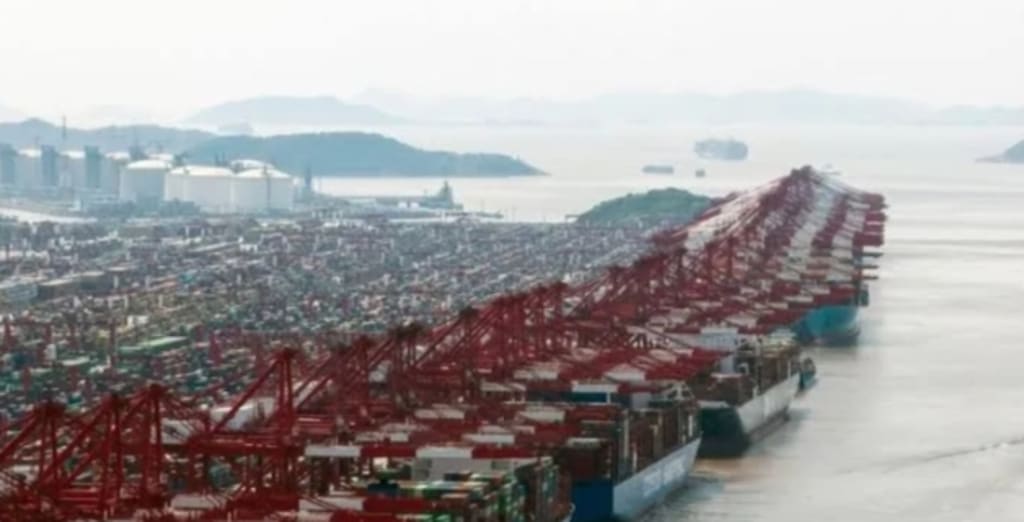
China has moved to intensify economic pressure on Japan by imposing stricter export controls on a range of Japanese companies, a step widely viewed as a strategic response to Tokyo’s evolving security posture under Prime Minister Sanae Takaichi. The decision signals that trade and national security are now deeply intertwined in East Asia’s geopolitical landscape.
While both countries remain major trading partners, the latest measures highlight how quickly economic cooperation can become leverage in broader political disputes.
What the New Export Curbs Involve
China’s updated rules focus on so-called dual-use goods — products and materials that can serve both civilian and military purposes. These include advanced electronics, precision machinery, specialty metals, and rare earth materials that are critical to industries such as aerospace, automotive manufacturing, robotics, and semiconductor production.
By tightening licensing requirements and restricting exports to specific Japanese firms, Beijing is not cutting off trade entirely. Instead, it is increasing regulatory scrutiny and limiting access to strategically sensitive components.
Such measures may appear technical, but their impact can be significant. Delays in receiving key materials can slow manufacturing lines, increase costs, and create uncertainty for global customers.
Why Tensions Are Rising
The move comes amid growing friction between Tokyo and Beijing over regional security, particularly regarding Taiwan and Japan’s expanding defense policies. Under Prime Minister Takaichi, Japan has signaled stronger support for maintaining stability in the Taiwan Strait and has increased coordination with the United States on defense initiatives.
China views these actions as provocative. From Beijing’s perspective, Japan’s security posture is shifting in ways that challenge Chinese interests. Rather than responding militarily, China has chosen to apply economic pressure — a tactic that allows it to assert influence without direct confrontation.
Export controls become a way to communicate dissatisfaction while maintaining formal adherence to international trade rules.
The Strategic Importance of Rare Earths
China’s dominance in rare earth processing gives it a powerful bargaining chip. Rare earth elements are essential for electric vehicle motors, renewable energy systems, advanced electronics, and certain defense technologies.
Japan, a global leader in high-tech manufacturing, relies on steady access to these materials. Even temporary restrictions can disrupt tightly coordinated supply chains.
Although Japan has worked in recent years to diversify sourcing — including investing in alternative suppliers and domestic reserves — China remains a major player in the rare earth ecosystem.
The export curbs underscore a broader message: economic interdependence can be used strategically.
Corporate and Government Responses
Japanese companies are likely to respond by accelerating efforts to reduce supply chain vulnerability. Potential strategies include:
Diversifying suppliers across Southeast Asia and Australia
Expanding domestic production capacity
Increasing stockpiles of critical materials
Investing in material innovation to reduce dependency
However, building resilient supply chains is not immediate. It requires time, investment, and coordination between government and industry.
Japan’s government has emphasized the importance of economic security in recent years, recognizing that geopolitical shocks can directly affect domestic industries. Support measures may include subsidies for strategic materials and incentives for local production.
Economic Pressure as Geopolitical Signaling
China’s action fits into a broader global pattern in which economic tools are increasingly deployed for political purposes. Export controls, tariffs, sanctions, and investment restrictions have become central instruments of statecraft.
Rather than severing economic ties altogether, Beijing appears to be applying calibrated pressure — enough to send a signal, but not so sweeping as to destabilize the entire trade relationship.
For multinational corporations, this approach introduces uncertainty. Companies operating across borders must now factor geopolitical risk more heavily into long-term planning.
Regional and Global Implications
The implications of this dispute extend beyond Japan and China.
If tensions escalate, other countries in the region may experience indirect effects. Southeast Asian nations could see increased investment as companies seek alternative manufacturing bases. At the same time, heightened rivalry may complicate regional trade integration.
Global supply chains, already tested by pandemic disruptions and trade wars, could face further stress if export controls expand or retaliatory measures follow.
Financial markets typically respond cautiously to such developments. Investors monitor signs of prolonged trade friction that could impact earnings, commodity prices, and currency stability.
A Delicate Balancing Act
Despite the hardened tone, neither Beijing nor Tokyo appears eager for a complete economic rupture. China remains one of Japan’s largest trading partners, and Japanese companies maintain significant operations within China.
This interdependence creates both leverage and restraint.
For China, export controls offer a way to assert influence without direct confrontation. For Japan, strengthening economic resilience becomes part of a broader national security strategy.
The outcome will likely depend on diplomatic engagement in the months ahead. If tensions ease, restrictions could be softened. If rhetoric hardens further, economic measures may intensify.
Looking Ahead
The hardened export curbs illustrate how trade policy is increasingly shaped by strategic competition. Economic decisions are no longer purely commercial; they reflect geopolitical calculations.
For businesses, the message is clear: supply chain security is now inseparable from national security.
For governments, the challenge lies in balancing deterrence with economic stability.
As China presses Takaichi with stricter export controls, the broader question remains whether economic pressure will encourage compromise — or deepen divisions in an already complex regional landscape.
About the Creator
A Gathering of Evil Bosses
“I’m the queen of chin jutting while I smooth my hair, attacking, insulting, and deflecting to protect my appointer.” “Oh, please, Blondi, my hair is curled, highlighted, and longer than yours. I feature television commercials telling immigrants that we will give them a free plane ride home, and if they voluntarily turn themselves in, they will be allowed to legally apply for re-entry. It runs everywhere, and I look good in it! You can’t compete because of your blond hair. Mine is nicer, and my lips are prettier than yours.”
By Andrea Corwin 6 days ago in The Swamp



Comments
There are no comments for this story
Be the first to respond and start the conversation.