
A new U.S. attack on Iran could risk large-scale retaliation
Rising tensions and military posturing between Washington and Tehran fuel fears that even a limited strike could ignite a broader regional conflict with global consequences.
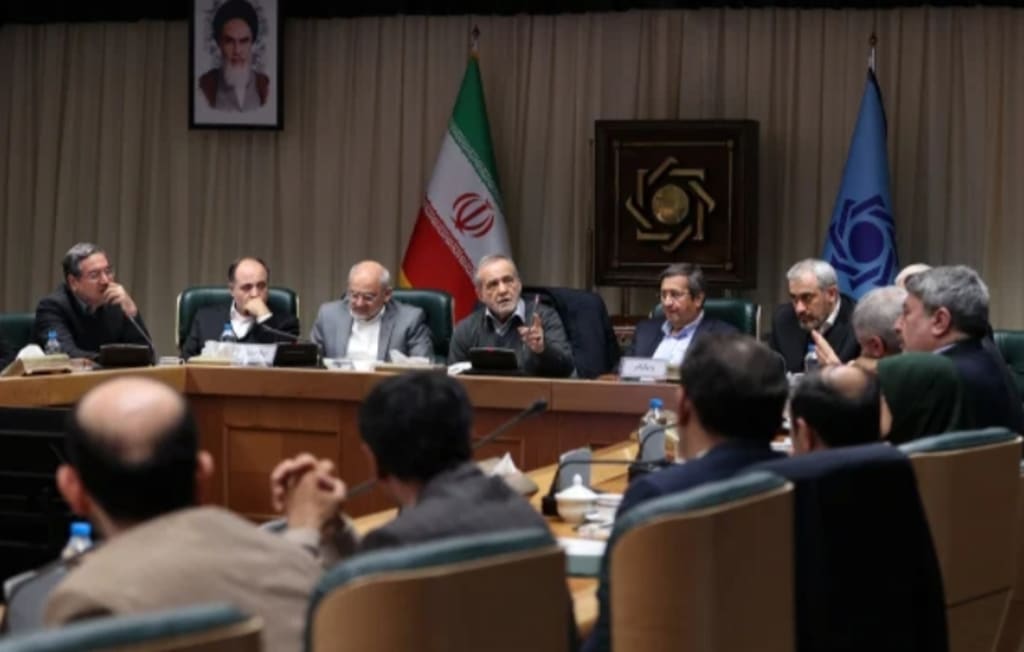
Rising tensions and military posturing between Washington and Tehran are fueling fears that even a limited U.S. strike on Iran could ignite a broader regional conflict with global consequences. While diplomatic channels remain open, the steady drumbeat of warnings, troop movements, and strategic signaling has pushed the situation into a fragile and potentially dangerous phase.
At the heart of the concern is a simple but sobering reality: in the modern Middle East, conflicts rarely stay contained.
Why Tensions Are Escalating
The United States and Iran have been locked in strategic rivalry for decades. Disputes over Iran’s nuclear program, ballistic missile development, regional influence, and support for proxy groups have created recurring cycles of confrontation.
Recent developments — including increased military deployments and sharpened rhetoric — have heightened anxieties. U.S. officials have signaled that “all options remain on the table” should negotiations stall. Meanwhile, Iranian leaders have warned that any military action would be treated as an act of aggression requiring a decisive response.
This rhetorical escalation is not unusual in diplomatic standoffs. However, when paired with visible military readiness, it raises the stakes significantly.
The Illusion of a “Limited Strike”
One of the most debated questions among defense analysts is whether a targeted U.S. strike could remain limited in scope.
In theory, precision strikes aim to send a message — disabling specific facilities or military assets without triggering full-scale war. In practice, however, the targeted country may not interpret such action as symbolic restraint.
Iranian officials have repeatedly emphasized that there is no meaningful distinction between a “small” attack and a broader campaign. From Tehran’s perspective, sovereignty violations demand retaliation to preserve deterrence and national credibility.
This dynamic creates a dilemma: what one side sees as calibrated pressure, the other may view as an opening salvo.
What Retaliation Could Look Like
Iran possesses a range of response options that extend well beyond direct confrontation.
1. Missile Strikes on Regional Bases
Iran maintains a sizable ballistic missile arsenal capable of reaching U.S. military installations across the Gulf region. Even limited strikes could cause casualties and infrastructure damage.
2. Activation of Proxy Networks
Tehran has longstanding ties with armed groups in Iraq, Lebanon, Syria, and Yemen. These networks could target U.S. interests, shipping routes, or diplomatic facilities, expanding the theater of conflict.
3. Maritime Disruption
The Strait of Hormuz remains one of the world’s most critical oil chokepoints. Disruptions there — even temporary — could send global energy markets into turmoil.
4. Cyber Operations
Iran has developed cyber capabilities that could be deployed against infrastructure, financial systems, or communications networks.
The broader concern is that retaliation may not occur in a single, immediate burst. It could unfold gradually, complicating response strategies and increasing unpredictability.
Regional Spillover Risks
A confrontation between Washington and Tehran would likely reverberate throughout the region.
Allies such as Israel and Gulf states would heighten defensive measures immediately. If Iran perceives coordination between the United States and regional partners, its response could expand accordingly.
Energy infrastructure, shipping lanes, and military bases are all potential flashpoints. Even absent large-scale combat, the perception of instability could trigger financial volatility.
Oil prices would likely spike. Stock markets could slide. Insurance rates for maritime shipping might surge.
The economic shockwaves would not stop at the region’s borders.
Domestic Pressures Shape Decisions
Both Washington and Tehran face internal political pressures that complicate crisis management.
In the United States, leaders must balance deterrence credibility with public fatigue over extended military engagements. A forceful response may be framed as necessary to protect national interests, but prolonged escalation carries significant political and financial costs.
In Iran, leadership must project strength to domestic audiences. Failing to respond robustly to a U.S. strike could be interpreted as weakness, potentially undermining political legitimacy.
These internal dynamics reduce room for compromise once confrontation begins.
The Role of Diplomacy
Despite the heightened rhetoric, diplomatic channels remain active. Indirect negotiations and backchannel communications suggest neither side fully desires open war.
However, diplomacy operates under pressure. Military buildups intended as leverage can also increase the risk of misinterpretation. A miscalculation — whether from faulty intelligence, accidental engagement, or misread signaling — could shift events rapidly.
International actors, including European governments and regional mediators, continue urging restraint. Their argument is straightforward: escalation would carry costs far beyond the immediate participants.
Economic Fallout Would Be Immediate
Even before direct conflict, markets tend to react to geopolitical tension. A confirmed U.S. strike could trigger:
Sharp increases in oil prices
Stock market volatility
Currency fluctuations
Increased defense spending
Supply chain disruptions
Given the global economy’s sensitivity to energy prices, even temporary instability in the Persian Gulf could have far-reaching consequences.
Can Escalation Be Controlled?
Military planners often rely on escalation ladders — structured responses designed to prevent uncontrolled expansion of conflict. Yet real-world dynamics are rarely predictable.
Retaliation cycles can intensify quickly. A missile strike prompts counterstrikes. Proxy attacks lead to expanded targeting. Cyberattacks invite digital retaliation.
Each step increases complexity and reduces clarity.
History shows that crises can be managed, but it also demonstrates how rapidly events can outpace intentions.
A Fragile Balance
The prospect of a new U.S. attack on Iran is not merely a question of tactical effectiveness. It is a strategic gamble with potentially cascading consequences.
Analysts warning of large-scale retaliation are emphasizing capability and precedent, not speculation. Iran has demonstrated both willingness and capacity to respond when it perceives aggression. Meanwhile, U.S. forces and allies are deeply embedded across a region already marked by volatility.
For now, restraint and diplomacy appear to offer the clearest path to stability.
Because in high-stakes geopolitical confrontations, the first strike is rarely the final move — and the aftermath can be far more difficult to control than the decision that triggered it.
About the Creator
A Gathering of Evil Bosses
“I’m the queen of chin jutting while I smooth my hair, attacking, insulting, and deflecting to protect my appointer.” “Oh, please, Blondi, my hair is curled, highlighted, and longer than yours. I feature television commercials telling immigrants that we will give them a free plane ride home, and if they voluntarily turn themselves in, they will be allowed to legally apply for re-entry. It runs everywhere, and I look good in it! You can’t compete because of your blond hair. Mine is nicer, and my lips are prettier than yours.”
By Andrea Corwin 6 days ago in The Swamp
Trump Officials Plan to Build 5,000-Person Military Base in Gaza, Files Show
Internal planning documents reveal that officials linked to former U.S. president Donald Trump have explored the construction of a permanent American military base in Gaza Strip capable of housing up to 5,000 personnel, according to files reviewed by investigators and confirmed by multiple sources familiar with the matter. The proposal, drafted as part of a broader post-conflict stabilization framework, outlines a heavily fortified installation designed to support security operations, humanitarian coordination, and regional deterrence. While the plan has not been formally announced, the existence of the documents underscores the extent to which U.S. officials have considered a long-term military footprint in Gaza following months of war and instability. Strategic Objectives According to the files, the base would serve several purposes: securing key transport corridors, monitoring militant activity, and acting as a hub for intelligence and logistics. Planners argue that a permanent presence would help prevent the re-emergence of armed groups and provide reassurance to regional allies concerned about renewed conflict. The documents describe a facility with airfield access, missile-defense systems, medical units, and housing for rotating combat and support troops. Analysts say such a base would represent one of the most significant U.S. deployments in the Palestinian territories in modern history. Officials involved in the planning process said the idea emerged from internal debates about how to guarantee security if Israel withdraws major combat formations while Gaza undergoes political and humanitarian reconstruction. Political Sensitivities The concept is deeply controversial. Palestinian leaders and human rights organizations warn that a foreign military base in Gaza could entrench occupation-style control and inflame tensions rather than stabilize the territory. Critics argue that any long-term solution must involve Palestinian governance and international oversight rather than unilateral military structures. Regional governments have also reacted cautiously. Several Arab states have signaled privately that a U.S. base in Gaza could complicate fragile diplomatic efforts and risk drawing Washington deeper into a volatile conflict zone. Supporters of the idea within Trump’s political circle contend that American leadership is necessary to prevent Gaza from becoming a security vacuum. They argue that U.S. forces could operate as a neutral stabilizing power while reconstruction efforts move forward. Link to Trump’s “Peace Vision” The proposal aligns with Trump’s broader rhetoric about enforcing peace through strength. During recent political speeches, Trump has suggested that American authority could rapidly impose order in conflict zones through decisive action rather than prolonged diplomacy. Documents indicate that the base would be part of a larger security architecture involving coordination with Israel and selected regional partners. Israeli defense officials have not publicly commented on the plan, but sources say discussions included possible intelligence-sharing and joint operational zones. Logistical and Legal Challenges Building a base of this scale would require massive logistical investment. The files estimate billions of dollars in construction and security costs over the first five years, including hardened shelters, radar systems, and supply depots. Planners also note the challenge of maintaining supply lines into Gaza, an area with damaged infrastructure and restricted access routes. Legal experts warn that the deployment would raise serious international law questions. Gaza’s status as a Palestinian territory under complex occupation arrangements means that stationing foreign troops could require international agreements or UN authorization. “There is no clear legal pathway for a permanent U.S. military base in Gaza without broad international consent,” said one former U.S. defense official familiar with the region. Reaction in Washington In Washington, lawmakers are divided. Some Republican allies of Trump see the plan as bold and necessary to reshape Middle East security. Others, including members of both parties, warn that it could entangle the U.S. in another long-term ground commitment similar to Iraq or Afghanistan. Democratic leaders have questioned whether such a move would undermine diplomatic efforts aimed at a two-state solution. They argue that American troops on the ground could become targets for militant attacks and further escalate regional violence. A Signal of Future Policy Although the plan remains unofficial, its existence signals how dramatically U.S. Middle East policy could shift if Trump returns to power. Rather than relying on multinational peacekeeping or negotiated frameworks, the documents show a preference for direct military control as a tool of stabilization. For now, the proposal remains a confidential contingency plan. But its disclosure highlights the intensity of behind-the-scenes planning and the scale of ambition among Trump-aligned officials seeking to redefine America’s role in Gaza. Whether such a base would ever be built is uncertain. What is clear is that the idea has already sparked alarm among diplomats, regional leaders, and humanitarian groups who fear that turning Gaza into a permanent military zone would deepen conflict rather than resolve it.
By Fiaz Ahmed 5 days ago in The Swamp



Comments
There are no comments for this story
Be the first to respond and start the conversation.