
China Holds Military Drills Around Taiwan as Warning to ‘Separatist Forces’
Beijing escalates pressure on Taiwan while regional and global concerns over stability continue to grow

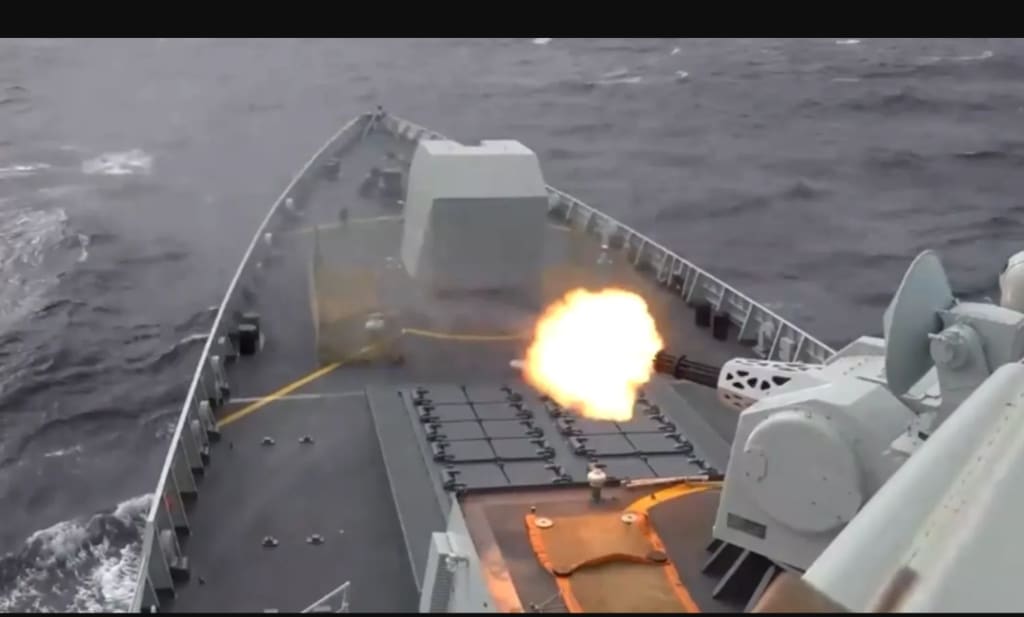
China has once again intensified tensions in East Asia by conducting large-scale military drills around Taiwan, describing the exercises as a warning to what it calls “separatist forces” on the self-governed island. The drills, involving naval vessels, aircraft, and missile units, underscore Beijing’s determination to assert its claim over Taiwan and send a strong political message to both Taipei and the international community.
The latest show of force comes amid already strained relations across the Taiwan Strait and growing global concern over the risk of miscalculation in one of the world’s most sensitive geopolitical flashpoints.
What the Drills Involve
According to Chinese officials, the exercises include joint operations by air, sea, and missile forces, simulating scenarios such as blockades, precision strikes, and coordinated combat readiness. Military analysts note that such drills are designed to test China’s ability to operate multiple branches of its armed forces simultaneously in complex environments.
The drills are taking place in areas surrounding Taiwan, a move that has become increasingly frequent in recent years. While China insists the exercises are routine and defensive in nature, their scale and proximity to Taiwan signal heightened pressure.
Beijing has framed the drills as a direct response to what it views as provocative actions by Taiwan’s leadership and foreign powers supporting the island.
China’s Message to Taiwan
China considers Taiwan a breakaway province and has long stated that reunification is inevitable, reserving the right to use force if necessary. By labeling Taiwan’s leaders as “separatist forces,” Beijing aims to delegitimize any moves toward greater international recognition or formal independence.
Chinese officials argue that the drills are meant to deter actions that could permanently alter the status quo. From Beijing’s perspective, military demonstrations are a way to reinforce sovereignty claims without immediately resorting to conflict.
At the same time, the language used by Chinese authorities has grown more assertive, reflecting frustration with Taiwan’s growing international profile and closer ties with Western democracies.
Taiwan’s Response
Taiwan has condemned the drills, calling them an act of intimidation that threatens regional peace and stability. The island’s defense ministry reported increased military activity near its airspace and waters, prompting heightened alert levels and monitoring operations.
Taiwanese leaders have emphasized their commitment to defending the island’s democratic system and way of life. While avoiding inflammatory rhetoric, officials stress that Taiwan will not be pressured into submission through military threats.
For Taiwan’s population, repeated drills have become part of daily news, but they still generate anxiety, particularly among families living near strategic areas and young people facing compulsory military service.
Why These Drills Matter Globally
The Taiwan Strait is one of the most strategically important regions in the world. It is a major shipping route and a critical hub for global supply chains, particularly in the semiconductor industry.
Any escalation involving Taiwan could disrupt international trade, energy markets, and technological production. As a result, China’s military drills are closely watched not only by regional neighbors but also by governments and businesses worldwide.
The United States and its allies have repeatedly called for restraint, emphasizing the importance of maintaining peace and stability in the region. Although Washington does not formally recognize Taiwan as a sovereign state, it maintains strong unofficial ties and has committed to helping the island defend itself.
A Community Perspective: Living Under Pressure
Beyond military strategy and diplomacy, the drills have real consequences for communities. In Taiwan, residents live with the constant awareness that their home is at the center of a global power struggle. Schools, businesses, and families must carry on with daily life amid recurring reminders of potential conflict.
In China, state media coverage frames the drills as necessary measures to protect national unity, shaping public opinion and reinforcing narratives of sovereignty and strength.
Across the region, neighboring countries worry about spillover effects, refugee flows, and economic instability should tensions escalate further.
Strategic Signaling or Prelude to Conflict?
Most analysts believe the drills are primarily a form of strategic signaling rather than preparation for immediate invasion. Military exercises allow China to demonstrate capability, test readiness, and influence political calculations without crossing the threshold into open war.
However, the increasing frequency and scale of such drills raise concerns about accidents or misinterpretations. In a heavily militarized environment, even minor incidents can escalate rapidly.
The absence of direct communication channels during moments of tension increases the risk of unintended confrontation.
The Broader Geopolitical Context
China’s actions around Taiwan must also be viewed within a wider global context. Rising competition between major powers, shifting alliances, and debates over democratic governance versus authoritarian models all influence how the situation unfolds.
For Beijing, Taiwan represents a core national interest tied to historical identity and political legitimacy. For Taiwan, the issue is one of self-determination, democracy, and security.
These fundamentally different perspectives make compromise difficult and heighten the importance of careful diplomacy.
Conclusion
China’s military drills around Taiwan serve as a stark reminder of unresolved tensions in the region. Framed as a warning to “separatist forces,” the exercises highlight Beijing’s determination to assert control while stopping short of direct conflict.
For communities in Taiwan, China, and beyond, the situation underscores the fragile balance between deterrence and escalation. As military activity becomes more routine, the challenge for all sides will be preventing intimidation from turning into confrontation.
In an interconnected world, the stakes extend far beyond the Taiwan Strait. Maintaining peace will require restraint, dialogue, and an understanding that stability benefits not just governments, but the everyday lives of millions of people.
About the Creator
Asad Ali
I'm Asad Ali, a passionate blogger with 3 years of experience creating engaging and informative content across various niches. I specialize in crafting SEO-friendly articles that drive traffic and deliver value to readers.



Comments
There are no comments for this story
Be the first to respond and start the conversation.