
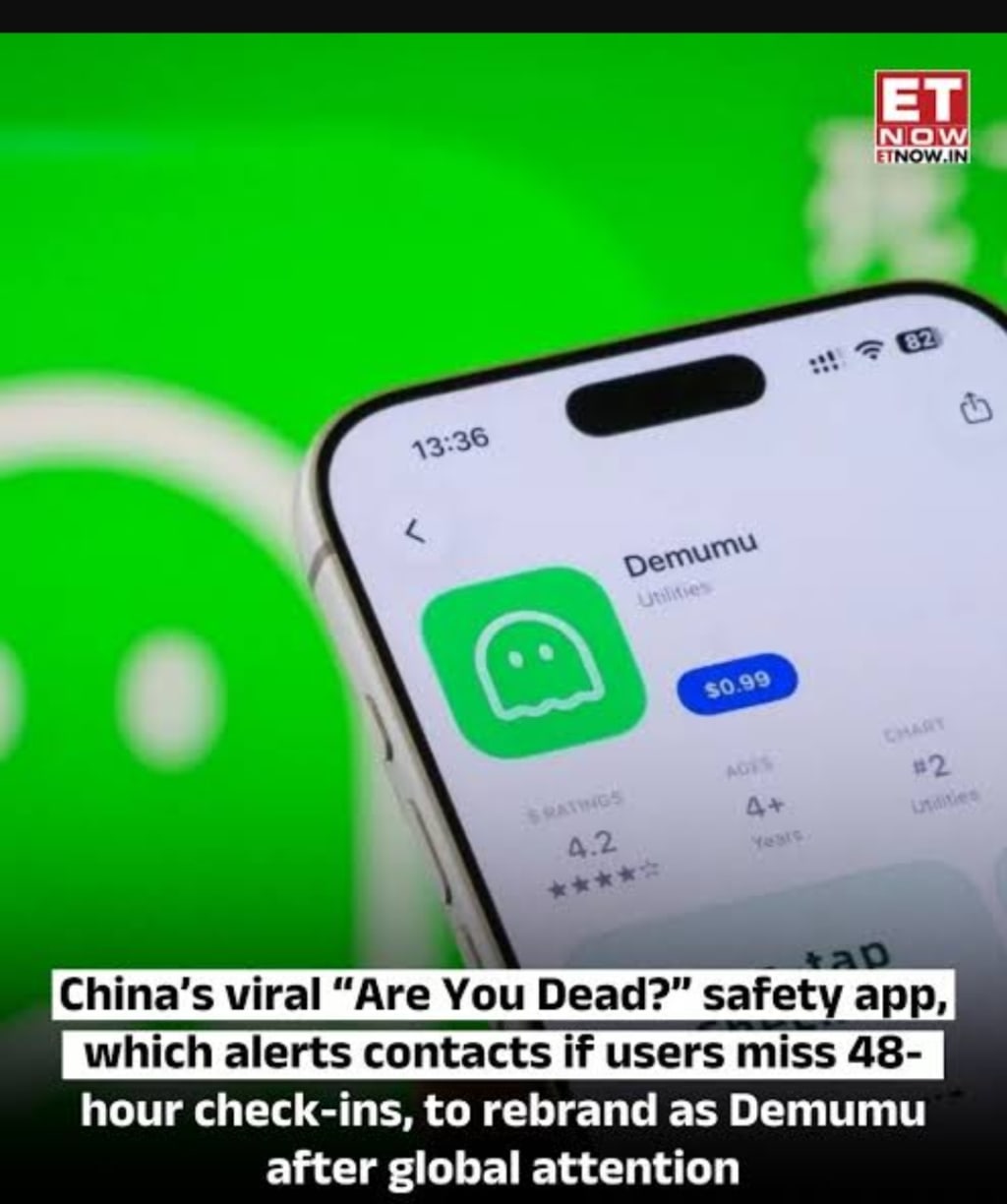
From "Are You Dead?" to "Demumu": The Viral Safety App Rebranding for Global Users
: A Chinese app, which alerts contacts if users living alone miss check-ins, surges in popularity and shifts to a paid subscription model.

An App with a Startling Name Goes Viral
A Chinese safety application originally named “Are You Dead?” has become a global internet topic. The app, designed for people who live alone, saw a massive surge in downloads, climbing app store charts after going viral on social media. Its core function is simple: users must regularly check in. If they fail to do so, the app automatically sends alert messages to their pre-designated emergency contacts. The direct and startling original name captured significant attention, highlighting a growing concern for personal safety in single-person households.
The app was developed by a company called Sileme. It tapped into a real and often unspoken anxiety, particularly in large urban centers where individuals may go long periods without direct personal contact. The viral spread was not confined to China; international media coverage and social media shares drove users from around the world to seek out the app, making it a trending topic globally and showcasing a universal need for such safety technology.
How the Safety Check-In System Operates
The app’s operation is based on a user-defined schedule. Upon downloading, users set up a regular check-in interval—this could be daily, every few days, or on another customized schedule. They must then actively open the app and press a button to confirm they are safe within each period. The interface is designed to be straightforward, minimizing steps to complete the check-in.
The critical feature is the automated alert. If a user misses a check-in window, the app does not notify them first. Instead, it immediately sends messages to their listed emergency contacts. These messages inform the contacts that the user has missed their safety confirmation and may include the user’s last recorded location data. This system is intended to prompt a real-world wellness check from friends or family, potentially speeding up emergency response.
The Psychology Behind the Demand
The app’s sudden popularity points to broader social trends. Increasing numbers of people are living alone, whether by choice or circumstance, in cities worldwide. While offering independence, this lifestyle can come with latent fears about accidents, sudden illness, or other emergencies where one might be unable to call for help. This app functions as a digital safety net, providing peace of mind to both the user and their loved ones.
Sociologists note that the app formalizes an informal practice—many people already have casual check-in arrangements with friends. However, an automated system removes the reliance on memory and routine, ensuring the process is consistent and failsafe. The viral moment revealed that this anxiety was more widespread and acute than many tech companies had realized, creating an immediate product-market fit.
Controversy and Rebranding to "Demumu"
The original name “Are You Dead?” (Chinese: “你还活着吗?”) was a major driver of its initial attention but also a source of controversy. While some found it darkly humorous and effective, others criticized it as being insensitive, alarming, or in poor taste. For an app aiming for mainstream and possibly global adoption, such a name presented a significant barrier.
In response, the developer Sileme has announced a full rebrand. The app is now officially called “Demumu.” This new name is less confrontational and carries a softer, more caring connotation in Chinese, better aligning with the app’s purpose as a protective tool. The rebranding is part of a strategic shift to sustain its user base beyond the viral news cycle and appeal to a broader, more international audience.
Transition to a Paid Subscription Model
Alongside the name change, the company has confirmed a move to a paid subscription model. During its initial viral growth phase, the core app functionality was free. The enormous influx of users, however, requires robust server maintenance, consistent software updates, and customer support. A subscription fee will fund these ongoing operational costs and ensure the service’s long-term reliability.
The shift to paid access is a critical test of the app’s value. It will determine whether users perceive the safety service as essential enough to pay a recurring fee. The pricing strategy and tier structure will be crucial. Developers may offer a basic alert system for a low monthly fee, with premium tiers possibly including features like integration with wearable devices, more detailed location sharing, or direct links to emergency services.
Technical and Privacy Considerations
An app of this nature handles sensitive personal data, including user location and contact information. Its privacy policy and data security measures are therefore under scrutiny. Users must trust that their location data is stored securely and only used for the explicit purpose of safety alerts. The company must be transparent about whether data is encrypted, if it is shared with third parties, and how long it is retained.
Furthermore, the technical reliability of the alert system is paramount. False alarms caused by app glitches or server errors could desensitize emergency contacts, while a failure to send an alert during a real crisis would be catastrophic. As “Demumu” scales, ensuring near-perfect uptime and rapid bug fixes will be the foundation of its credibility and user retention.
Global Market Potential and Cultural Adaptation
The app’s viral success outside China indicates a global market opportunity. However, successful expansion will require more than just translation. Privacy expectations and regulations differ greatly between regions like the European Union, the United States, and Southeast Asia. The app’s data practices must adapt to comply with strict regulations like GDPR.
Cultural adaptation is also key. The directness of the original name resonated in one context but may be off-putting in others. “Demumu” must position itself carefully in different markets, potentially emphasizing community, family care, or independent living support depending on local cultural values. Partnerships with local health or wellness organizations could aid in this tailored approach.
The Future of Digital Safety Nets
“Demumu” represents a growing category of digital duty-of-care applications. Its evolution from a viral phenomenon with a provocative name to a sustained service under a paid model will be closely watched by the tech industry. It highlights how technology is increasingly being used to mediate personal safety and social connection in an atomized world.
Future iterations may see integration with broader smart home ecosystems or health monitoring platforms. For instance, a future version could potentially interface with a smartwatch that detects a hard fall, automatically pausing the check-in requirement and notifying contacts of a potential incident. This positions the app not as a standalone novelty, but as a potential component of future personal health and safety infrastructure.
A Caution on Real-World Reliability
Despite its utility, experts caution that such an app should be one layer of a personal safety plan, not the sole solution. Technical failures can happen. A user might simply forget to check in during a busy travel day, triggering unnecessary alerts. The most effective use involves clear communication with emergency contacts about the app’s role and establishing backup plans.
The story of “Demumu” is ultimately about using technology to address a very human fear. Its journey from “Are You Dead?” to a subscription-based service reflects a maturation process, both for the product and the conversation around solo living safety. Its long-term success will depend on building trust through reliability, respecting user privacy, and consistently delivering on its core promise: offering a simple link to help when it might be needed most.
About the Creator
Saad
I’m Saad. I’m a passionate writer who loves exploring trending news topics, sharing insights, and keeping readers updated on what’s happening around the world.
Center Stage with Paul Stewart
*** I'm keen to republish the interviews I did for my series with Vocal creators. It's been a few years and I thought it might be nice to revisit these wonderful conversations. I'll be releasing them one at a time for a few weeks/months.
By Heather Hubler4 days ago in Interview




Comments
There are no comments for this story
Be the first to respond and start the conversation.