

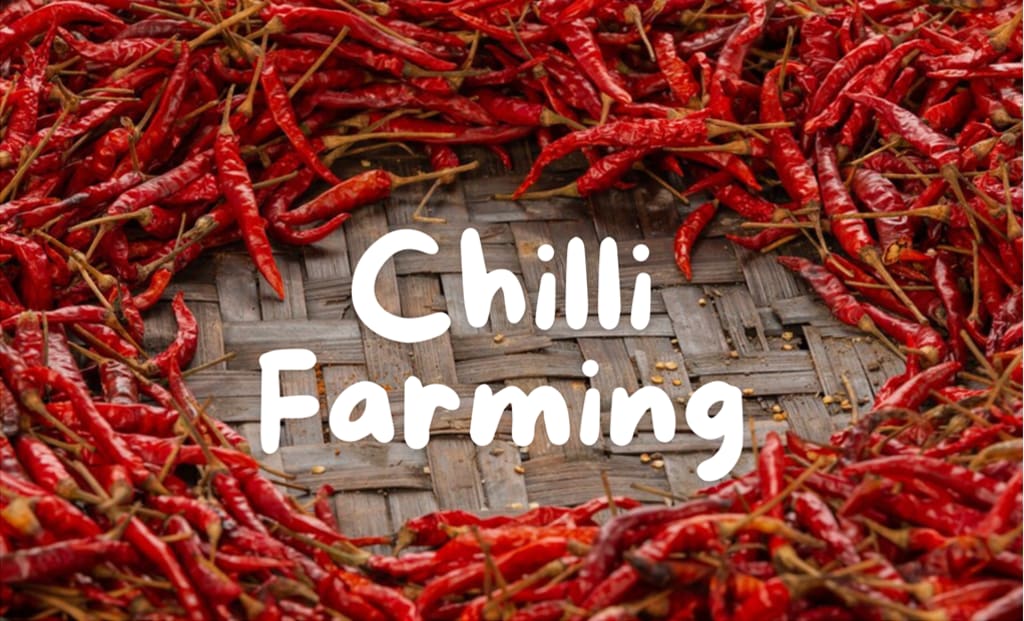
Chilli farming is one of the most significant sectors contributing to the Indian agricultural sphere. Since it is one of the most consumed spices in Indian food, the demand for chillies is always high. Chillies are one of the cash crops, and India is the biggest producer of chillies across the globe.
Let’s learn more about chilli farming in India. We will cover everything, starting from preparing the soil to harvesting the crops. This guide will help farmers enhance their yield and profit in the market.
Understanding the Climate and Soil Requirements
If you want to yield better quality, then the first step is to understand the climate and soil requirements for the crop. Let’s learn more about it :
Climate Requirements
Chillies thrive in regions with warm and high humidity. The optimum environmental conditions for the growth of chilli are 20 – 30 degrees. However, Frost can cause massive damage to crops, so these crops need a frost-free period. A moderate quantity of rainfall between 600 and 1200 mm is ideal, but moisture-logged soil should not be preferred.
Soil Preparation
Chillies are not very selective when it comes to soil, but the best soil for growing them is sandy loam or clay loam. Additionally, soil with good drainage and rich in organic matter, preferably with a pH of 5.5-7.5, is ideal for chillies.
Ploughing the field a couple of times or up to three times in order to break the soil is important before plantation. This will ensure the proper development of roots. Moreover, applying compost or farm yard manure during ploughing can help improve the soil’s nutrient value. Tractors help in soil preparation and make farmers work easy and efficient. If you are planning to buy a versatile tractor, then you must check out the New Holland 3630, which comes with 50 HP and 3 cylinders. It provides smooth operation during soil preparation.
Selecting the Right Variety
To ensure the proper growth of chilli and better yield, picking the right variety according to the region is very important. Let’s learn more about it :
Popular Varieties
India has many types of chilli known for their variation, which can grow in different places and be used for various purposes. Some of the important varieties of chilli are Guntur, Byadgi, and Ramnad Mundu. A farmer has to consider variety according to the climatic condition of the area and the demand for it in the market.
Seed Selection and Treatment
It is important to use the right seeds to grow crops; this will also enhance their growth. Seeds must be treated with fungicides to prevent them from being attacked by soil-borne diseases. Additionally, it enhances germination and plant health.
Planting Technquies
The right way of planting the seeds after soil preparation is important because it helps in managing the crop. Let’s learn more about it:
Nursery plantation
The right beginning of the process must be the preparation of the nursery. Seeds are mostly planted in a nursery bed, and once they are 6-8 weeks old, they are moved to the main field. They are correctly drained to prevent water from standing on the nursery bed.
Transplantation
Transplanting should be conducted when the seedlings are 6-8 weeks old and contain 4-5 leaves. Spacing between plantlets must be between 45 to60 cm, although the exact spacing differs from one cultivar group to the other. Proper spacing, in this case, helps provide better aeration and assists in minimising the incidence of diseases.
Irrigation and Fertilization
Proper irrigation and fertilization care are important to ensure the growth and development of chillies. Farmers must consider following for better yield.
Irrigation Practices
Water is an important component for the growth of chillies. Drip irrigation supplies water directly at the root of chilly plants and helps control water wastage. It is recommended that overhead irrigation should not be used as it favors fungal development in the crop afterwards.
Fertilization
In chilli farming, it is vital that the intervals of fertilizers are moderately applied to the plants. Only three fertilizers are important, and these are nitrogen, phosphor, and potassium. The amount of application depends on the soil's requirement based on soil testing.
Modern Farming Machinery
Machines are very important in increasing efficiency in chilli farming. New Mahindra tractor models come with some special features that help with ploughing, sowing, and even harvesting crops. These tractors are meant to cater for one of the many challenges that Indian farmers face; hence, they are essential for chilli farmers.
Harvesting and Post-harvesting
Harvesting is an important part of cultivating a crop. Let’s learn more about methods of carefully harvesting chillies to ensure their good quality.
Harvesting Techniques
Chillies take roughly between 2-3 months from the time they are transplanted into the container or field. They should be harvested when they have developed their mature colour but are still green if to be eaten fresh or red if for drying. Special attention should be paid to harvesting with care to avoid damage.
Post-Harvest Handling
Chillies quality needs to be preserved to the highest standard, and proper handling is very important after the farming process. Chillies should be dried under direct sunlight or mechanical means to dry the clothes with the least level of moisture content. When stored in a cool and dry area, the chilli does not spoil and retains its spicy flavour and bright orange hue.
Conclusion
Chilli farming in India can be a rewarding business if done with proper care and the right methods. Implementing modern machinery, such as mini tractor, can improve productivity and help farmers make chilli farming a constant source of income.
About the Creator
Rajendra_Singh
I'm a agriculture blogger, who loves sharing my knowledge about growing things. On my blog, you'll find practical tips and interesting stories to help you get started!
Keep reading
More stories from Rajendra_Singh and writers in The Swamp and other communities.
Growing Thyme in India
Thyme (Thymus vulgaris) is an aromatic perennial herb renowned for its culinary, medicinal, and ornamental uses. Originating from the Mediterranean region, thyme has adapted well to various climates and soils, making it a viable crop in India.
By Rajendra_Singh2 years ago in The Swamp
A Gathering of Evil Bosses
“I’m the queen of chin jutting while I smooth my hair, attacking, insulting, and deflecting to protect my appointer.” “Oh, please, Blondi, my hair is curled, highlighted, and longer than yours. I feature television commercials telling immigrants that we will give them a free plane ride home, and if they voluntarily turn themselves in, they will be allowed to legally apply for re-entry. It runs everywhere, and I look good in it! You can’t compete because of your blond hair. Mine is nicer, and my lips are prettier than yours.”
By Andrea Corwin 17 days ago in The Swamp




Comments
There are no comments for this story
Be the first to respond and start the conversation.